The Lake Was Gone and the Satellite Kept Talking [Podcast]
Cezar Mocan's satellite finds a lake missing and generates testimony instead of doubt. Danny Snelson and I follow that instinct through games and publishing.

![The Lake Was Gone and the Satellite Kept Talking [Podcast]](https://storage.ghost.io/c/25/84/2584b75d-4bd6-4cce-8259-f1d1c65abbb5/content/images/size/w1200/2026/09/ep36_feature_09_field-guide-still-12.png)
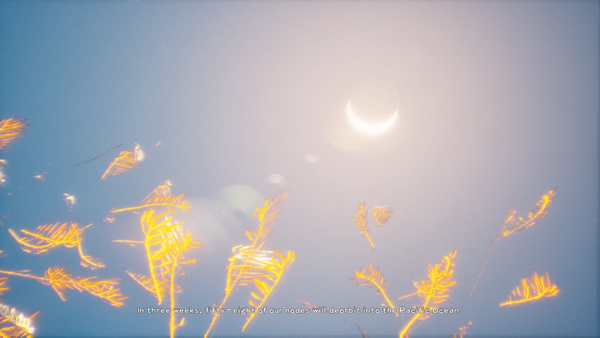
I open with Cezar Mocan's satellite, which finds a lake missing from the place its own records insist it should be, and would rather produce testimony than admit it does not know. The question I put to Danny Snelson runs through the rest of the hour: what happens when unreliability is the design decision instead of the defect? The through line for this cycle is what a machine does at the edge of what it can account for.
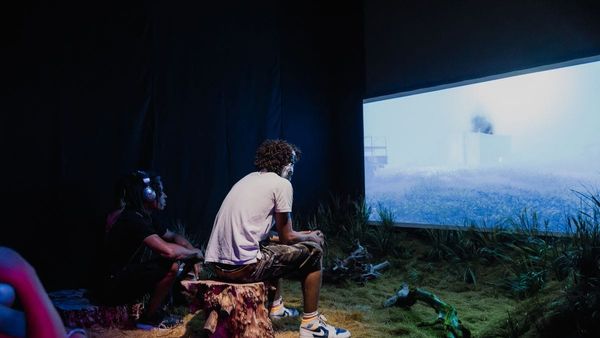
Mocan's End of Signal, which won the SOLO AI Award '25 and which I wrote about last week, imagines a constellation of 73 satellites called Argus. One of them registers the absence of a lake and, in the minutes before it is unplugged, generates testimonies about what might have happened. Mocan's own term for this is "technological undetermination," a condition in which the unknown comes from a surplus of plausible explanations rooted in existing ground truths rather than from a scarcity of information.
Then thatgamecompany started a label. Fifteen years ago, I wrote a Wall Street Journal piece arguing that small studios were the New Hollywood, and the part that did not hold is that almost nobody got wealthy. Danny reframes the whole question by going back to what the word means. A publisher makes things public, which is the labor of getting work into someone's hands, and in a field where the tools keep getting more open, the scarce thing is whoever can be trusted to cut through the noise. He reaches for Annapurna and for Something Else Press in the 1960s, where an imprint was a coterie rather than a funding source. My own answer is smaller: own the audience, and make the games smaller.
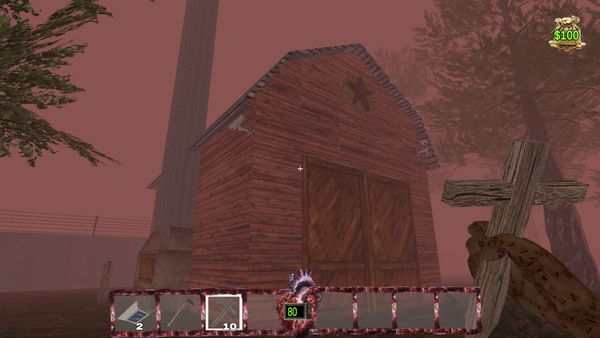
The back half is the archive and the news. Adam Yates published Holyvoid, 168 pages of artifact for a game that does not exist, in the lineage of Vermis, and Danny argues the hallucination the book produces may beat the game it implies. Joshua Calixto's 2015 piece on the Rosa Var Attre encounter in The Witcher 3 gives us sideshadowing, , and Danny traces it forward through Baldur's Gate 3, Elden Ring and Disco Elysium. My interview with Don Rawitsch turns into the thing I would now write differently about westward expansion, and Danny lands the episode's best reversal: The Oregon Trail did not teach a generation history, it taught them how games work.
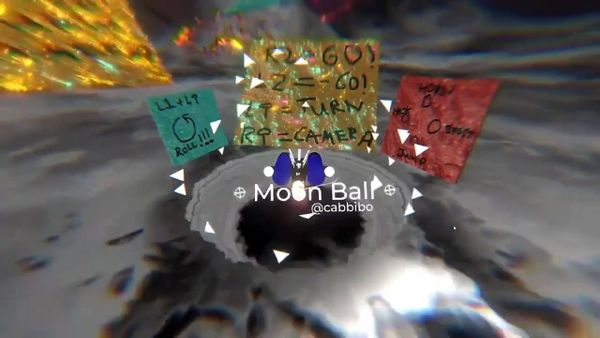
We close fast on Mexico joining IberVideojuegos through the Centro de Cultura Digital, on VHOLUME and whether brutalism actually suits parkour, on Inkblood interrogating time itself, and on why marketers keep telling people not to make puzzle games.
Links
- Cezar Mocan's AI satellite cannot get its story straight, my feature on End of Signal
- Joshua Calixto, "Dickens and the Impossible Romances of Video Games"
- Carol Ann Has Dysentery
- An .exe in the caption turned an art book into a rumor
- Mexico joins a seven country games policy program
- VHOLUME is out, parkour under a brutalist ministry
- Inkblood, a magnifying glass and a time machine
- Kill Screen in 2012: thatgamecompany will self-publish their next game
- Cezar Mocan
- Nouvelle Bug
- Hito Steyerl, How Not to Be Seen: A Fucking Didactic Educational .MOV File
- Jon Bois, 17776
- Mashinka Firunts Hakopian, "Art histories from nowhere"
- sunset visitor, 1000xRESIST
- thatgamecompany launches thatgamepublisher
- Something Else Press
- Adam Yates, Holyvoid
- Plastiboo, Vermis I
- Gary Saul Morson, Narrative and Freedom
- VHOLUME
- Inkblood
- IberVideojuegos
- Ambrose Trataris, Daisy-Chain Star-Connection at Gray Area
- Danny Snelson
Hosted by Jamin Warren with Danny Snelson. Music by Nick Sylvester.