Cezar Mocan's AI satellite cannot get its story straight
Cezar Mocan built a satellite that cannot agree with itself about the night a toxic lake vanished, and its unreliability turns out to be a design decision.

On a strange night in Cezar Mocan's A Field Guide to Orbital Melancholy, a lake goes missing. Seventy-two satellites, operating as a single artificial mind, report a toxic lake gone from a place where it has always been. But by morning, strangely, it is back. Perhaps it was truly a hallucination, but the problem is no one is around to see which version is actually true. And the only witness? They're on life support and are on the brink of someone pulling the plug.
This story is, of course, pure fiction, but it's the actors that are distinct. In Mocan's real-time simulation that sits at the heart of his work, End of Signal, there is never really a resolution, just a lot of finger-pointing and moving the scenery around on the set. The conceit is all about perspective: a satellite system sees something it shouldn't because the map is lying. In the simulation, we see the machine work through all the reasons why by summoning objects and humans of various shapes and sizes back to the scene of the crime for interrogation.
A Field Guide to Orbital Melancholy, 2026. Real-time simulation in Unreal Engine. Courtesy the artist.
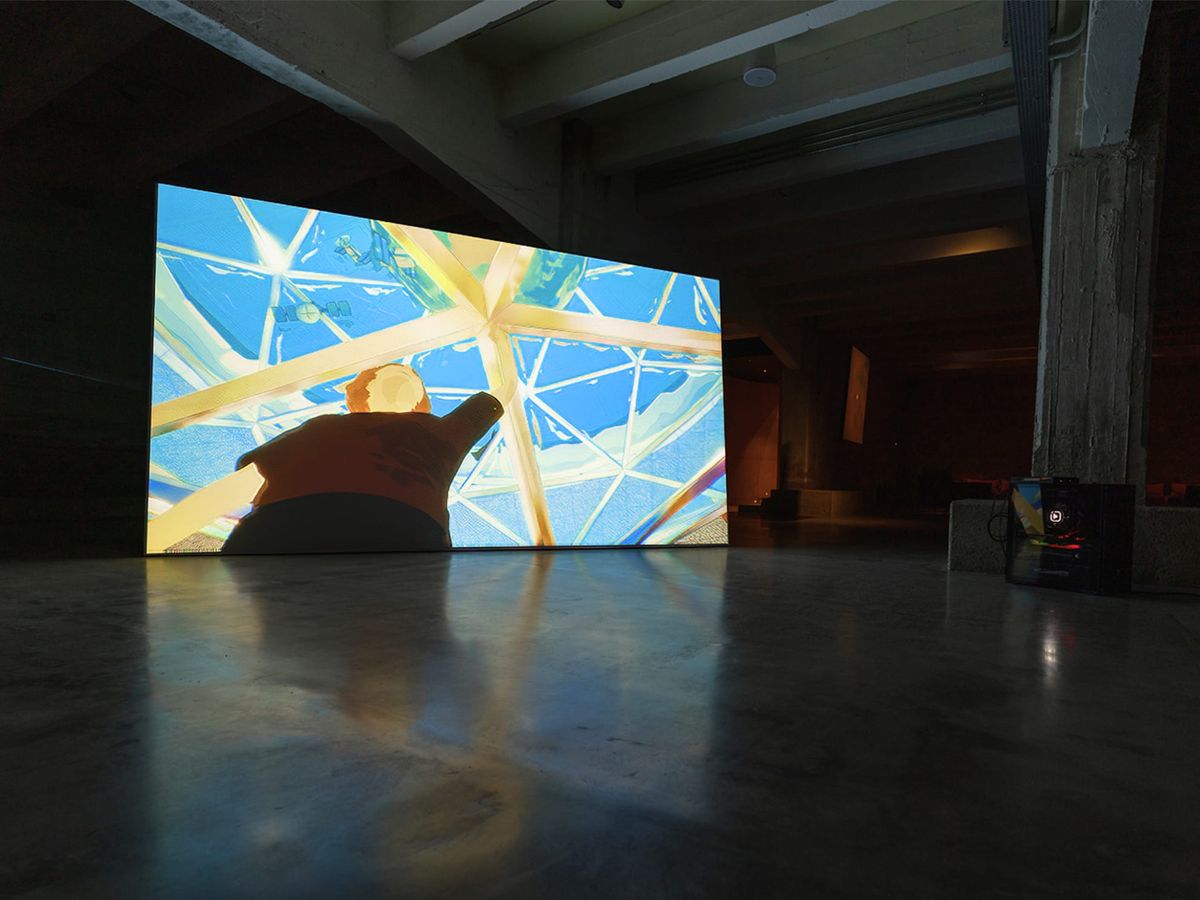
Mocan is part of a set of artists working within the constraints of AI to build work that only AI can. I've become less interested in the "AI did X" vein in a lot of arts and games writing, so Mocan's work, like Tomo Kihara's, is exciting precisely because it questions the tool that it uses. Shown at SOLO Contemporary in Madrid as part of Onkaos, End of Signal is a mix of media, but its real-time simulation piece stands out. In it, we watch the satellite system Argus attempt to reconstruct a plausible explanation for how the lake could disappear. We are watching something like its memory, akin to watching Claude "reason" its way through a problem. It calls all of the characters back to the office, provides alternate explanations ("a veil of evaporate"), and then comes to no conclusion. The characters, both human and inanimate, leave the research center sullenly and then start the routine over again. At one point I am watching a ladder, a tree, a green screen, and a camera buoyantly bounce alongside a march of silent humans until they all snap into place. The camera slowly pans and scans over the sequence of a bizarre scene. "To find out where the lake went, they would have to trust what they saw," the satellite system thinks. "And we saw nothing there."
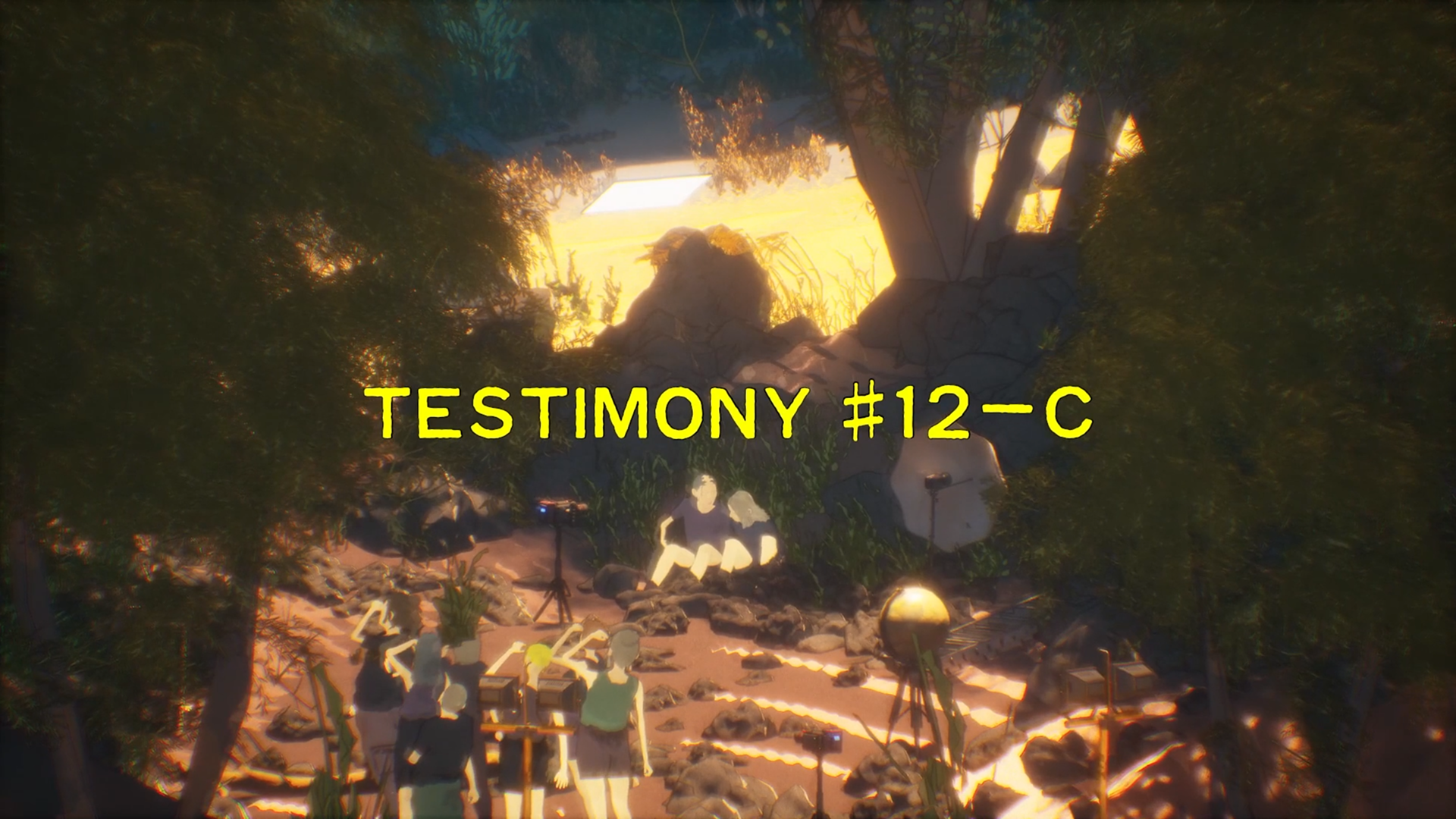
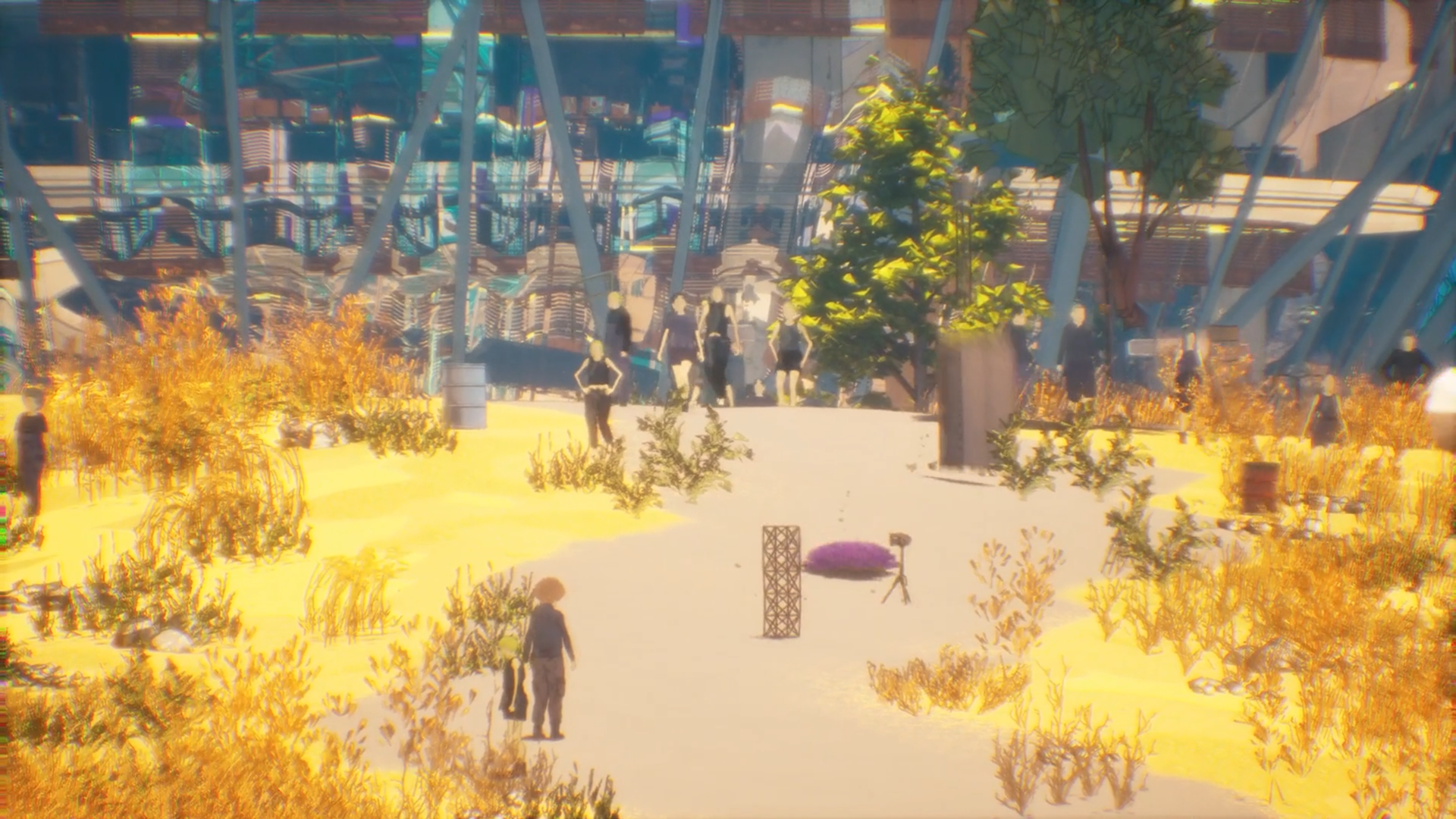
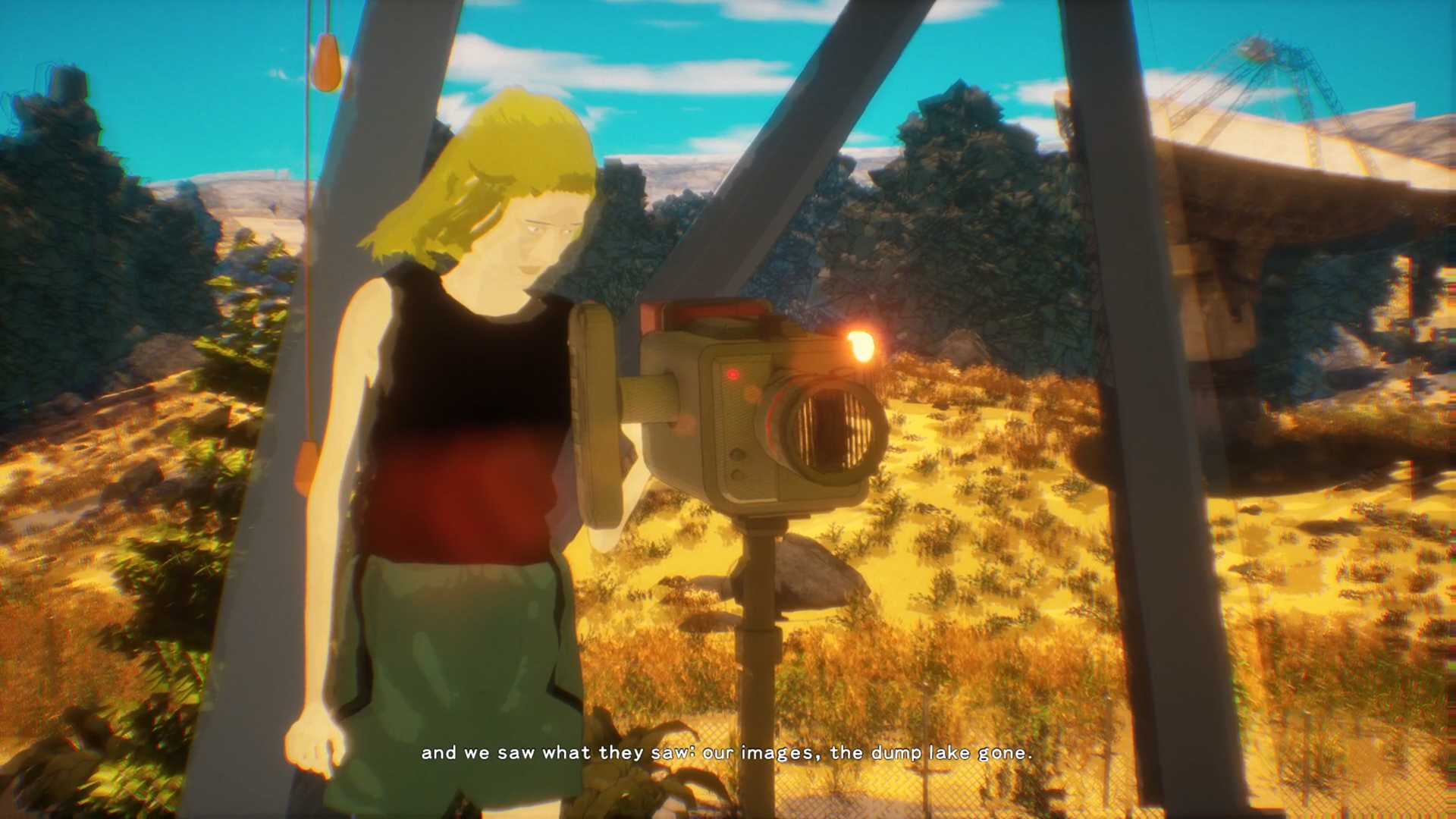
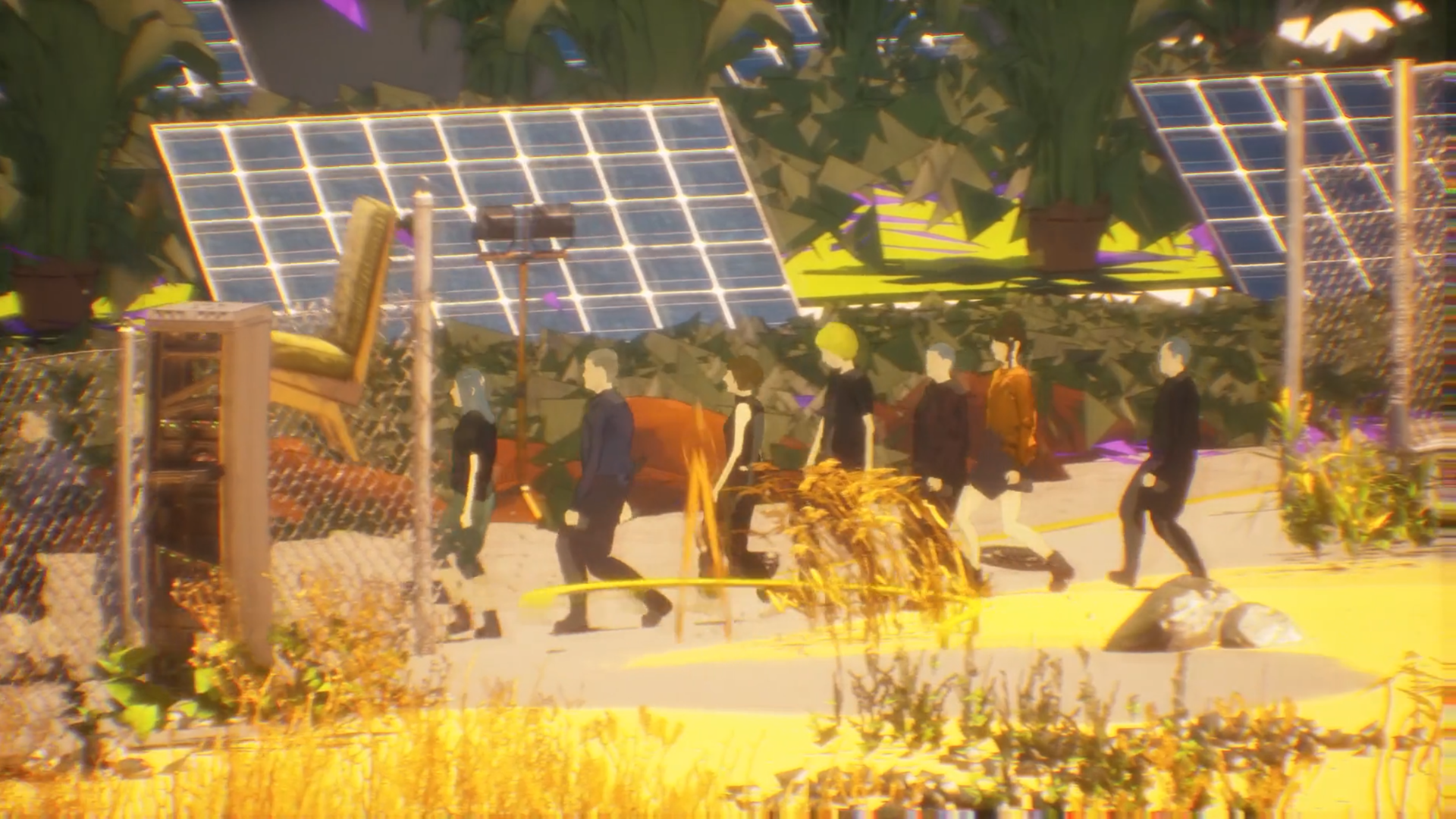
Stills from A Field Guide to Orbital Melancholy, 2026. Courtesy the artist.
Part of why AI unsettles us is its inconsistency. Every time we query the same question, we get a different response. Usually it's true-ish, but it's more that LLMs are required to give slight deviations on the same central idea. It's both very human, but also a bit unnerving, as we expect more certitude from computer systems. Mocan points out that this is a deliberate part of the design, to make its waffling seem more real. Mocan's response is an AI-powered system that generates a different and equally plausible account of the night that body disappeared. But the response is different every single time, pointing to unreliability as a condition of us and humans and the machines that we've constructed. "We tend to remove these images from the infrastructures which produce them and assume that they come from nowhere," Mocan opines. "And of course this is a politicized nowhere."
That sense of uncertainty is a key part of Mocan's work. We typically think of overhead imagery as being indelible in some way. We even have a term for it, Mocan points out, "view from above." "We associate that perspective with a God's view. It's omniscient and omnipotent; it can see more than we can see with our human eyes, and therefore we tend to trust it more," Mocan says. That phrase enters court filings, border disputes, and targeting decisions because it implies that the all-seeing eye can separate fact from fiction. In the U.S., that point of view is also distinctly martial, from the overhead view of Hiroshima to the helicopter views of napalm in Vietnam, to the monochrome violence of drone strikes. In this way, the view implies there is no "author." Things just happen, even if only on the map.
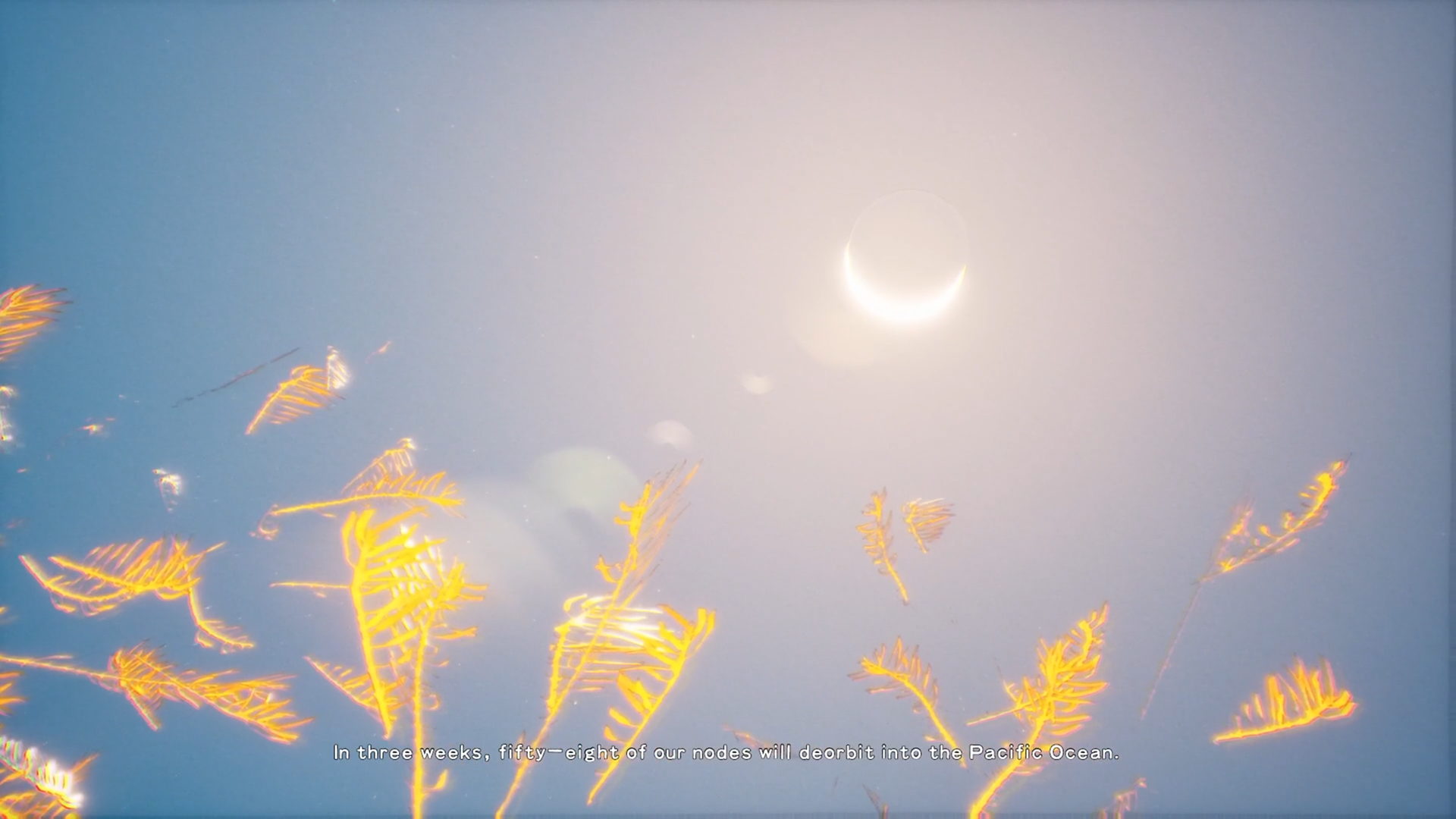
A Field Guide to Orbital Melancholy developed from a deep research period for Mocan that centered on satellites. Specifically, he became interested in "ground truth": the real-world calibration locations used to train satellites. The landscapes tend towards the arid and the desert so that they remain exactly the same. "Those landscapes in many ways stand at the bottom of the image production pyramid. All satellite images that we see rely on these few sites in some way," Mocan says. That so much of what we think we see from satellite images rests on so few actual locations is a problem as old as maps. He points out phantom islands "discovered at various points in the past, usually centuries ago, placed on maps, placed in atlases, and eventually they had to be undiscovered." It would seem that the "view from above" would obviate the existence of phantom islands' cartographic fiction, but what would happen if a satellite is looking for something that didn't ever exist? "The calibration sites act as the moment when my fictional satellite establishes its relationship with the ground truth," Mocan says. "The phantom islands are a precedent of the ground truth breaking. Maybe also the reason why my satellite becomes unreliable."
Mocan came to landscape sideways, out of competitive programming in Romania and into a first-year film photography class taught by Victoria Sambunaris, who works in the lineage of New Topographics: the land as something inevitably altered by humans and by progress and by technology. He says he only understood two years ago how much of his practice came out of that room.
One run of the simulation, in which Argus assembles and reassembles the night the lake went missing. A Field Guide to Orbital Melancholy, 2026. Courtesy the artist.
We would like our maps to hold still. But they come unfixed instead, sometimes by force, as in Donbas or Gaza, and sometimes by the smaller act of an insecure and fascist president renaming a body of water. But often, the uncertainty is generated through smaller acts. "Nuclear power plants in France are pixelated, but not in other countries. And I started asking myself, why is it that France wants to hide that kind of critical infrastructure, but other countries don't care about it?" Mocan says. The pixelation is that same power exercised quietly, one tile at a time, on the only picture we have agreed to believe.
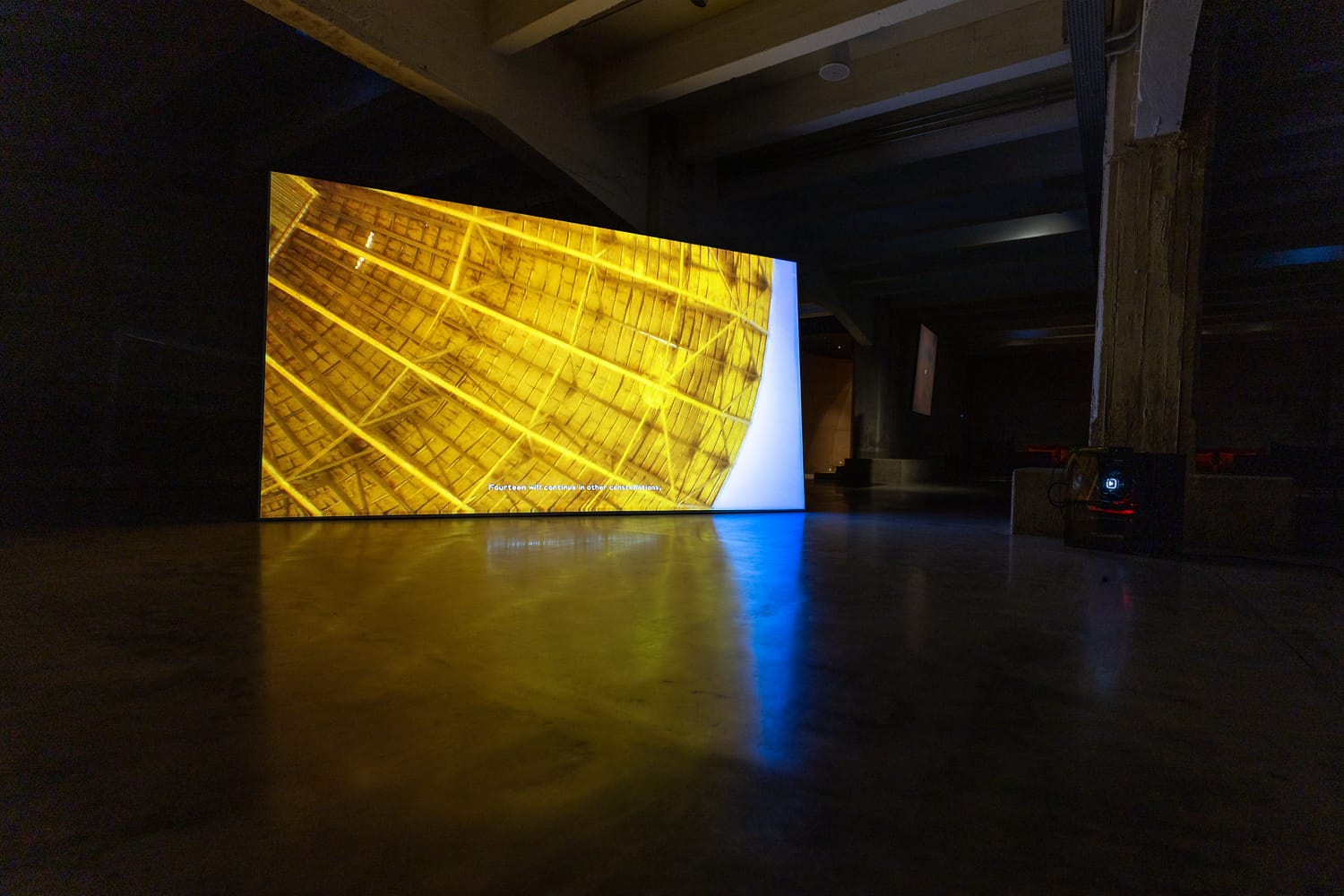
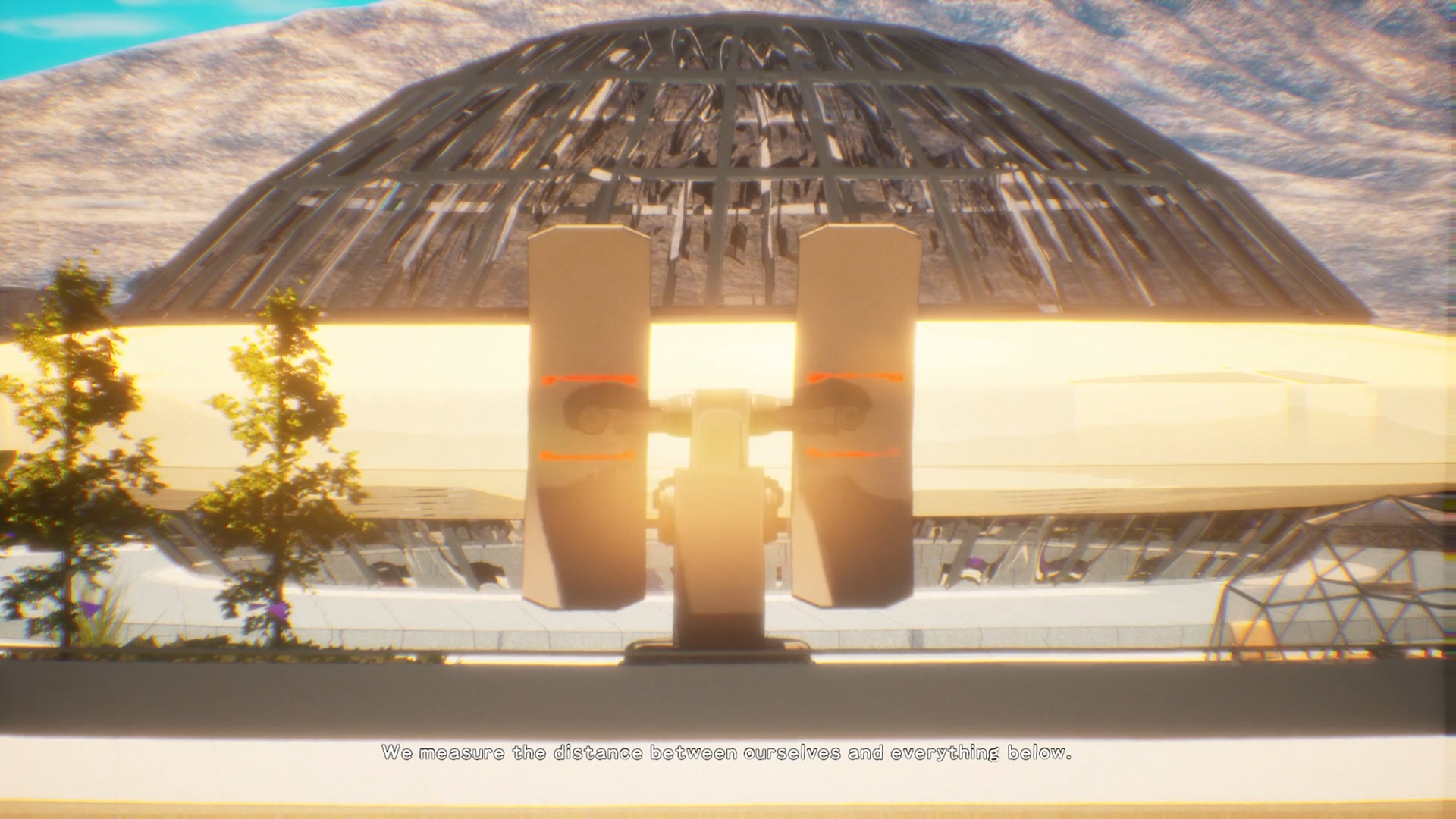
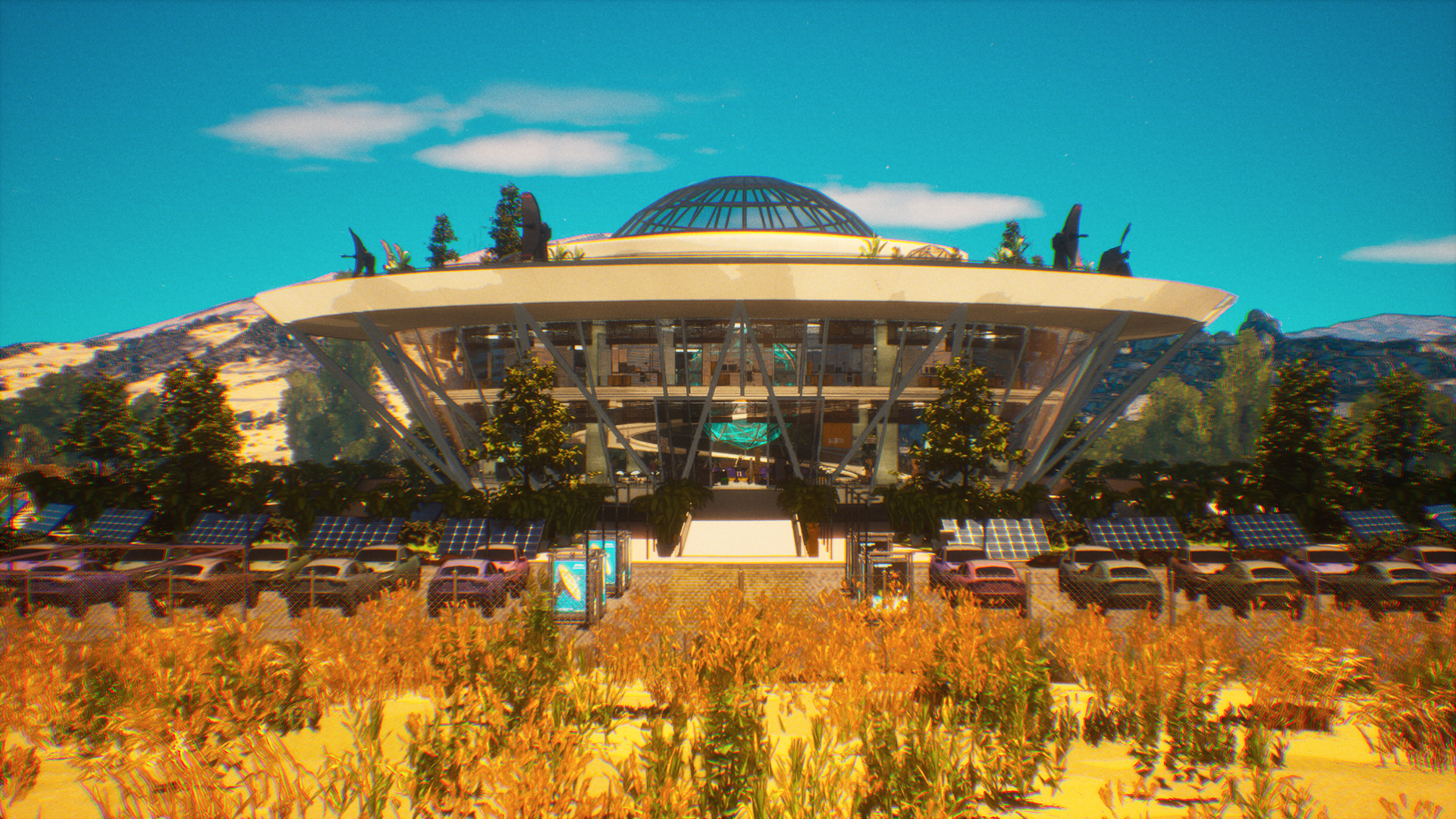
End of Signal at SOLO Contemporary, Madrid, June 2026, with stills from the simulation. Courtesy the artist.
Unreliability has become a convenient thing for an artist to be interested in at precisely the moment these systems cannot be made to repeat themselves. The work is auto-Rashomonic, generating its own contradictory witnesses and then declining to adjudicate, which is also a fair description of the thing everyone complains about when they use a chatbot. What we want from machines is the expected response, and the range of the unexpected has gotten much, much larger.
What machines see, and what we agree to believe about it, is a question Killscreen keeps asking out loud. The free newsletter carries the reporting, plus the work that makes the question worth asking.