An .exe in the caption turned an art book into a rumor
Adam Yates draws occult architecture in ink. Holyvoid runs 168 hardcover pages from The Mansion Press, and there is nothing to play.

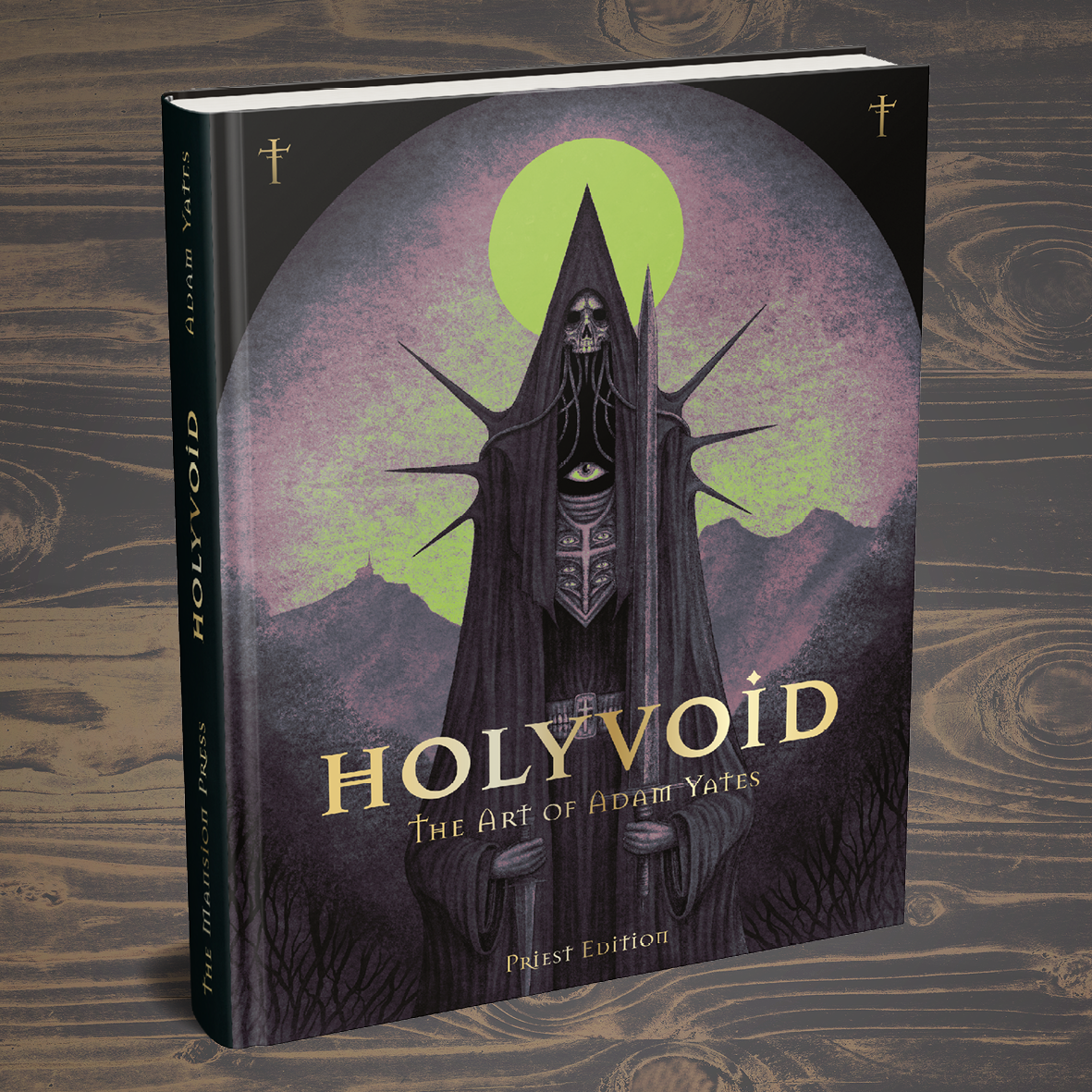
Adam Yates dropped a mysterious carousel from Holyvoid in August with a one-word caption: holyvoid.exe. Strange! But that's the whole bit, and it was indeed effective, with scores asking what it was and where to buy it. And it, meaning a game.
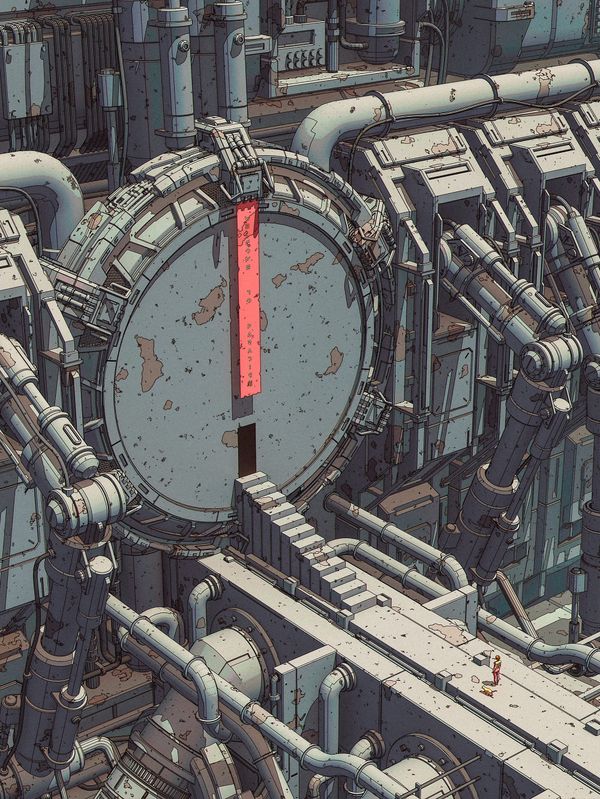
But there is no game. Holyvoid is 168 hardcover pages from The Mansion Press, 21 by 28 centimeters, gold-stamped, $45. There are drawing in the ink of the liturgical; figures coming undone, cathedrals drooping and organic, and other types of saintly misdeeds. The press copy reaches for Giger, which is fair but undersells what Yates does: the drawings are an index and function as documentation of a world with a lore bible somewhere.
So why .exe? Well, it's a claim that a file exists somewhere, just waiting for you to download it. It's the same move Vermis made when it presented itself as a strategy guide to a Souls-like that was never programmed. The reader supplies the missing executable.
It is worth being precise about the direction here, because it is the opposite of the usual. Games routinely produce art books after the fact, as residue. This runs the other way: the artifact arrives first, and the game is the negative space, inferred entirely from production design. Nobody has to build it for it to work on you.
We have written about fake game art before, and about illustration that wants to be played. What has changed is that the fake artifact no longer reads as a joke about games. It reads as a genre with its own shelf, and Yates is now firmly on it.
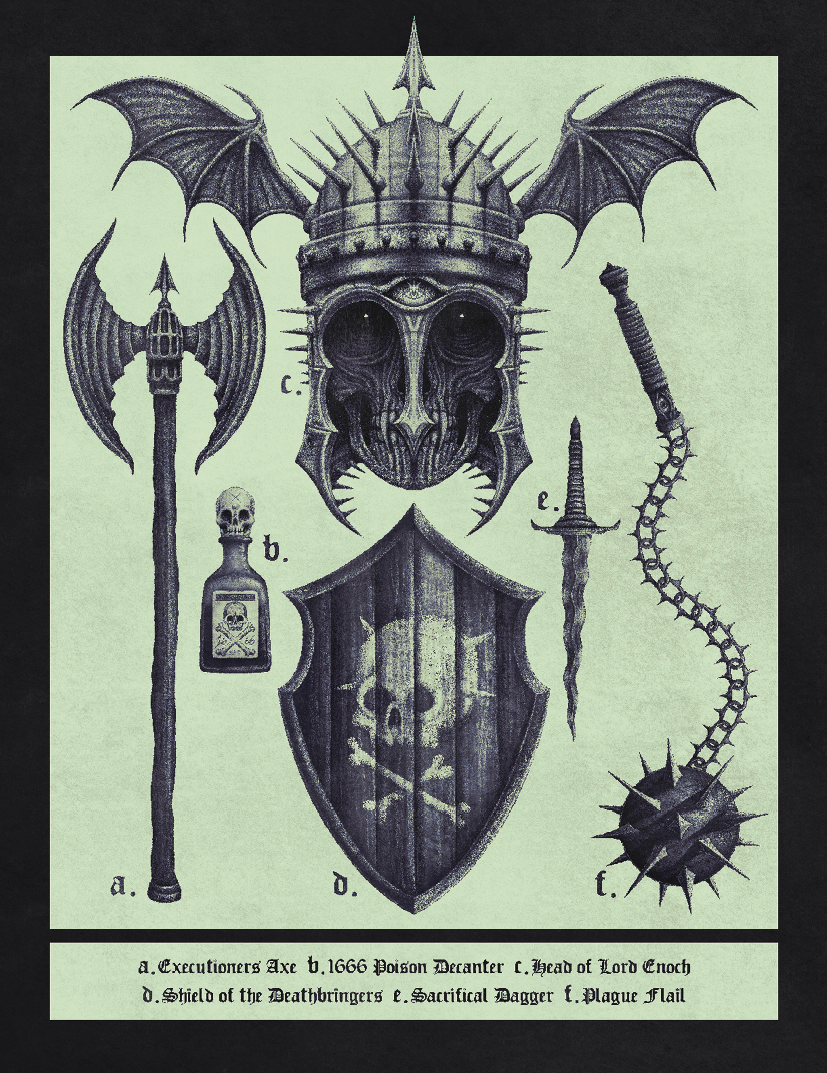

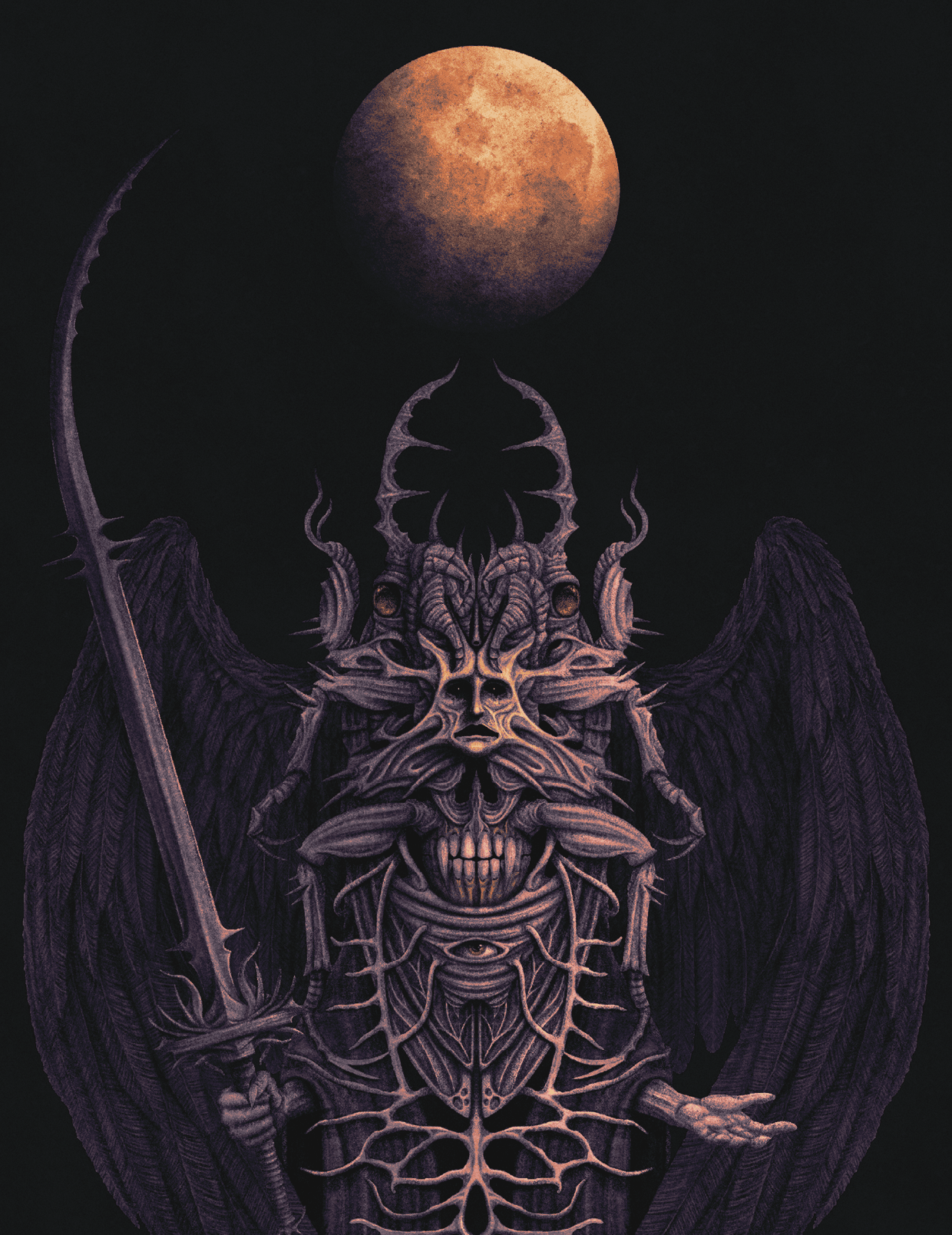
Interior pages from Holyvoid, via The Mansion Press.
Art that borrows the grammar of games without ever becoming one is a whole shelf now, and Killscreen covers it as a form rather than a novelty. The free newsletter is where it lands.