An Axie Infinity Cooperative Finds Solidarity in Chaos
In Limn's new issue, artist Nestor Siré and anthropologist Steffen Köhn describe splitting a play-to-earn team's earnings 60/40 with Cuban players.

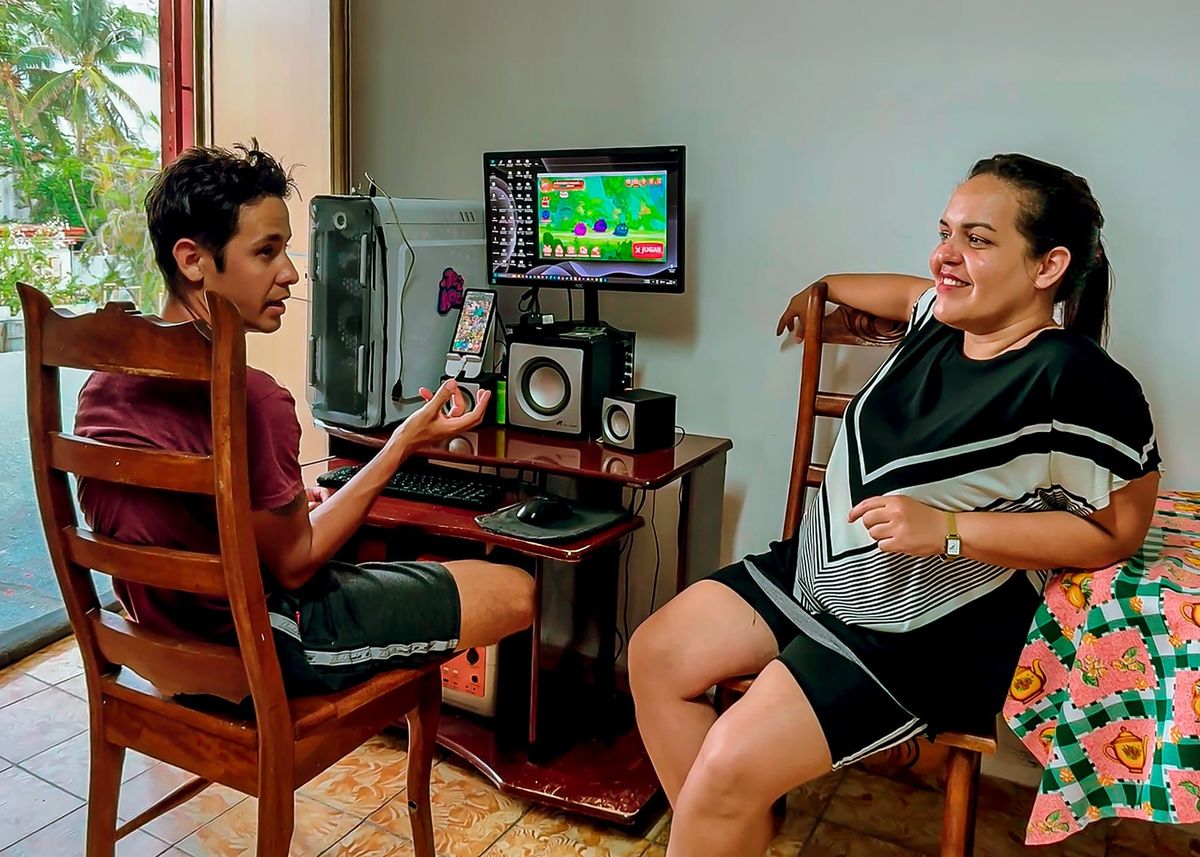
Nestor Siré and Steffen Köhn have published "Gaming in Infinity," an essay in the new issue of Limn, No. 15, The Great Offshore. It's a work we've been following so it's nice to see it broken out in full. The essay tracks Cuban players of Axie Infinity, the blockchain game from the Vietnamese company Sky Mavis, through the play-to-earn boom of the early 2020s, and documents an intervention the pair ran inside it, as they noted in the announcement. Siré is a Cuban multimedia artist; Köhn is a filmmaker and anthropologist at Aarhus University.
A starting team of three Axie NFTs cost around $1,000 at the 2021 peak, so most Cubans entered through "scholarships": wealthy investors lent out teams and kept a share of the earnings, often the majority. The essay shows entry exams held over Telegram, daily quotas, and players scrambling to finish before power outages or before owners revoked their borrowed teams. U.S. sanctions kept Cuban players off major exchanges, so earnings sluiced through informal peer-to-peer brokers on Telegram and WhatsApp.
Using research funds, Siré and Köhn bought a competitive team and handed it to a Cuban player, who kept 60 percent of the earnings and co-owned the team. The other 40 percent went into a collective fund that bought a second team for another player. "Instead of surveillance, extraction, and moralistic discipline, the cooperative emphasized reciprocity, shared risk, and collective imagination," they write, a contrast with the exploitative model so rampant in the game. The group outlasted most investor-run guilds after hackers drained more than $600 million from the network behind the game in March 2022.
The essay is a companion to Grinding Choices, the dice-roll gamebook built from the same fieldwork. Köhn's book Island in the Net: Digital Culture in Post-Castro Cuba came out from Princeton University Press this year. The essay is free to read online under a Creative Commons license, alongside pieces on call centers, start-up states and an interview with filmmaker Alex Rivera.
For more reading see Killscreen's report on the Grinding Choices gamebook, the full Great Offshore issue, Killscreen's 2011 story on prisoners forced to gold farm in World of Warcraft, and Fortune's 2022 account of Axie Infinity's collapse.
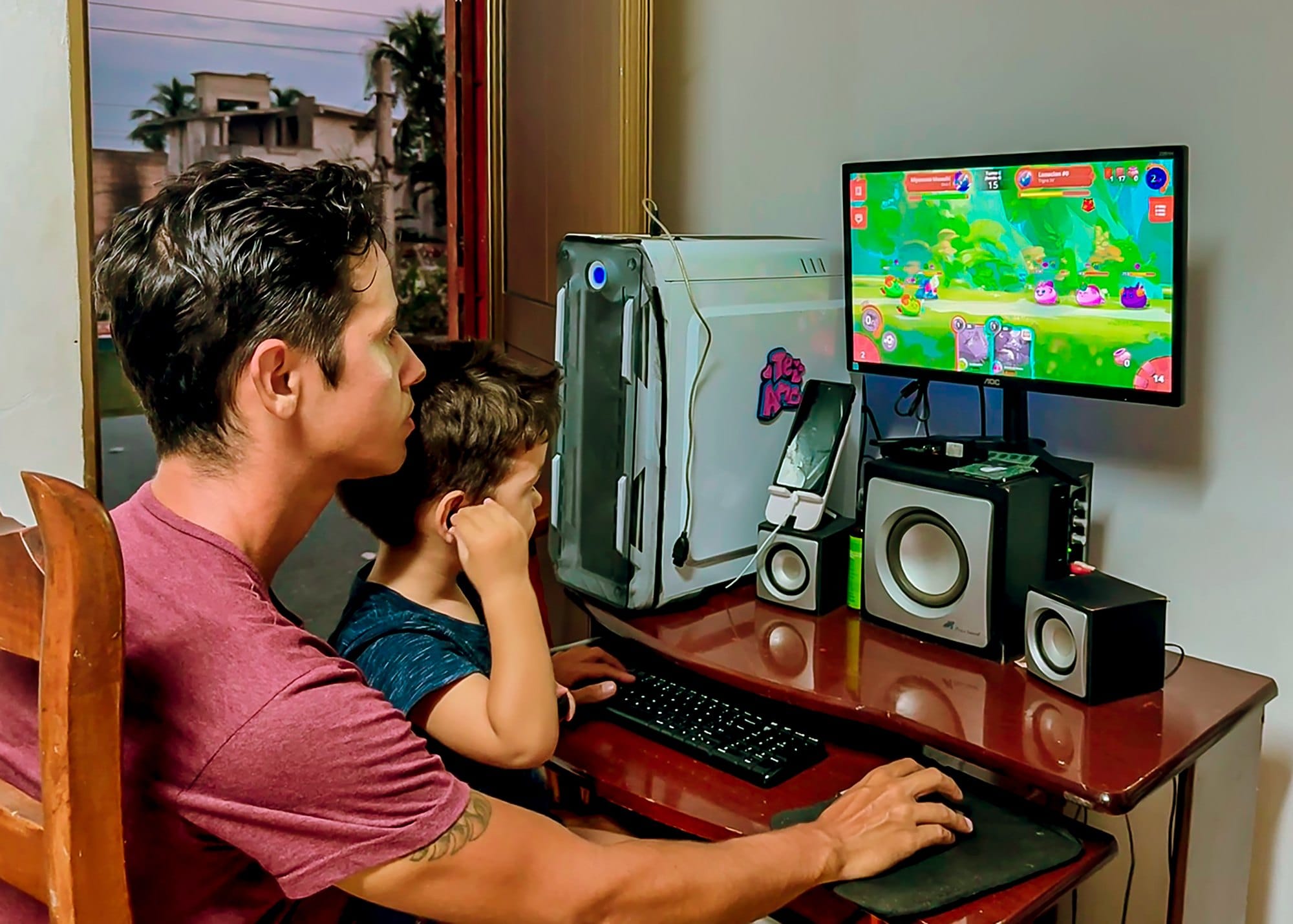


Photo by Nestor Siré; stills from Axie Infinity. Via Limn (CC BY-SA 4.0).
A cooperative built inside a crypto game is the kind of story Killscreen goes looking for. The free newsletter brings the week in games at the edges, where almost nobody else is looking.