Theo Triantafyllidis Makes Weather the Main Character
The Greek artist's newest live simulation work revives the lost art of meteorological divination for our current climate crisis.

"Seasons are not seasoning, and weather is not weathering," Theo Triantafyllidis tells me from his studio in Athens. It's a feeling we've all been working through as the weather we thought we knew keeps changing. The past is not a prologue. And so the turn of phrase—"Funny weather we're having"—is no longer quaint. The funny weather is The Weather.
Reflecting on the work, Funny Weather is a live-simulation and the first commission from Behind the Screen, a digital art network led by Factory International with ACMI, Onassis ONX and M+. The location itself reflects the scale of the threat—just down the road from the Media Wall at Aviva Studios in Manchester is the River Irwell, which in recent years has started to flood in unpredictable ways.
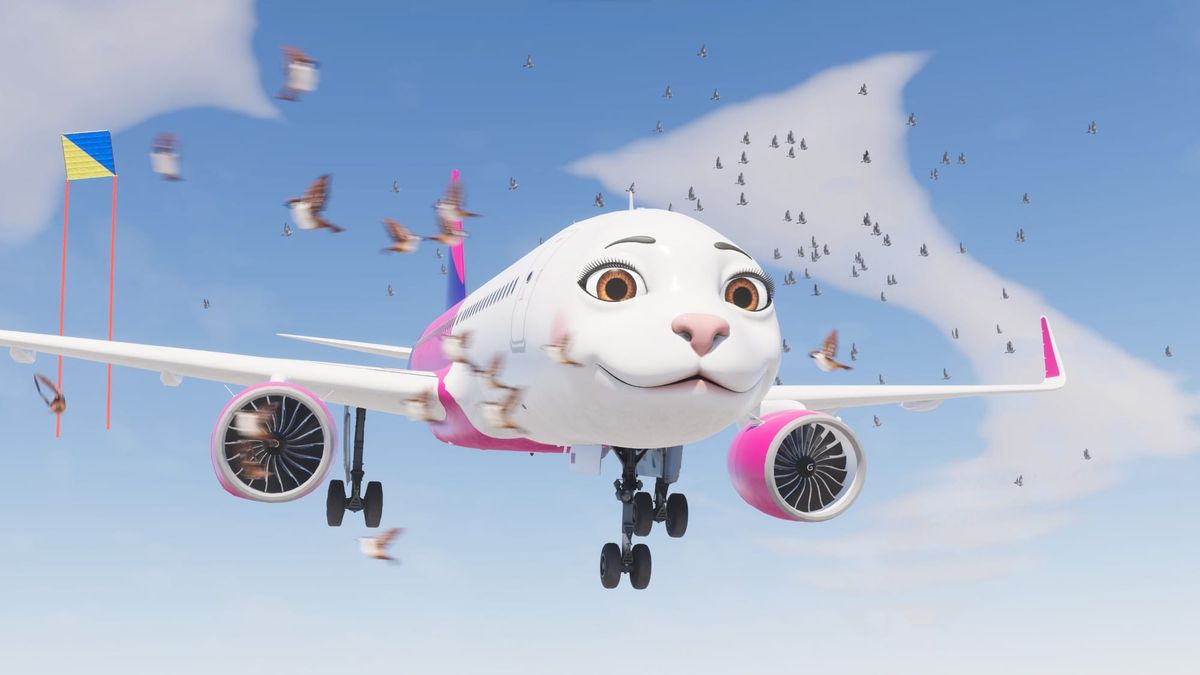
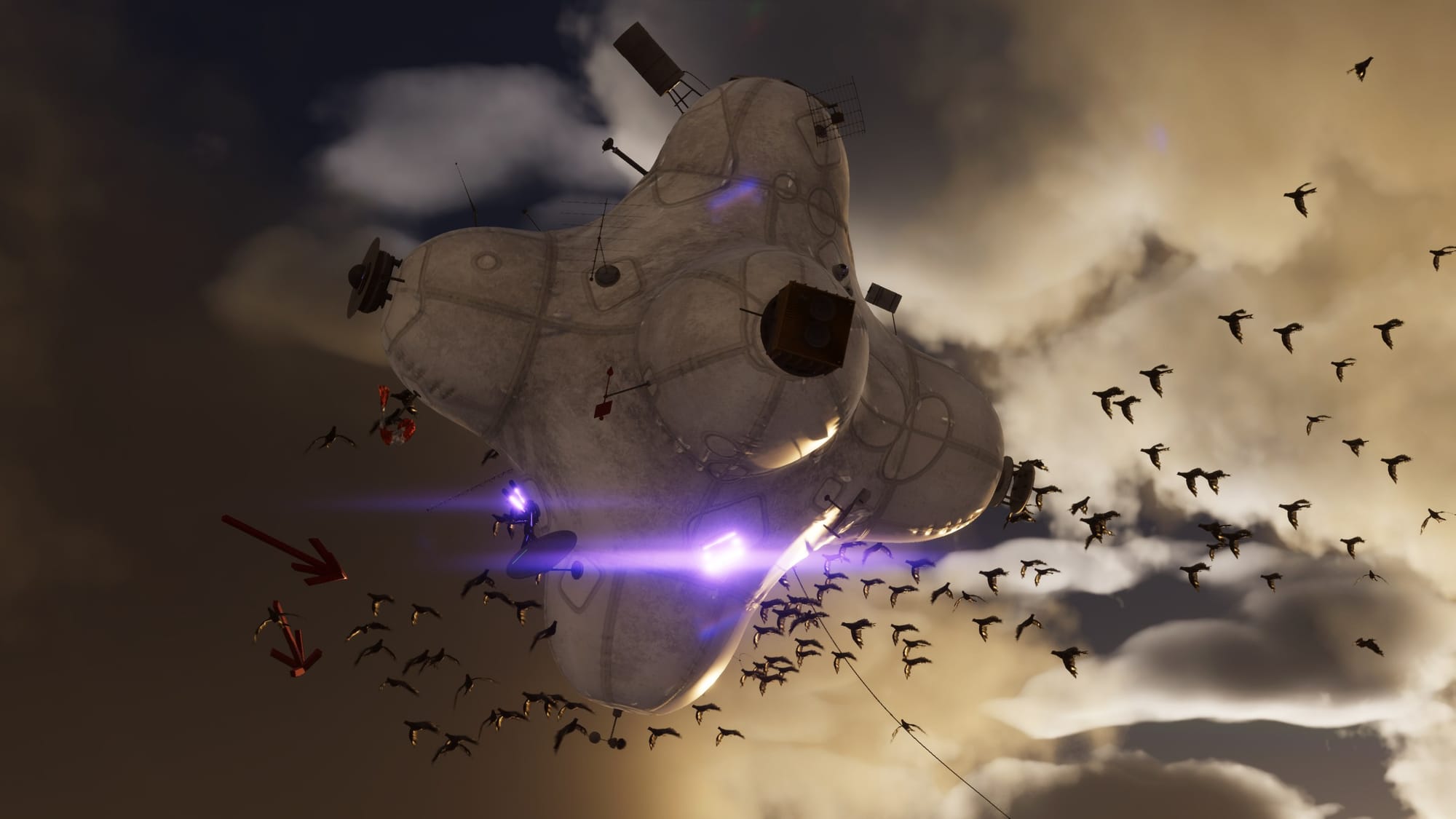
The work never repeats. A camera gazes up at the sky, as if from someone lying in the grass, watching clouds drift, birds flock and a festival of kites shift shape, while strange characters occasionally wander through the frame. Behind it sits an Oracle: a small language model, running locally, fed with the day's weather, the flights passing overhead, and recent bird sightings logged in the eBird (my favorite!). Every three to five minutes, it draws three cards from a custom tarot deck, finds connections in data that has none and issues a reading in large, authoritative type. Those readings set the mood of what follows, so the on-screen weather sometimes matches the sky outside. And sometimes, as Triantafyllidis puts it, "the Oracle is pissed and throws a thunderstorm."
I spoke with Triantafyllidis about forecasting, oracles, and why the seasons have stopped behaving.
JAMIN WARREN: Weather has started to feel like a main character in our lives. Where did Funny Weather begin for you?
THEO TRIANTAFYLLIDIS: I've been thinking a lot about simulations, about the way simulation as a tool has always been used in weather forecasting, trying to detect and foresee larger patterns in such a complex and unpredictable system. So I was thinking about how to bring these two together into a more poetic simulation that reacts to the weather and also uses the weather as a strong visual element in the work.
JW: You're in Athens. What does the weather feel like there right now?
TT: It's weird. I don't think there is a good formula, and that's the funny weather part. The long-term prediction for Greece is desertification, as the sub-Saharan temperature zone moves up the Mediterranean. But until we get there, we're in a weird roller coaster of shifting weather. The past five years have actually been even more pleasurable than before, but I don't think that's going to last for too long.
JW: Lizzie Wade's Apocalypse describes Doggerland, the land bridge that once joined Britain to Europe, swallowed by a 400-foot sea level rise over thousands of years. People adapted across generations, but now it's happening so quickly. We need things to happen today. Why did the forecast jump out at you as a way in?
TT: Early on, I had meetings with meteorologists and climate scientists, and a few things struck me. They have been using AI models for weather prediction for more than three decades. An AI model is very good within the limits of the dataset it's been fed, for day-to-day predictions that follow patterns we know. The physics-based models, which try to simulate the entire atmosphere, are expensive to run, but they don't rely on any existing data set, so they are much better at predicting weather in this new territory we're going towards, which is more unstable and strange.
There is no good formula, and that's the funny weather part.
AI is also becoming a heated conversation around its energy usage, so why am I putting it next to climate change? I've been struggling with this dichotomy, but to me it's about the strangeness of using AI to extrapolate into territory it is not familiar with, and how it may succeed or fail there.
And I'm thinking about how earlier civilizations forecast the weather. I'm using the metaphor of the Oracle, a time when humans were maybe more in tune with nature, reading humidity, clouds, and bird migration as signs. As that sensibility escapes us and we build all this AI infrastructure to do similar things, the core of Funny Weather is basically an Oracle attempting to do this.
JW: Weather has been a subtext through so much of history that people didn't understand at the time. Some have speculated that the sky in Edvard Munch's The Scream came from Krakatoa, and that Mary Shelley and Byron wrote under dark skies. You're making that subterranean layer evident. How does the system work?
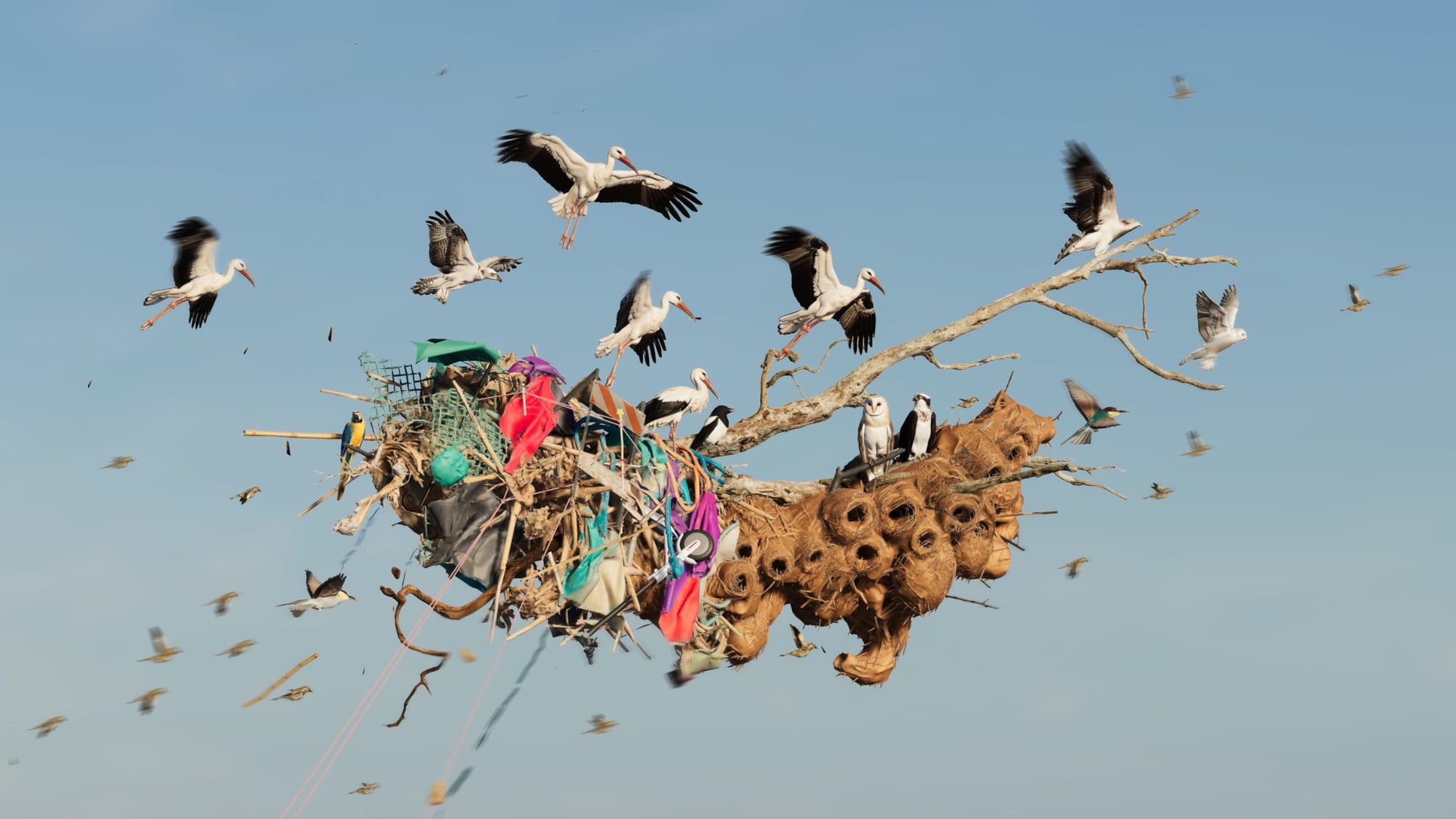
TT: The visual premise is a camera looking at the sky, almost like we are lying back on the grass. There are realistic, three-dimensional clouds, flocking birds, and a festival of procedurally generated kites. Occasionally, specific actors pass by and do something.
On the backend, a director AI controls pacing and the camera. A mood provider controls the in-game weather, lighting, and emotional variables like stress or optimism. And the Oracle is a small, relatively dumb local LLM that we feed with live weather, the flights above us, and recent bird sightings from the eBird app.
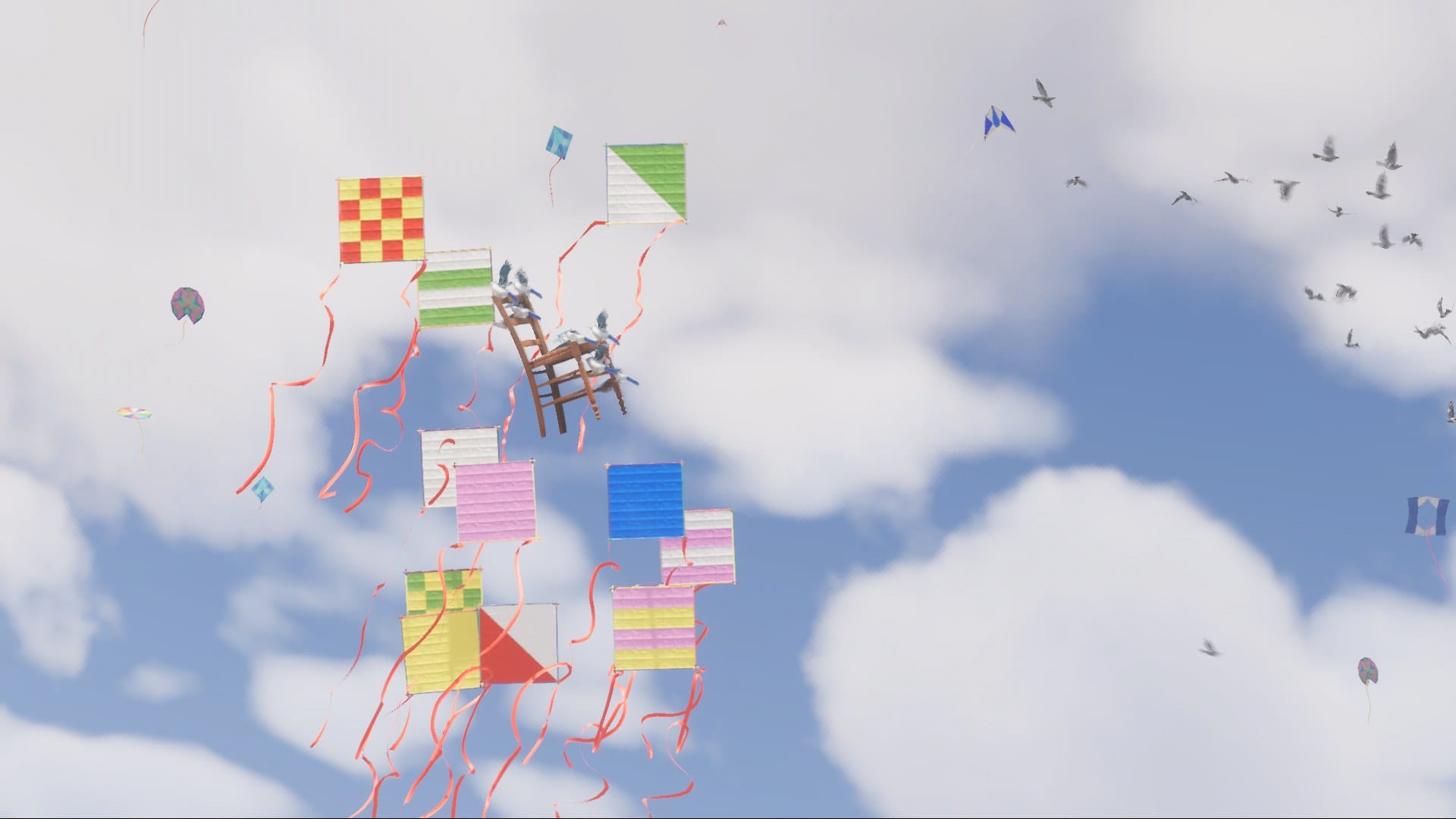
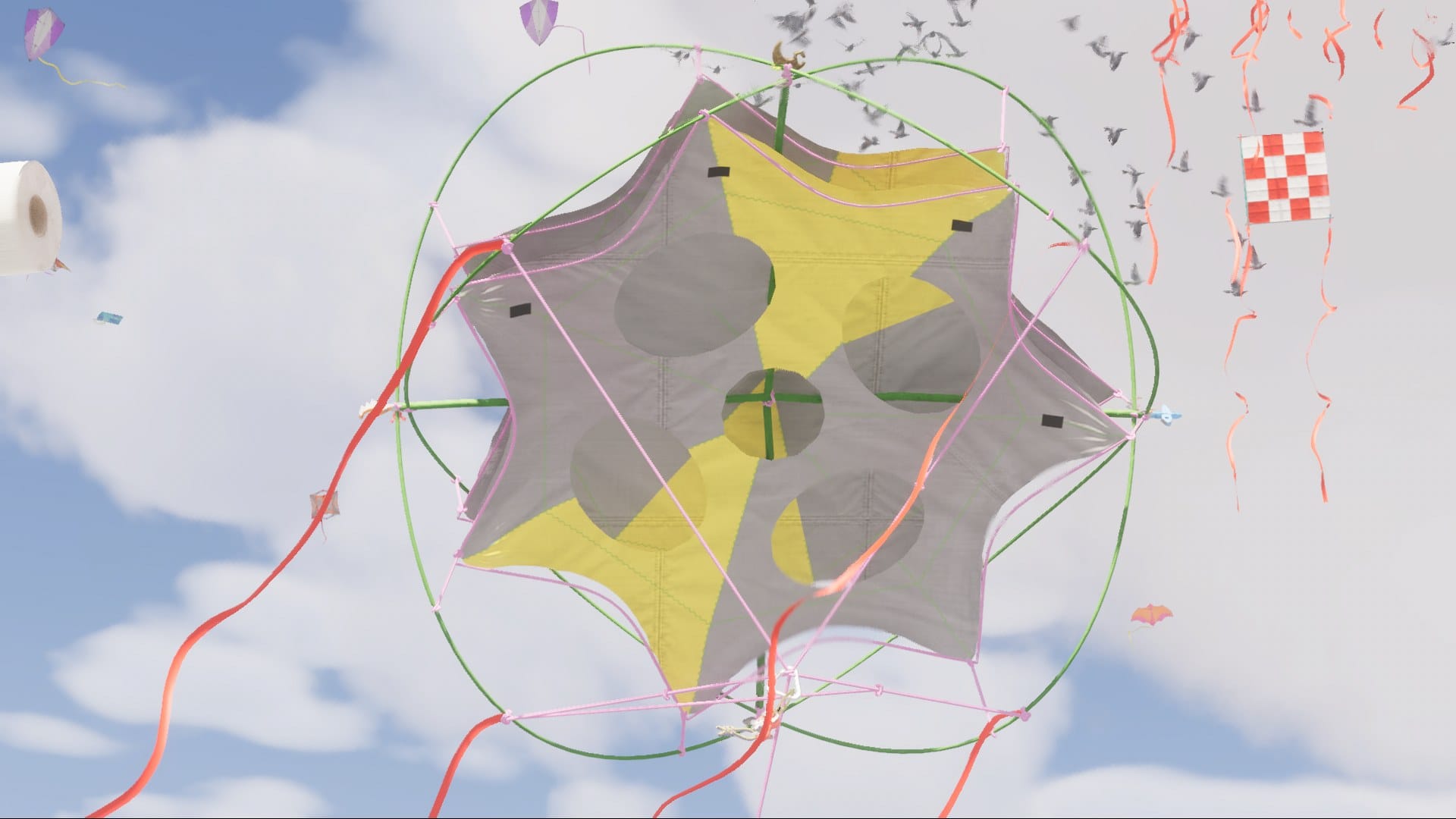
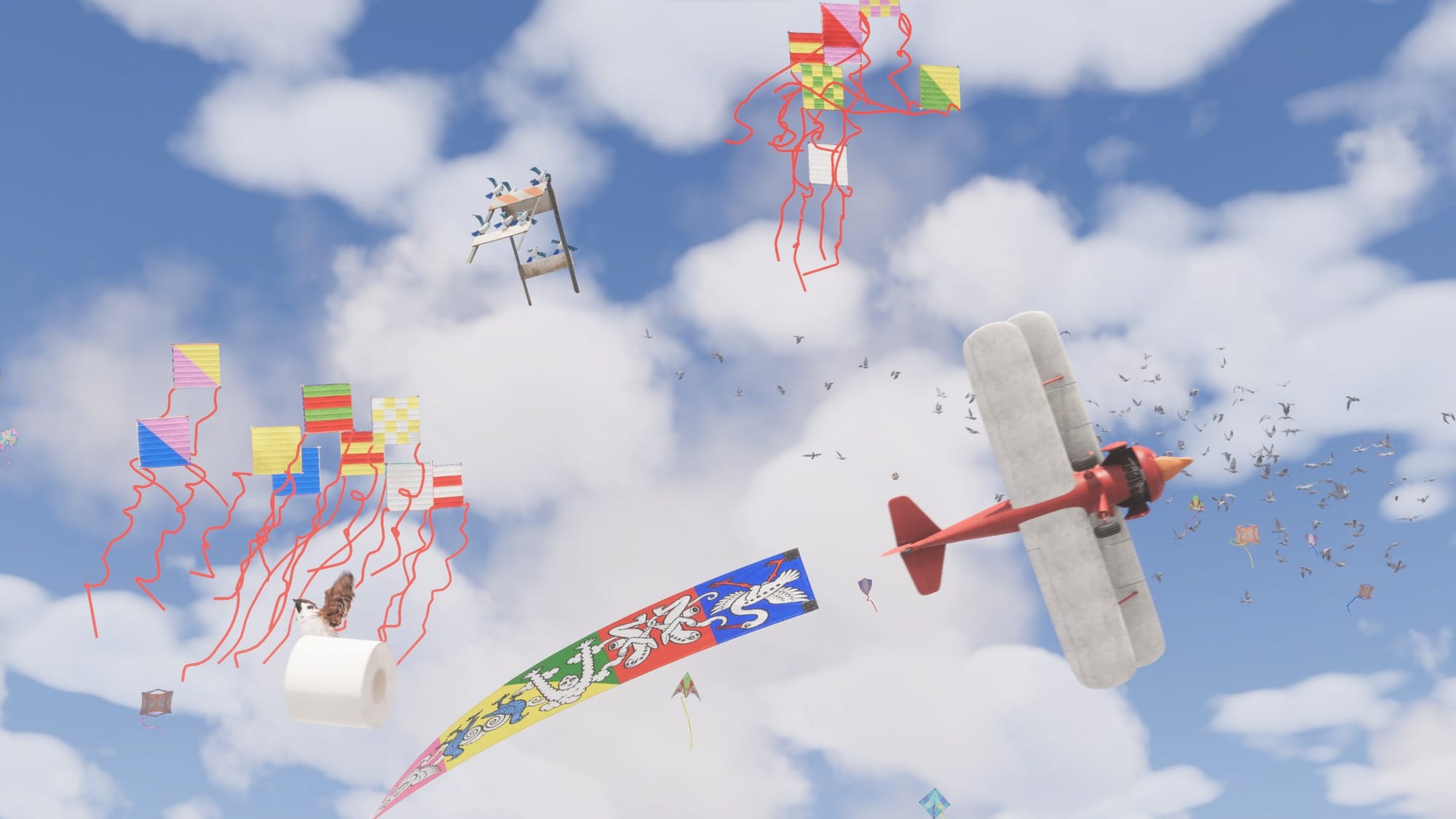
Funny Weather (stills), 2026. Courtesy the artist and The Breeder, Athens.
JW: I'm an avid eBird user, as a birder.
TT: Amazing. The Oracle has its own temperament, which we determine with some really funny poetic calculations, like the ratio of bird sightings to airplanes that day. Each act lasts three to five minutes. The Oracle asks a question, throws three tarot cards from a deck we've made, and asks the LLM to draw connections, even if they push the line of what a connection can be. The reading is displayed in very authoritative typography, something between a fortune cookie and an omnipotent AI deciding our fate. Sometimes the in-game weather matches what you see outside, and sometimes the Oracle is pissed and throws a thunderstorm.
The Oracle is a small, relatively dumb local LLM.
JW: And the objects themselves, the kites and characters, are those machine-generated too?
TT: It's a little bit in between. Some of them are procedurally generated, but in a more traditional way. The kites are a procedural generation algorithm that will pick a shape, branch off some sticks, then draw a cloth and stitch it on top of them, so it's not AI-generated in the new sense of the term. But there's also a generative AI image system running in the background, and right now it creates these weird scribble drawings based on the eBird sightings. We give it a general direction and a specific sighting with a location, and ask it to imagine exactly what these birds were seen doing, so it makes these almost four-panel cartoons of birds doing something strange. Then it displays this as a piece of paper that flies through the air, gets slapped on the camera, and leaves again.
And there are a few characters that are almost like Italian brain rot, really weird AI slop characters, like humanoid airplanes making out, and other strange character vignettes. These are pre-generated, though. They are actually hand-3D-modeled and animated, and they interject into the action in strange ways.
Something between a fortune cookie and an omnipotent AI deciding our fate.
JW: So it's a blend of systems. And the Oracle picks its own mood, rather than you setting an emotional valence as the artist?
TT: Yes. The Oracle picks its mood by making these really strange calculations and ratios between the weather, the airplanes, and the birds.
JW: What do you hope people take from it?
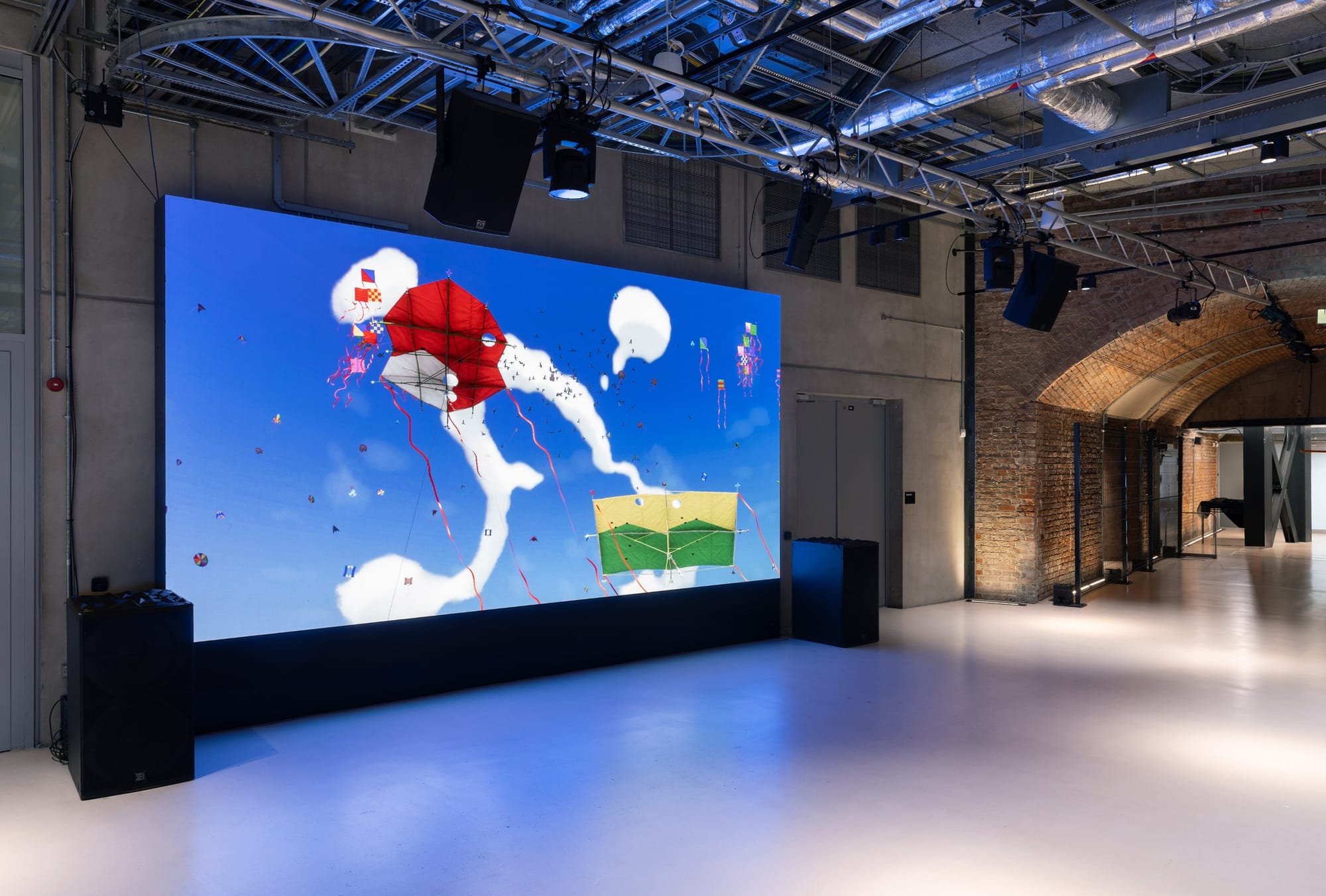
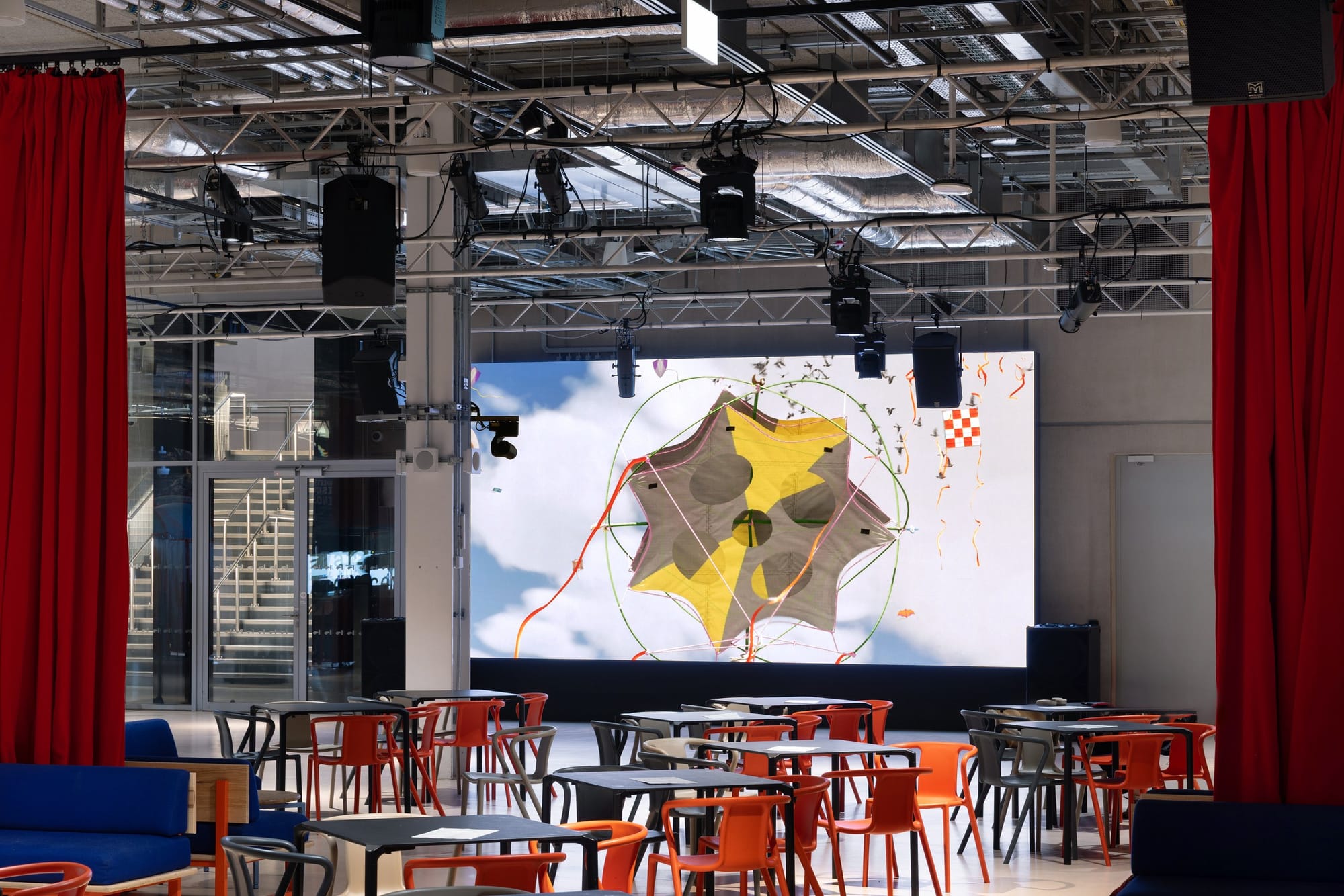
TT: The work is extremely ambient, so I am avoiding white-cube or screening-room presentations. At Factory International, it's on a large LED screen in the lobby, next to a coffee shop and a ticketing office, a place very close to the local community. My hope is that it lives in the background, and occasionally a weird character or a site-specific quote from the Oracle makes people go, "What's going on back there?"
JW: For me, the Los Angeles fires were the moment it felt permanent. Did you have a funny weather moment?
TT: Thankfully, I haven't been directly affected by something that dramatic, though wildfires are frequent in Greece every summer. It didn't start with something dramatic. It started with noticing that every day, the weather isn't what I thought it was supposed to be. Seasons aren't seasoning, and weather isn't weathering. It's always something off.