Doom Is Where the Outsider Art Went
Sean Kennedy's Doom mod arcade at Onassis ONX argues what the art world keeps missing: three decades of modding scenes are where outsider art lives now.


Sean Kennedy’s start in curating was sparked by crashing someone else’s. At an early Outland Game Night at Onassis ONX, a new, casual series from Brian Droitcour that aimed to bring the art crowd and the games crowd together, Kennedy took matters into his own hands.
He was talking up Terminal 64, the operatic approach to Super Mario 64, and wished it were on display. So he simply tabbed out of the game that was running, downloaded it onto the house computer and switched it on himself. "Renegade curation," he calls it. (He has apologized many times.) But asking for forgiveness over permission led Droitcour to ask him to help program a new series.

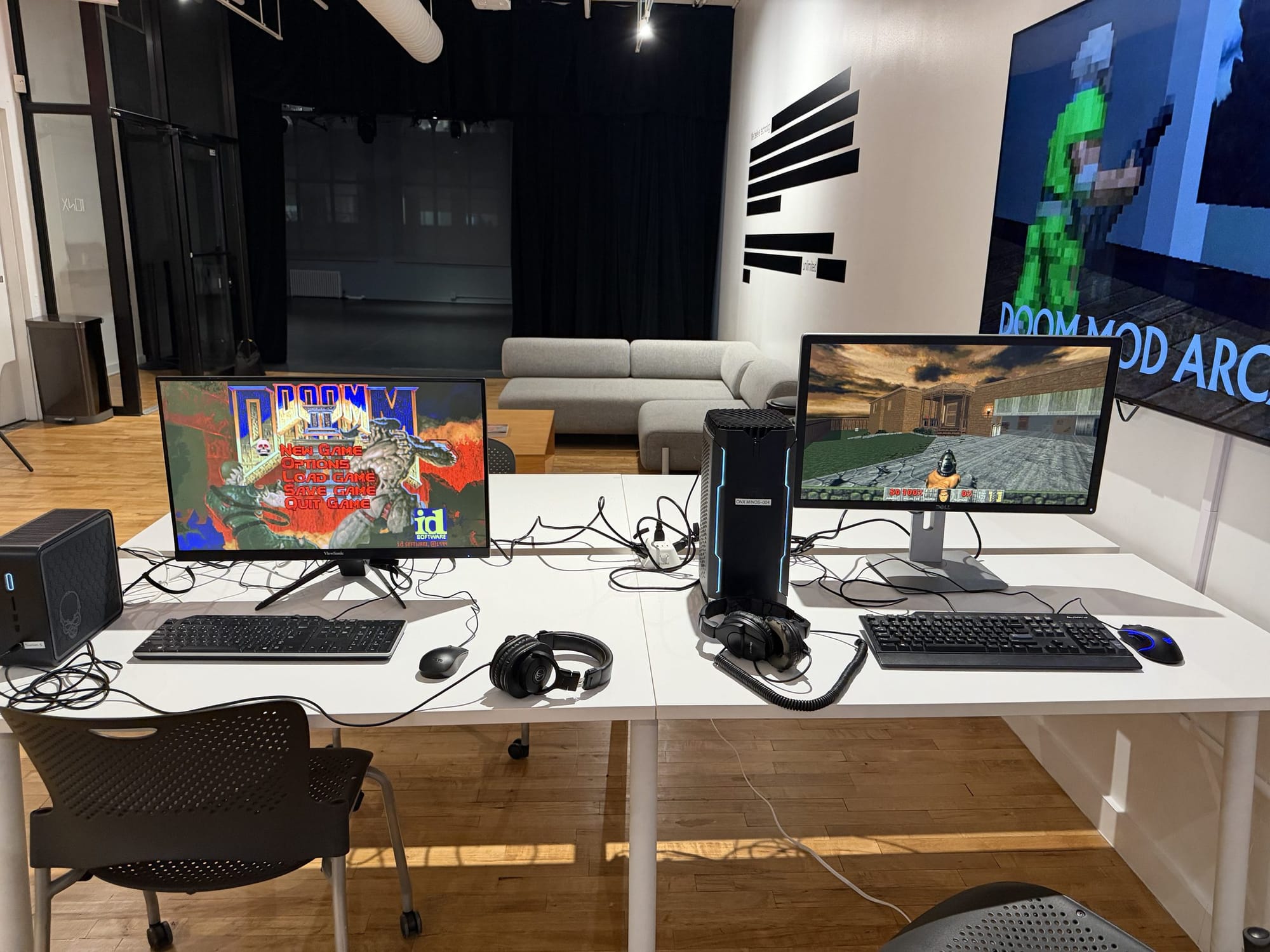
On Nov. 10, the two staged a one-night arcade of Doom II WADs at ONX. WADs (short for “where’s all the data”) are custom files that could be loaded to run original material in Doom, a predecessor to user-generated content that would become popular 20 years later. The practice inspired a generation of modders worldwide to experiment with the same material that created one of the most popular games of all time. However, Kennedy asked a different question from the one modders usually ask. The question was no longer what the best possible Doom is. It was what Doom can be. "You port this thing over to a different scene, and we're doing the exact same discursive thing that art is all about," Kennedy says.
"If you want to find outsider art in the world as it exists today, you can find it in videogame modding scenes," he says. The markers are all there. It’s hermetically sealed off from the market, in part because there is no way to make money at all. Moreover, it’s a discursive practice where one body of work talks to itself and its adherents. One mod, Knee-Deep in ZDoom, added “modern” features like jumping and looking up and down, since the original featured none, and it split the community. A later mod, Knee Deep in Knee Deep in ZDoom, mocked it. Kennedy compares it to a Duchamp joke. "Videogame communities are salons," he says.
Knee-Deep in ZDoom by the KDIZD Team (2007). Footage: Guineu Trapella on YouTube
Part of what makes Doom a good salon is that everyone already speaks its language. We spent the past era of games chasing new mechanics, but as that period is winding down, reimagining what could have been is the vanguard. (Look no further than the best-selling Grand Theft Auto franchise, which has changed almost nothing, save adding swimming, to its toolkit.) Now, much of the most interesting work looks backward, putting old forms in new contexts. With Doom, you don't have to teach anyone that this is a conceptual space. Kennedy compares it to pop art working with Marilyn Monroe. "My parents know what Doom is," he says, "and they do not play video games."
"You port this thing over to a different scene, and we're doing the exact same discursive thing that art is all about."
That shared language makes space for subversion. myHouse.wad, released anonymously in 2023 under the name Veddge, adapts House of Leaves and became the most famous Doom mod ever made. Because it was released amid the Backrooms fervor and drew some of the biggest streamers in the world, it also pulled a new, younger wave of modders who were interested in internet horror. Kennedy tapped it for the show, and although a full run takes over an hour, which is too long for a gallery, he says five or 10 minutes is enough to feel the house start to change. Windows appear where there were none. A door opens the wrong way. Two rooms are stacked on top of each other, which the engine isn't supposed to allow.
myHouse.wad by Veddge (2023). Footage: pagb666 on YouTube
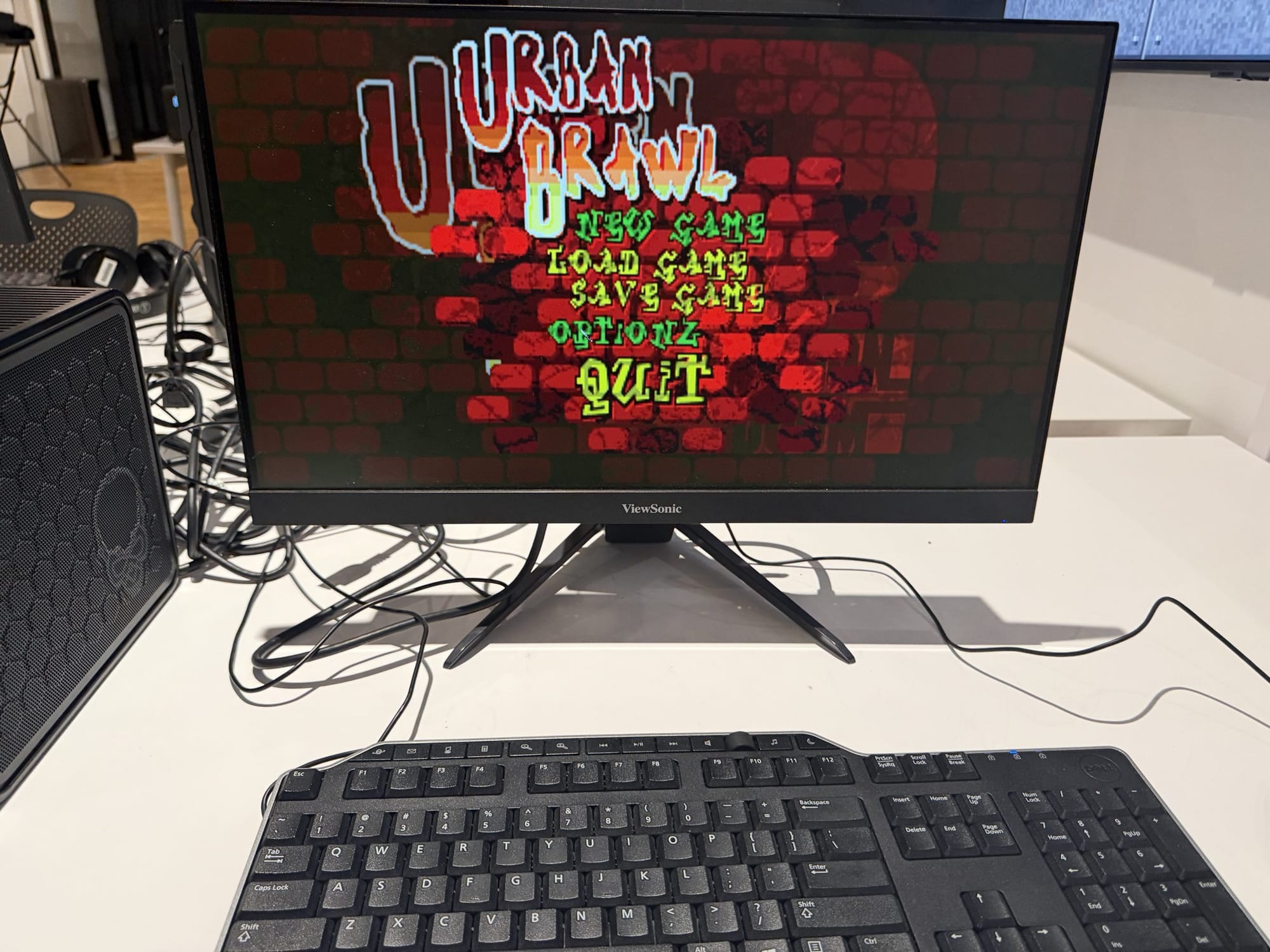
Another table was set up for mods experimenting with genre inversion: Action Doom 2: Urban Brawl, a beat 'em up, and JP LeBreton's Mr. Friendly, which turns the demons' hell into something closer to Animal Crossing.
"If you want to find outsider art in the world as it exists today, you can find it in videogame modding scenes."
Across the 10 games, what is on display is the top of a pyramid of accreted folk knowledge, spread across decades of Doomworld forum posts and held by a handful of veterans. Kennedy credits his co-panelist Ray Kelley, a 20-year veteran of the scene, as the source of almost everything he knows. So Kennedy, who’s now fielding requests from other spaces to build out the night’s concept, is bridging the gap between what is known and what could be shown. The technical considerations are non-trivial as well. A mod might need one specific source port and compatibility layer to run at all. "I did all the work for you," Kennedy says.
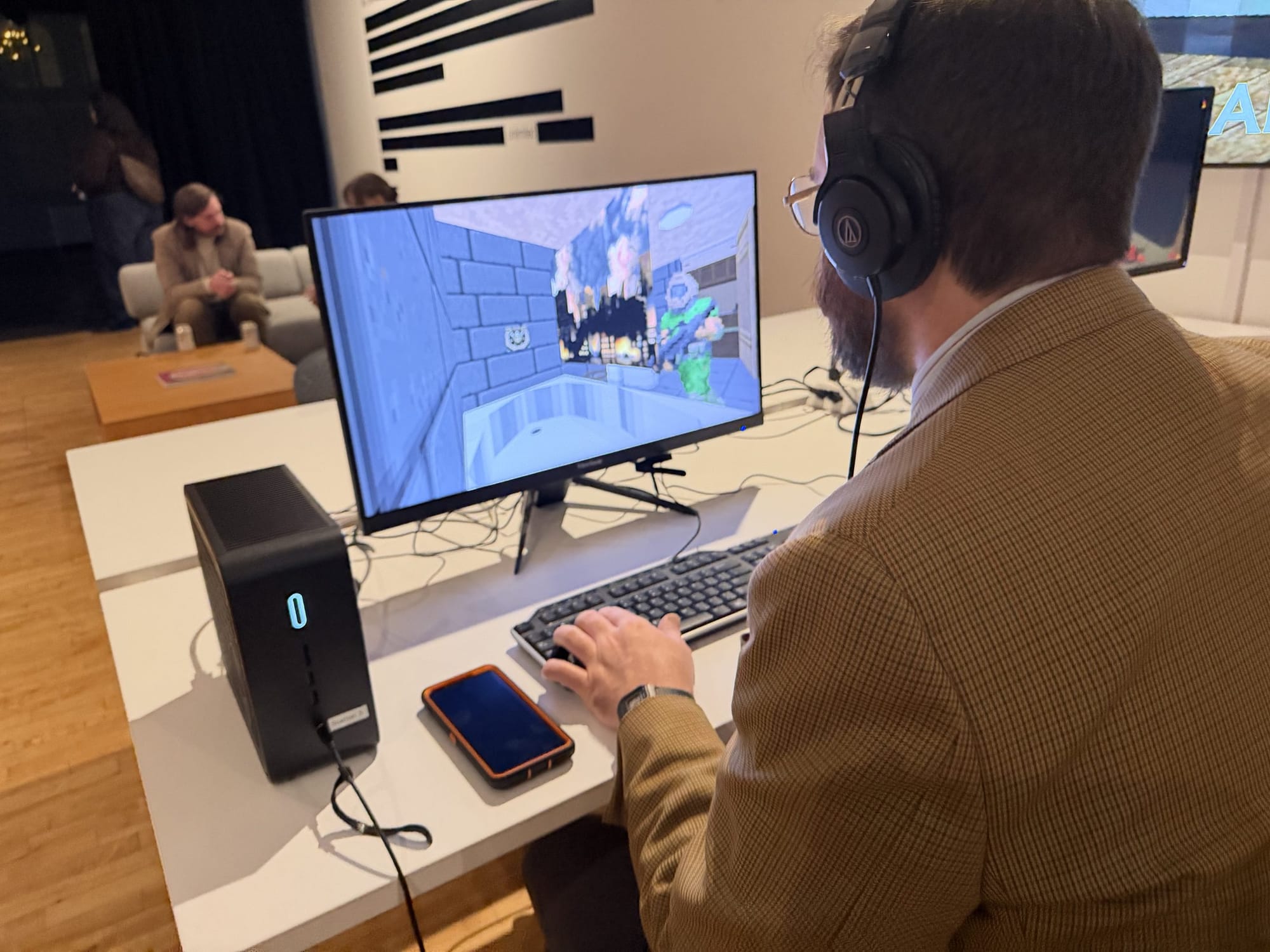
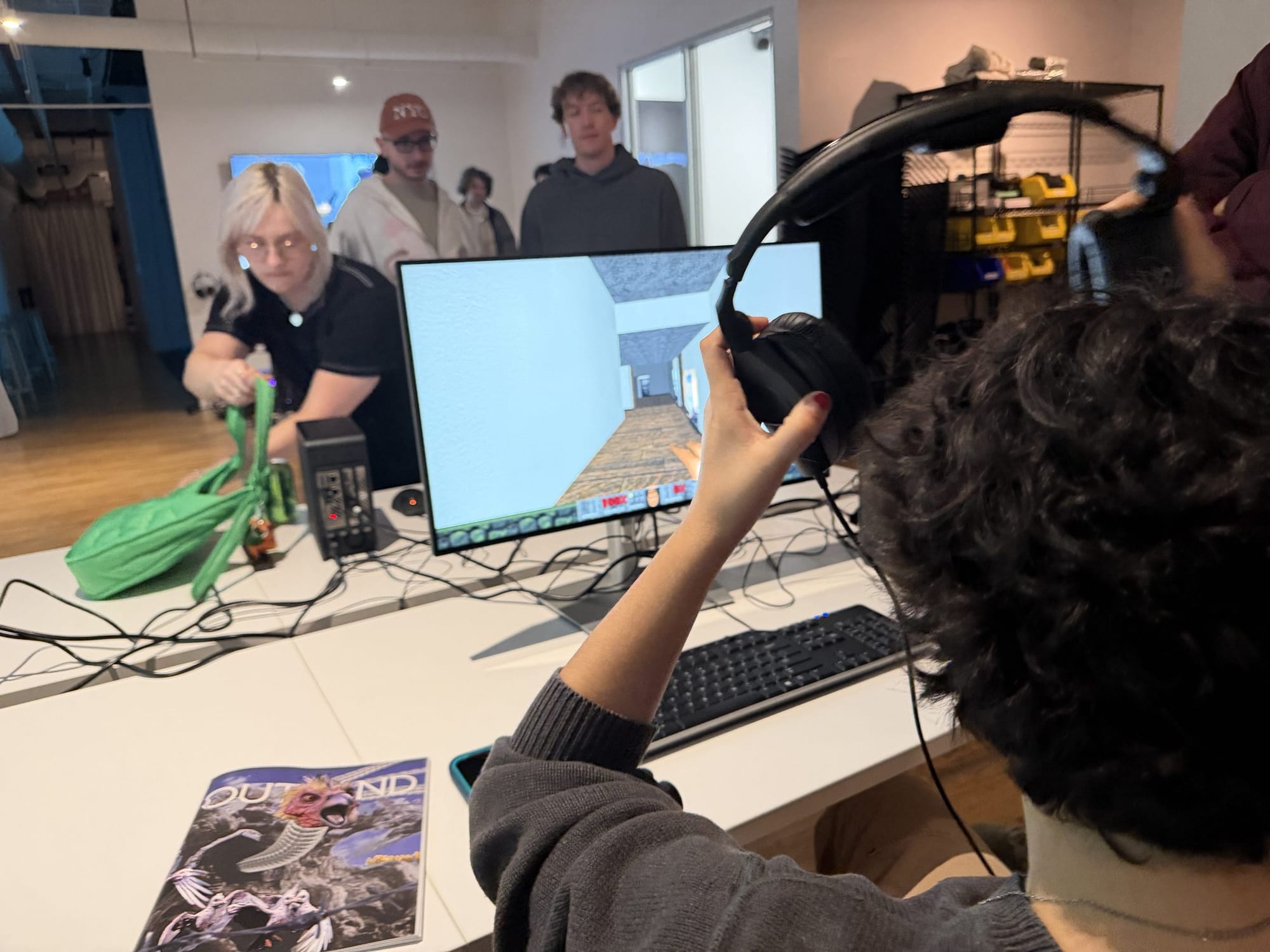
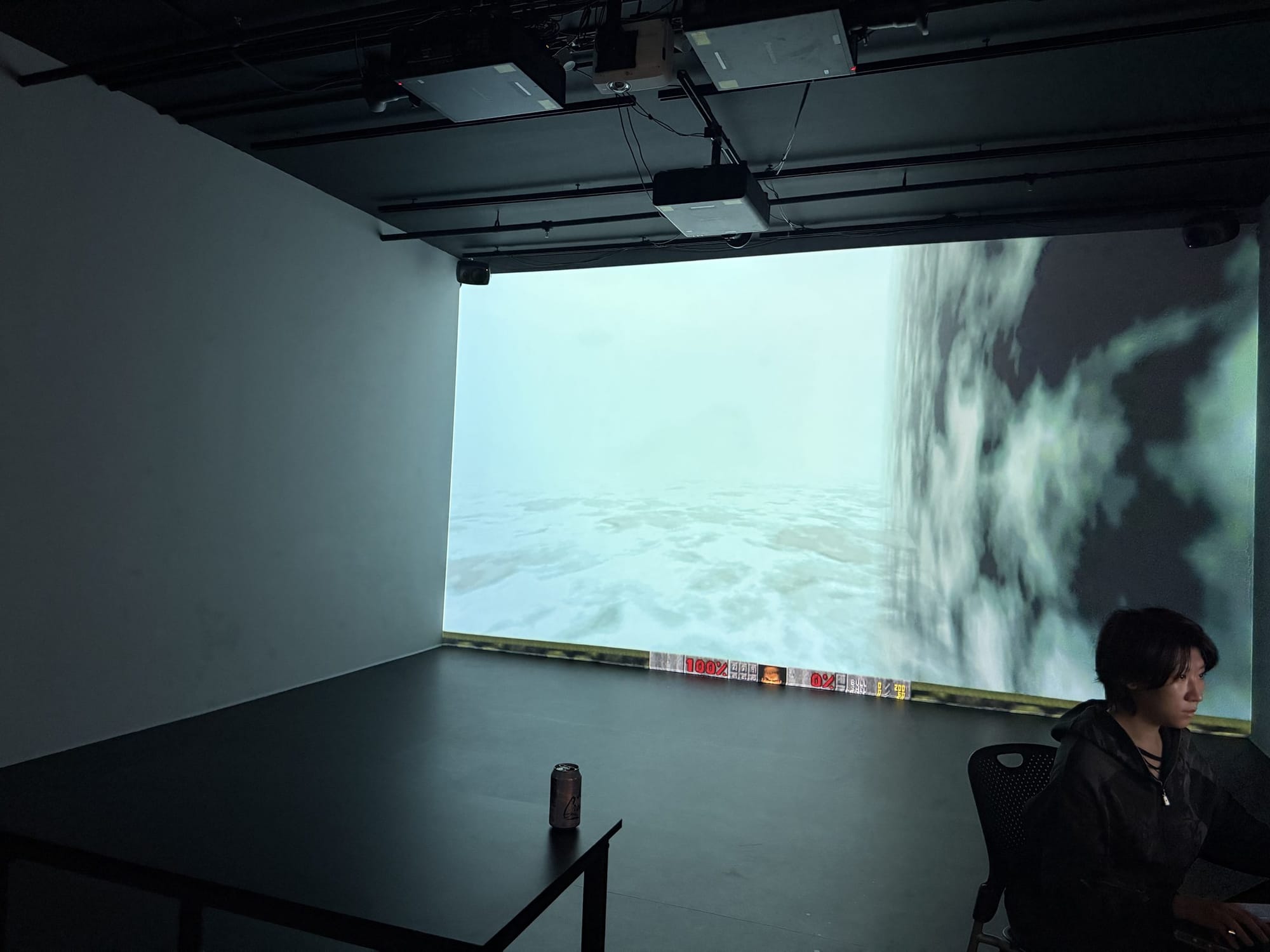
The Doom Mod Arcade at Onassis ONX, Nov. 10, 2026. Photos courtesy Sean Kennedy
ArsDoom by Orhan Kipcak (1995). Footage: Mathias Jansson on YouTube
Funnily enough, the gallery is also one of Doom's oldest ideas, pointing to an alternate history where mods, or more broadly games, entered the white cube through the front door. Orhan Kipcak's ArsDoom turned Ars Electronica into a level in 1995, two years after the game came out, but didn’t spark a deeper engagement from cultural institutions. Chariot Rider's The Doom Gallery asks what a museum in hell would hang. "How is that not something that has been done more?" Kennedy asks. "That seems so obvious to me."
The Doom Gallery by Chariot Rider. Footage: the release trailer