A dice-roll gamebook holds Cuba's Axie Infinity collapse
Nestor Siré and Steffen Köhn compress years of fieldwork among players, sponsors and hackers into numbered sections and multiple endings.

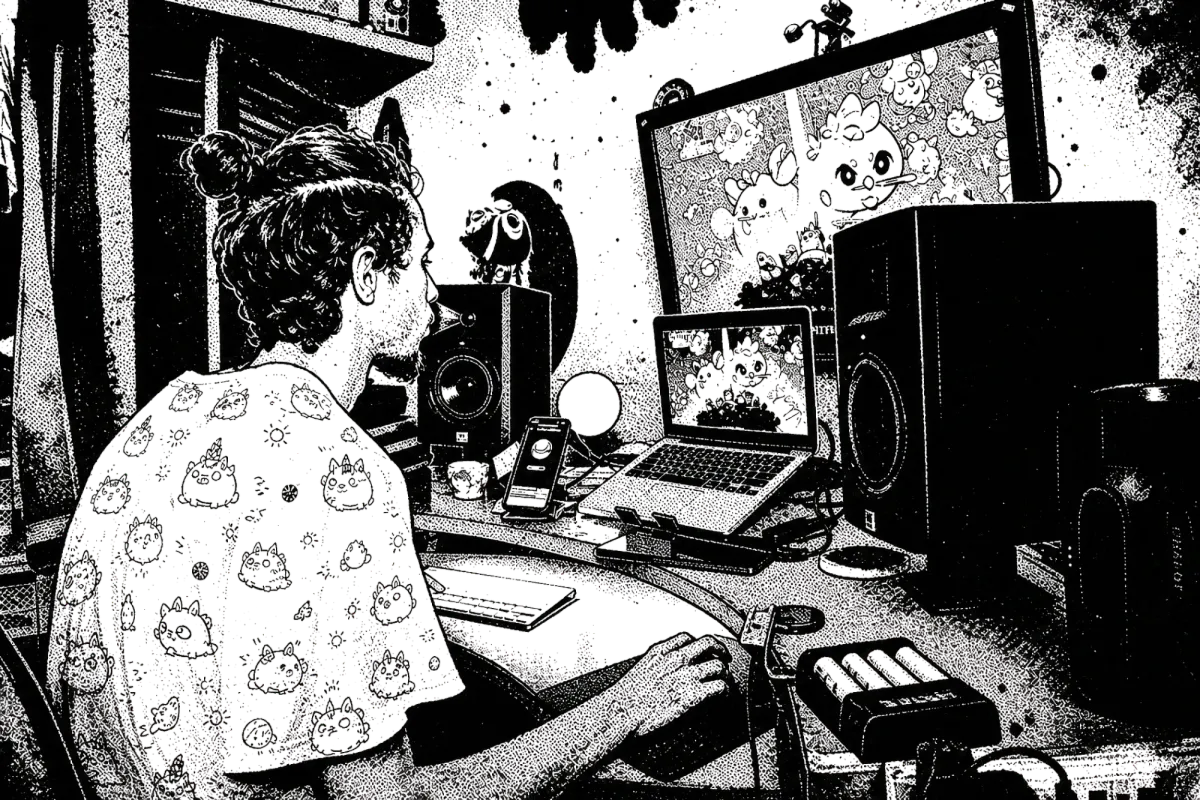
Grinding Choices, from Cuban artist Nestor Siré and anthropologist Steffen Köhn, is a solo adventure gamebook in the 1990s mold—numbered sections, branching decisions, dice rolls, multiple endings—and every one of those endings is something that actually happened to somebody.
The work condenses several years of fieldwork on Axie Infinity's play-to-earn scam economy in Cuba, where the Vietnamese-made crypto game briefly became a real income during the island's inflation crisis, then collapsed. Siré and Köhn built it from long-term participant observation and interviews with players, sponsors, hackers, brokers and their families, and showed it last week at [untitled games event], the experimental games night hosted at the Rijksakademie in Amsterdam.
Getting into Axie took upfront capital most Cubans didn't have, so many played under "scholarship" arrangements—a manager stakes you, then takes a cut— which is to say, a contract with branching clauses and house odds. The same fieldwork surfaced this year in Economic Anthropology as "Virtual Pets, Real Precarity," which names the result speculative labor. The gamebook makes you hold the character sheet while the dice name it for you.
This is a long project for the pair, who have spent years documenting the infrastructure Cubans improvise when the official kind fails them— heir book Handmade Networks covers the hand-made media economy of El Paquete—and Siré brought Paketown, a game about that same network made with one of the island's first independent game studios, to the same weekender. Killscreen has been watching this scene longer than the crypto cycle: we visited Cuba's first indie game in 2016, and admired the hidden architecture of Choose Your Own Adventure branches long before an ethnography moved into one.
Killscreen files stories on the games nobody else covers — a dice-roll ethnography included. Radar, our free newsletter, brings three of them a week.