When you can no longer close the club, you build one
Sobriety and injury cost Ambrose Trataris the nightclub, so they rebuilt it inside VRChat, then staged it as a dance work where one body puppets another.


If you’ve had the misfortune of not quite having enough cable, you may have been tempted to cross one power strip over another. Any DIY arcade maker knows this well, and you hope the entire arrangement doesn’t become a fire hazard. But artist Ambrose Trataris pointed me to a different understanding while making their new work, which premiered at Gray Area in San Francisco on Aug. 29. “In the queer community, resources are daisy-chained,” they say. “It’s something we’re always creating, these life graphs for each other.” The other side of that is the “star connection”: a clean line straight to the source of power.
Daisy-Chain<><><>Star-Connection is a 45-minute hybrid dance work grounded in that asymmetry, reading like a laundry list of Trataris’ interests: contemporary choreography, drag, motion capture, live VR, seven musicians, holographic projection. The timeline was three years, deliberately, after an earlier performance left them racing to fix the software underneath. It’s an enduring challenge to have wide-ranging interests while trying not to make the work “overwrought.”
Trataris is part of a set of performers experimenting with living and breathing in online spaces while presenting themselves to others. Kevin Peter He has been constructing physical armatures for his live performances, coming off the back of his Lincoln Center Collider fellowship. Letta Shtohryn’s Чули? Чули / Chuly? Chuly starts from a cave thick with urban legend before moving to motion capture onstage. In all, there’s so much possibility to blend the impermanence of live physical performance with the flexible features of game worlds.
The work started with Trataris’ reflections on their experiences with nightlife, which had been a welcome stability. But life changes, and we grow older, and we lose the ability to do what we once could. To wit, Trataris is sober now, has had a number of injuries, and their relationship to those rooms has changed. “I just don’t have the same ability to sustain my presence inside of a nightclub the way that I used to,” they say. “There’s a grief that has happened, where I feel displaced by the spaces that are supposed to be nurturing myself and my community,” they tell me.
But not all was lost. They found the world of VRChat, and found the room again in virtual reality. VRChat is not a tool they picked up; it’s an artist’s studio, as Trataris notes; their practice has never really been a studio one. It’s site-specific with a tool of the moment, the same as their drag and performance work has always been. And on VRChat, the range of experiences is so vast that it’s an exciting place to find oneself over and over again. They take part in various trans-focused nightclubs and support groups. “Without it the work doesn’t exist,” they say.
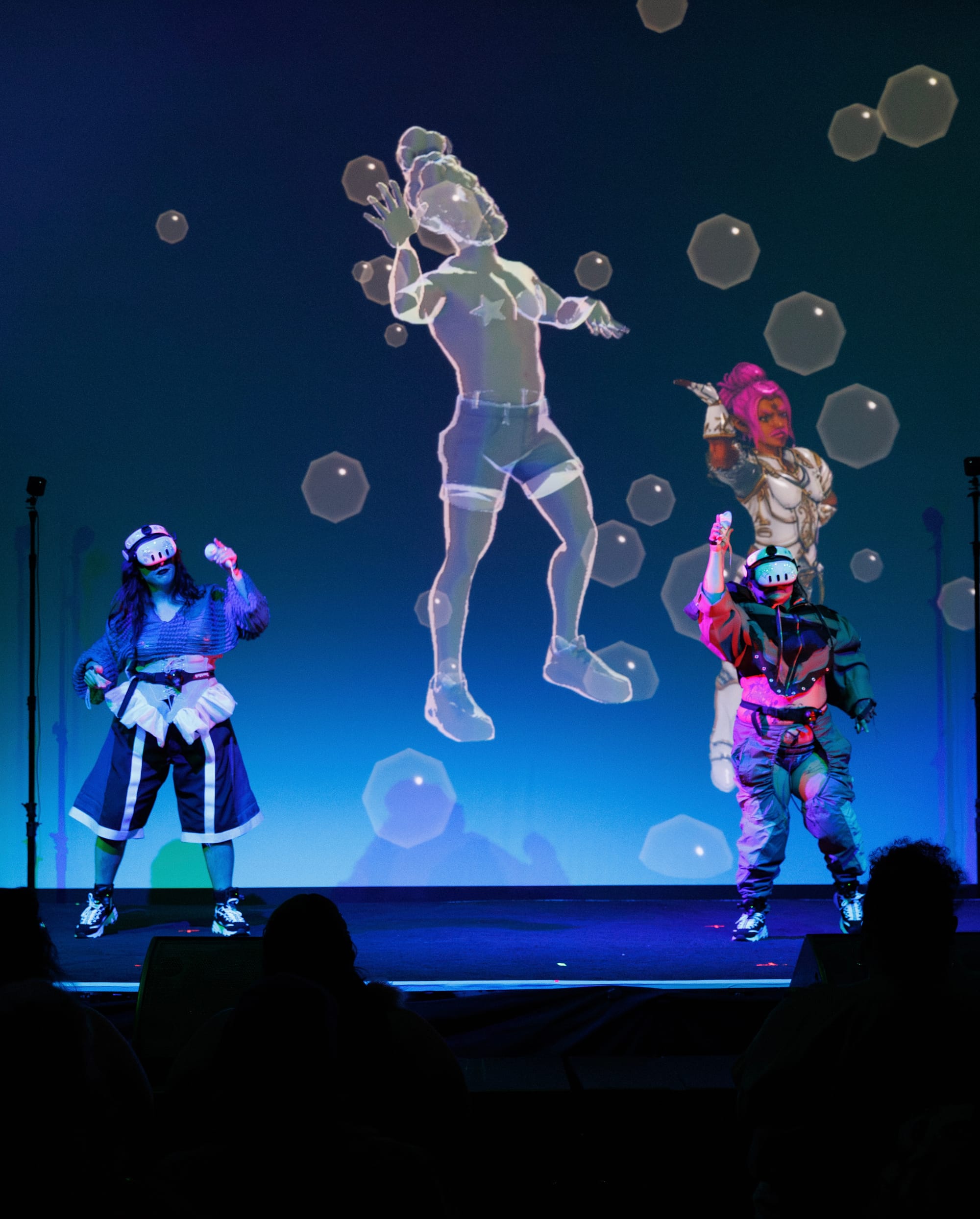
The experimentation with bodily type pulls heavily from Trataris’ experiences as a drag performer: getting into drag is a physical negotiation—“stuffing, shoving, augmenting, cinching, going somewhat numb in order to enter the new skin.” But once you’re in, “you’re locked in,” they say, and the character feeds you. It’s a key development and a twist: an avatar gives the same charge of transformation with none of the cost, and the absurdity scales accordingly. “I really spent a whole night as a cookie,” they say. “Physically, a cookie that was on the ground. I could move around, and I could hear and listen to everything, and I could see everything, but no one knew I was there.” Another night they found an entire world made of Space Jam DVDs and became one. “I try to bring that absurdity back into real life as much as possible through drag, but I am limited physically by reality.”
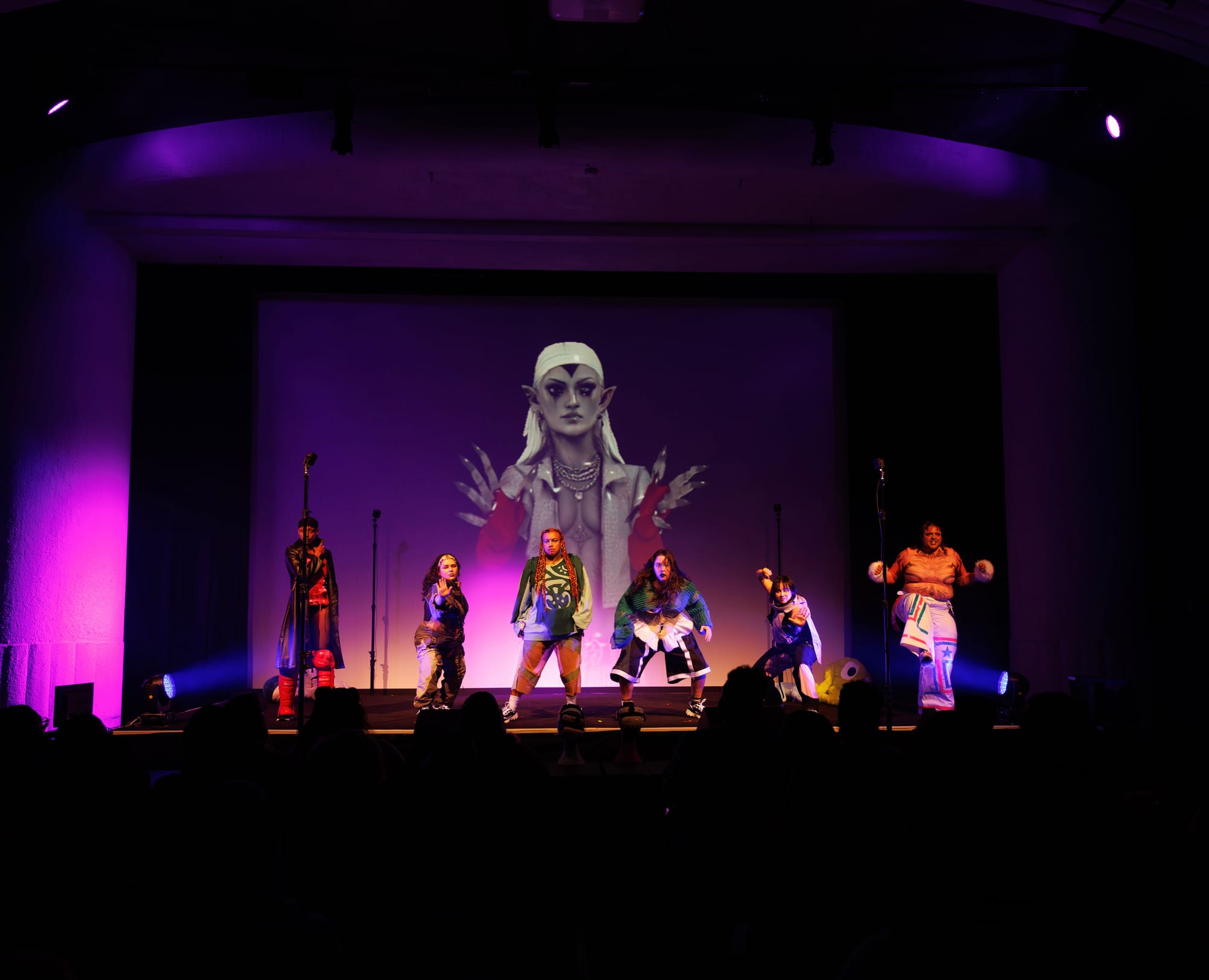
Daisy-Chain<><><>Star-Connection opens at a club, with two go-go dancers standing behind matching holographic avatar projections on screen. Two more dancers arrive, then spin through different bodies, trying on avatars one at a time like a department store and gesturing at what works and what doesn’t. Then Trataris appears, a humanoid rabbit that blends live costume and avatar performance, and detonates the room with a hyperpop number that puts everyone to sleep (the only natural way to end a sweaty, ebullient night at a club).
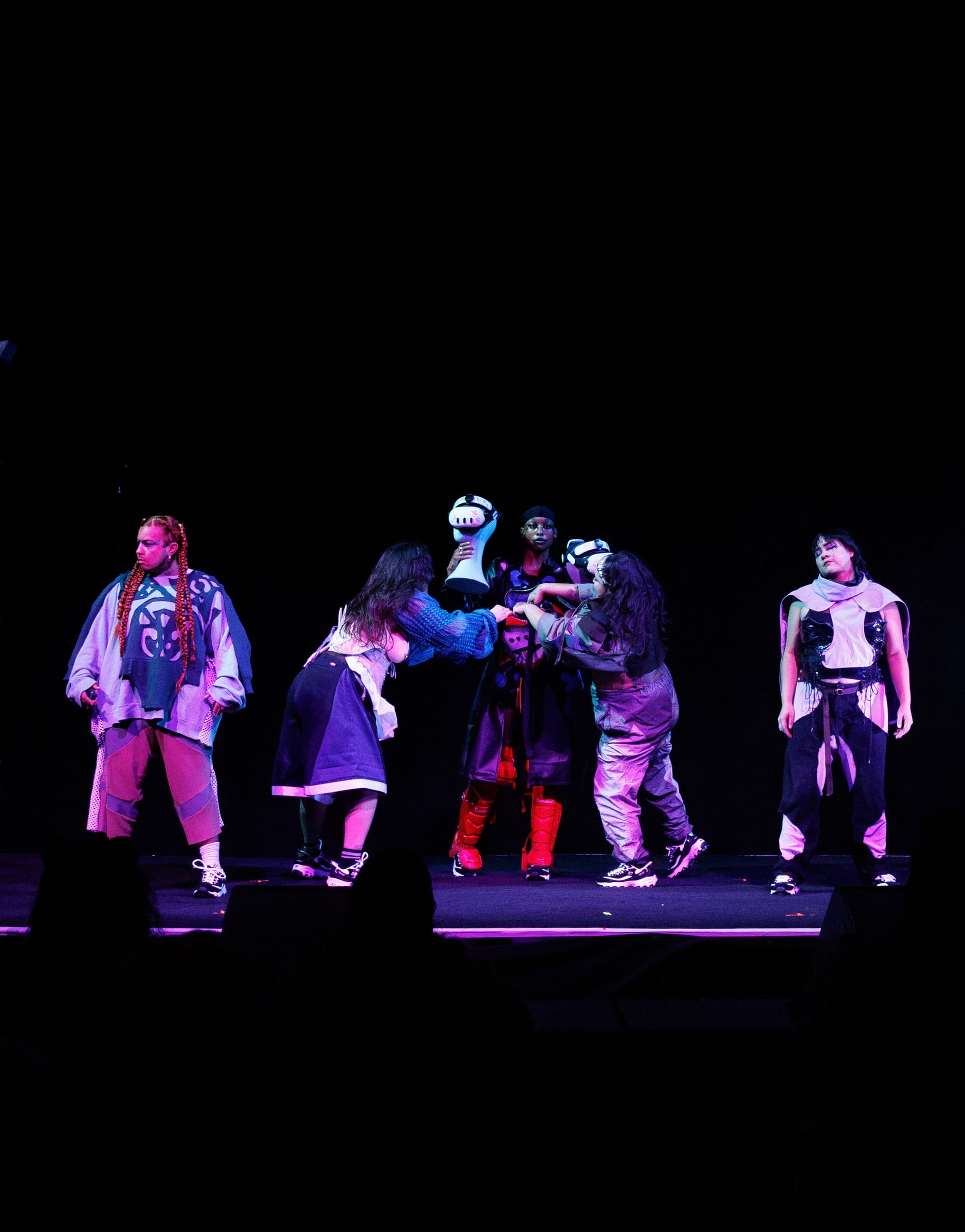
The image Trataris keeps returning to is a chain of control. This was the first time they worked with a choreographer who could teach a dancer, who could teach another dancer. Working with a choreographer allowed Trataris to universalize the experience, both broadening the range of moments and hyperfocusing the performances to capture the lived experiences of those all around them. Onstage, that becomes literal: the avatar on the screen, the person in full VR, and the person controlling that person. “Someone is manipulating the body of someone who is then manipulating the avatar,” they say. The daisy chain is not only how the community shares power. It is how movement travels through a body it doesn’t belong to.
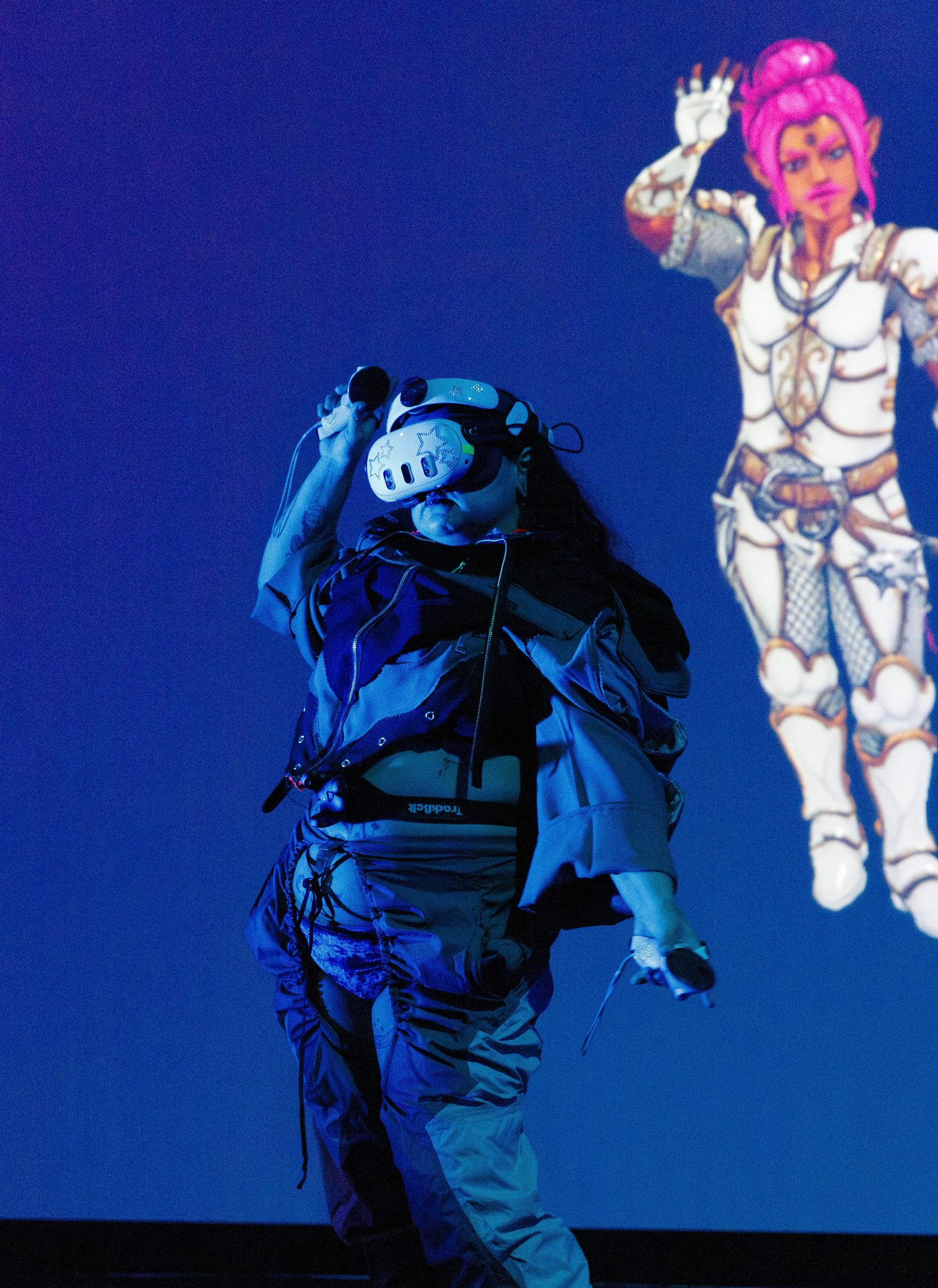
The largest change in how they work is the least visible onstage. For the first time, Trataris is not the central performer in their own piece, as I’ve known them. Trataris pulled in a dramaturg to devise the choreography collaboratively, rather than simply arrive with an idea in hand. It was a liberatory experience to have a collaborator from the contemporary dance world who could connect the work to “other lineages and languages and histories that maybe I don’t have access to.” Previously, they referenced their own movement heavily, but as an ensemble, the material is distributed, with each character drawn from the dancer performing it. As an artist working with dancers of color, Trataris found that decentralizing themselves as protagonist was not a gesture but a requirement of telling the story honestly.
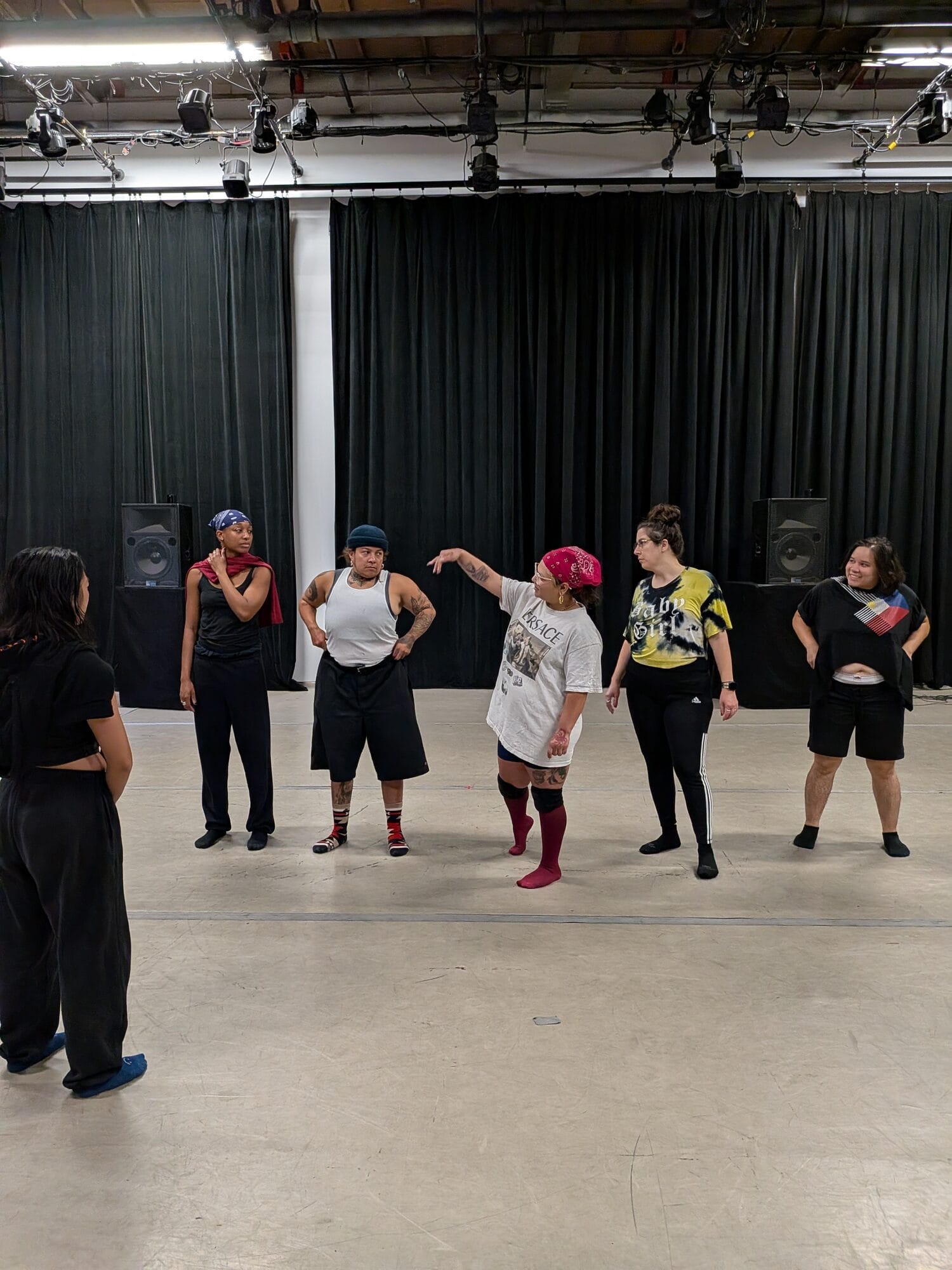
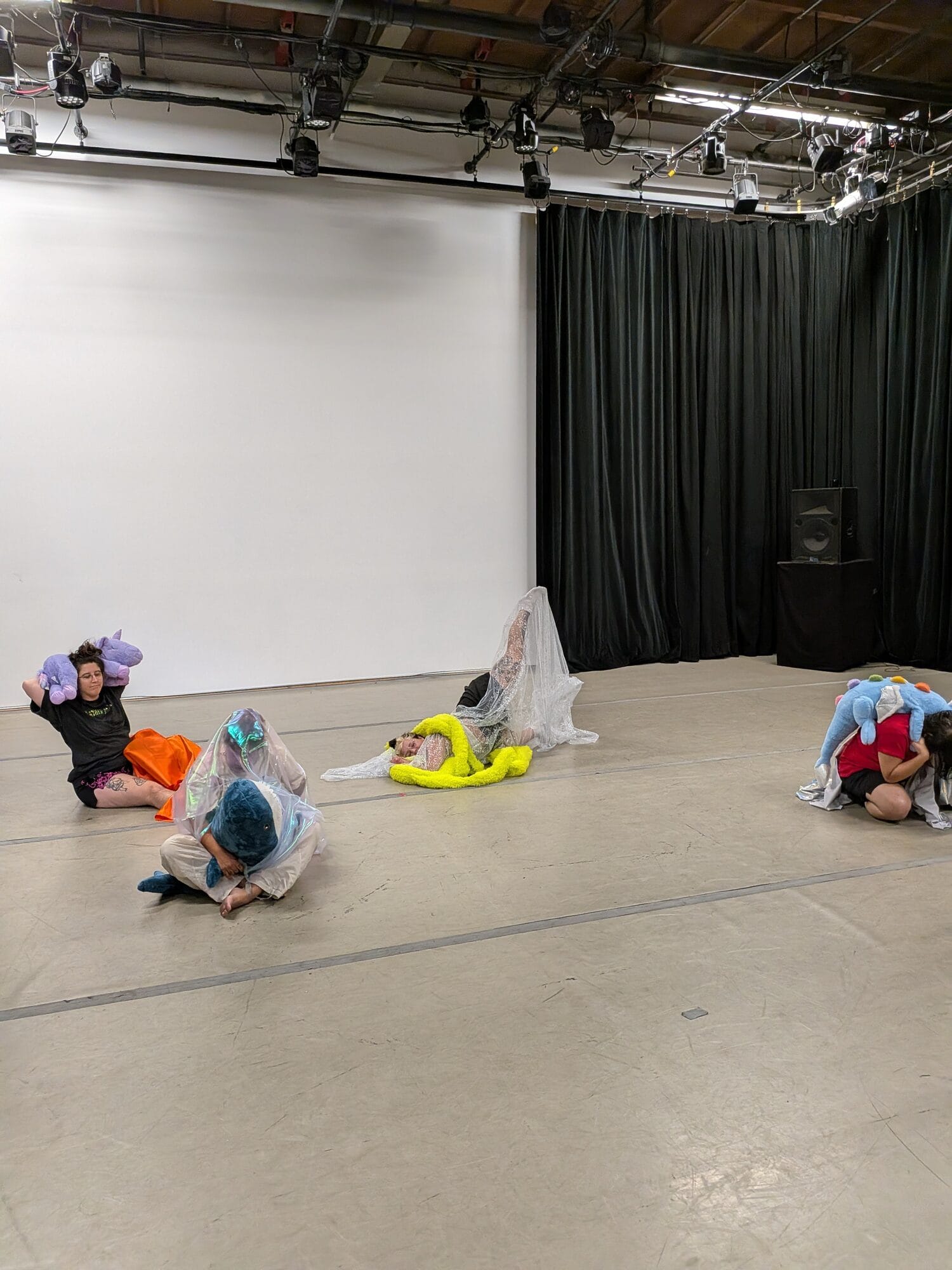
In rehearsal, July 2026. Courtesy of Ambrose Trataris
“What happens when you decentralize your own way of making,” they say, “so that it can create something bigger than yourself, or your own vision?”
What they are chasing on the other side of that question is a feeling they already know. They call it "party-god" immortality—the conviction, real in your rave years, that you cannot and will not die. It stops being true. Video games let you touch it again. The work is figuring out how to hold onto that freedom and endless possibility “without having to destroy your body” to prove you can rise again the next day.
More on bodies and avatars from Killscreen: When the mocap suit drifts, the drift becomes choreography · So It Goes
Killscreen has spent fifteen years on the games that refuse to explain themselves. Once a week, free.