Keiken's Morphogenic Angels Imagines Post-Human Bodies 1,000 Years From Now
Keiken—Isabel Ramos, Hana Omori, and Tanya Cruz—merge performance, film, and game design to build optimistic post-human worlds 1,000 years in the future.

During the pandemic, the work of Keiken—Isabel Ramos, Hana Omori, and Tanya Cruz—came across my radar for their work, Feel My Metaverse. What a quaint word that once was, before Facebook changed its name, Apple shipped weird digital faces on the Vision Pro. When I spoke to Cruz, she was more serene: "There are just certain terms that we really end up resonating with, even if it's only for a specific period of time," she said. "Maybe it's just something that helps us underpin our approach."
Out of that work with virtual bodies has emerged an interdisciplinary practice that spans film, performance, industrial design, and, now, games. Morphogenic Angels Chapter 1 is part of their larger world-building project about our planet 1,000 years from now and beings that have organically reengineered their bodies to become post-human. And unlike many forays into our distant future, Keiken is delightfully optimistic, focusing on what we could be and not what we are not.
In this interview, we talk through their journey to game-making, the challenges of working as a triad, and whether they'll need business cards someday. This conversation was conducted last year as I've been going through some older work to get it out there!
–
Jamin: We spoke four years ago. You were at the beginning of your journey as a group. What would you say has been some of the biggest changes for you all creatively?
Tanya Cruz: When we made Feel My Metaverse, it was after we'd spent maybe three or four years working together already at that point, but we had never really done anything technical or digital. We'd been doing a lot of performances, doing a lot of world-building and writing narratives and things, but we'd never actually had the chance to learn any of the digital skills we wanted to.
We'd been nominated for this exhibition in London, and that was the perfect opportunity to begin learning Unreal. That was a super challenge for us because where do you start, and how do you do anything? So it was a real uphill battle for us. Before, we were just using it for making films or short films, basically, and some XR performances. Now, we've actually dipped our toes into the actual game-making side of it, which has always been a goal of ours.
When we first started collaborating at university, our main interests or goals were to create immersive experiences and explore the nature of consciousness. Keiken means experience in Japanese. So, it's really been at the fundamental core of what we want to do, whether that's in whichever medium we're working in.
But I think over the years, it became more and more obvious that making a game is the perfect situation for us. We always want the audience to be completely immersed in the story, have agency in that world, exist in this shifted reality, and then have this experience they can take back into their own reality.
The willingness to just use the G word—to say game—comes with expectations, right? Did you play with some of the semantic distinctions there between immersive experience, game, and new media art?
Being Keiken means things never really belong to one specific category. We were able to turn our initial demo into a fully formed chapter for the HAU Theatre in Berlin and present it in this context of being in a theater, so it took on this very performative form.
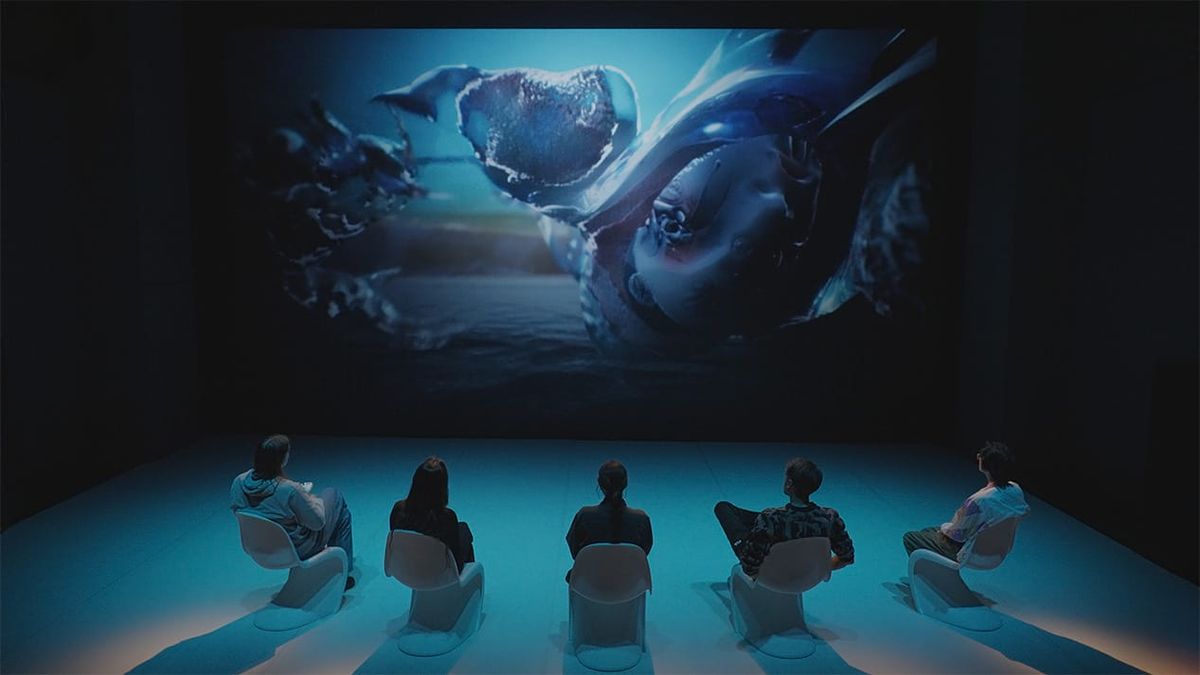
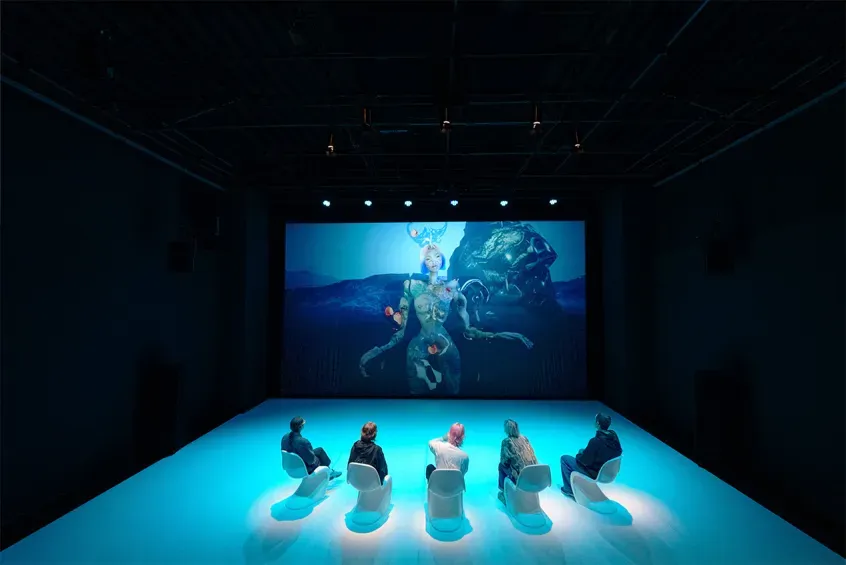
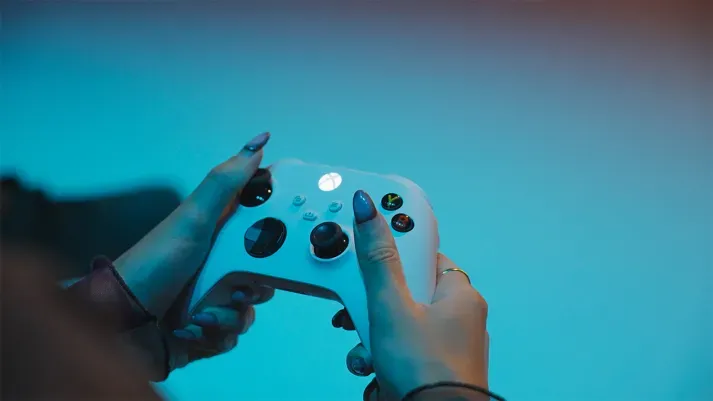
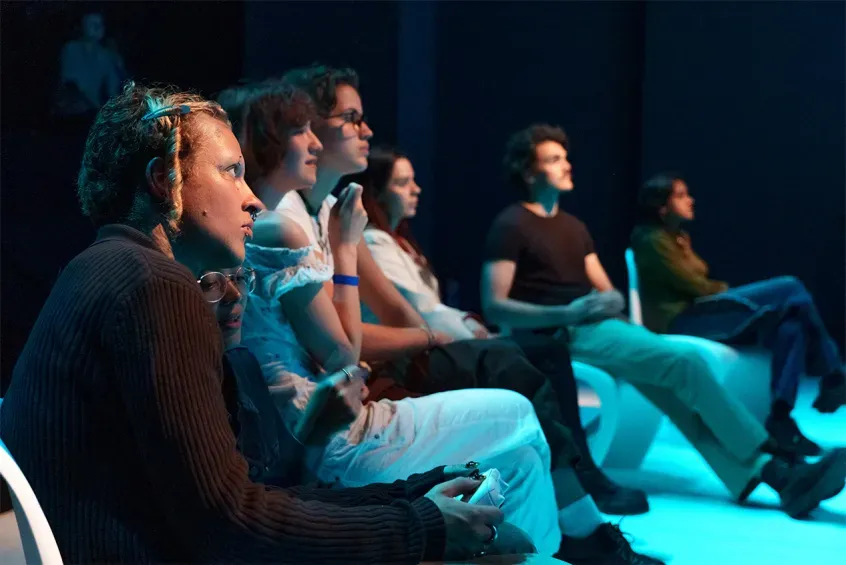
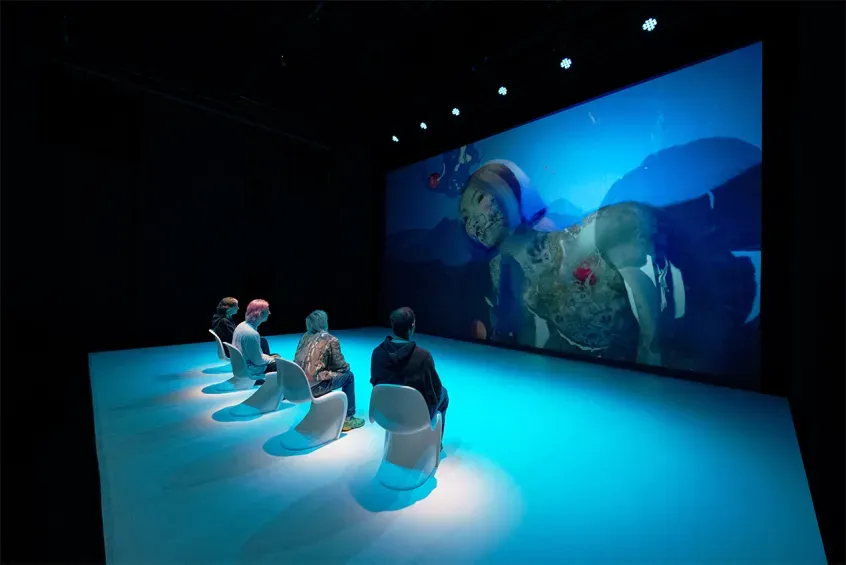
We adapted that version to make it more robust and tangible than in the theater for a gallery context. It became an immersive installation that invites the audience to experience the work in a sensory way. The way the game works is that it can be played as a single-player game, but it can be enjoyed by a wider audience as a cinematic experience. So we spent a long time crafting the narrative to shift between gameplay and cutscenes seamlessly, creating this bridge that can be enjoyed by multiple types of audiences simultaneously.
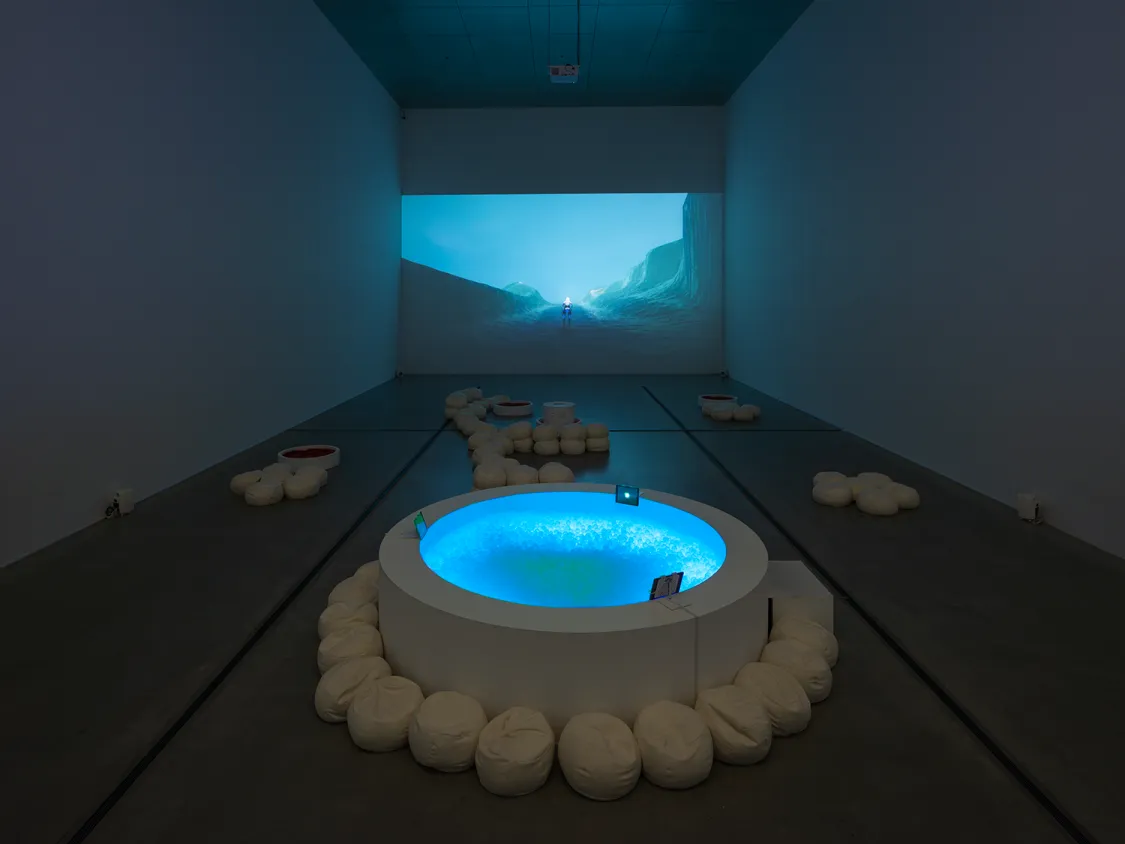
When we presented it at the 21st Century Museum in Japan, we really wanted to make it a very tactile and sensory experience so that the audience tuned in to the narrative itself. There's a ball pit that the audience can sit in. We released some lavender scent into the space every now and then, and there's this big cellular seating structure. We like this very layered experience of the work.
Games in Galleries: Context-Shifting Work
Were there any compromises that you had to make where maybe there were tensions between players, the world that you were attempting to construct, and the on-the-ground realities of having people in a physical space playing said thing?
Instructions! We had to grapple with the fact that we're presenting our game or our art piece in an art context, so that's in museums or galleries, that's in theater spaces where you're going to have a range of different people coming in to experience it, who maybe they've never played a game before.
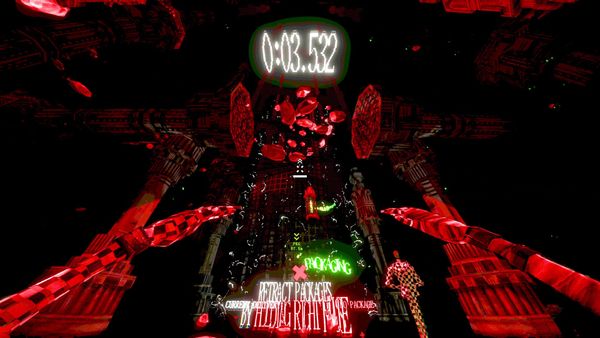
I think what we've tried to do is we've tried to create it so that the aim of the game is challenging, and it has this rope that you have to climb upwards. The player has to utilize their energy mechanics, so they can either expel energy, protect it, connect it, or catch energies of other entities or beings they meet in the game.
So I think it was really a big journey of discovery for us anyway.
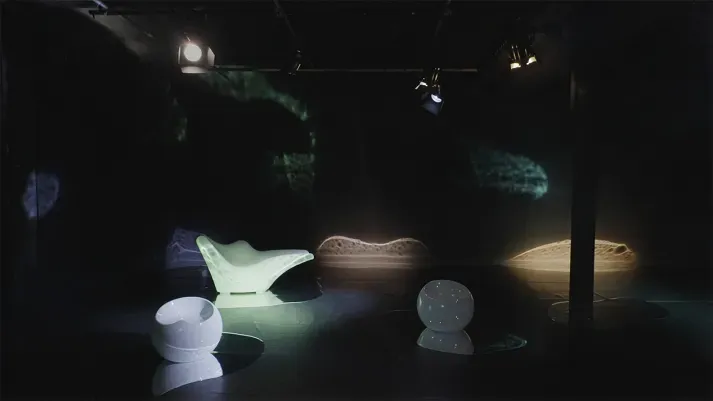
In our last conversation, you brought up the challenges of representing real people. I believe some of your work, the Kylie Jenner beauty work, has some commentary on how we define realness and digital spaces. How has that come along in your practice in terms of how you want to showcase bodies and how bodies move? How has that process been for you, or how's your understanding changed over the last couple of years as you've gone from working with collaborators to more actively sculpting and constructing the bodies that appear in your work?
It's not just this desire to create something realistic. We've always been exploring going beyond the human body, beyond the human sensory experience, to have more compassion for otherness and the unknown and other beings, and just imagining how, in the future, the nature of consciousness in the human body might evolve. So I think we've always had this strong science fiction tether to that idea. And that's really influenced the way that we end up working and creating our own digital bodies.
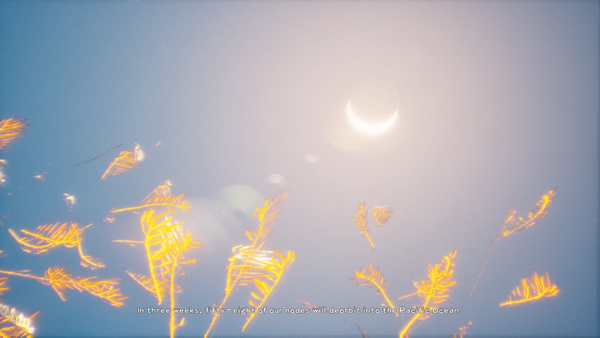
With Morphogenic Angels, within our world-building project, humans are no longer referred to as humans. They're now angels. And that's because they have this morphogenic ability to adapt their bodies, and they can merge their cells with the cells of other beings—animals, other extraterrestrial life forms, and so on. They are able to expand their possibilities of what it means to be human.
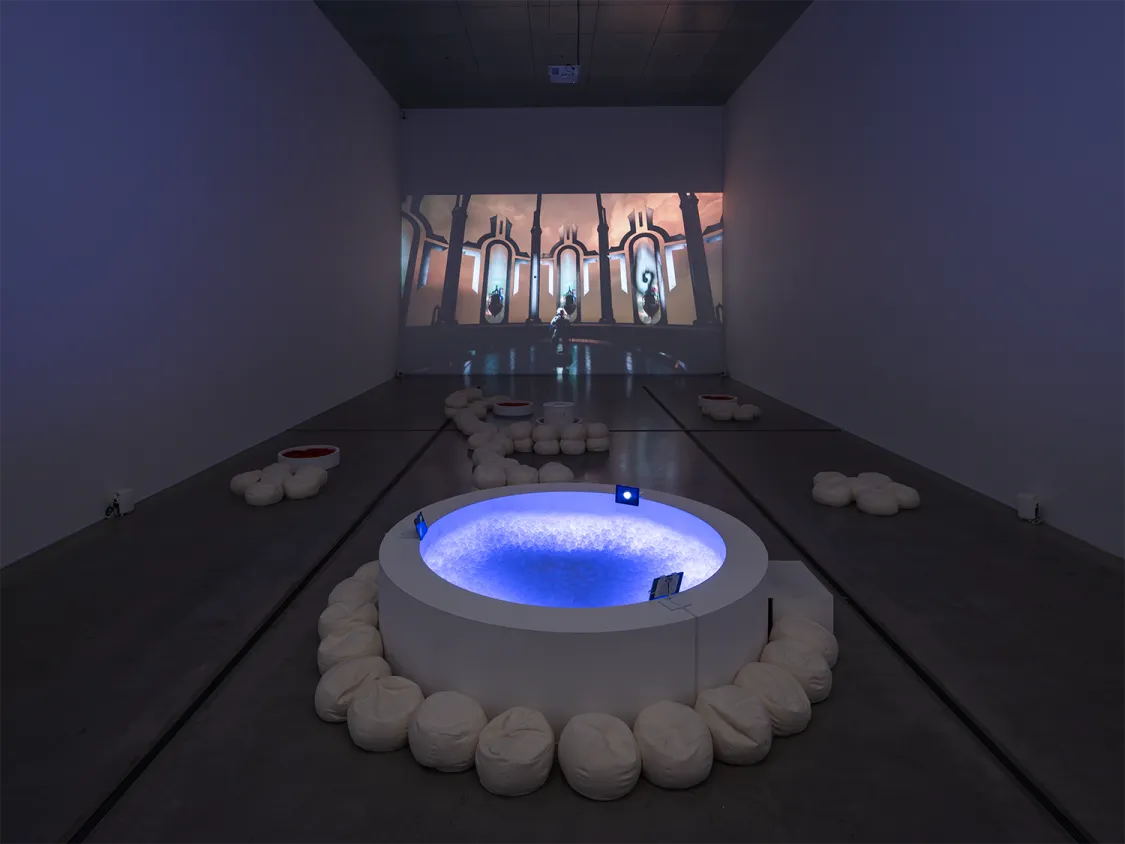
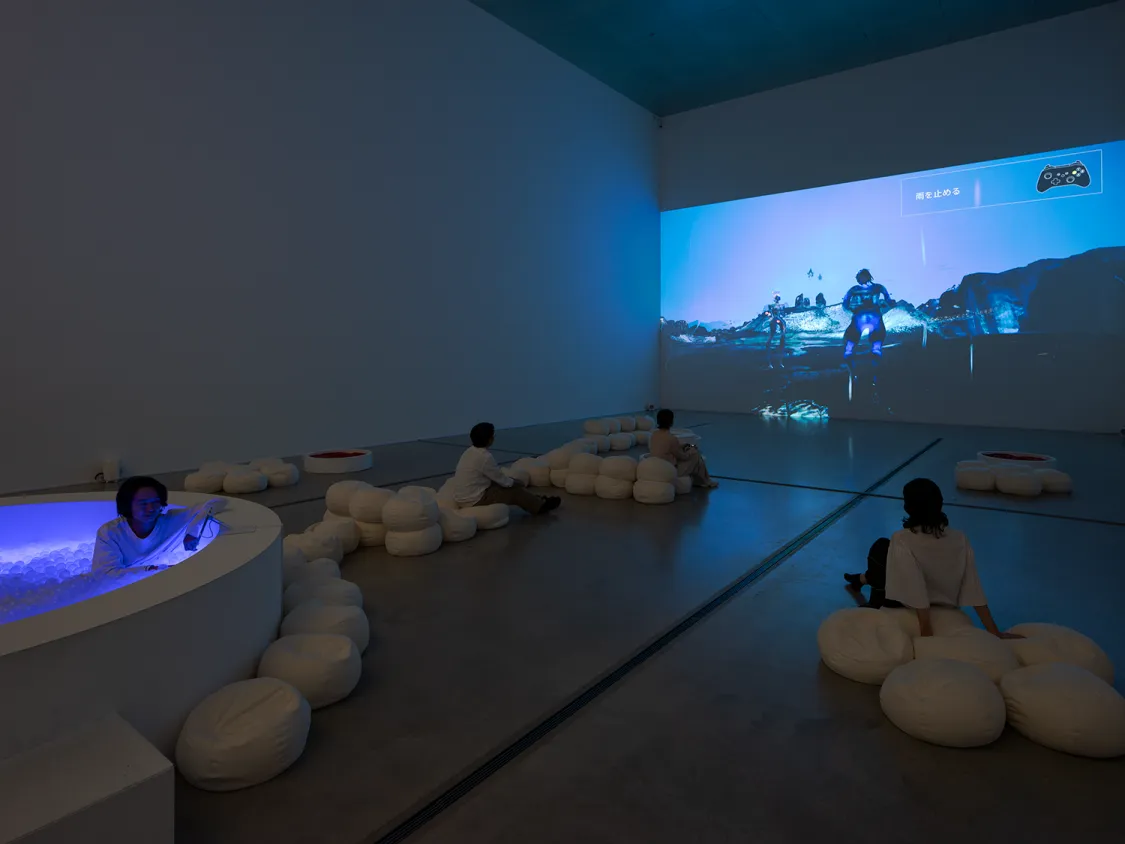
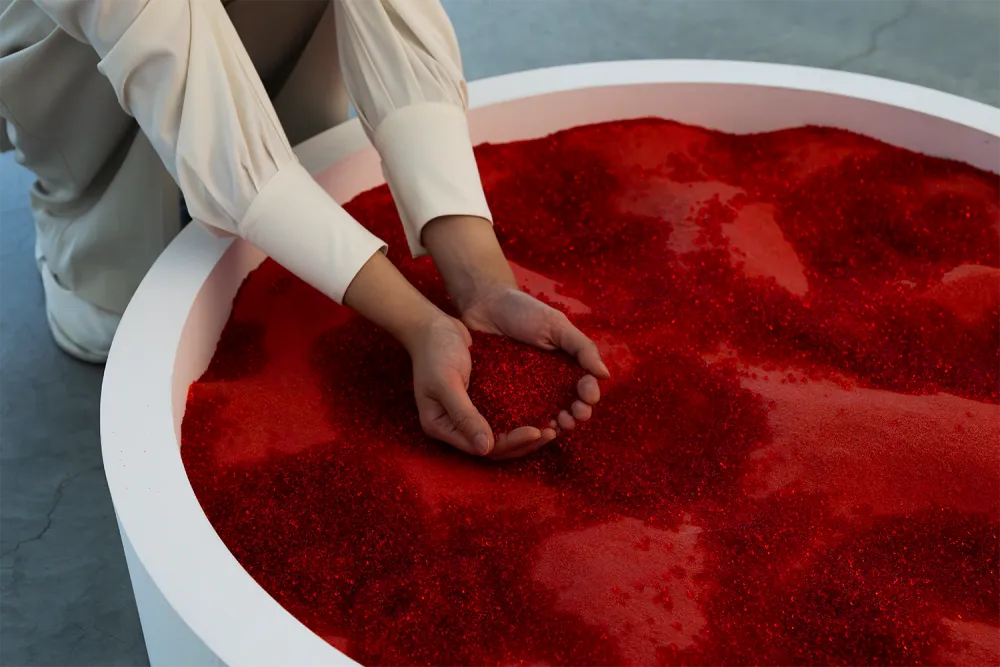
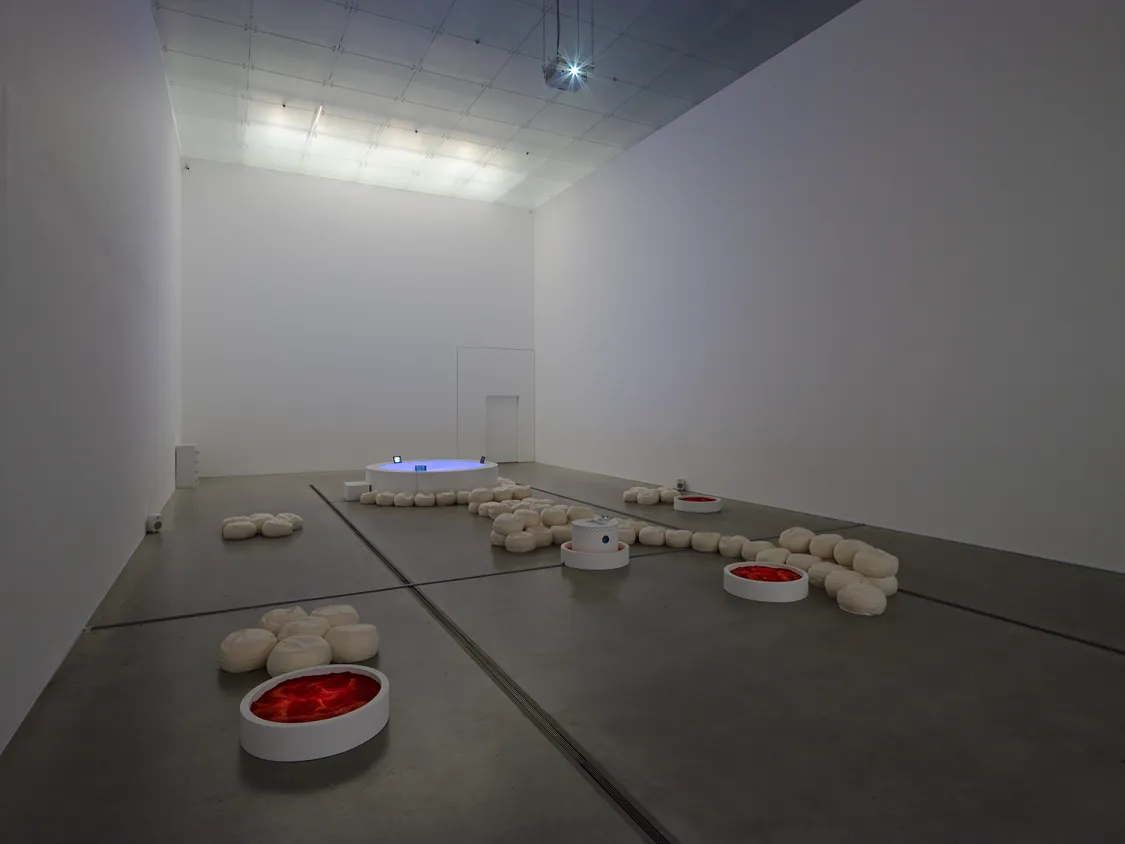
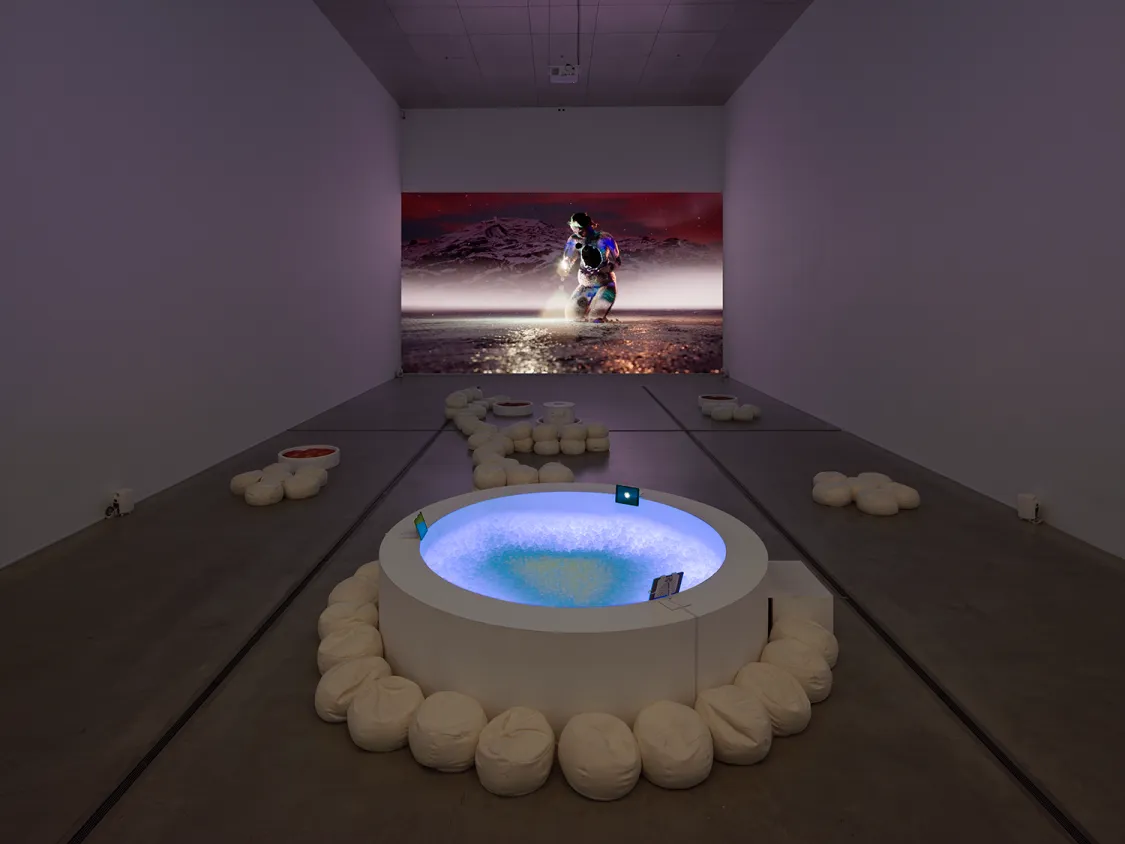
At 21st Century Museum of Contemporary Art, Kanazawa in Japan
The characters are influenced by the scientist Michael Levin, who's been researching morphogenesis and how we can rewire senses to do different things in the body. He was interested in these flatworms, where they can dissect and cut off one part of their tails. Then, rather than telling the body to regrow that tail, it can actually tell it to regrow a head. So it showed us how malleable nature is and how much we don't understand yet.
As we were figuring out who these characters were, we had to really understand the different morphogenic abilities of the different characters. So we have Yaxu, the protagonist, and they are part octopus and a range of other things. Then, we do a lot of different sculpting of the bodies. We take it in turns; we always have this passing on the baton collaboration of doing the character design, where we go back and forth between each other to create these multi-layered bodies and creatures.
We sculpted the body and the face to make them as non-human as we can, while still working within the confines of a humanoid rig, I guess. Painting the textures and having something more glossy or amphibious. We made this special fur all over the body, which is very fine. You can't really see it. When we do the motion capture, even though we know the story and we know who the basis of those characters are, they don't actually really start to come alive until we do the motion capture, where there's this relationship between the digital body and the physical body actually happens. We start to really understand how that character might actually move and how they might have certain physical responses to something that you wouldn't be able to tell if you were just doing it digitally.
So when we—in the first motion capture session with Sophie embodying the character of Yaxu, we realized that the character actually had to be part octopus as well because of the way their body is and because of the way that's how when you move, that's how the body feels, right? So there's this intuitive thing that happens only in that moment. From then on, all the nuances of that character start to evolve and become being.
Working as Three Minds, One Vision
How has the division of labor changed between you? Has it changed at all? Is everything collaborative? How have your roles as a group changed? Because you're bringing in all these other collaborators as well.
Since the beginning of Keiken, when we were just at art school, we graduated, and we didn't know how to do anything. We did everything together. Every decision was made together, every piece of every sentence, every email that we wrote was done together. So we accidentally became this one consciousness as three people. It's very sweet, but we're very dependent on one another. We really want everyone in the collective to touch everything we've done because it doesn't feel right if we don't.
But I think you start to identify the things you're more interested in and the things that come more naturally to you over time. I'll do a lot of the characters and the animation. When I do the characters, Hana and I are back and forth with that process. Hana, for example, will do a lot of the environment design with this magic realism quality, but that's really directly influenced by Isabel's ideas and symbols.
Because we're a collaborative practice and we deal directly with trying to imagine alternate realities, it's essential to us to have an approach that takes world building at its core. When you collaborate, you are—you are all coming at it from a different perspective, and you all need to create a way of cohesively existing together within that creation of that world.
We're trying new roles, but we're still defining them. Maybe next time we talk, I'll give you a clearer answer.
Jamin Warren: You'll have official job titles and business cards.
Tani: Exactly, yeah.