What is the Environmental Weight of a Rendered Frame?
Kara Stone and Joshua Dawson are making work about a world in crisis. They're also reckoning with what it means to build inside the systems driving it.

This is a write-up of a conversation we hosted a couple of weeks ago., if you're a member, Go ahead and check out the conversation, or, if you're a member, watch the talk in full.
Every new technology has a supply chain. Every server farm needs power. Every rendered frame ultimately costs us something. For artists working at the intersection of climate and digital culture, that isn't an abstract problem—it's the condition of the work itself.
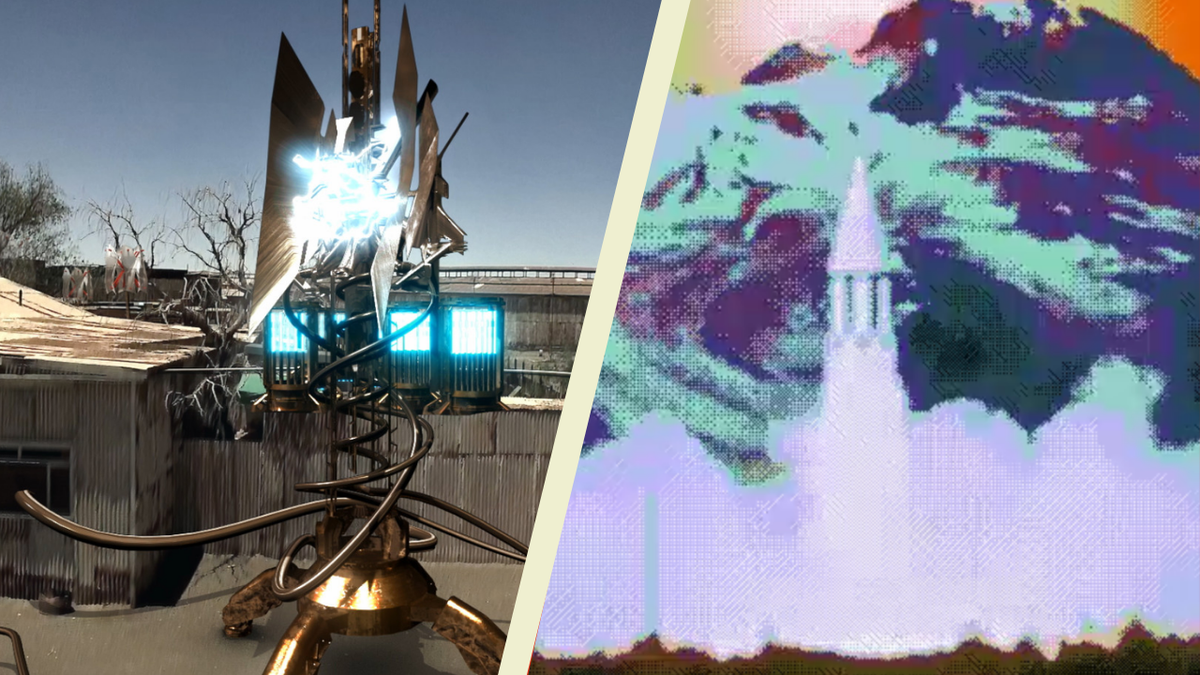
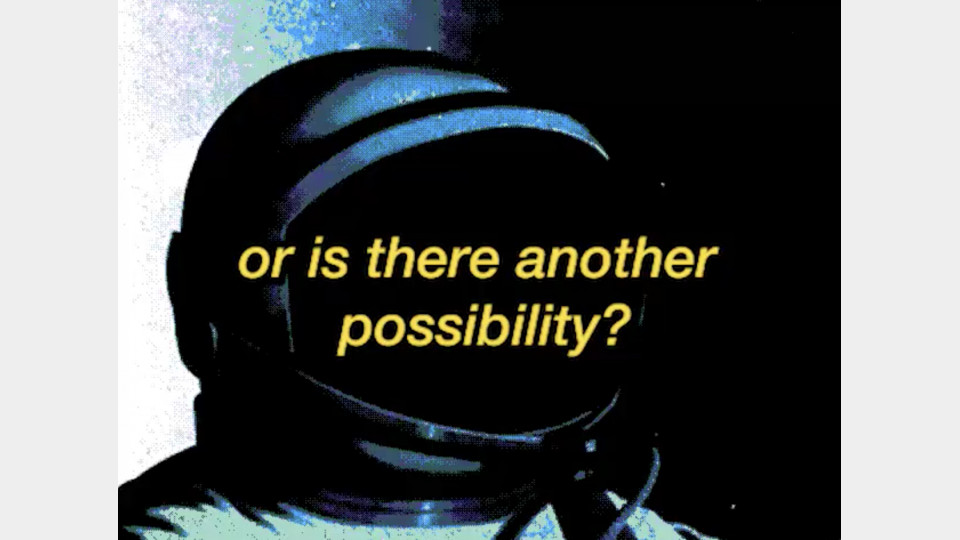
Kara Stone knows the condition intimately. On a balcony in Calgary, facing a legendarily sunny sky, she has installed a 150-watt solar panel, a marine deep-cycle battery, an MPPT controller, and a Raspberry Pi. The hardware hosts Solar Server, a website that runs only when the weather cooperates. Its first title, Known Mysteries, is a lo-fi climate fable set in a near-future Alberta, where a woman named Sorrow returns to her hometown after the death of her mothers and tries to untangle what the local oil-turned-tech conglomerate had to do with it. The town is a "launch town," a staging ground for lotteries that send residents to colonize Mars.
Why Build a Game Server Powered by the Sun?
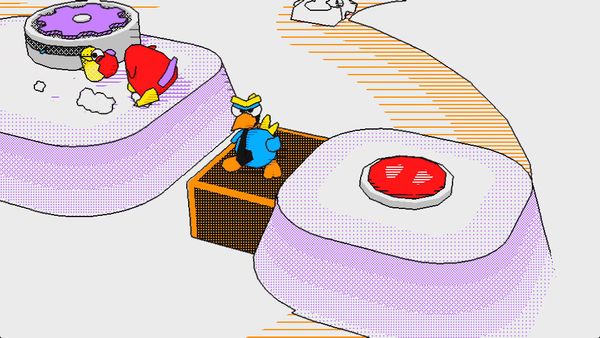
Stone came to the project from a place of quiet contradiction. Her earlier games lived on Steam, on the Apple and Android stores, on itch.io—all of them, she realized, fossil-fueled by default. "To play my work, you need to consume fossil fuels," she says. Solar Server was a way to design herself out of that bind. The games hosted there are built to be small: compressed video, dithered textures, chaptered downloads that stream in as the opening cutscene plays. When the weather turns, the site goes dark (and you can track the weather from a little widget on Solar Server's homepage.)
Roughly 5,700 miles south, in the Atacama Desert, Joshua Dawson was making work from the other end of the same supply chain. Dawson trained as an architect in Bangalore, India — a city whose rapid development had strained the state's water supply — before drifting toward filmmaking through the proximity of USC's film and architecture schools. His 2018 short Loa's Promise is a seven-minute epistolary: a letter written by Chile's depleted Loa River to a former resident of Quillagua, a nearly depopulated oasis town. In Dawson's speculative future, the region's ghost towns have been retrofitted as data centers and digital mines, built from the same copper the mines keep pulling out of the ground.
The film predates the current discourse on AI's material footprint by several years, making its framing feel uncannily prescient. Dawson decenters the human deliberately. "I didn't want to do a disservice to the people that were actually living there by telling their story through their POV," he says. The river speaks instead, mourning what the landscape is being asked to forget. The sharp, plastic CGI of the new infrastructure sits uneasily against drone footage of the actual desert — a palimpsest, in Dawson's term, where you can still read the older text bleeding through.
What Constraint Actually Produces: Aesthetic, Not Compromise
What connects the two practices isn't subject matter so much as a shared relationship to constraint. There's a pressure on small-team game makers to make things that look like other small-team games: pixel art, cuteness, cozy loops—what Stone has been working against for most of her career. "Lots of people can see the aesthetic and just think, 'Well, this isn't a game,'" she says. "It doesn't compute as a game." Known Mysteries uses scanned handmade objects and live-action found footage instead. Dawson, for his part, describes his work as "falling short of photorealism"—the CGI looks slick because the new infrastructure it depicts is meant to look slick, incongruous against the real.
This is the useful part. The history of games is full of constraints that produced aesthetics: Jordan Mechner rotoscoping his brother to make Prince of Persia's sprites move like a body; the entire 8-bit sound palette; Infocom shipping novels because they couldn't ship graphics. Stone and Dawson are in that lineage—not nostalgic for it, but using limitation as a generative tool rather than a compromise. The files are small because the server is small because the panel is small because the sun is what the sun is. The CGI reads as plastic because plastic is the point. The game runs when the weather runs. Waiting is a virtue.
Neither artist is under any illusion that this scales. Stone talks about degrowth—the planet can't support continued growth even on renewables—but frames it less as renunciation than as creative pressure. Dawson cites George Monbiot's "Hypocrites Unite," an essay arguing that, by the math of consumption, every environmentalist is a hypocrite. "Hypocrisy is the gap between your aspirations and your actions," Monbiot wrote. Inaction isn't the alternative. Cynicism is.