


I was playing Grand Theft Auto IV a few years ago when something small happened that I’ve never been able to shake. I’d just finished a heist, jumped out of a plane, pulled a parachute, and landed next to a prison.
And there, right beside me, was a gardener.
Just a gardener, trimming the hedges, completely indifferent to the man who’d just fallen out of the sky with a sack of cash. It was procedural—he just happened to be there. But it spoke to something essential about what a game city can be when it’s working: a place thick with parallel life that doesn’t care about you at all.
That moment came back to me during a recent conversation talking with Chaim Gingold and Konstantinos Dimopoulos. Gingold is the author of Building SimCity: How to Put the World in a Machine. Dimopoulos is an urban planner turned game designer whose writing on game urbanism has become essential reading for anyone thinking about built environments inside screens. I wanted to sit them down together because they approach the same question—what makes a game city believable?—from opposite directions. One comes from the history of simulation, the other from the practice of actually planning real cities.
Why Do So Many Game Cities Feel Like a Facade?
JAMIN WARREN: Games do a lot of different things. You get invested in the characters, you get invested in the stories. Approaching them through the lens of the constructed environments inside them is very specific. Games treat cities as backdrops, as sets. What do you feel is actually missing when a designer thinks of a city as an arrangement of buildings rather than a functioning system?
KONSTANTINOS DIMOPOULOS: Sometimes, leaving things out is unavoidable. But it's very rare for us to see public spaces that are not just streets. A square can be a fantastic place. A park can be fascinating and packed with life. Generally, this whole life-and-functioning-society aspect tends to be missing. People forget that cities are historical places. They need to feel dynamic, to showcase that they have been around for a while. An older building, something under construction—those are simple things often forgotten.
CHAIM GINGOLD: A counterexample is Jet Grind Radio. You're skating around, and there are crowds of people just hanging out. They all jump out of the way, and it's part of the pleasure. That makes me think about who makes the games and what gets represented, but also the quality of the travelogue and how important that is.
DIMOPOULOS: If we approach game cities as something to be visited—besides something we're meant to be playing in—they can offer a different level of enjoyment. But there has to be some thought poured into things.
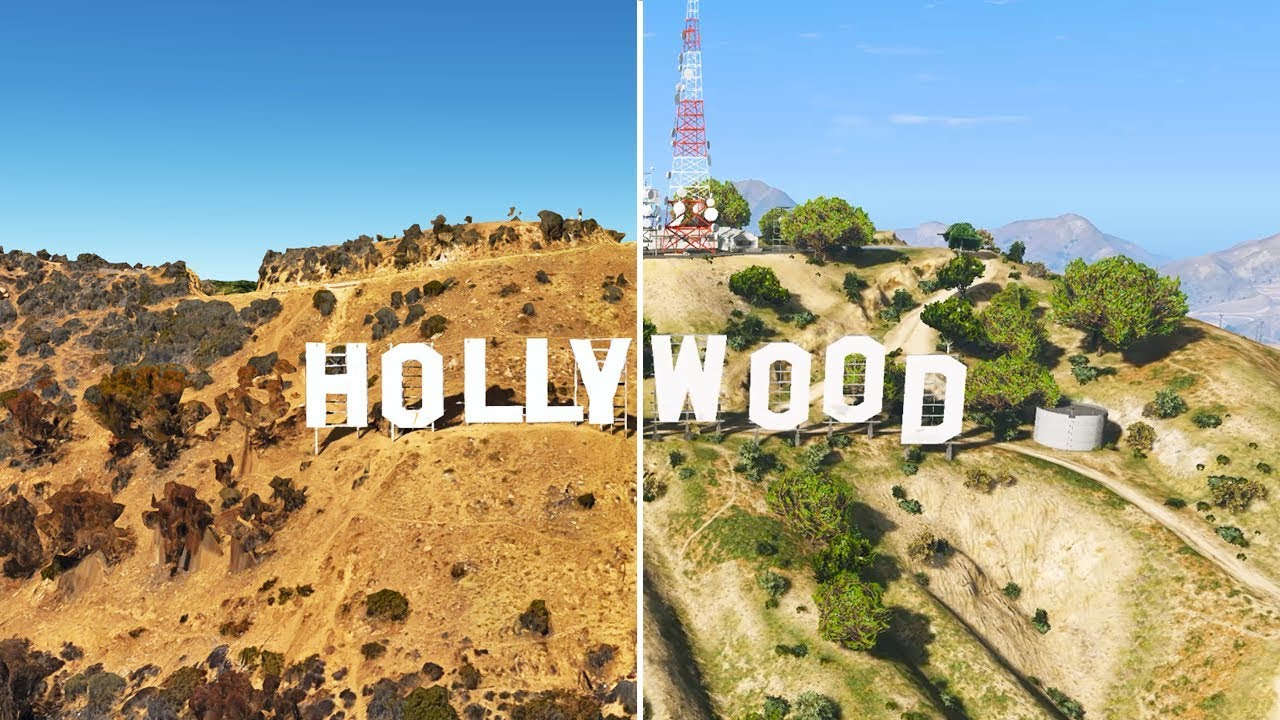
WARREN: When Grand Theft Auto V came out, I was living in New York, and my wife is from Los Angeles. We started playing it together. It was really surreal for her to see the city depicted in miniature. Now living in Los Angeles, I realize how much that game captures of Southern California—the same way a film like One Battle After Another is a love letter to California. The idea of games as places you can go, even if you can't go in real life, they should offer some perspective on the actual place, both for people who live there and for people who never get a chance to visit.
What Functions Make a City Come Alive—Even in a Game?
WARREN: You've written about urban functions—commerce, housing, transportation. I get the sense sometimes that game makers approach cities in terms of the physical environments, as opposed to the systems that undergird them. Even if you're not making a simulation game, there's still the idea that someone has to take out the trash, that there's still municipal government. What are some of the functions of a city that make game cities come alive?
DIMOPOULOS: When you think of what people need to be doing at a specific place, that helps you not forget crucial things. If you forget functions, you tend to create places that feel like Disneyland—a facade you just cruise through. People know that crowds move to the square on lunch breaks, and kids will be at the playground after school. Those simple things lend a real sense of authenticity. Warren Spector's Deus Ex didn't model thousands of unhoused people in a future dystopia. He just showcased five around a barrel. And you instantly get the idea.
WARREN: You don't need so many things, just enough. Players fill in the negative space of what's implied by the existence of certain characters. I finished a heist in Grand Theft Auto IV and jumped out of a plane with a parachute. I landed next to a prison. There was just a gardener doing their thing as this guy landed with a big sack of cash. It was procedural—he just happened to be there. But it spoke so much. For me as a player, there's this whole other universe of things happening. I'm this crazy outlaw adding a level of chaos, and there are just people going about their daily lives.
What Made SimCity Revolutionary as a City Model?
WARREN: What makes SimCity special as an object? You'd be hard pressed to find another person who knows more about the game and its origin.
GINGOLD: The advertising leaned into the city-is-alive—the living city in your computer. Cars moved, buildings developed, and smoke came out of smokestacks. Fires would unfold across the map. And the scale was huge for the time. You'd scroll around this giant map, and it was alive everywhere. That scale and massive detail and aliveness are very intrinsic to what a city is—sprawling, dense places filled with parallel activity.
Then SimCity puts the player in a god-like position, and that juxtaposition of the giant living world with that positionality is what made it so engaging. Plus, it's silly. Serious technical stuff like zoning and tax rates, but also a Godzilla-like monster. Serious but silly—that's a very Will Wright design sensibility.
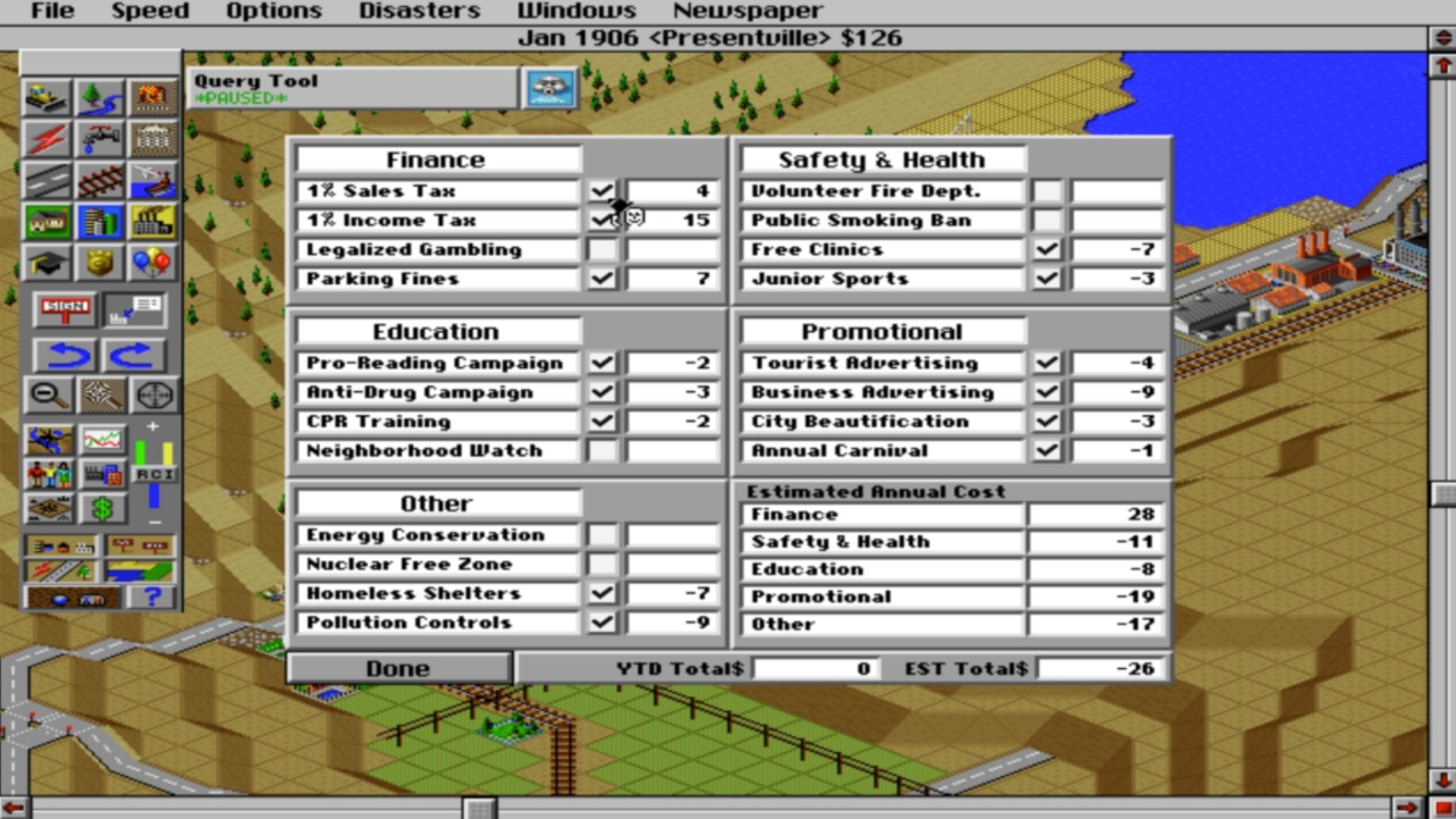
WARREN: Walk me through the argument in Building SimCity. The thing that was most interesting to me was the web of influences. The book is broken up into the history of simulation, the business environment for Maxis, and then a deeper dive into the design of SimCity itself. Can you walk through the interdisciplinary context that made it stand out?
GINGOLD: Will Wright didn't just sit down and make up an incredible city model. He built upon work done over many decades. One tradition is cellular automata—Conway's Game of Life is the most famous example. It's very good at rippling spatial simulations, entwined with questions about what is life. Then there's Jay Forrester's system dynamics. Forrester worked on Whirlwind in the 1940s, the first interactive real-time digital computer, then pivoted to MIT's school of business, simulating social systems—firms, then cities, then the whole world.

His urban model got enormous media attention in the early '70s, contemporaneous with the crisis of the cities—civil rights, the Watts uprising. If cellular automata gave SimCity its bottom-up texture, system dynamics gave it top-down cohesion—the economic structure tying residential to commercial to industrial demand. Wright smashed it together with the graphical user interface and video games, both relatively new mediums. He put complex simulations traditionally for specialists in the hands of everybody.
WARREN: There's thankfully a long history of games being the mechanism by which virtual reality, social networks, or artificial intelligence become playgrounds for deeper ideas. If you have the mindset that games are not so unserious that they can't generate very serious inspiration, you end up in interesting places.
Does SimCity's Ideology Actually Matter?
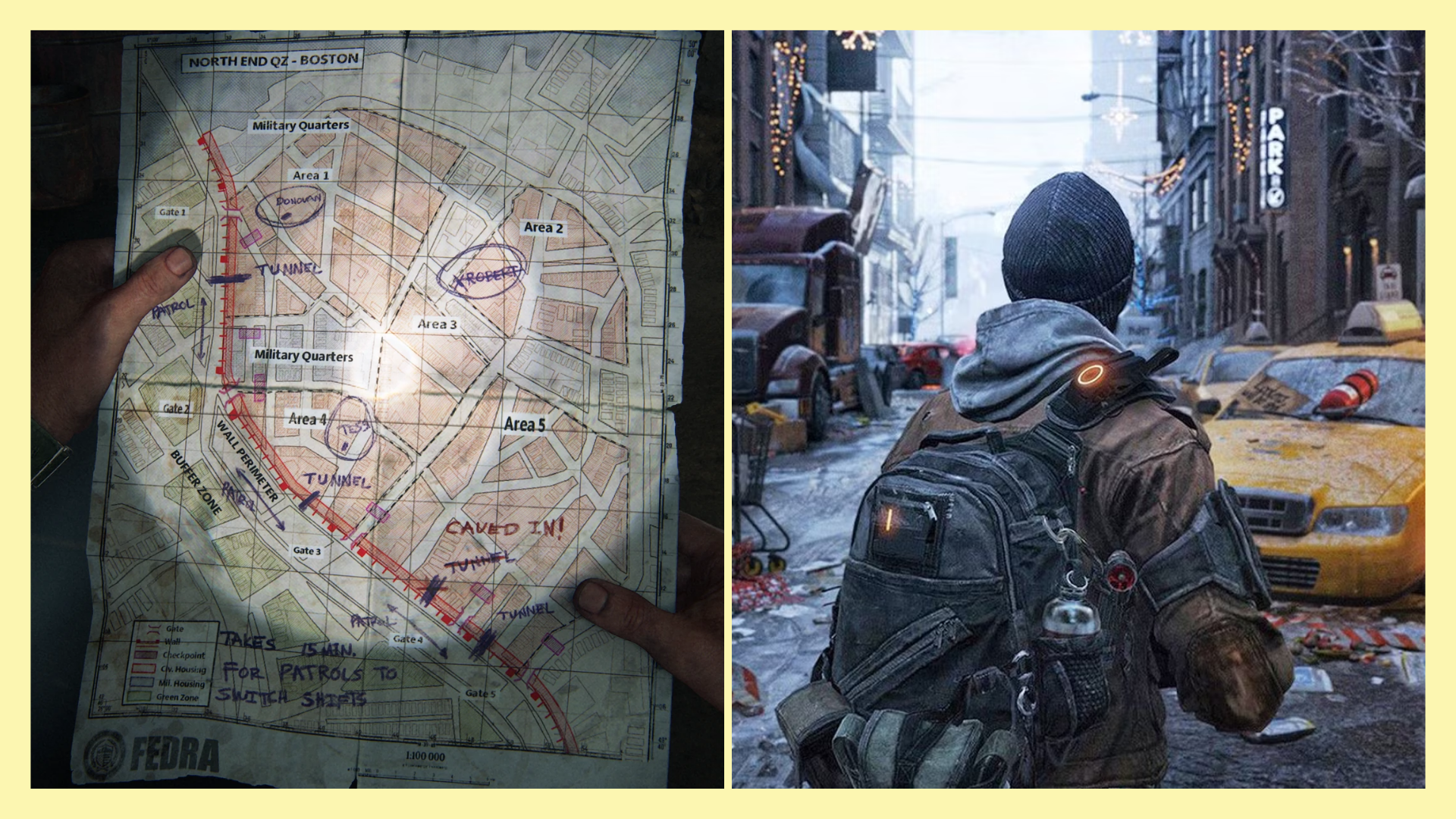
WARREN: You brought up that some of the philosophical ideas about what cities should be are baked into a game like SimCity. In a review of Chaim's book, Celine Nguyen in the Los Angeles Review of Books talks about the ability to see a system clearly as a precondition to manipulating it—in some ways, a game like SimCity gives you all this power. But it also has a bias towards certain types of cities. You can't raise the tax rate too high, or people will riot. You can build lots of cities, but you can't build all of the cities. How much do those critiques really matter?
GINGOLD: SimCity tries to have it both ways. It's a serious living city, but also—there's the monster. It's just a toy. That's a brilliant rhetorical move. Alan Kay has argued it smuggles in ideology, but I think that distancing—it's a toy, it's real, it's not—makes you aware it's a representation. Will Wright sees everything as materialist representation, like a filmmaker. Unlike Forrester, who thinks he's an engineer solving the world's problems.
DIMOPOULOS: It's also something created in the United States. It makes sense for someone in a country that has been creating places ex novo for the duration of its existence to start on an empty field. If I made a European city game, I would start with a pre-existing town—Roman, Byzantine, medieval. There's already a tissue.
GINGOLD: SimCity has a colonial, American ideology baked in, too. There is no ex novo here either. It was a settler orientation—just this empty land.

How Could Self-Driving Cars Change How We Build Game Cities?
WARREN: I live in Los Angeles, and one of the newest entrants to our built environment has been Waymo. The self-driving car could change how cities are organized. You can see a world where parking disappears, or road widths shift, or pedestrian space expands. How long before something like that filters into how game designers depict urban space? Are there assumptions that the self-driving car exposes about the cities we've been building in games for the last 40 or 50 years?
DIMOPOULOS: This is at best a taxi. What would change things would be investing in proper mass transportation. But the gameplay possibilities of a self-driving vehicle are immense.
GINGOLD: It feels like such an American idea, extrapolating forward from our transportation logic. What if all that technology were refactored? I'm much more excited about the little robots around Berkeley's campus delivering food with animated faces. There are so many other configurations possible. My hope is that it lets us make an urban landscape that is less terrible.
WARREN: It doesn't have to be a self-driving car. It could be a self-driving bicycle or rickshaw or some other mobility device. It doesn't have to be a Jaguar.