


What I remember most is the drowning. In Sonic the Hedgehog, my spiky blue compatriot ships off to underwater depths in one of the later levels (Labyrinth Zone, to be exact), and he must collect air bubbles, always stationed just out of reach, to stay alive. But after a certain time period, a menacing countdown appears in the middle of the screen. The music would build to a pitch and quickly subside, and in the moment of silence that followed, Sonic would throw up his hands in anguish, the 16-bit sound of his lonely cry for air would fill the room, and he would sink to parts unknown. Even today, hearing that music rekindles those adolescent moments of frustration and fear.
Sound plays a crucial role in how we receive games, and in the hands of the right creator, audio design can trigger wide varieties of emotion. We asked several experts to reflect on this issue’s theme of discomfort, and explain how with their audio canvas they create something unsettling.
Michael Schwendler, sound designer for Dynamedion on the ambient and eerie sounds of action thriller Alan Wake
There’s a natural touch in the ambiance that makes the player feel like they know this sound, and there’s always some weirdness. “This sounds like a forest, but there’s something I’ve never heard before.” I mixed five or six different forest ambient tracks. I created something that sounds like grout with reverb, delays, and so forth, and made them sound like an ambient layer. You get a mood that you can identify, but there’s something wrong. The player isn’t sure if it’s a dream or reality.
One manifestation of the dark presence is the tornado. Of course, it’s a supernatural tornado. I tried to build something like wind gusts based on screams. I took a woman’s scream and baby screams with reverb to create a constant sound.
Good sound design creates audio worlds that match the visuals. If it’s too unnatural, you lose contact to the game, and it gets distracting. It brings you out of the world.
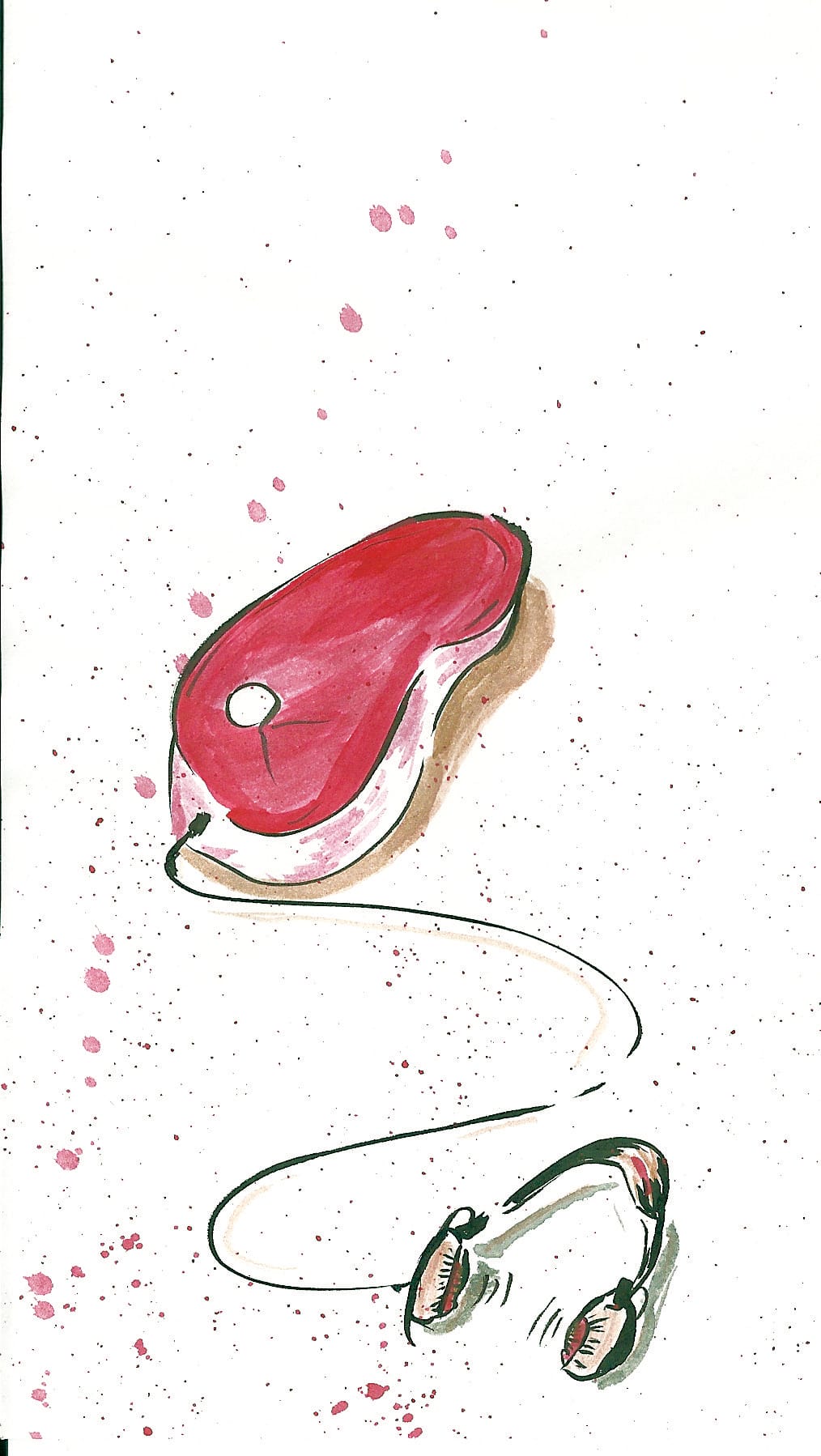
Jordan Fehr, sound designer for the fleshy, boneless protagonist of Super Meat Boy
I started with actual meat recordings. I work part-time at a deli. So when they make roast turkey, they peel off a thing of turkey fat, and I would just take it home and slap it against some countertops. Once you have enough ripping and stabbing, you get a library of meat sounds.
The meat sounds are actually kind of boring on their own. When I needed to layer wet squishy stuff, I hollowed out a pumpkin, put the innards in a bowl, and started squishing them around. It’s disgusting. The clarity of the microphone is so gross.
Karen Collins, Canada Research Chair in Interactive Audio, University of Waterloo
In terms of actual physical responses to sound, there’s been quite a bit of research. Very low bass sounds are experienced as threatening because in the natural world, heavy bass is associated with something like a volcano, thunder, or a dinosaur. Higher-pitched sounds tend to be made by much smaller animals. Higher frequencies are the pitch of a baby crying, so that’s a response that’s innate to us. We would associate those with being disturbing because we need to help that baby, and it draws our attention. In that sense, some sounds are universal, but the idea that music itself is a universal language is not true. It’s very culturally specific.
Slot machines rarely use a negative sound, because everybody wants to hear the sound of winning. They may taunt you, though, to keep you playing. They need to keep us interested. They use acoustic frustration—when we feel like we’re losing, we feel like we have to keep going to win. Casual games do this a lot, in terms of sound effects. There’s this game-show whammy sound when your player dies. It’s a taunting sound, rather than being too negative. But you don’t find that in a first-person shooter, because they’re more serious. The music is much slower and funereal if your character dies.
There is research on the most horrible sounds you can hear, and determined the sound of vomiting is the worst. Vomiting is kind of universal, since we do have a universal disgust towards bodily fluids and vomiting is really unpleasant. The dentist drill is another one—that’s not natural.
Caleb Epps, senior sound designer, Harmonix Music Systems
With Rock Band, the crowd carries a lot of gameplay critical feedback to let you know when you’re failing a song. As our games become more casual, it’s harder in our minds to say that the crowd should outright boo you. We have this courtyard in the back of our office where I get people around a few mics and say, “OK, be negative, but encouraging negative.”
It’s a weird thing, especially for The Beatles: Rock Band. We had to convey that you were failing a song, but also be positive, because nobody boos the Beatles. How do you cheer, but more in a ho-hum fashion as opposed to a raging, screaming girl?
I have drawn from my experience as a performer, and I try to remember bad performances where whatever I’ve been doing hasn’t been well-received. I’m a singer by craft, but even if we’re doing a demo of the game, I always have that nervousness and twinge of performance anxiety anytime I sing a Rock Band song. I try to tap into that when I’m making negative crowd sounds.
![Manufacturing Discomfort with Messhof [KS01]](https://storage.ghost.io/c/25/84/2584b75d-4bd6-4cce-8259-f1d1c65abbb5/content/images/size/w800/format/webp/2025/12/rooftop_a.jpg)
![I Am King of the Ogres [KS01]](https://storage.ghost.io/c/25/84/2584b75d-4bd6-4cce-8259-f1d1c65abbb5/content/images/size/w800/format/webp/2026/02/Untitled-design--31-.png)
