Phoenix of Gaza XR opens at UCLA with a Fady Joudah reading
Ahlam Muhtaseb and Naim Aburaddi's 360-degree archive of weddings, dabke and craft workshops takes headset bookings Nov. 3 and 4.

- When
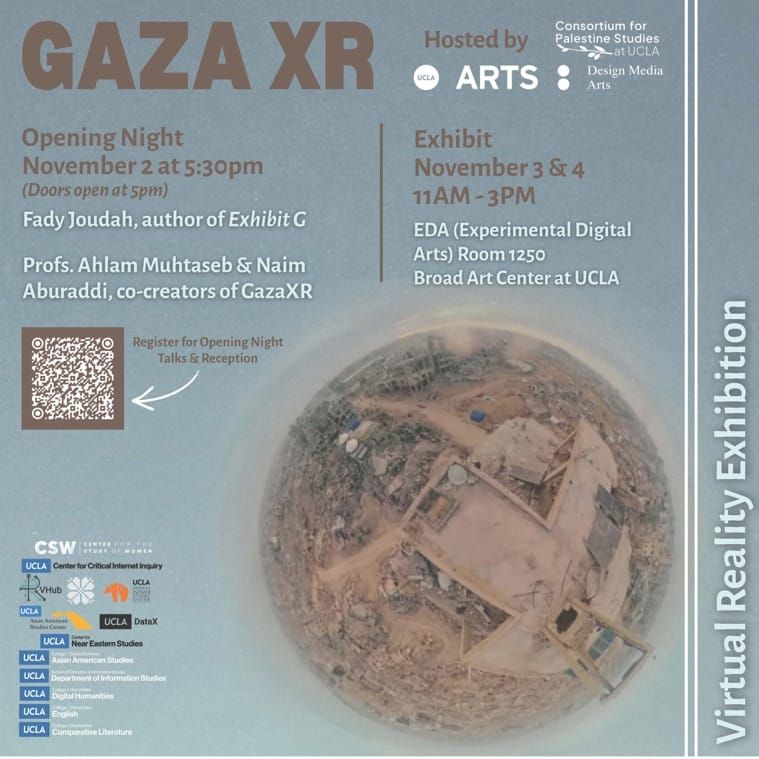
- Opens Mon., Nov. 2, 2026, Tue., Nov. 3 and Wed., Nov. 4, 11 a.m. to 3 p.m.
- Where
- Broad Art Center, UCLA, Los Angeles. Headset sessions are in the Experimental Digital Arts room.
On Monday evening, Nov. 2, Palestinian American poet Fady Joudah reads at UCLA's Broad Art Center to open Phoenix of Gaza XR, a virtual reality archive of daily life in Gaza, alongside a lecture from the project's co-founders; on Nov. 3 and 4 the public can book 30-minute headset sessions in the building's Experimental Digital Arts room, 11 a.m. to 3 p.m., with walk-in spots both days.
Phoenix of Gaza XR, introduced by the project team
The project, led by Ahlam Muhtaseb, a professor of media studies at Cal State San Bernardino, and journalist and media scholar Naim Aburaddi, assembles 360-degree video and 3D replicas of Gaza's history and daily culture: weddings, dabke, stitching and pottery workshops, monuments like the Great Omari Mosque. Its founding goal, in the team's words, was "presenting Gaza outside the realm of death and destruction," a mission the makers say was redefined by the war that began in 2023.
The footage carries a memorial inside it. The 360-degree material in the exhibit was shot by photojournalist Yahya Sobeih, who was killed in an Israeli airstrike in May 2025, at 32, hours after celebrating the birth of a daughter. Moving through these rooms in a headset means moving through what Sobeih chose to keep.
The exhibit has spent two years touring campuses, Yale, Princeton, MIT, Harvard, Tufts and UMass Amherst among them. The UCLA stop is hosted by the Consortium for Palestine Studies with UCLA Arts and Design Media Arts; the announcement and opening-night registration are up now.
Interactive media keeps being drafted for preservation when places become unreachable, and Gaza has pulled games toward documentation before; we once covered GAZA, a videogame built from real tweets sent from the strip. The form has grown gentler since: not a game at all this time, just rooms, weddings and craft, held at eye level.
Killscreen covers what games and their tools do far from the store page, including carrying memory for places made unreachable. The free newsletter brings that work to your inbox.