Ok, fine, let's talk some more about penalty kicks
A reader comment sparked an interesting idea

Intersections is ongoing series about play in the real-world.
So last week I asked about rule changes in soccer, and received some interesting suggestions. Cesar, for example, had the excellent idea of implementing my brainstorms (e.g., increase the size of the goal in extra time) in FIFA as a mod. It's an unwitting nod to Zach Gage's Really Bad Chess (2016), where your opponent may have, say, four queens and six knights.
Reader Jason had a note I wanted to pursue further, though: that the fouled player should take the penalty. In the current system, there's a disconnect: even if Player A is fouled inside the "penalty area" surrounding the goal, their team is awarded a penalty and chooses their best penalty taker. Jason's suggestion is similar to the system in basketball, where if Player A fouls Player B, Player A receives a foul count of up to six, and Player B may be awarded a free throw.
Much like soccer penalties, the odds of scoring a free throw are generally pretty high, but there is enough variance that teams build strategies around who they want to foul later in the game. Shaquille O'Neal, for example, had one of the worst free-throw percentages of all time, and "Hack-a-Shaq" strategies would deliberately exploit that. In soccer, putting the fouled player on the penalty spot likely wouldn't change the outcome, as the odds of scoring a penalty are extremely high (about 75 percent), regardless of who takes it.
But one problem with the penalty system is that punishments are not always commensurate with the crime. The justification for penalties is that a) it's very difficult to score and b) denying someone a "significant" goal-scoring chance should be a high consequence. It's ostensibly a deterrent. If I'm shooting right in front of the goal, and someone grabs my shirt, I'm robbed of a legitimate chance. The problem is that if a player commits a penalty-worthy foul on the edge of the 18-yard box, was I really going to score from there? With the introduction of data analytics over the last 20 years, we can see that the expected value of a penalty shot is far greater than the location of the foul.
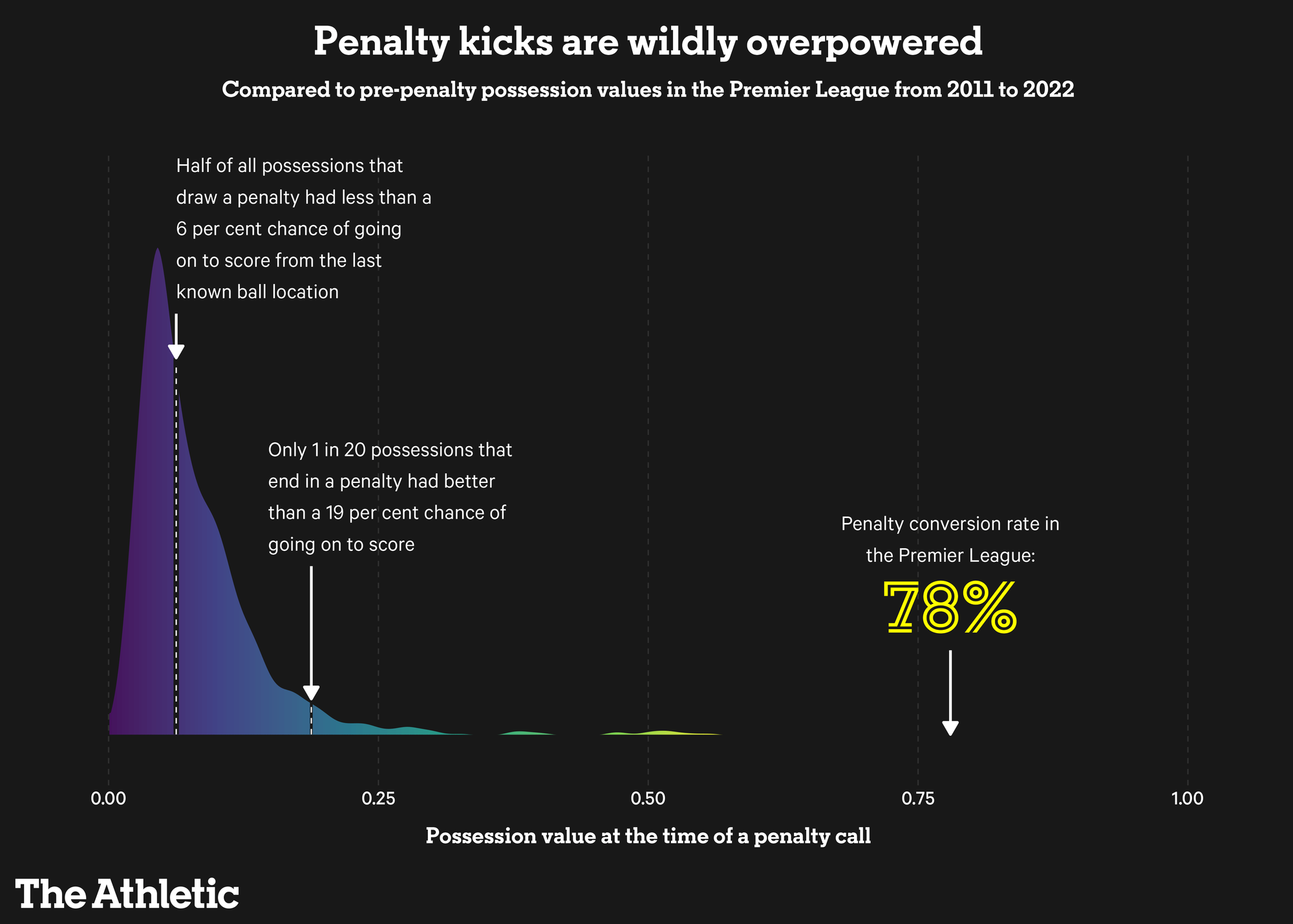
Of course, players understand the math intimately. "Depending on the particular game, players may strategically transgress rules, accepting a short-term punishment for a long-term strategic or psychological advantage," write Eric Zimmerman and Katie Salen in Rules of Play about "sanctioned rule-breaking." Casual fans of the World Cup are often flummoxed by the amount of flopping, theatrics and overall antics that frequently dot soccer matches, but this is simply because players understand the odds. Drawing a penalty, for example, is simply an overpowered strat. The Athletic went deeper into the "miscarriage of justice" that are penalties, back at last World Cup. "Out of more than 900 penalties since 2011-12, only a handful of them come anywhere close to a penalty's 78 percent chance of scoring." Yikes!
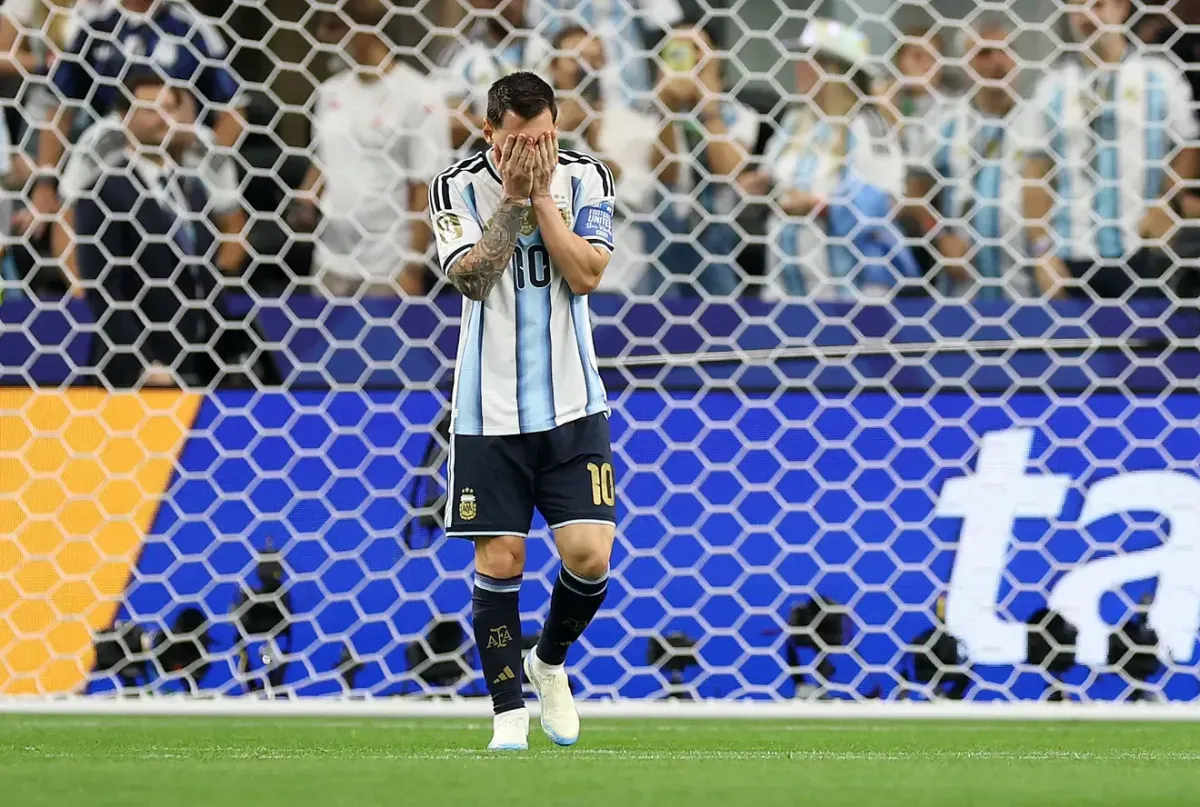
But Jason's suggestion might bring some balance. For example, at this year's World Cup, Argentina was awarded a penalty against Egypt, and Leo Messi, with a 77 percent average, took the shot. But the player fouled was Nicolas Tagliafico, who has never taken a penalty. Perhaps having the fouled player, a complete unknown, would add the necessary jeopardy back into the mix. (Although...Messi did miss against Egypt, so ironically, he might have been the best person to select!)
A broader implication of having the fouled player take penalties is narrative. The "story" of sports is unique in the world of play, in part because it spills over into press conferences and DMs. Sports are also corrupted/influenced by compensation, which adds stakes to the affair. But all sports stories are an outgrowth of the rules that emerge through dynamic interaction. So then, the joy of sport is the relationship between the players that unfolds during the match. Competition engenders all kinds of relationships, as it is a zero-sum affair.
Penalties break that storytelling lineage by separating the source of the conflict from its outcome; maybe it's time to restore it. It's important to remember that all rules are about the desired aesthetics in a play system. So with penalties, what kind of story do we want to tell?