Node Center put game engines on its curating syllabus
Applications opened June 1 for a six-month online program out of Berlin that teaches worldbuilding as a way to make exhibitions.


On June 1, Node Center for Curatorial Studies in Berlin opened applications for Curating the Digital, a six-month online program for curators and art professionals. The announcement promised VR, AR and AI. The detail that caught my eye sat further down, in the outline for the second module: “Game engines, Three.js, and emerging digital tools for curatorial practice.”
For the record: the program runs July 8 to Dec. 9, 2026, with two hours on Zoom every Wednesday, a cap of 30 seats and a fee of 1,080 euros (or six payments of 225). The caption gave June 24 as the application deadline, while the last slide of the same post and Node Center’s own page say July 3. Marco Mancuso, the critic who founded Digicult in 2005, coordinates, and every participant builds a curatorial project along the way.
That second module, scheduled for Aug. 12 to 26, belongs to Lívia Nolasco-Rózsás, and its third session is titled Worldbuilding. It treats the word as a curatorial method, and Nolasco-Rózsás has practiced it. In 2021, with Giulia Bini, the curator staged Spatial Affairs at the Ludwig Museum in Budapest. Its online half, Spatial Affairs. Worlding, was a multiplayer browser environment designed by The Rodina, where visitors drifted among the artworks as avatars. The architect Bika Rebek was scheduled to follow in September with virtual exhibition design, avatars and co-presence included. Charlotte van den Bosch and Yulia Loginova cover immersive rooms and project management.
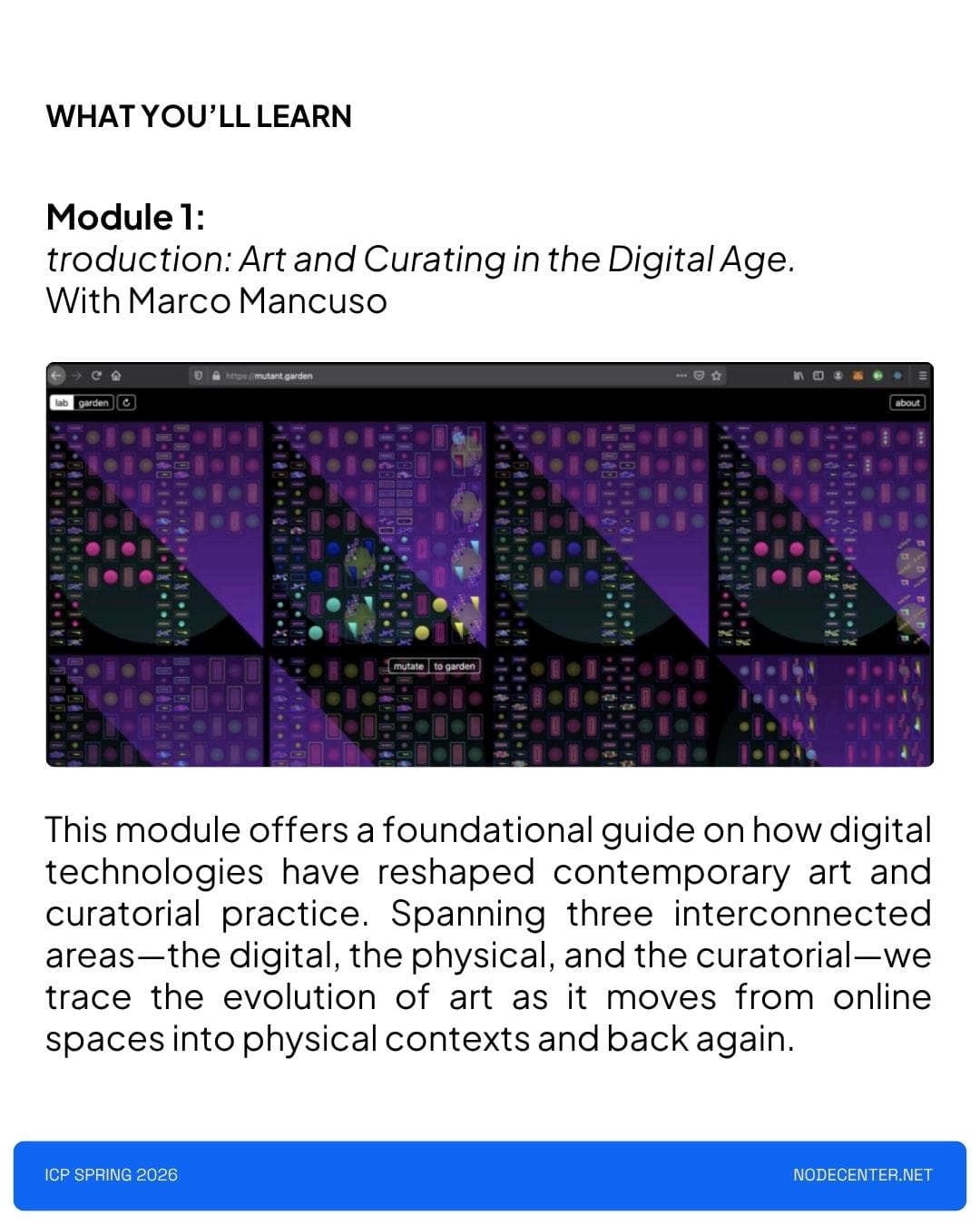
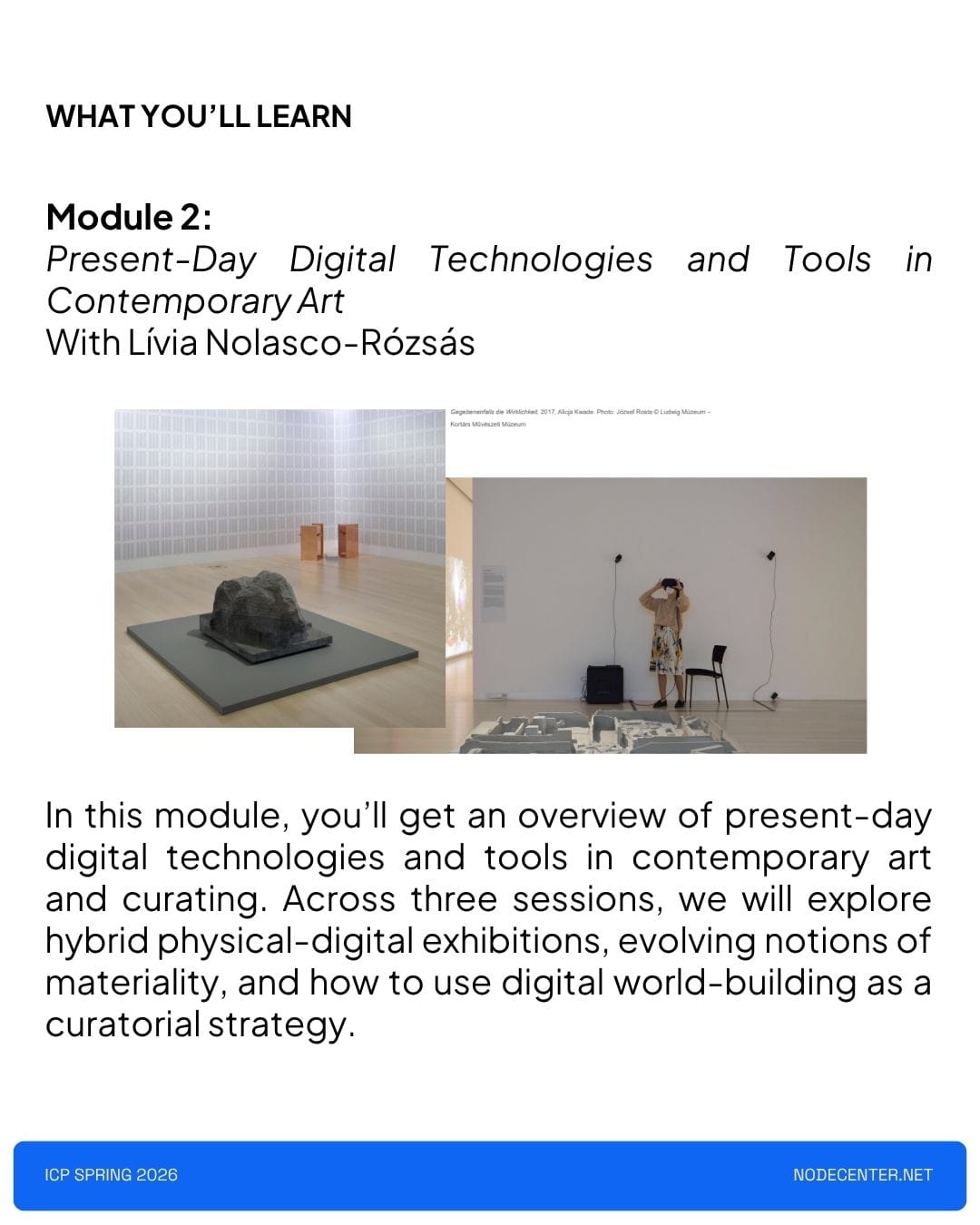
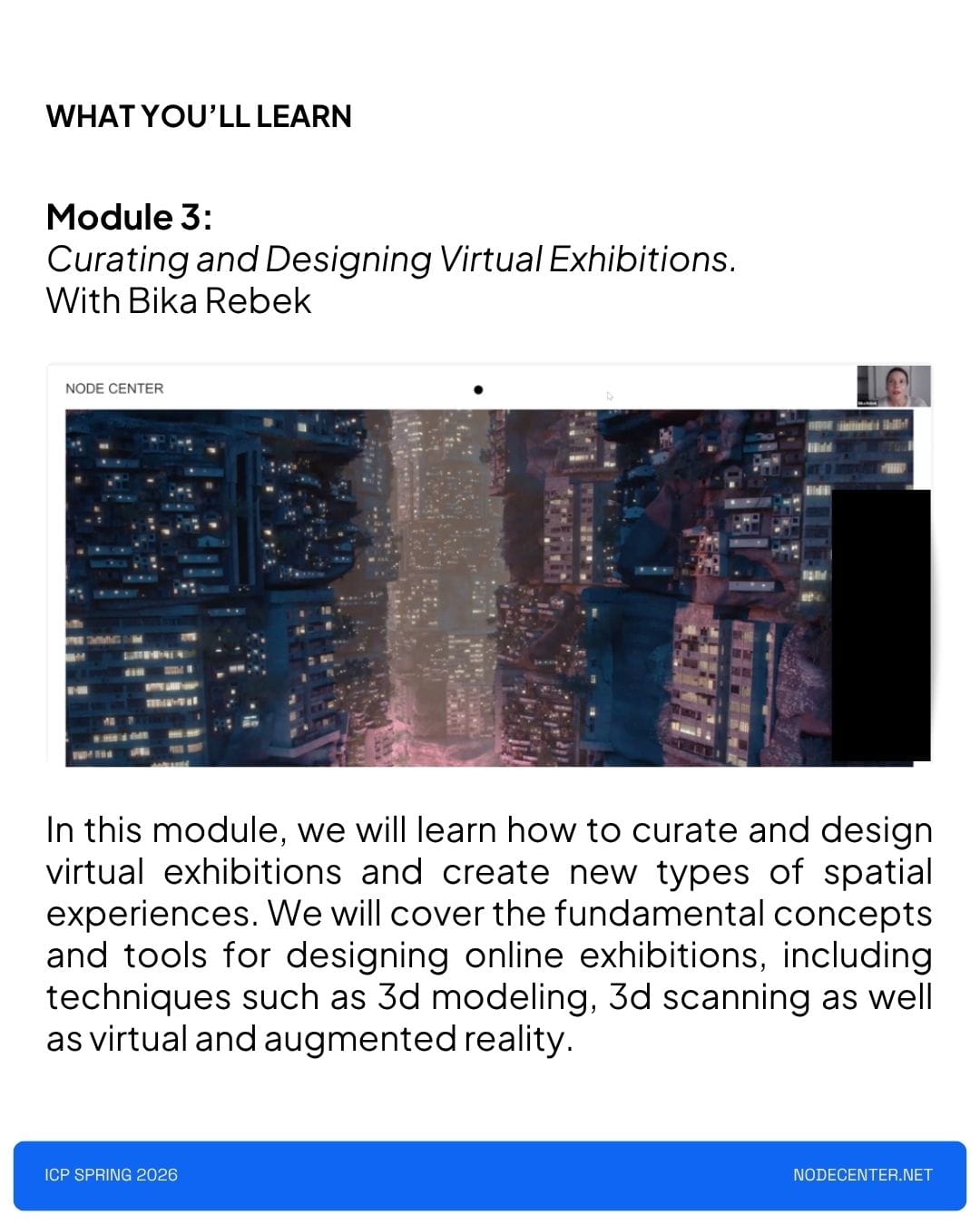
Slides from the announcement outlining the first three modules, taught by Marco Mancuso, Lívia Nolasco-Rózsás and Bika Rebek. Images via Node Center.
Killscreen reads the course outlines so you don’t have to, and tracks where game tools turn up in museums, galleries and classrooms without announcing themselves. The free newsletter collects what we find.