Miles Buckle Makes Games You Can't Play
Miles Buckle rebuilds Rear Window, Amarcord and Hitchcock's Rope as late-'90s games nobody will ever play, and the impossibility is exactly the point.

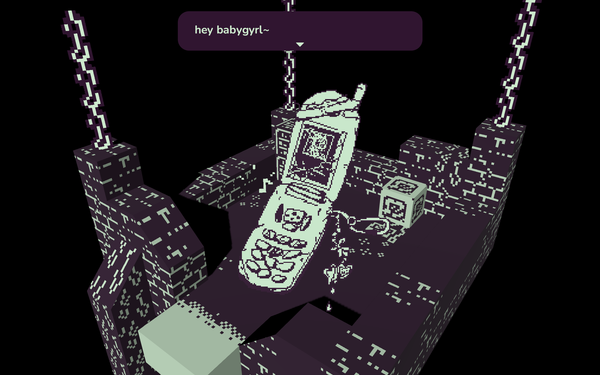
There is a corner of Instagram where the Red Room from Twin Peaks looks like it shipped on the PS1, where Hitchcock's Rope plays out inside The Sims, and where Fellini's seaside hometown comes with its own save menu. It belongs to Miles Buckle, a London-based artist who runs the adaptation machine in reverse—pulling cinema into the visual language of late-'90s videogames, one lovingly deformed polygon at a time. Games have never been good at talking to the other arts; Buckle's work is a conversation between mediums that speaks both languages fluently, less interested in whether these games could exist than in what it feels like to remember them anyway.
Raised in Brighton and trained in graphic design at Central Saint Martins, Buckle is now developing an isometric game with a collaborator who wrote his own coding language and game engine, alongside a pair of commissioned short films. We spoke with him about Lego without instructions, the stretched JPEG face that makes late-'90s graphics feel Lynchian, and why the sea in Amarcord is made of plastic.
Jamin Warren: Did you grow up making things digitally? Tell me about your first interactions with building worlds on computers.
Miles Buckle: I think originally it stems from things like Lego, and choosing to create something that you've not been instructed to create. From a young age I was interested in trying to replicate things I'd seen somewhere else—rebuilding something without the instructions, or moving as I got a little bit older into Minecraft. I remember when I was 10 building Buckingham Palace, mainly from photos—Googling Buckingham Palace and having a picture on my iPhone or iPod touch at the time. Back then scale wasn't super important. It was more just the feeling that you've built something.
Jamin: Did you come from a creative family?
Miles: Not particularly, work-wise at least—my mum is a therapist and my dad works for a builder's merchant. But I was encouraged to be creative, and they weren't anti-videogame either. I don't know how much of that was them really understanding the benefits of videogames or more just, it's fine, go do what you want. But it's funny to look back and think that playing videogames a lot as a young person definitely has had a huge impact. Maybe not completely positively, but in a lot of ways positively, which is quite satisfying, I guess, to look back and think, I was right.
Jamin: Before the digital side of things, were you recreating film sequences in some other way?
Miles: Not really. I definitely did a bit of painting, and in graphic design as well, when I was studying, often I would be trying to replicate weird pre-existing designs. We ended up defining it as recontextualized design, where you've not really made anything new—it's more that you've pulled in something that otherwise you might not have considered as being appropriate or relevant to a brief, but it does work.
Jamin: What were your training wheels? What were you playing on, and what were you making with?
Miles: We had Lego Star Wars on the Xbox. There was a Star Wars: Revenge of the Sith game that was too difficult to play for some reason, so Lego was the one I went for instead. Eventually other people had stuff, so Minecraft somewhere in the middle, and games like Call of Duty and Battlefield with friends from school. But I also got into RPGs a lot—Skyrim, Fallout, The Witcher. And then I did get a laptop around 12 or 13, and that's when I started using Blender for the first time.
Jamin: You've drawn on Eraserhead, Blue Velvet, Twin Peaks—even Fallout's interface laid over Lynch. What is it about David Lynch that lends itself to this work?
Miles: When you look back at that sort of graphics from the late '90s, it looks really surreal—you've got a low-polygon head, but then they've got a JPEG of a face stretched over it. They've decided, no, we can have the real face of the actor. And there's the modern context of people saying, when I saw this at the time, this looked really realistic—and now it's laughably bad. But I'm definitely interested in intentionally exploiting those aspects of graphics in a way that feels very Lynchian—I hate to use that term—but feels very surreal, because all you've done is returned to a different point in time. There are certainly elements of nostalgia, and people enjoy things for their retro quality, but if you're looking at it in an artistic way, the style of David Lynch's work and the context behind it complements that deformed late-'90s style.
Jamin: You're often working with pre-existing visual language. How much do you stick to the exact shot-by-shot versus capturing a mood?
Miles: It's definitely case by case, because there'll be some where I am literally just recreating frame for frame. You still have to decide how much of the background is going to be a 3D object and how much of it is actually just going to be embedded into a texture. How is this tree going to look? Is it going to be just two images crossed over with transparency, or is it going to be a 3D model?
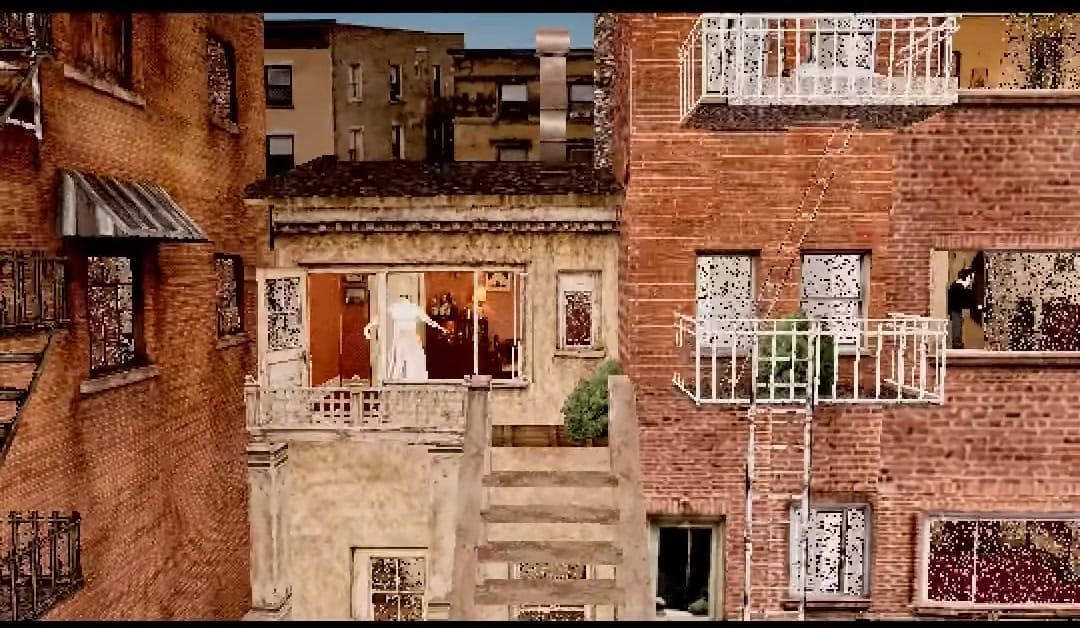
Jamin: The Rear Window piece took you a week. You built the entire set in Blender?
Miles: Yeah. I found some architecture articles about it, actually, and they provided blueprints online—I don't know if they'd found these from the film archives or if they'd built them from the scenes. And someone else had built this amazing recreation—they built it in Blender, but they had these really nice renders in Unreal. So I was using all of these references and shots from the film to make it, and all the textures: OK, that wall is this color brick, so I'll try and find that color brick. As long as it looks right in the shot, it doesn't matter what else is there.
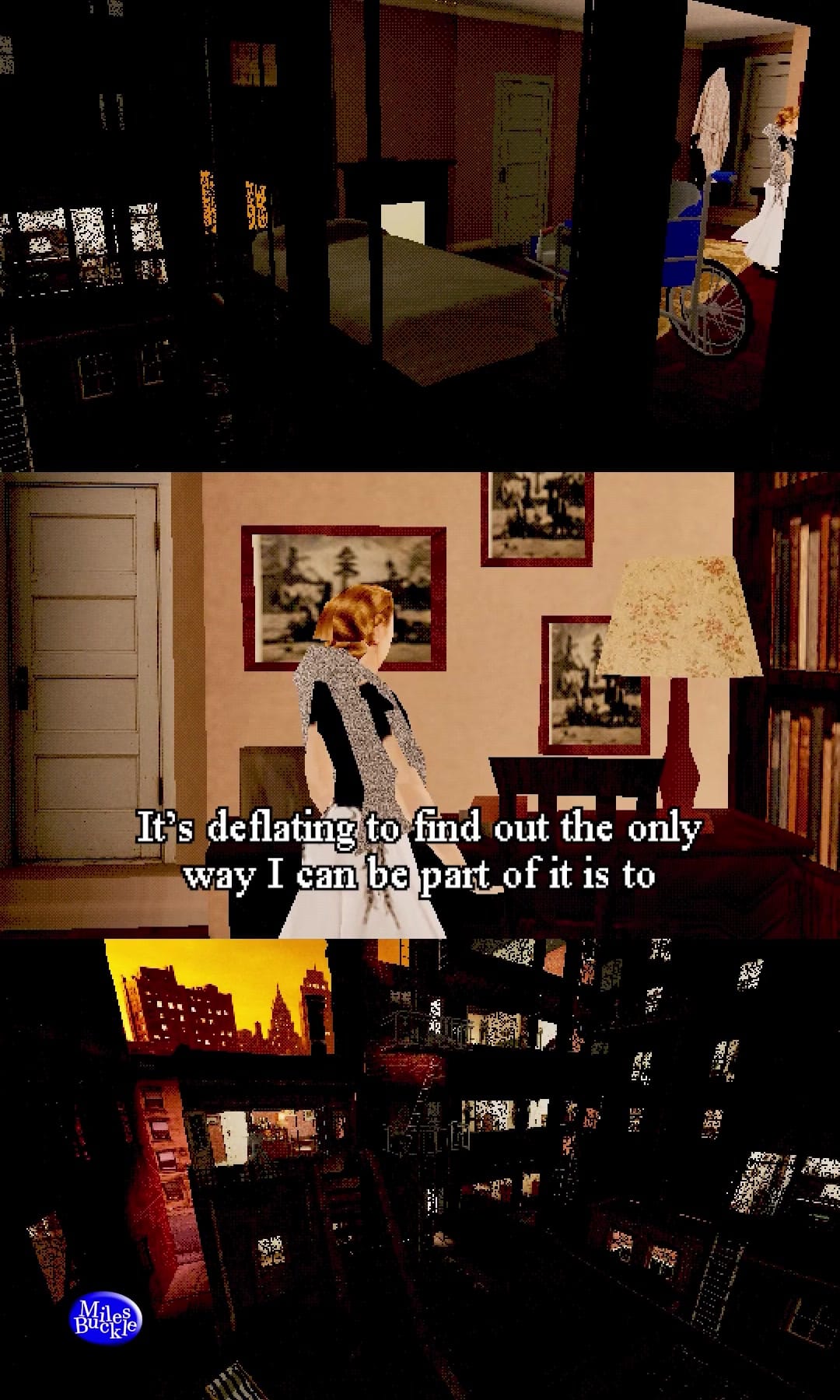
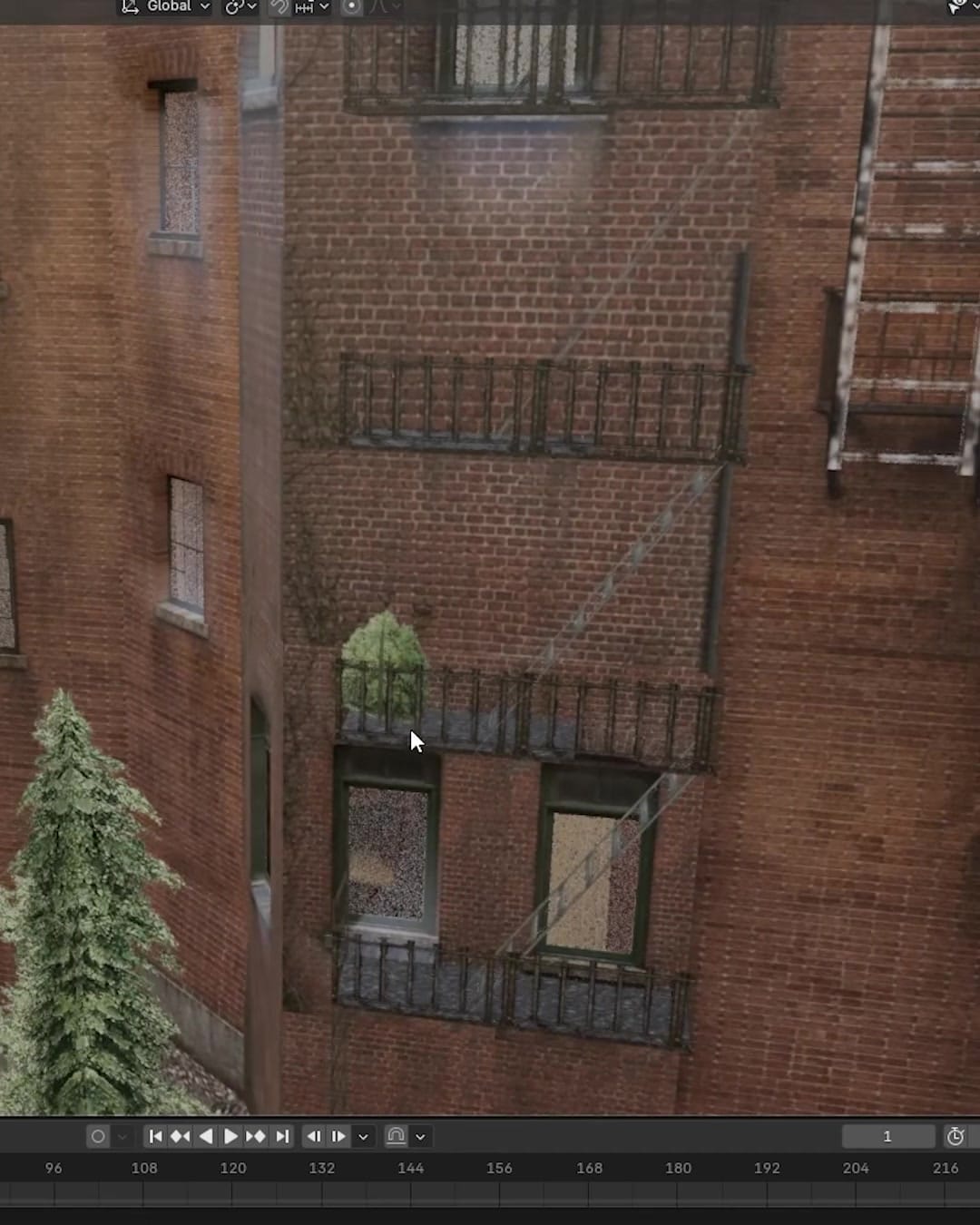
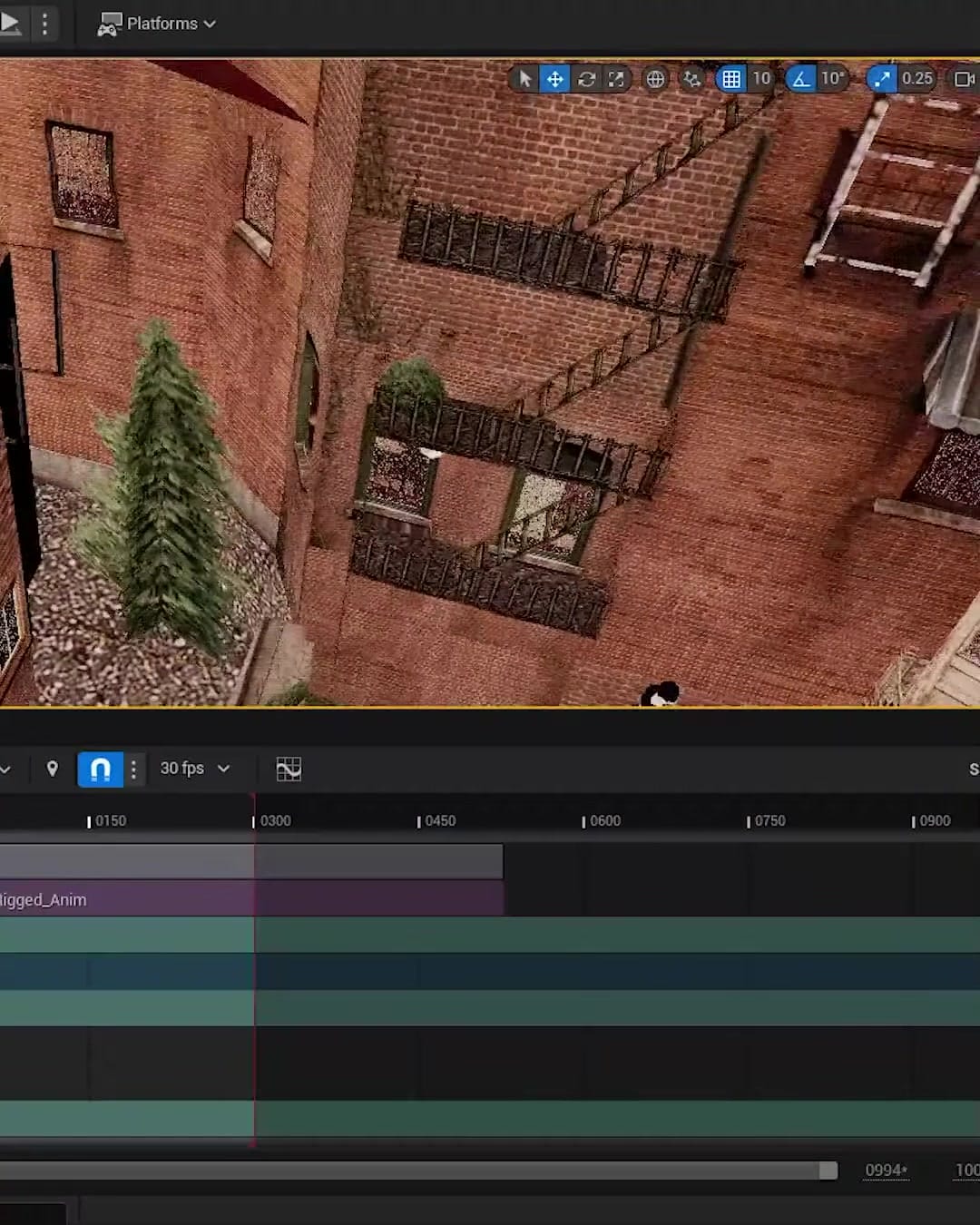
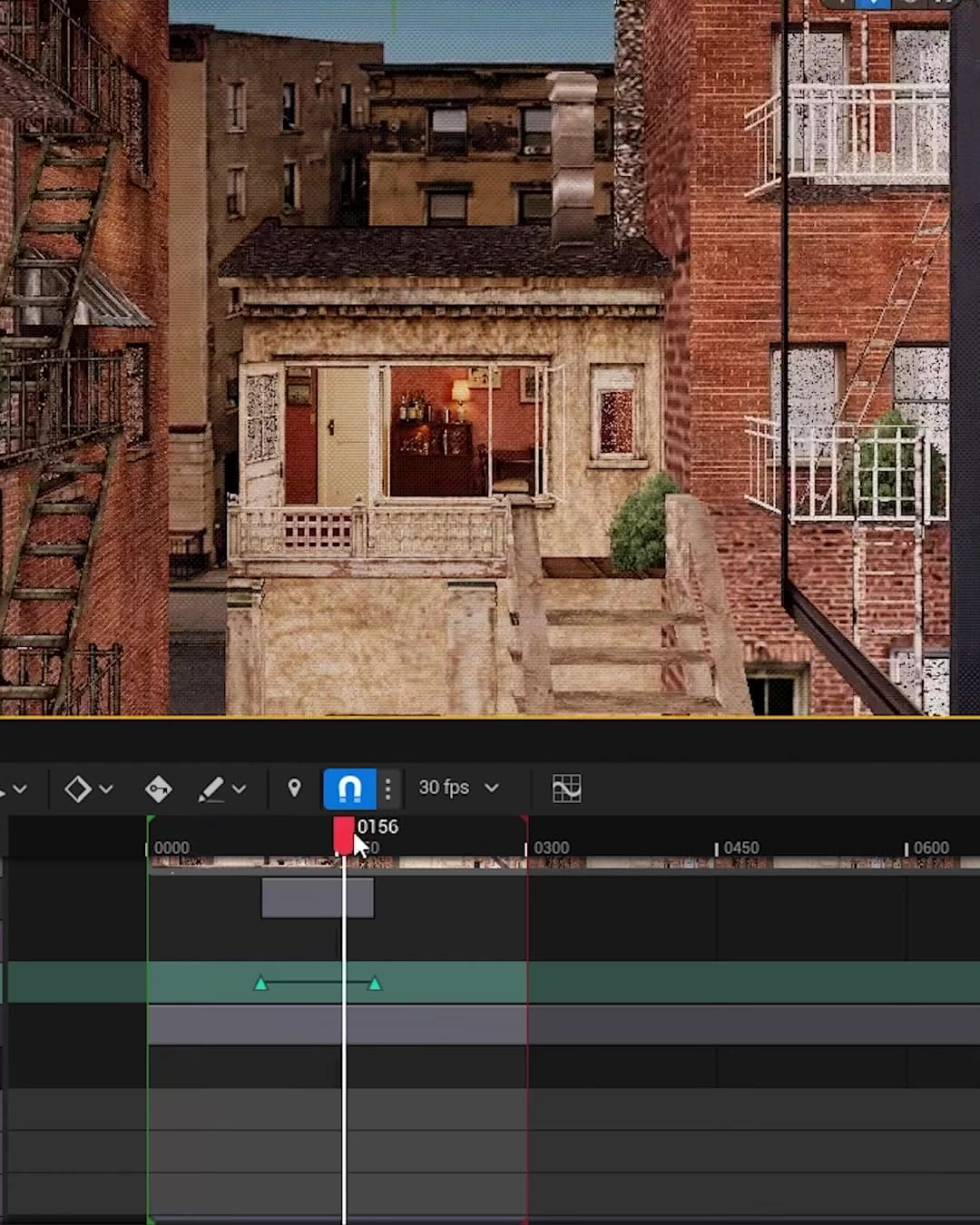
Rear Window 2000. Courtesy of Miles Buckle.
Jamin: Which is very true about games. It's something I was looking at a couple of weeks ago with the backrooms—in games there are these liminal spaces where there's not necessarily something on the other side. And in some ways film worlds do operate like that: if you slipped through the set, you'd be in this whole other place. Amarcord interested me because you strayed further from the frame there. Tell me about constructing that one.
Miles: I wanted to capture—because I did a similar one for The Umbrellas of Cherbourg—more just the vibe of a film, especially a film that's set quite specifically in a location, but also a film that has—it's funny, I actually watched this last night again—a very specific aesthetic. Both of these films have surreal environments, but it's kind of hidden a little bit. In Amarcord there are certain things that just don't make sense about the environment, but it's intended to be how memory works—how you remember something in a way that's probably not accurate, but that's still the way you remember it. There's a great scene where they're all on these little boats and the sea is clearly made of plastic—but it's not a bad special effect. He remembers the sea being this waterproof layer between him and under the water. And a lot of videogames really have that same thing. We remember something in a certain way. So I'm definitely interested in films where memory is part of the story. Lost Highway as well.
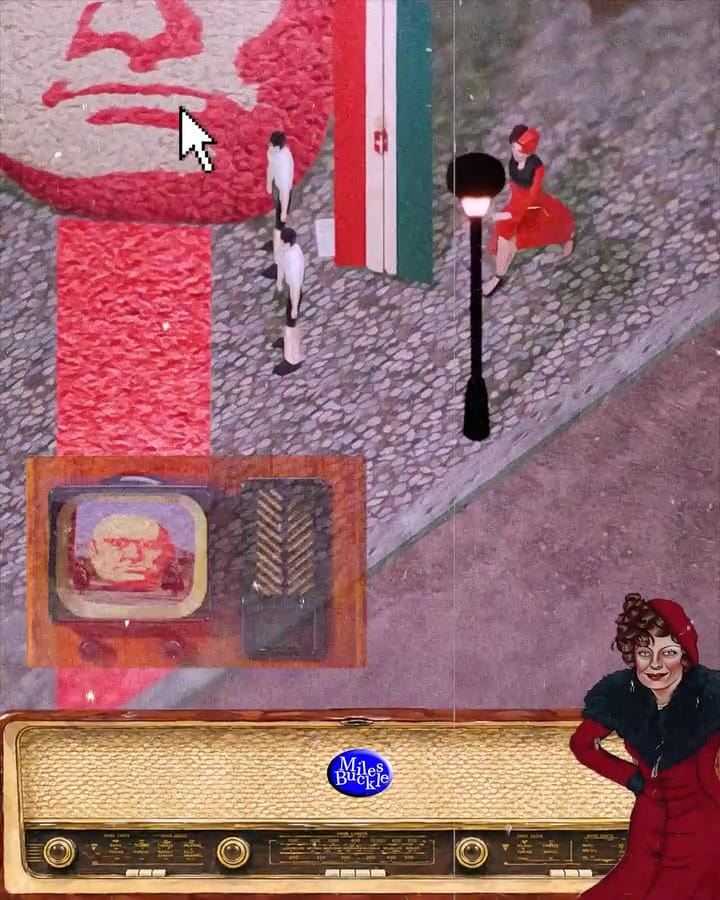
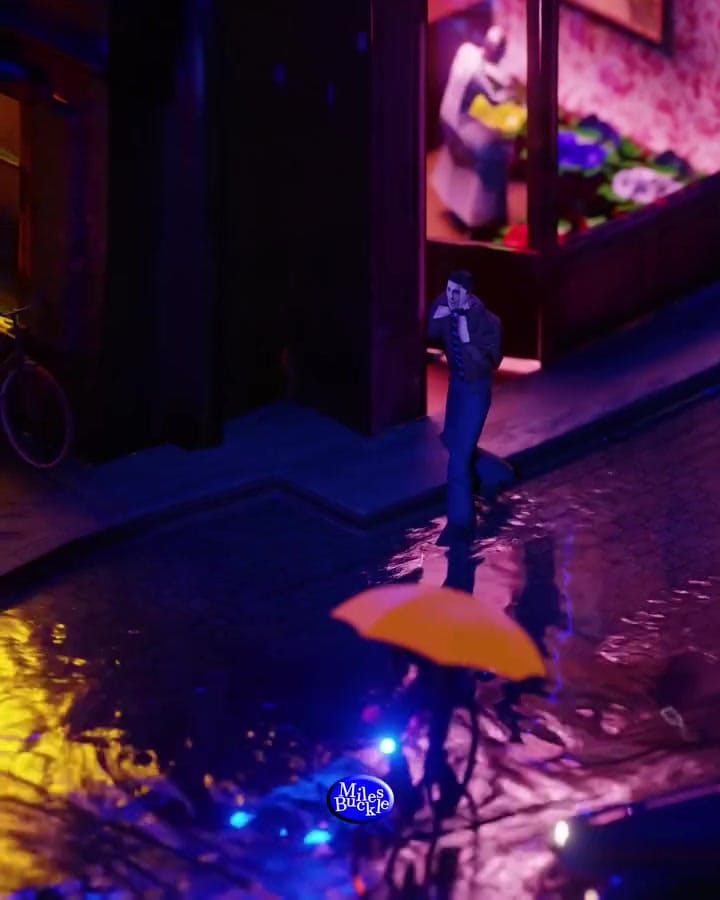
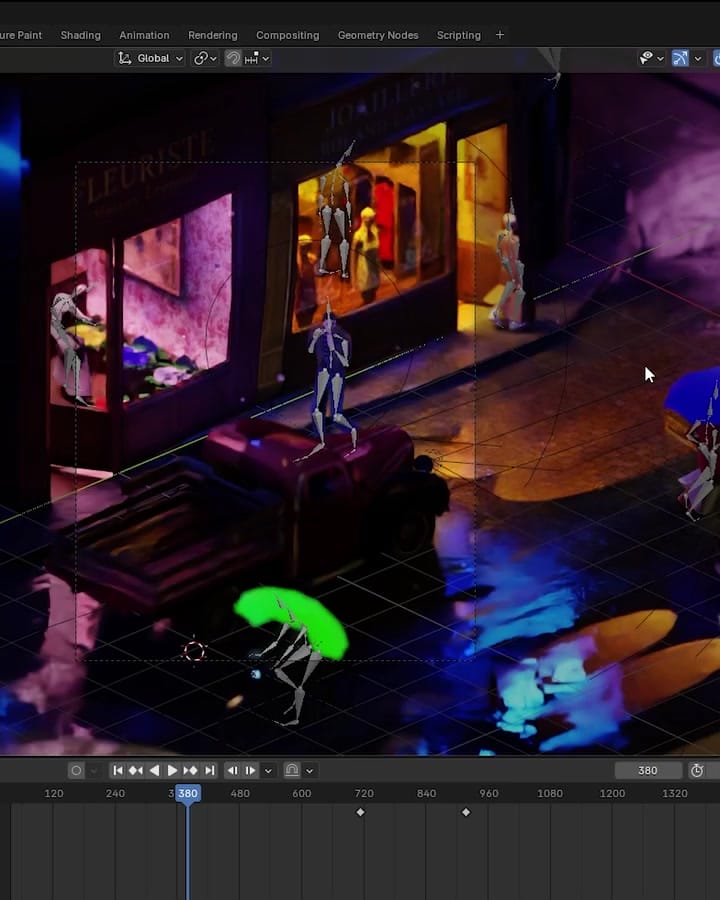
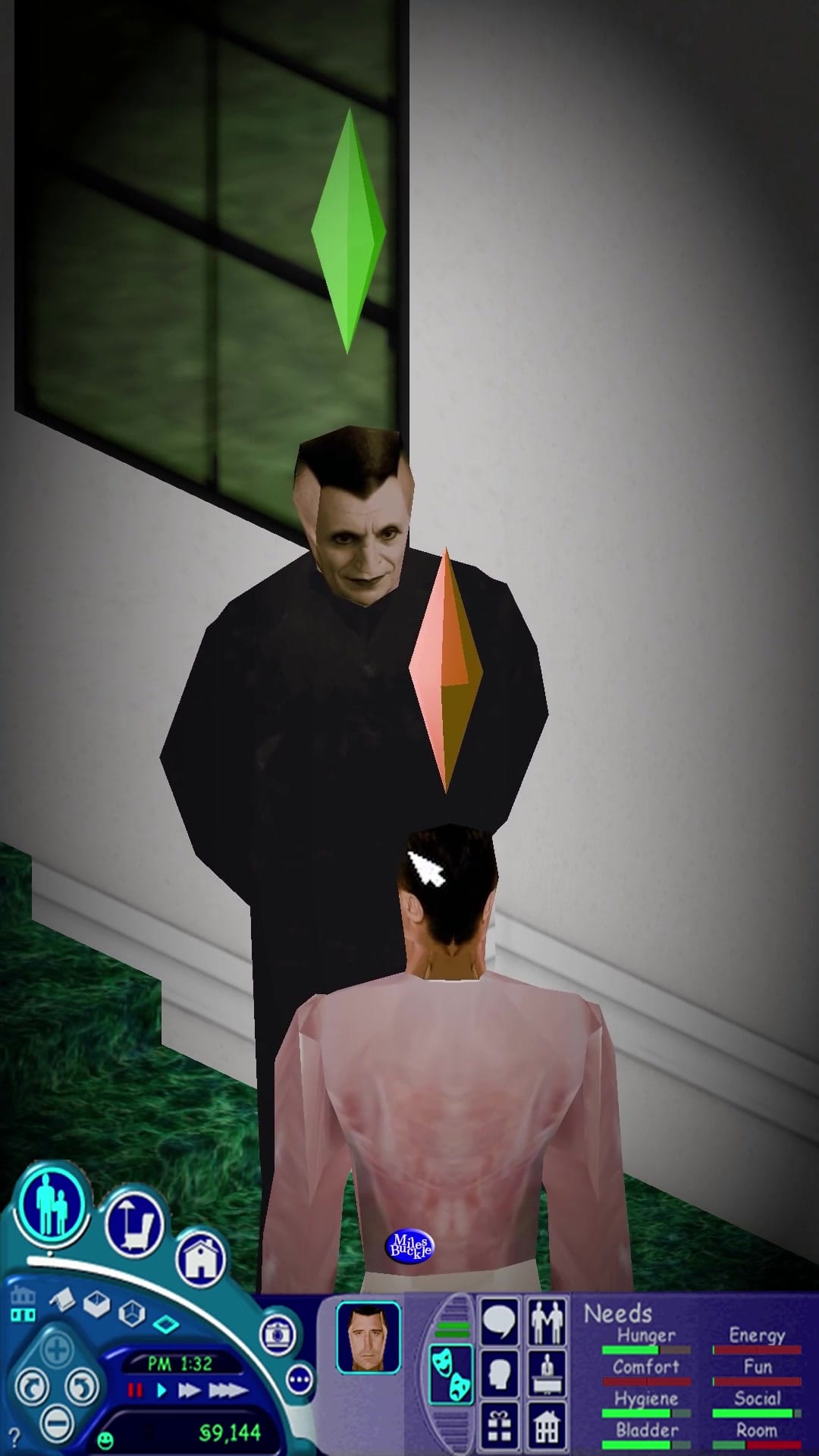
Amarcord, The Umbrellas of Cherbourg, Lost Highway and the Backrooms in The Sims. Courtesy of Miles Buckle.
Jamin: A question that comes up in your comments is, "I would play that." Do you feel like that's the right question? Is it a call to action—that you should do an adaptation? Or are they maybe missing the point of what this work is?
Miles: It makes me happy seeing that sort of thing, because it shows that I am in touch with what maybe doesn't exist but people would like. It's satisfying and rewarding to be not teasing people with imagine they did make this, but, you know, it's a snapshot of something that would be nice to that person.
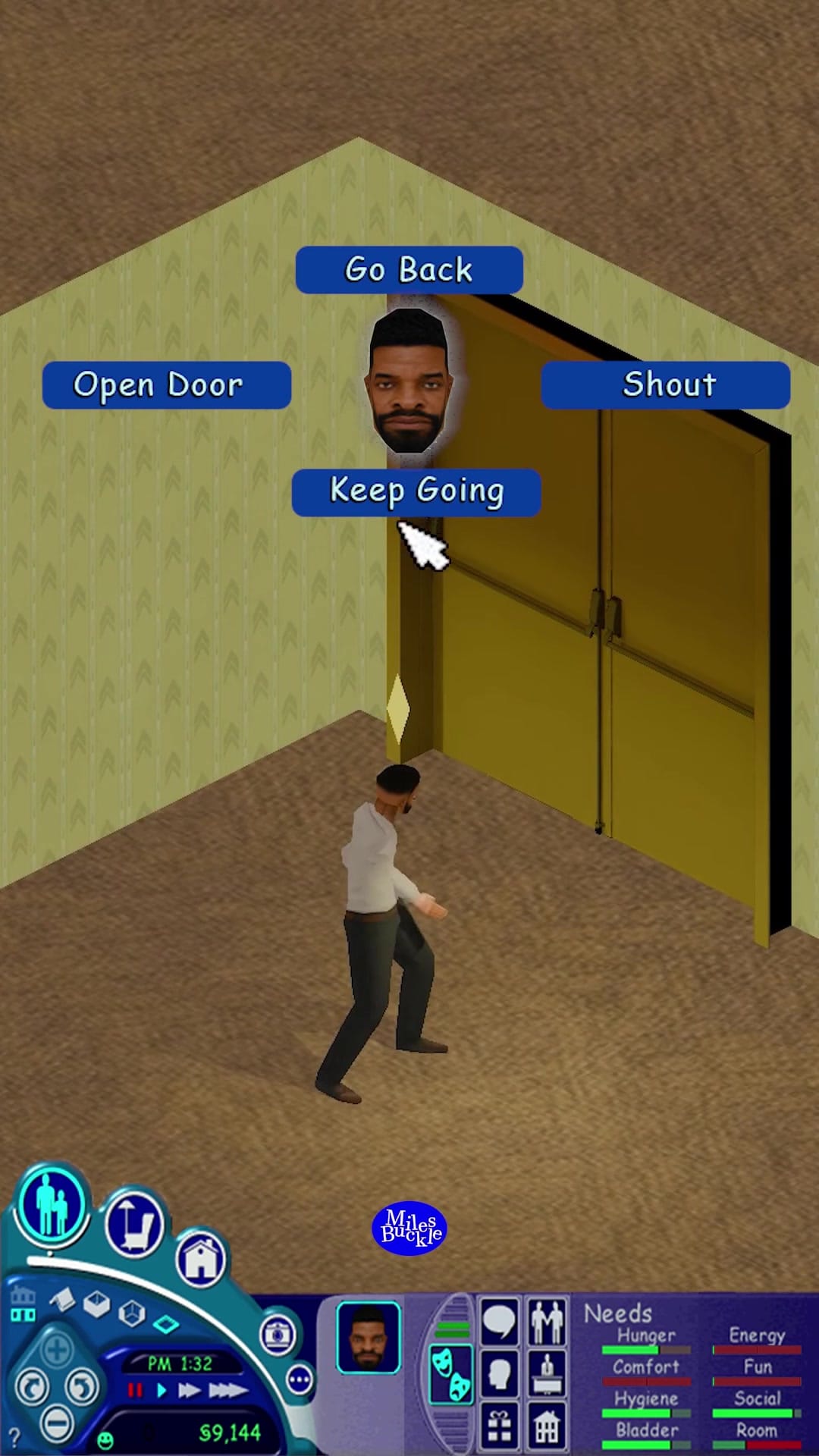
Jamin: Last question—the Sims animation work, like Hitchcock's Rope. There's a performative turn there, away from the pre-rendered and toward something more in line with machinima. What inspired that jump?
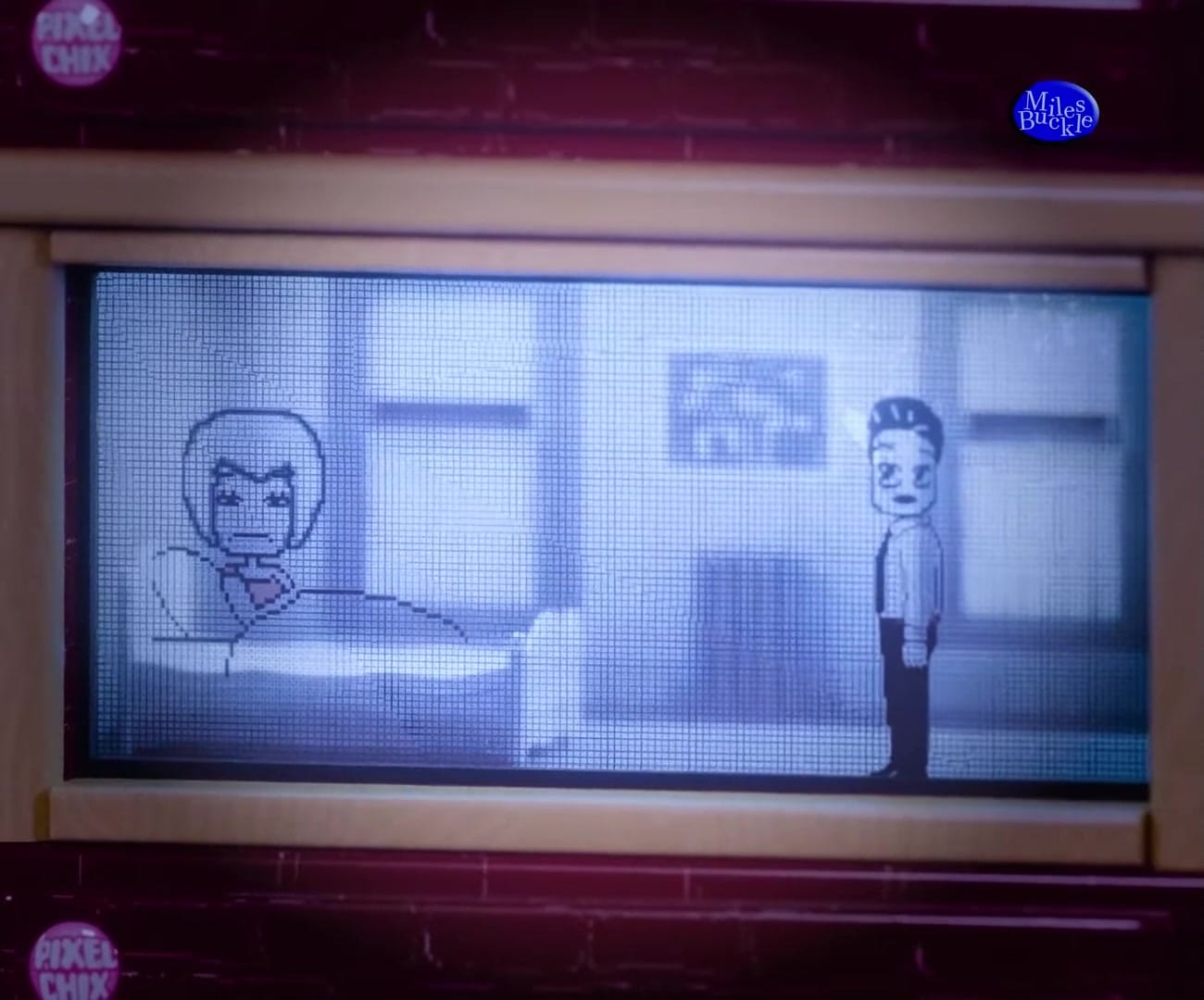
Miles: I was interested in how I could combine the pre-existing mechanic in a game with a moment in a film. If someone's going to walk from A to B, you tell them to walk from A to B—and rather than their reaction being a close-up of their face, because we don't get that shot from our perspective, what would the videogame offer? Would there be a bubble above their head? I also like the on-rails, choreographed element, where it looks like it's happening organically but everything is going off in timing, which comes full circle with the filmmaking part: it's a film made to look like a videogame, but it is just a film. These are all the sorts of things that inspire me, because I think in a weird way I'm actually more interested in the filmmaking part of it than in the game design part. It's just that I like the aesthetics and the visual mechanics of videogames.
Buckle’s games are unplayable on purpose, and almost nobody else is writing about work like it. Killscreen is, and it’s free.