Lou Faroux on Digital Apocalypse, the Kardashians, and Hollywood's Closeted Golden Age
French artist Lou Faroux uses game engines and AI avatars to ask what the internet did to us—and to resurrect Hollywood's closeted Golden Age.


Lou Faroux makes work about the internet as a participant-witness, sketching the conditions of a present that won't sit still long enough for anyone to fully describe it. Her films and installations move through a vocabulary familiar to anyone who has spent the last 20 years online: the awkward Mark Zuckerberg keynote, the Kardashian confessional, the GTA "WASTED" sound, the TikTok logo sound, the Sims character creator screen. But what she does with those materials is closer to history painting than to meme culture. Faroux treats the contemporary digital landscape as a subject worthy of the same attention a Renaissance court painter might have given a coronation: slightly exaggerated, lightly sarcastic, deeply serious about what it means to depict a society to itself.
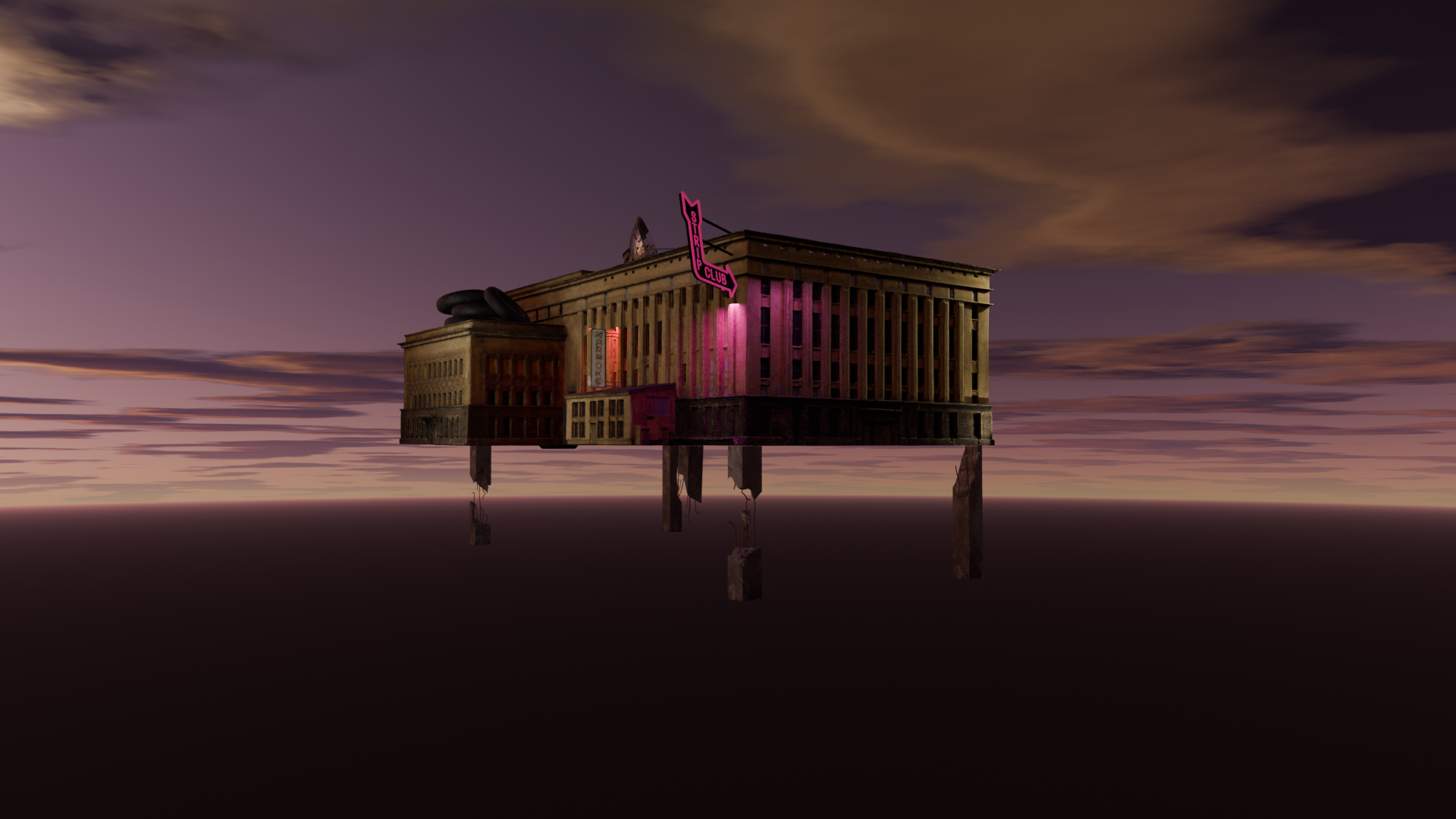
Trained as a filmmaker, the Paris-based artist arrived at games sideways. Early pieces like This is How the World Ends (2020) and Take Me to Your Dreams used The Sims and stock 3D assets as a kind of casting agency, populating her narratives with avatars rather than actors. More recent work, like K-Detox Internet Collapse (2024), has pushed further into game engines proper, building rehab centers, abandoned churches, and parking lots where the residue of online behavior plays out after the network has gone dark. Her characters scroll on dead phones. Her Zuckerbergs deliver sermons in deconsecrated chapels.
Her newest project, Diamonds and Dust, complicates the picture. Developed during a Villa Albertine residency in Los Angeles and built in Unreal Engine using Parag Mital's Emergentic software for AI-driven characters, the piece turns its attention from Web 2.0 to the Hollywood Golden Age—specifically to the "Sewing Circle," a loose constellation of queer and lesbian filmmakers and actresses who worked under the censorship of the Hays Code from 1934 to 1968. They include names like Alla Nazimova, Dorothy Arzner, Greta Garbo, and Marlene Dietrich.
Faroux has been digging through the archives at USC, UCLA, and the June L. Mazer Lesbian Archives, building avatars that will eventually inhabit a re-creation of demolished L.A. landmarks like the Garden of Allah, now a parking lot on Sunset Boulevard. The plan is to let those avatars converse—with each other, with Zendaya, with Kim Kardashian—across a hundred years of repression and self-representation.
We spoke about her childhood hacking The Sims, why the internet's collapse interests her more than its survival, and what it means to build a video game out of a queer archive that the studios spent half a century trying to erase.
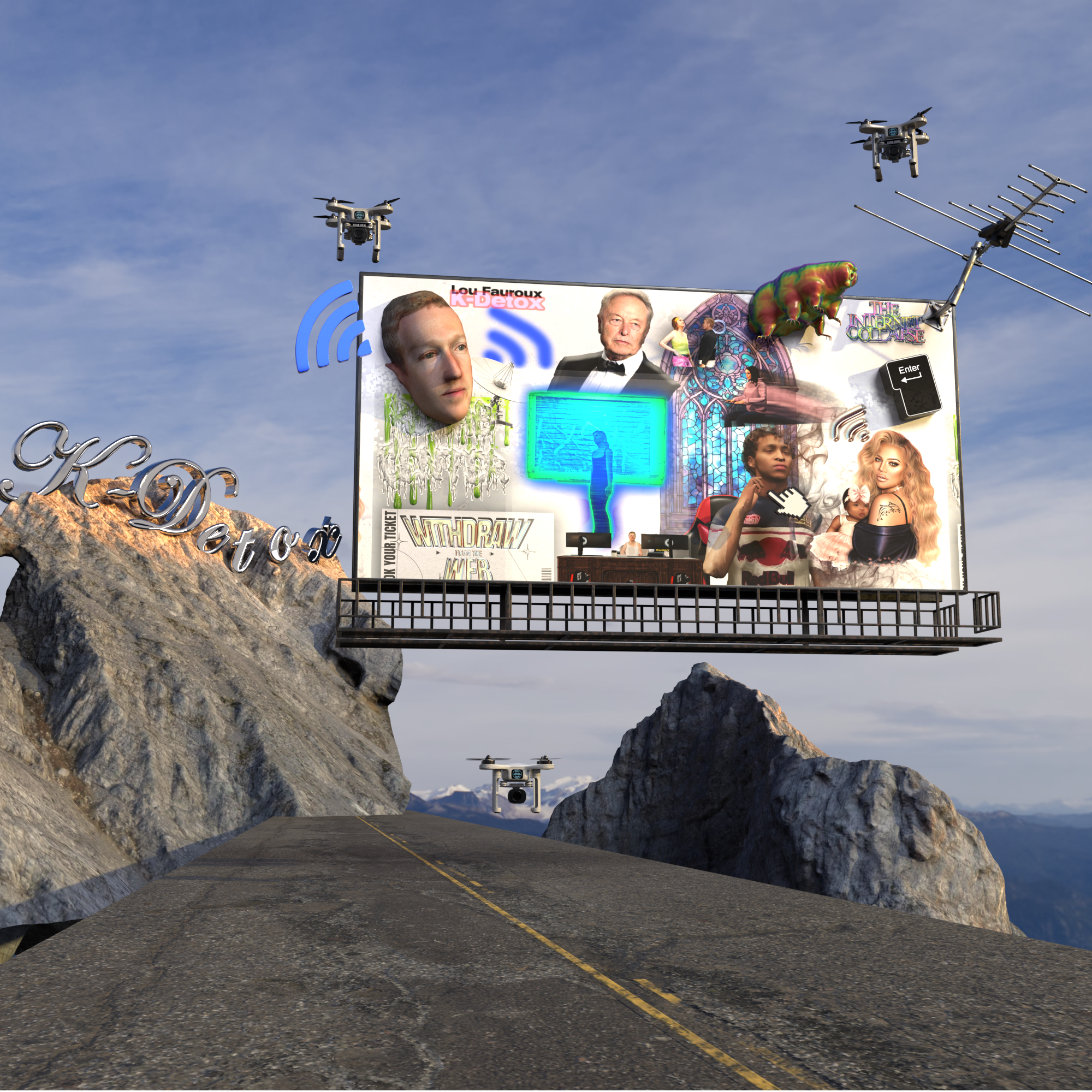
Jamin Warren: You've described The Sims as foundational. Can you tell me about your early relationship to games and play, and how you first got pulled into digital worlds?
Lou Faroux: I was very into simulation close-to-reality games growing up. I might even have learned to read from video games, because I started playing really young on small, interactive online games. For several years, I was mostly playing driving games, whether it was RPM Tuning or Trackmania. I loved driving through cities and landscapes I'd never been in. And then The Sims. I started being interested in simulation games very young.
The Sims is famously open-ended—people play it in radically different ways. What kind of player were you?
We had add-ons that would make us have enormous Sims, bigger than the walls. We would press this machine and have all the Sims gain knowledge, or force all the Sims to be in love with each other. I was very into pushing the boundaries of the gameplay, but I also liked doing celebrities; my family, and friends in fancy homes and fancy neighborhoods. There are many ways to approach the game. I have a lot in my TikTok feed, people who put Sims in jail in bunkers that they create and enslave them.
After the Network Goes Dark
Many artists who grew up playing games went directly into making them. You took a different path, starting with film. What kept games at arm's length in the early years of your practice?
I had no idea we could make games. It took me some years to realize that it was possible to be behind the scenes. My films were very much influenced by video game culture and online culture, such This Is How the World Ends about a VIP software that could offer online services, which I did in 2020. It was during the lockdown and focused on a VIP software that could offer online services to avoid lockdown regulations. For the part in the film where people are uploaded, I used The Sims and filmed in The Sims to play that part.
I direct characters like avatars, not as a director directing actors and actresses as realistic people. They have this little bit of an NPC behavior. Maybe I needed years of digestion to understand how people respond to a narrative before I could add the option of interaction as a whole new dimension. There's also a sense of authority somehow, because then I get to tell what the beginning is, what the end is.
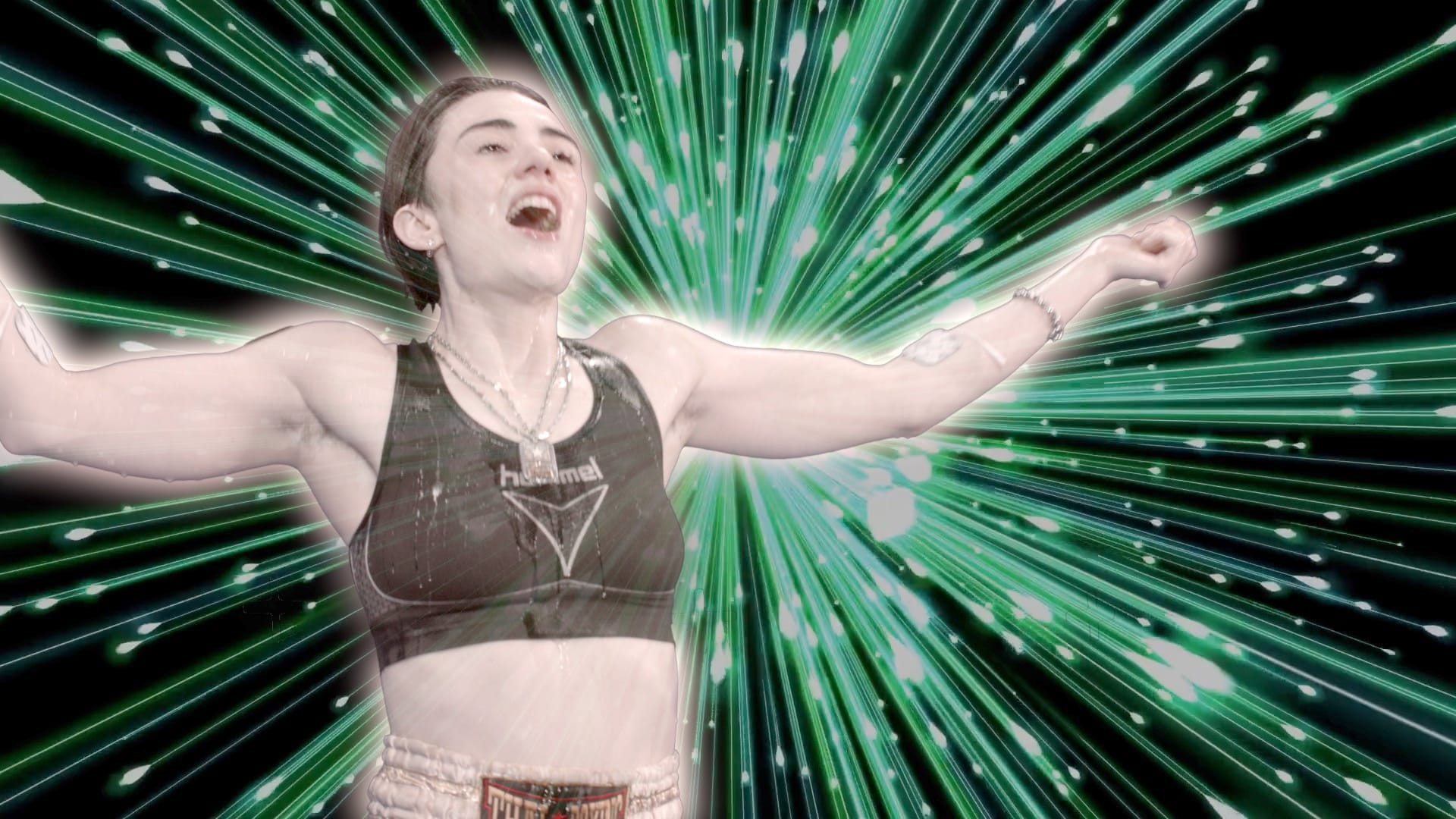
I direct characters like avatars, not as a director directing actors and actresses as realistic people.
One thread that runs through K-Detox and other pieces is this moment when the internet fails—not as a full apocalypse but as something more ambivalent. Are you mourning the internet we lost, or imagining what comes after?
It's almost about how the Internet has changed behaviors and society at an anthropological level so quickly. I'm interested in the human interaction with it and the human habits of integrating this massive, omnipresent tool, more than in the actual fear of its disappearance. As long as two computers are connected, the internet exists. Imagining its disappearance helps take a step back to reflect on what we let the internet become, the project it originally aimed for, and how it shifted so quickly, far from the open-source, knowledge-for-all projects it began with.
There's this little game I like to play in my head that led to Internet Collapse: is this 50-year chapter that could end in a minute just a small tab in the history of humanity? Or were the 2,000 years without the internet just a brief start, and the internet has been on for millions of years, transforming what we think humanity is?
Killscreen members get the Friday Playlist, the members-only podcast, and the full run of back issues. Two dollars a month.
Mark Zuckerberg and Kim Kardashian keep showing up as recurring characters across your work. They're an unusual pairing. What do they each represent for you, and why do you keep returning to them?
It wasn't meant to be important at first, but then, empirically, they became main characters. Mark Zuckerberg represents this early stage of Web 2.0, which seemed more about connecting and hope than it actually is now. He fits that very dystopian narrative—seeming very American Dream, the little genius nerd, self-made, but ends up being the MAGA billionaire supporter.
The Kardashians are very important in shaping how people buy, look, and communicate. The whole lore of social media culture is very much influenced by them, since O.J. Simpson, and the way they influence the culture as TV reality. They invented a way to present oneself with digital representation tools. I use them as almost religious icons.
From my perspective, in the system that is America, people are not citizens; they're employees of a company, and the federation is a company. The Kardashians are a business, and have no boundaries between what's business and what's life, what's family, what's private, and so on. It touched something about how we live under capitalism.
Also, they created fame before they created a product. Tech companies—San Francisco, Silicon Valley—code empty shells. And then the Kardashians in L.A. create content. They go hand in hand to waterboard the market of their presence.
The Archive That the Studios Tried to Disappear
Let's turn to Diamonds and Dust, which feels like a significant departure—you're moving from internet-native subjects to Hollywood's archival past. Walk me through what the project is and what drew you to this material.
It's a virtual environment that, like K-Detox, would give life to both a film installation and an interactive gaming piece. Through the Villa Albertine residency in L.A., I worked in archives at USC and the June L. Mazer collections. I was looking for letters, photos, materials from a group of actresses from the Hollywood Golden Age nicknamed the "Sewing Circle." It's a group of queer and lesbian filmmakers working under the Hays Code, the Motion Picture Production Code, in effect from 1934 to 1968.
They were gay men and lesbians who sometimes married each other to have a straight passing for their reputations. The lack of institutional history of queer lives makes you want to dig and understand what was going on 100 years ago. I'm interested in what it created in their persona as they repressed this side of themselves. Where could they explore their identities? There was the Garden of Allah, a hotel complex owned by Alla Nazimova, where many lived and created. Films like Queen Christina and Salomé emerged from them, living together.
I found letters from the Hays Code addressed to producers saying scenes that present homosexual traits should be pulled or distribution would stop. I'm interested in the history of homophobia onscreen, because Hollywood has enormous responsibility in how they present identities and minorities. Movies are more than a soft power.
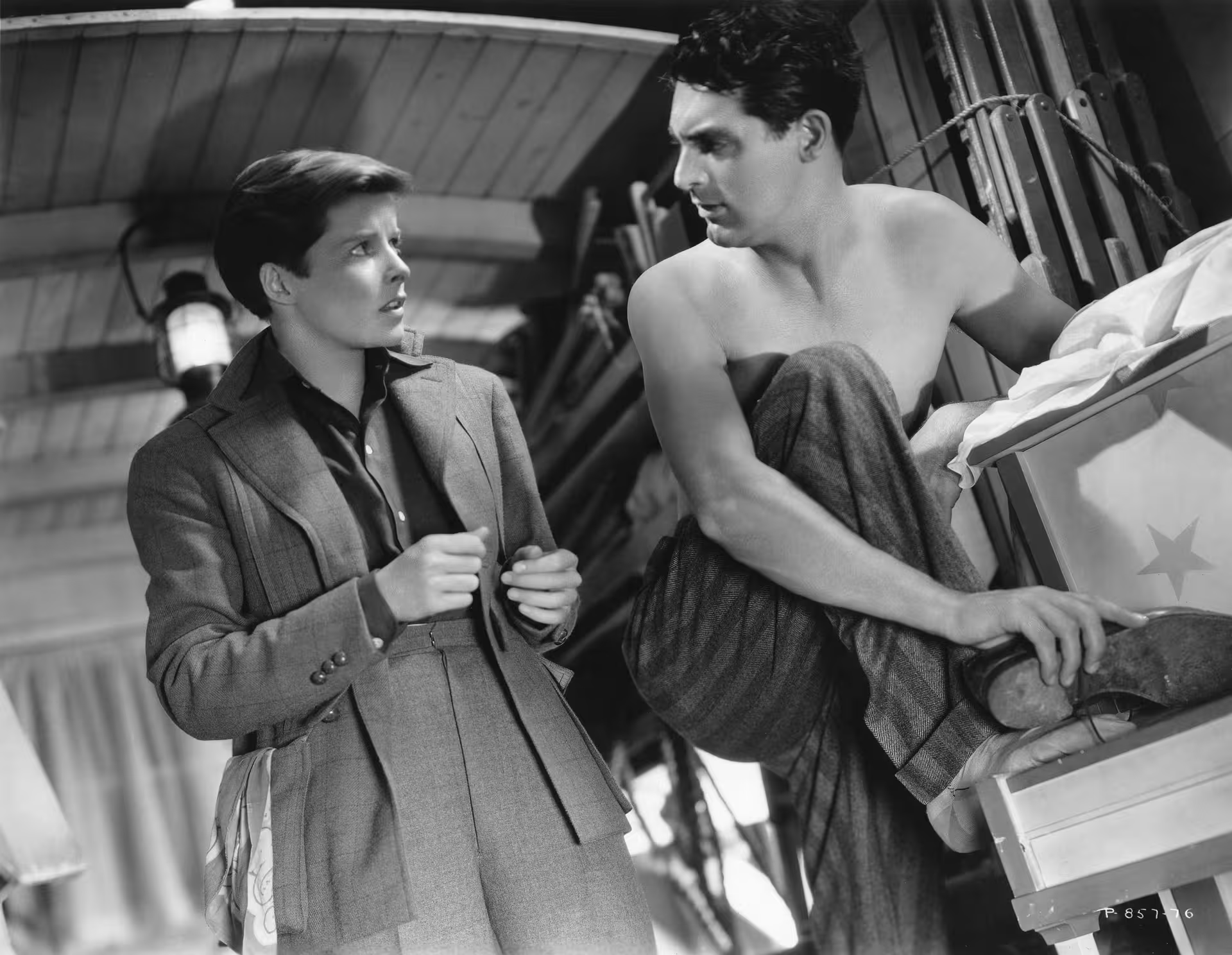
You're working with Parag Mital's Emergentic software to build AI-driven avatars from these archives. There's a growing wave of artists using AI to make archival material more accessible without flattening it. How are you thinking about AI's role in Diamonds and Dust?
I'm creating character avatars with their own histories, feeding their datasets from the archives. We could have Alla Nazimova chatting with Zendaya and Jodie Foster on a parking lot, because the Garden of Allah has been bulldozed—it's a parking lot on Sunset Boulevard now. So it's also about L.A. self-representation, about L.A. as a decor that changes very quickly.
We, in theory, all have access to this knowledge—going to collections is free—but with these tools, whether it's our vision or the AI, we can make it more digestible and accessible. With Emergentic, you can have AI-driven avatars interact with the piece. We could have an AI avatar of Kim Kardashian watching a 1920s film and reacting live.
I'm thinking of simple missions, like towing a car, which is very much about how L.A. works. These two characters sitting in the towing truck get to chat about certain topics. There used to be a McDonald's where the Garden of Allah was destroyed, so I'm thinking of using the menu screens as an interactive information desk. I still have a lot of freedom.
Killscreen covers the artists building worlds out of what the archives kept. Once a week, free.