What happens after the internet is gone?
Also: Kim K, game engines for fka, and read on for shredding


Lou Faroux on Digital Apocalypse, the Kardashians, and Hollywood's Closeted Golden Age

Lou Faroux makes work about the internet as a participant-witness, sketching the conditions of a present that won't sit still long enough for anyone to fully describe it. Her films and installations move through a vocabulary familiar to anyone who has spent the last 20 years online: the awkward Mark Zuckerberg keynote, the Kardashian confessional, the GTA "WASTED" sound, the TikTok logo sound, the Sims character creator screen. But what she does with those materials is closer to history painting than to meme culture. Faroux treats the contemporary digital landscape as a subject worthy of the same attention a Renaissance court painter might have given a coronation: slightly exaggerated, lightly sarcastic, deeply serious about what it means to depict a society to itself.
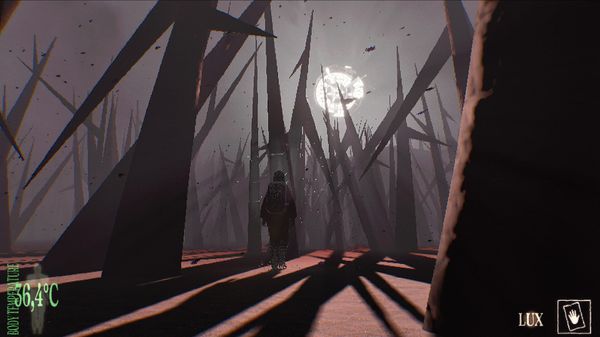
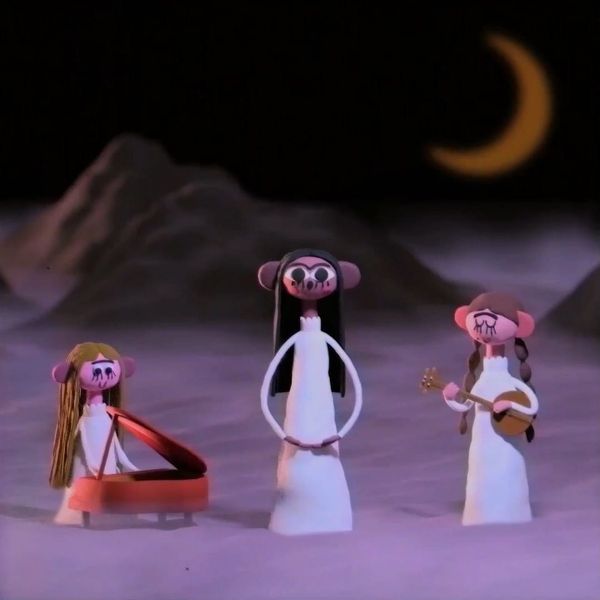
Trained as a filmmaker, the Paris-based artist arrived at games sideways. Early pieces like This is How the World Ends (2020) and Take Me to Your Dreams used The Sims and stock 3D assets as a kind of casting agency, populating her narratives with avatars rather than actors. More recent work, like K-Detox Internet Collapse (2024), has pushed further into game engines proper, building rehab centers, abandoned churches, and parking lots where the residue of online behavior plays out after the network has gone dark. Her characters scroll on dead phones. Her Zuckerbergs deliver sermons in deconsecrated chapels.
Her newest project, Diamonds and Dust, complicates the picture. Developed during a Villa Albertine residency in Los Angeles and built in Unreal Engine using Parag Mital's Emergentic software for AI-driven characters, the piece turns its attention from Web 2.0 to the Hollywood Golden Age—specifically to the "Sewing Circle," a loose constellation of queer and lesbian filmmakers and actresses who worked under the censorship of the Hays Code from 1934 to 1968. They include names like Alla Nazimova, Dorothy Arzner, Greta Garbo, and Marlene Dietrich.
Faroux has been digging through the archives at USC, UCLA, and the June L. Mazer Lesbian Archives, building avatars that will eventually inhabit a re-creation of demolished L.A. landmarks like the Garden of Allah, now a parking lot on Sunset Boulevard. The plan is to let those avatars converse—with each other, with Zendaya, with Kim Kardashian—across a hundred years of repression and self-representation.
We spoke about her childhood hacking The Sims, why the internet's collapse interests her more than its survival, and what it means to build a video game out of a queer archive that the studios spent half a century trying to erase.
Community Update
I profiled director Andrew Thomas Huang in 2019 for some of his engine-based work, and he recently shared some incredible behind the scenes footage of his work with FKA Twigs on the intimate and dazzling 2019 video Cellophane.
In our past interview, we talked about digital puppetry and heshared this great anecdote about the Muppets:
One summer, the Henson company sent two puppeteers to schools in LA to do a puppet program. When I was nine, they came to my neighborhood and taught us how to cut foam patterns and work with some pretty industrial, toxic materials. I threw myself at it. I felt privileged to be growing up in LA; to have access to stuff like that. That was the first moment I thought, Oh, this is how you can sculpt actual puppets out of foam and use industrial materials to fabricate these things. Even though I was nine, I still was like, Tell me what you actually use to make this stuff.
Thinking On..
They are people within their own right here and now, who go through struggles and trials and need the gift of story to help them, whether life’s storms are the same as any of us do. Their perspectives are quite literally smaller, but that doesn’t make their needs any less necessary or demanding.
This essay from Claire Swinarski got me thinking about how differently we treat children's media from "grownup stuff." It is a place where I think games can be quite flat (with the exception of R-rated content) where the medium can work across a variety of registers, including kids.
Spandrel
- The New York Times ran a challenging and detailed story on how games' play in Rikers. It's a nice complement to Ryan Bradley's 2015 story I ran about Leavenworth.
- I spend a lot of time thinking and talk to game makers that didn't set out to make games. Domus takes a look at the influence of architecture in fashion design, specifically the use of scale on the runway.
- A site-specific immersive theatre performance set at a Mexican family reunion to the tunes of Linda Ronstadt
- French-born Sino-Cambodian artist Virginie Tan is working with real-time field recordings from the Italian region of Molise, Italy for her playable wallpaper Windows - Montenero Edition (above).
From the Archive
Axe to Grind
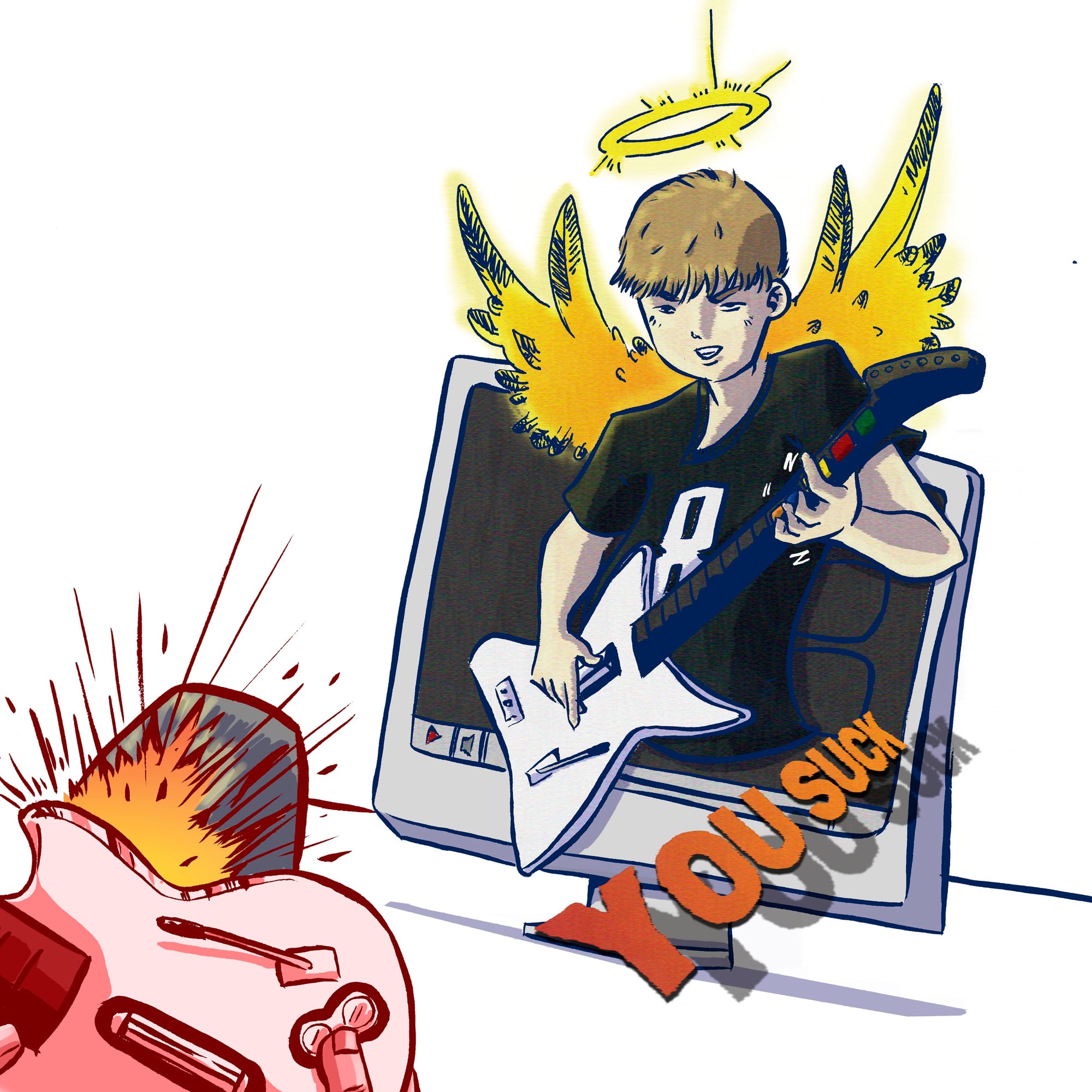
Hey, Guitar Hero prodigy! Thanks for making me feel like shit!