Falling blocks got the White House a copyright threat
Build the Wall vanished from arcade.gov days after The Tetris Company's warning.

On September 3, the White House launched arcade.gov, a page of five MAGA-themed browser games. One of them, Build the Wall, was a near-exact Tetris clone that asked players to "protect the border from the coming horde." The Tetris Company answered on X: "We take copyright infringement very seriously." Four days later the game disappeared from the site without explanation. That much made the news everywhere.
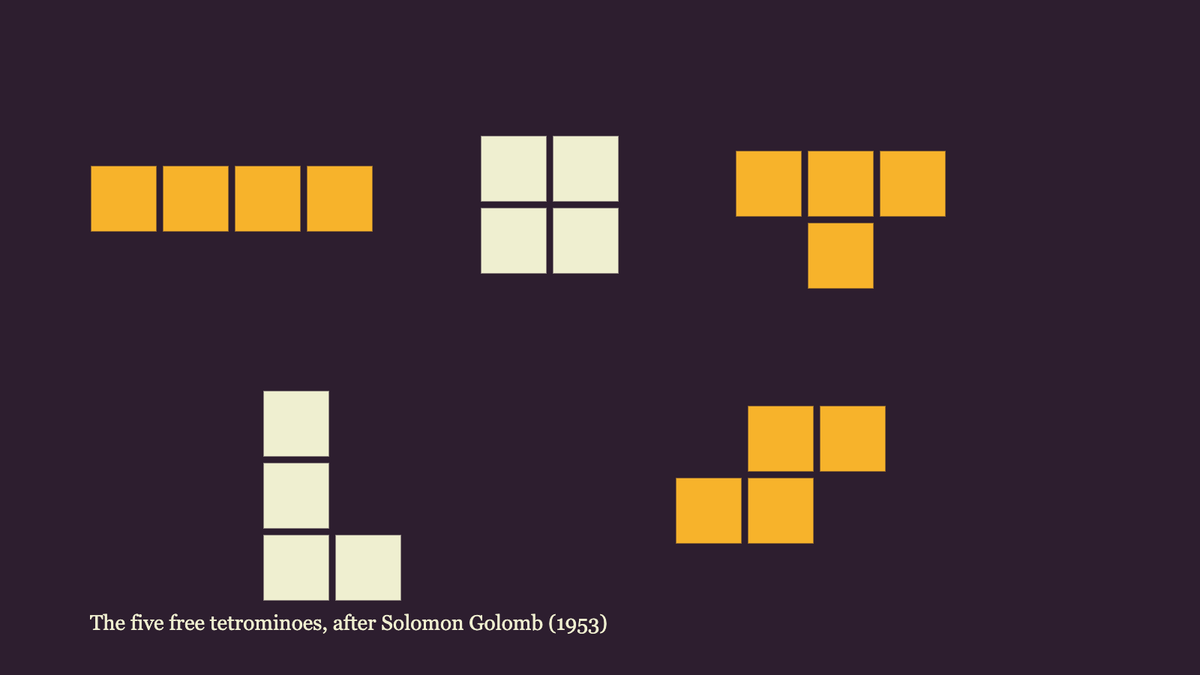
The reason it belongs here is the essay Julien Mailland published at the MIT Press Reader, which the publisher's announcement pointed me to this week. Mailland, a media law professor and author of Soviet Blocks, uses the takedown to reopen a question courts got wrong: whether anyone can own falling blocks at all. The mathematician Solomon Golomb described the tetromino shapes in 1953 and popularized them in Scientific American, decades before Tetris existed. The Tetris Company's power to police them rests on a 2012 ruling, Tetris Holding v. Xio Interactive, that effectively extended copyright to elementary geometry. As Mailland puts it, if the shapes were copyrightable, Golomb would be the holder, and Tetris itself would be the infringement.
The deeper history is stranger: a game coded in a KGB-adjacent Soviet lab, spread as samizdat on floppy disks precisely because no property regime applied to it, later fenced in by offshore shells and rewritten credits that erased co-programmer Vadim Gerasimov. We covered the fight over Tetris' copyright years ago; the argument has not aged a day.
A propaganda clone removed by a copyright empire built on a freeware folk object: nobody in this story owns the moral high ground, and Golomb owns the shapes.
Where games, law, and power collide is a beat Killscreen has worked since 2010. The free newsletter keeps you on it.
![The Sound of Dread, From Weapons to Dead Space [Podcast]](https://storage.ghost.io/c/25/84/2584b75d-4bd6-4cce-8259-f1d1c65abbb5/content/images/size/w600/2026/10/scoring-fear-podcast-resident-evil-flashlight.jpg)