FACT Liverpool's Third Journal Turns to Games
Gamespace gathers essays and conversations from Uma Breakdown, Theo Triantafyllidis, David Blandy, and others.

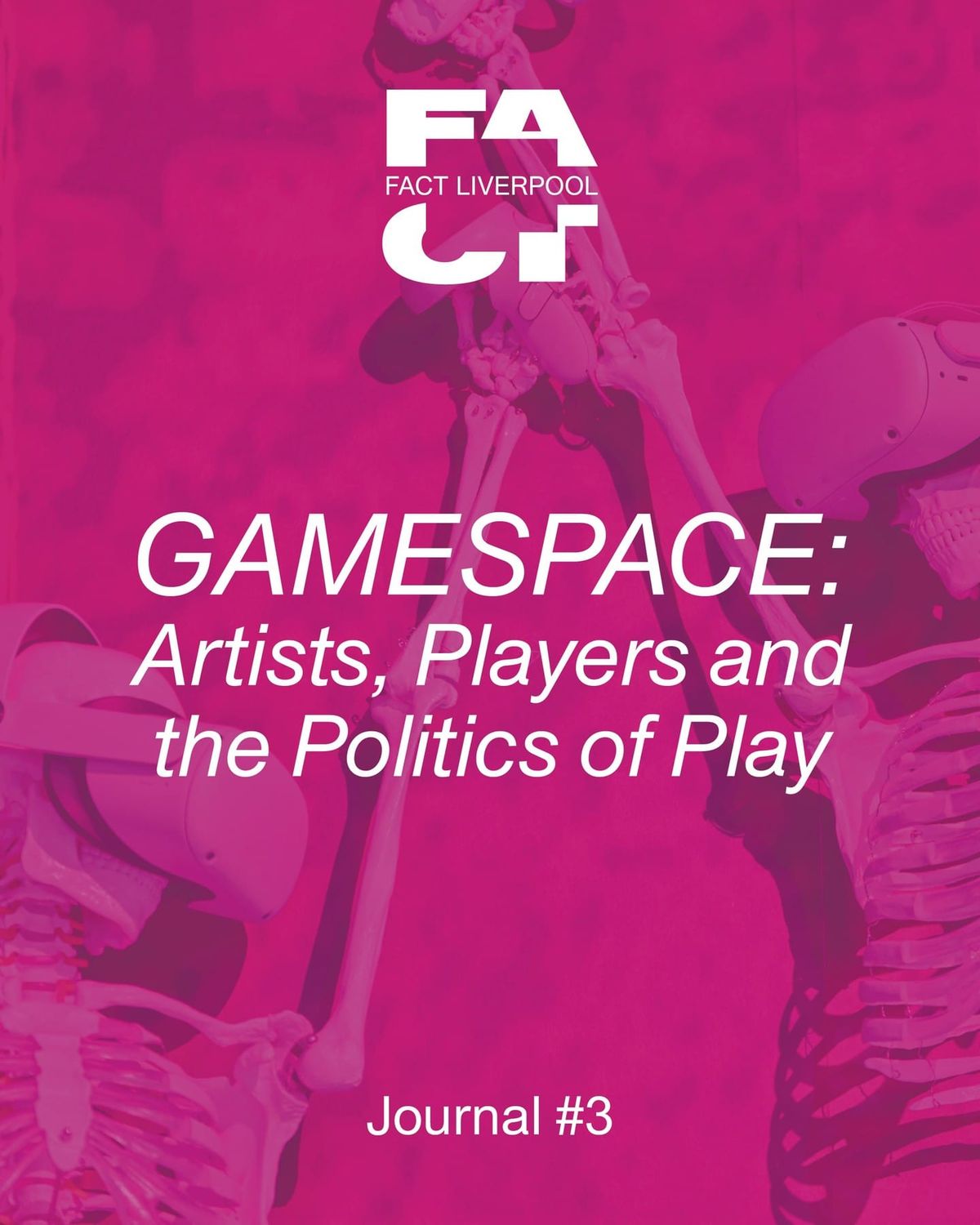
FACT Liverpool, the city's art and technology center, has done something quite wonderful with the third edition of its online journal. It's almost entirely about games. Gamespace: Artists, Players and the Politics of Play went live on November 5, per the announcement, and is free to read on Issuu or as a PDF download.
Of course, there are always challenges with a presenting institution filling the gap left in editorial by presenting its own magazine. FACT admits that the issue is an attempt to model "what a more critical engagement with games might look like from within an art institution," a worthy goal. The listed risks include lending legitimacy rather than applying scrutiny, celebrating a medium while leaving its conditions of production unexamined, and using the tools of the system to critique the system. For better or worse, these are also the concerns of a publisher like me, so welcome!
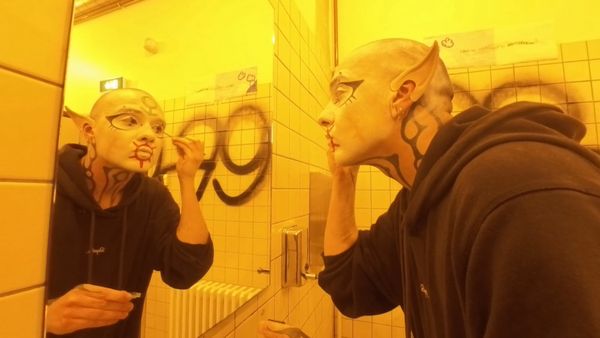
The contents blend essays, conversations, and fiction. Editor Nicola Triscott reflects on the world that games built. Aleena Chia and Marijam Didžgalvytė appear in an edited conversation recorded at FACT. David Blandy and Jazmin Morris discuss games, ecology and the politics of representation. Uma Breakdown asks what is specific to video games as an artistic medium. Theo Triantafyllidis and Maitreyi Maheshwari talk about the game engine as an artistic medium. Milia Xin Bi expands on the ideas behind Can Meeple Escape the Neurophoria?, the exhibition she curated at FACT earlier this year, and Lesley Taker contributes a piece of autofiction about playing games, writing, and making art.
What makes this special is that FACT is one of the few institutions continuing to come back to games instead of merely treating them as a one-off. It's been over a decade since MoMA first acquired video games, yet few institutions have kept returning to the medium the way FACT has. This year FACT has shown ONLY SLIME's AFTERLIFE, a reconstruction of their computer-game opera, and several contributors here are artists who make games or work in game engines themselves, which keeps the discussion close to practice.
For more reading see ONLY SLIME rebuilt their computer-game opera as AFTERLIFE; A three-day conference asks how images train the real; Theo Triantafyllidis Shows Feral Metaverse at Frieze London; and David Blandy's avatars join a 200-year survey of walking.
Killscreen reads the institutions that take games seriously, and argues with them when it counts. The free newsletter collects that work every week.