Damjan Jovanovic Builds Atlas of NASA's 1970s Space Colonies
The free three.js web app, with live 3D cutaways of five rotating habitats, accompanies a new essay on the settlement studies of O’Neill’s era.

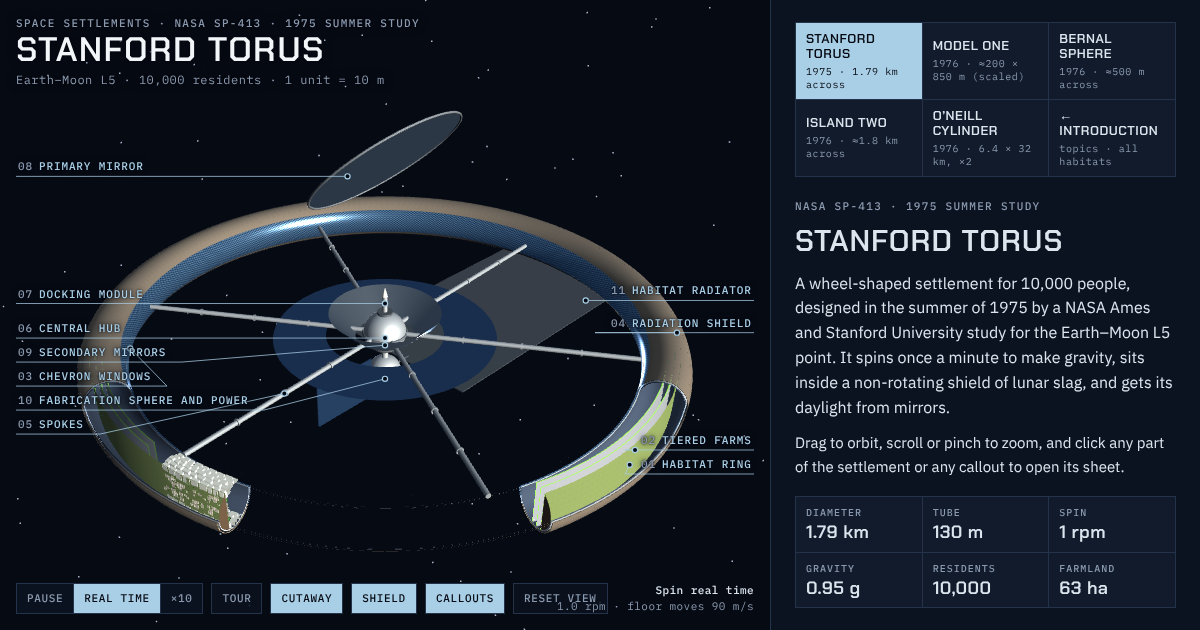
Damjan Jovanovic has released Space Settlements, an interactive browser atlas of the rotating habitats that Gerard O'Neill and NASA designed between 1969 and 1977. It accompanies "Rotating Worlds," an essay published Oct. 5 on Worldmaking Project and Jovanovic previewed the atlas in a reel on Instagram. Watch it below.
A tour of Space Settlements. Via Damjan Jovanovic on Instagram.
The atlas covers five designs: the Stanford Torus, Model One, Bernal Alpha, Island Two and Island Three. Each opens in a live 3D cutaway that you can step through system by system, shown beside the paintings by Don Davis and Rick Guidice that first illustrated the studies. The torus can turn through the cutaway once a minute, its designed rate. Other pages cover the colony's economy, the mass driver and a tool for testing new habitat shapes.
The free app is built with three.js, with its code on GitHub. Its gravity and structural checks apply the NASA study's criteria to shapes a viewer draws, while its ecological and economic figures are reproduced from the sources rather than simulated, per the essay. Those figures come chiefly from NASA's 1977 report Space Settlements: A Design Study and O'Neill's 1976 book The High Frontier.
Jovanovic is design faculty at SCI-Arc in Los Angeles and co-founded Studio Lifeforms, a game studio, with Lidija Kljakovic. The studio's ETRE was announced in August and is slated for release in 2027. The Stanford Torus, designed for 10,000 residents, emerged from a 1975 summer study at Stanford and NASA Ames.
For more reading, see Killscreen on Playing Models at SCI-Arc, the Public Domain Review on 1970s space colony art and Studio Lifeforms' page for ETRE.
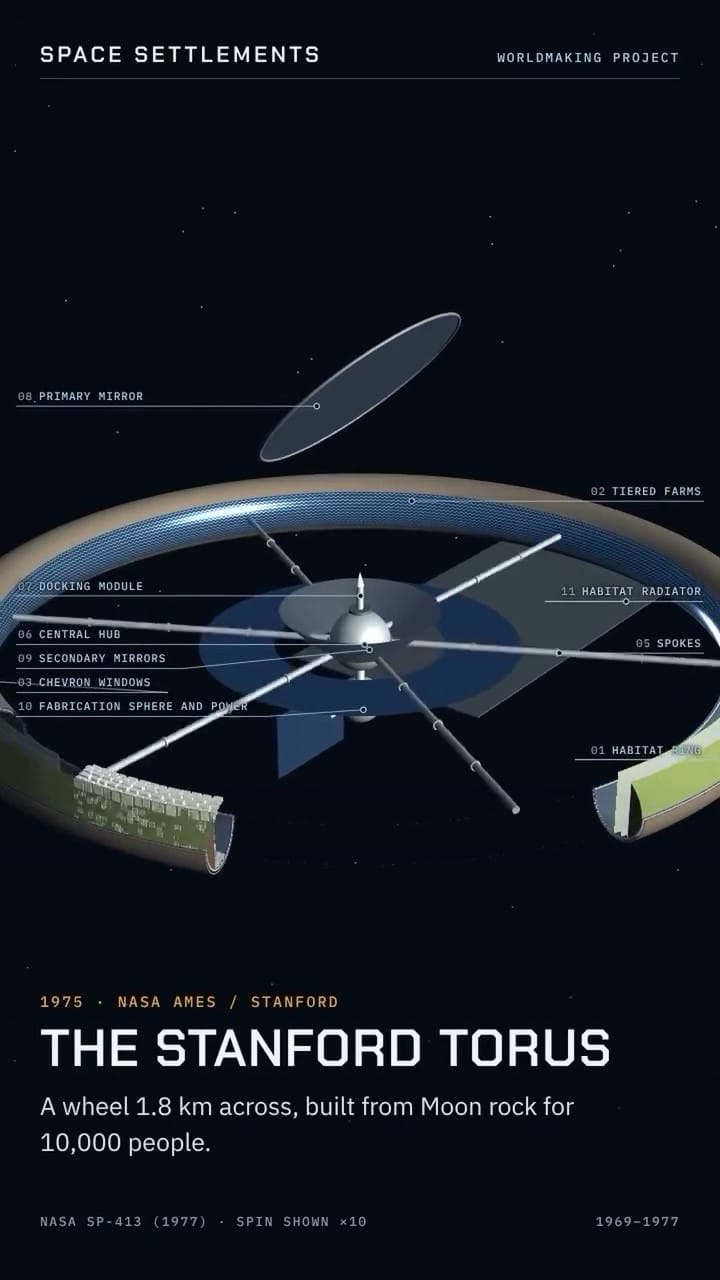
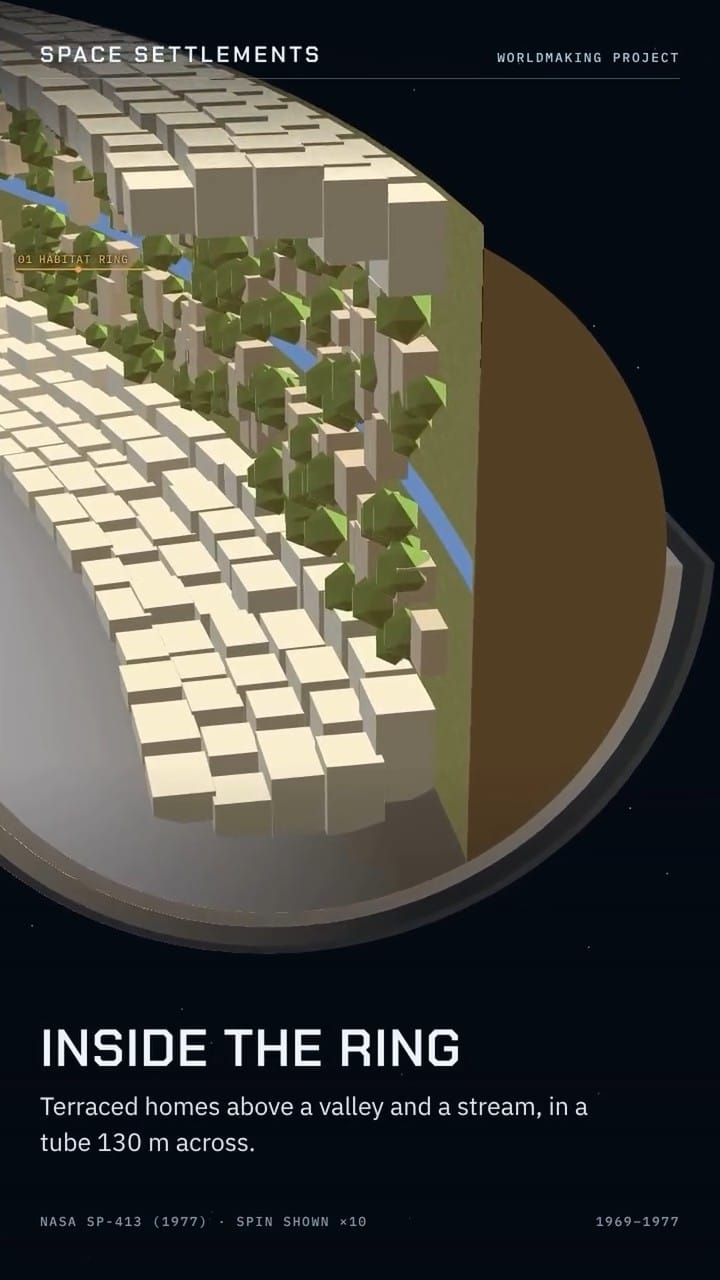
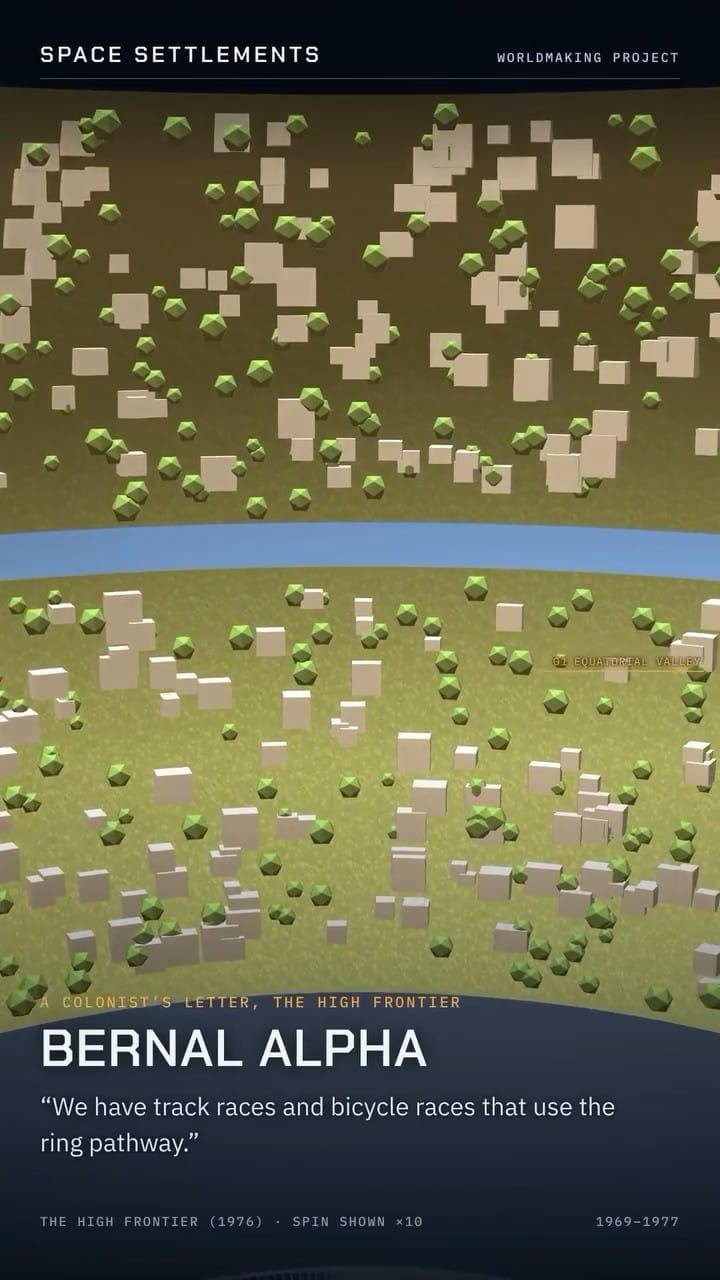
Views from Space Settlements. Courtesy Damjan Jovanovic.
Killscreen covers the game makers using real-time tools to do history, architecture and art. Get them twice a week, Monday and Thursday, in the free Radar newsletter.