Bennett Foddy's Games Taste Like Gasoline
The Baby Steps game designer reflects on jadedness, embodiment, and building a failson from two decades of human movement

At Oxford, the colleges run on wine. A friend once gave me a tour, and beneath the medieval halls sit cellars stocked by the barrel. While studying there, game designer Bennett Foddy remembers when the college needed to restock its whites. The fellows were summoned to taste 24 wines and rank them. A couple of bottles at the end of the line split the room perfectly: every junior fellow scored them one out of 10 ("tastes of gasoline") and every senior fellow scored them 10 out of 10 ("wonderful notes of gasoline.") “The senior fellows definitely know more about wine,” Foddy tells me. “But knowing more means liking the flavor of gasoline, right? That is crazy.” The not-so-sweet irony: the connoisseur ends up craving flavors the public was right to spit out.
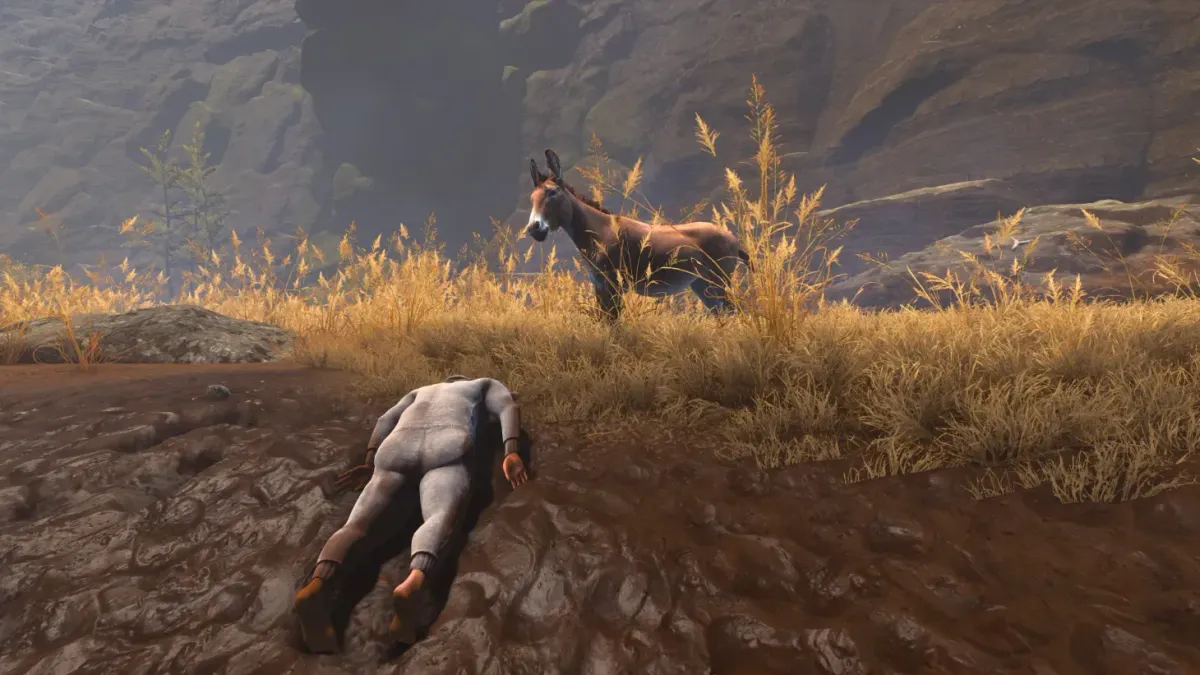
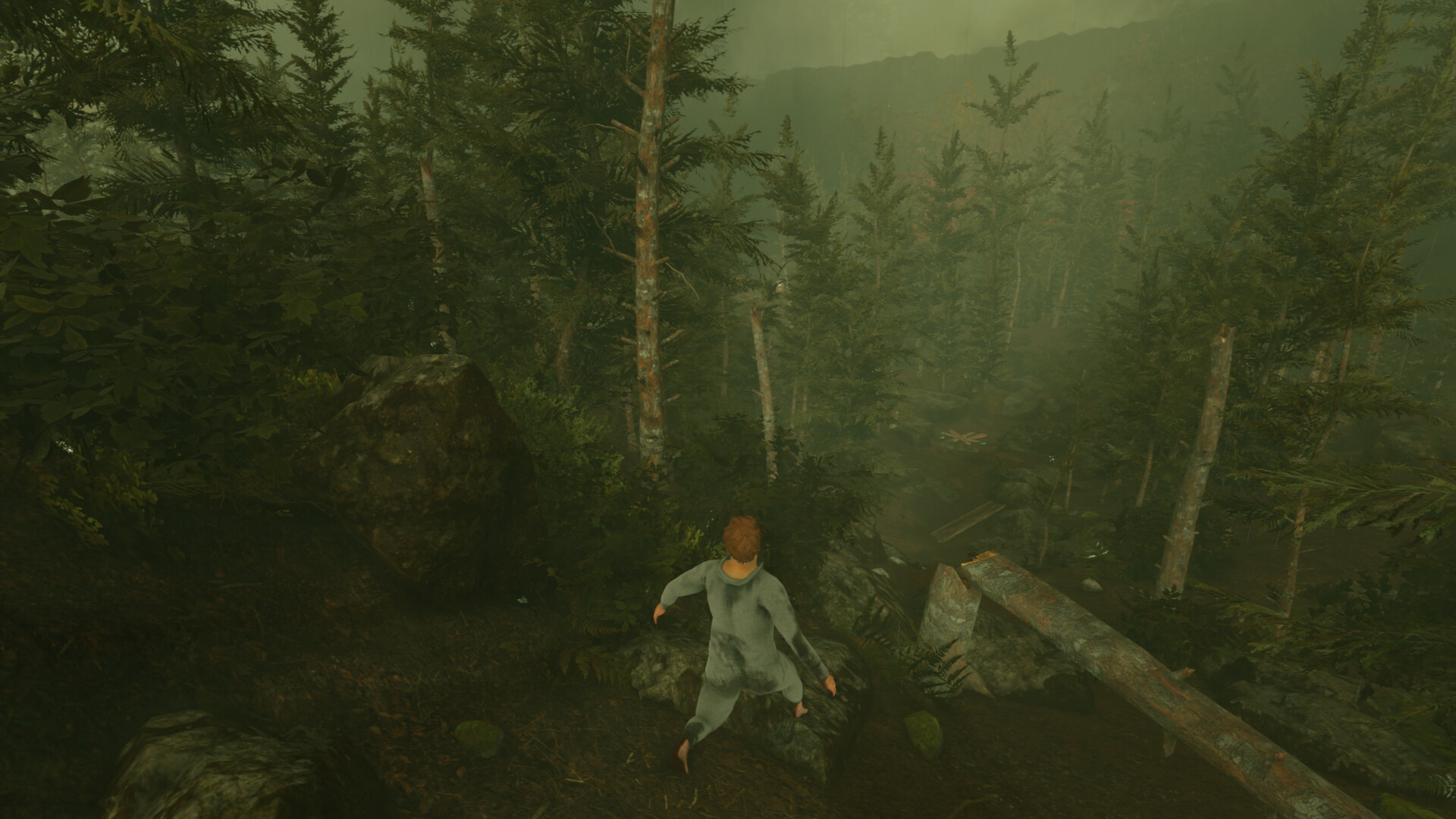
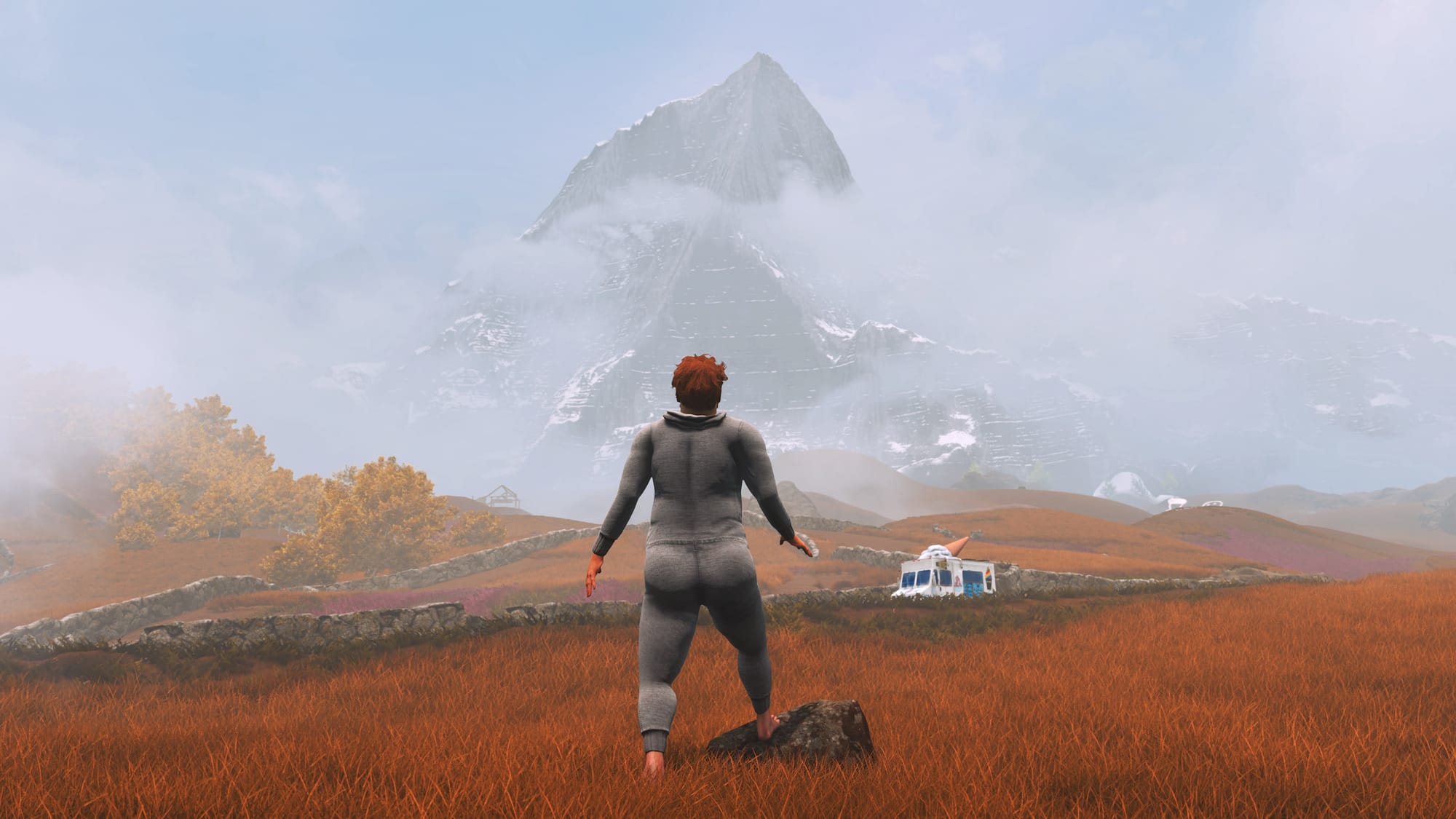
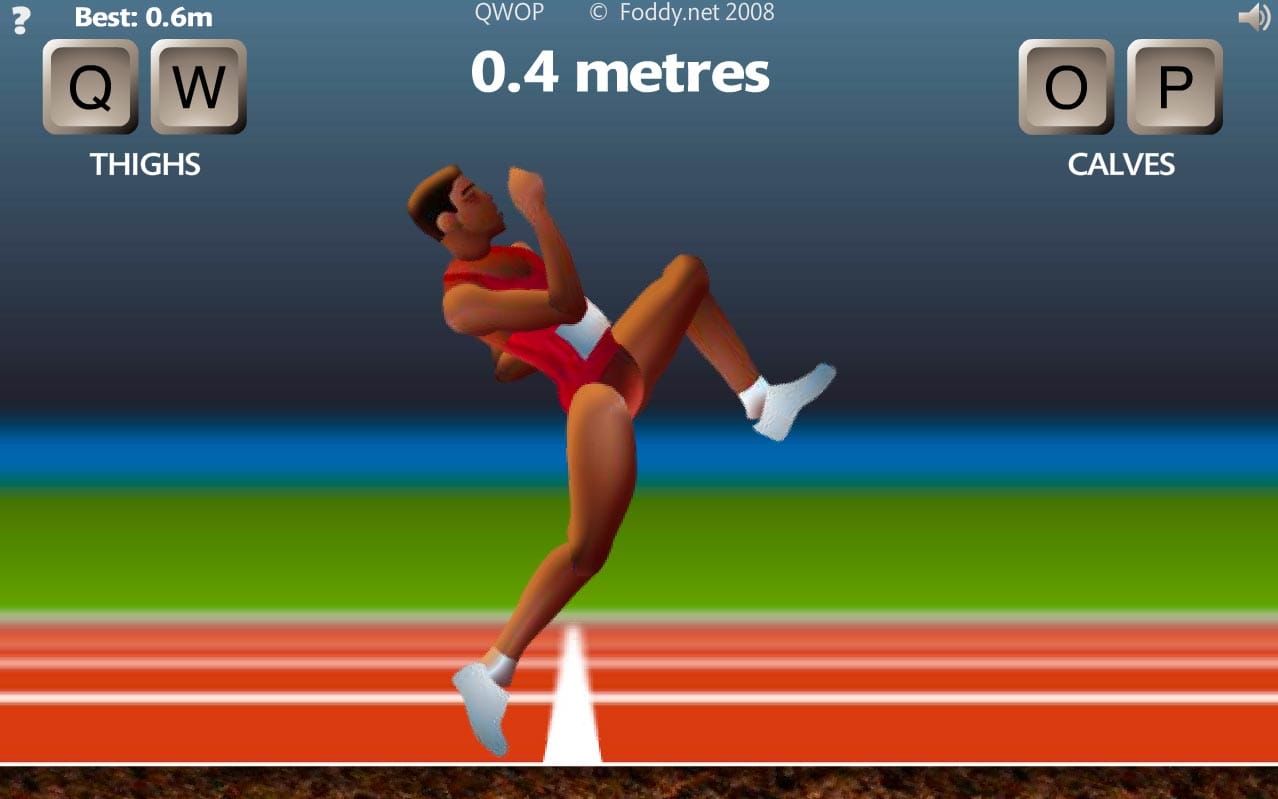
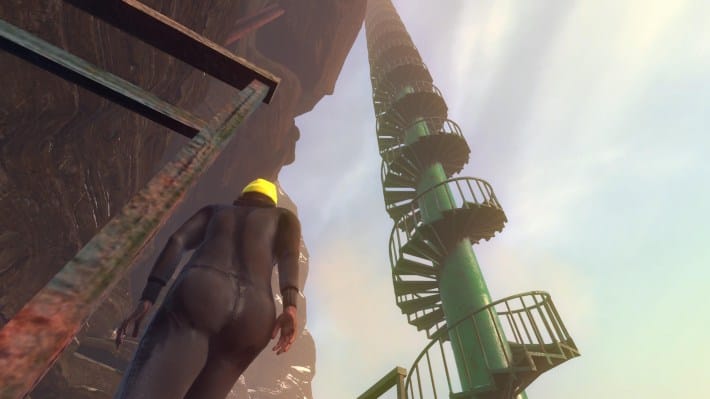
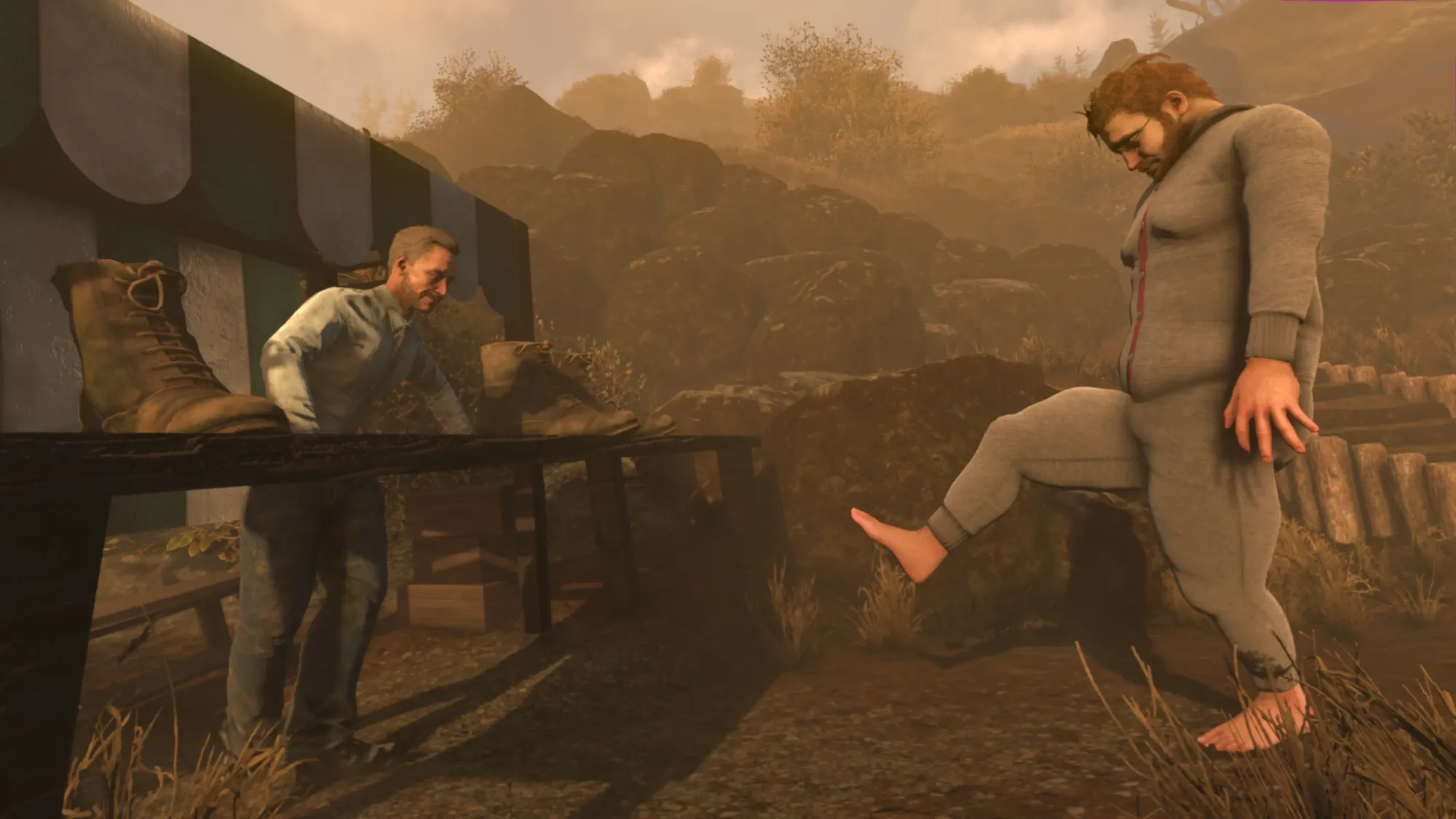
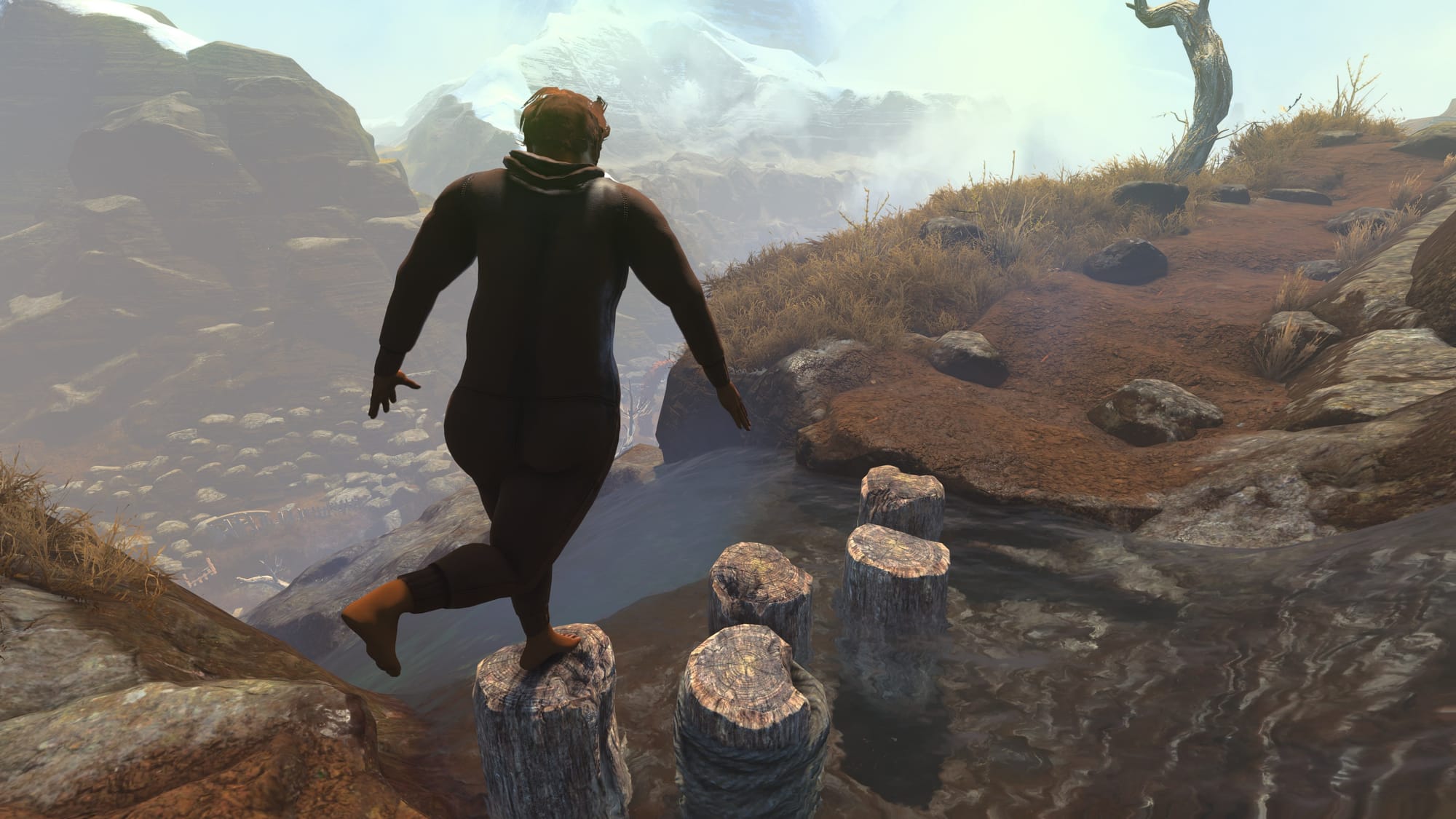
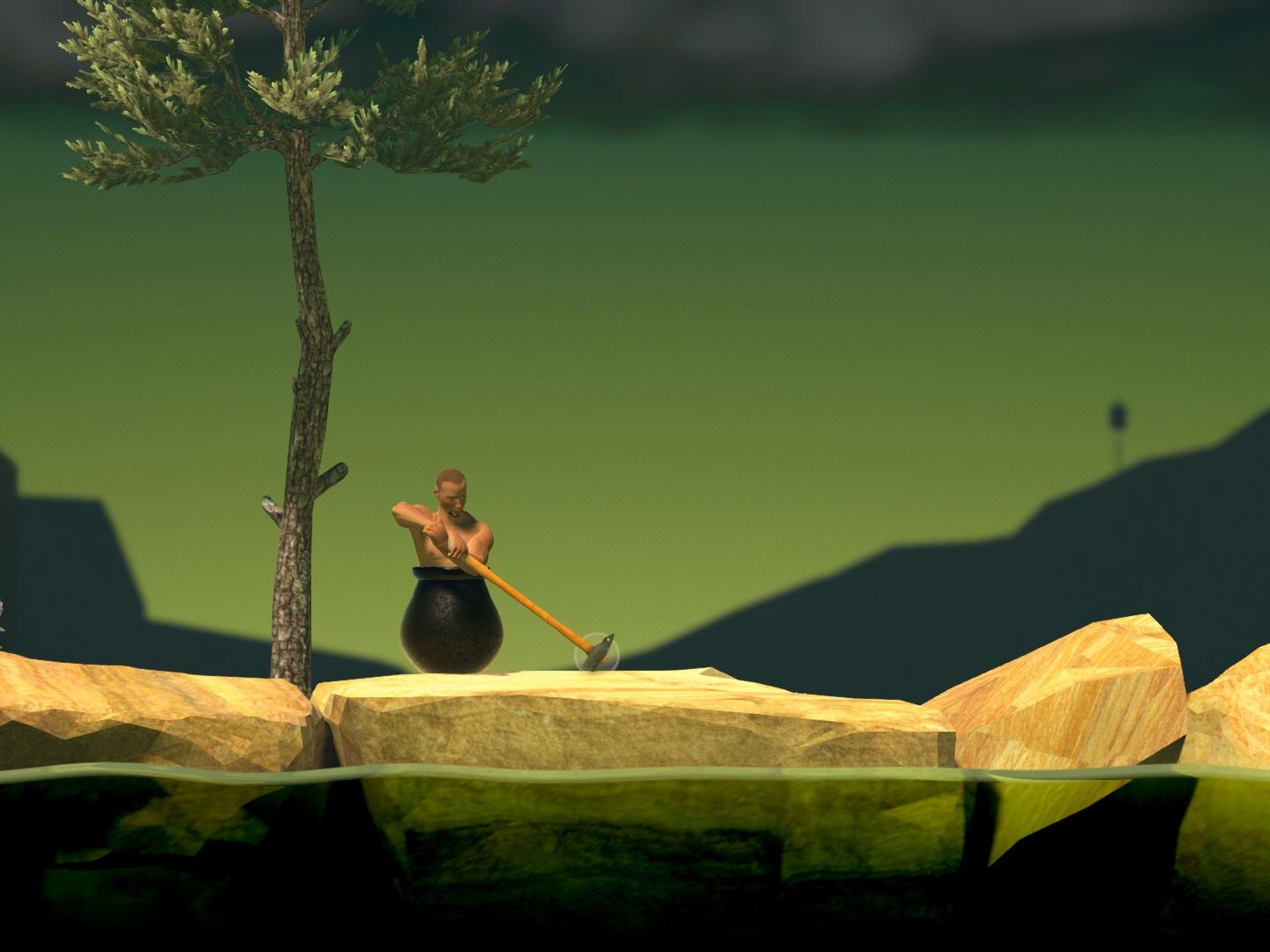
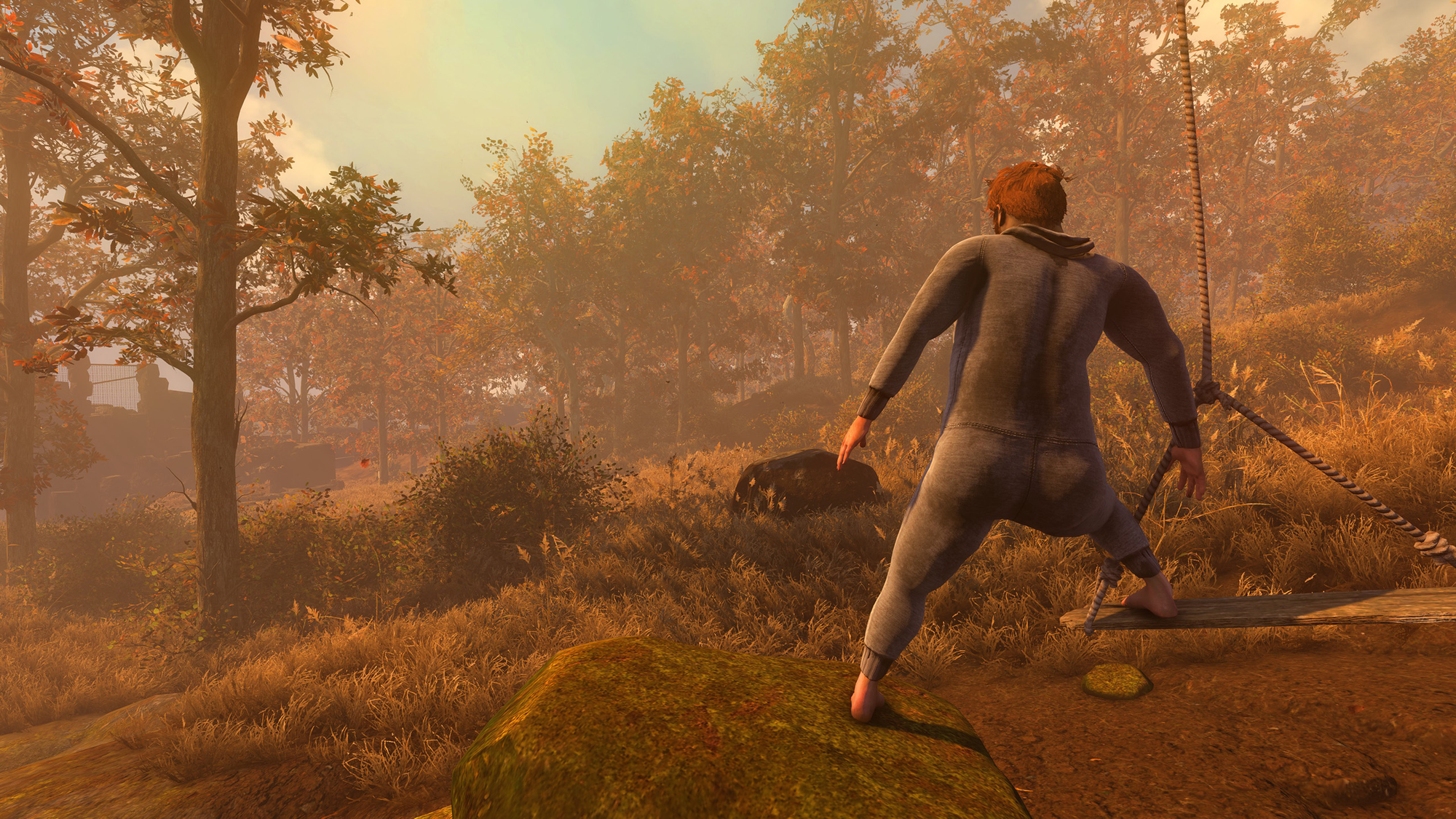
Foddy has spent two decades designing games that taste like gasoline to some and a revelation to others. A philosopher by training—he wrote a still-cited paper on performance-enhancing drugs at Oxford—he left the academy in 2007 to teach at the NYU Game Center and to make a body of work obsessed with, well, the body. QWOP made running impossible. GIRP made climbing a manual problem. Getting Over It with Bennett Foddy put a man in a pot and handed him a hammer. And Baby Steps, released last year with collaborators Gabe Cuzzillo and Maxi Boch, gave Foddy's signature limbless design a backstory: Nate, a failson in sweatpants who refuses, for reasons entirely his own, to use his hands.
I’ve loved (and frustratedly hated!) Foddy's games all the way back in to 2010, when he built a game for me for his old band Cut Copy. I reached Foddy in Brooklyn, between projects and playing a different game every day, to talk about piracy-era Australia, bodily autonomy, why narrative finally crept into his work—and what a designer does when literacy quietly curdles into jadedness.
Jamin Warren: I wanted to ask about your childhood playing experiences. You've talked in the past about trying to be a student of games, and that obviously extends back to childhood. What was the context you grew up in?
Bennett Foddy: The first thing to say about it is that it was a piracy-focused culture in Australia. Video games cost like a hundred bucks, and the consoles were spectacularly expensive, so I didn't really know anybody with an Atari or a Nintendo back in the eight-bit days. I was born in '78, so by the time I was really interested, I was five years old—early 1980s—and I couldn't get my parents to take me to the arcades.
I had a Sinclair Spectrum, an eight-bit computer that loads games off of audio cassettes, so you can copy other people's cassettes using a two-cassette deck. Then, around '85, I got a Commodore Amiga, and everybody knew somebody who had a hookup to a Swedish BBS with all the cracked games, and we would make copies of the discs after school.
The reason I lead with that is that it makes one really big, palpable difference between my experience and most of the American or Japanese folks I know: I just had dozens and dozens and dozens of games from the jump. Whereas if it's all being bought, you get a game for Christmas (maybe two if your parents are generous), and you're just playing those to death. My friends and I would spend a few hours, start to get a little frustrated, and in most cases—not every case, I did fall in love with some games—we were just really playing the first 10 percent and then switching to something else. And we spent a lot of time on multiplayer games, because you don't have to get good at them.
So getting good at games wasn't really a big part of my experience, despite being really fascinated and enthusiastic about them. It was broader rather than deep. When I started making games during the heyday of the Flash era, it felt very familiar. Here's just a hundred million little games you can play in your web browser, for free. It's disposable, but you're sifting through endless reams of games for something that grabs you, that somehow resonates with you personally.
Jamin: One thing that has stood out to me about your work is an interest in the human body; it seems to be a consistent site of examination for you as a game maker. I think maybe the start is the paper you wrote on performance-enhancing drugs, from quite some time ago. You seem optimistic in that paper about the body as a site of modification. The body has limits, and we can extend past them artificially.
What's interesting about your games is that the body's movements are very compressed. You can't use your legs in Getting Over It; you can't use your arms in Baby Steps. There are all these constraints you put on the human body. Do you feel like these projects are in dialogue with each other? Or is there some contradiction at work—pointing to the potential of the body, but then deliberately constraining it in your games?
Bennett: That was when I was an undergrad, actually. It’s the first paper I ever co-authored, and it remains the most cited academic paper I have ever written. It's about how anti-doping is kind of bullshit that just makes it easier for wealthy countries to performance-enhance and poor countries to be shut out of it, and it's never going to not be that, so we should probably take a different approach.
But I'm not a transhumanist. My opportunity to write that paper came from working as a research assistant for Julian Savulescu, who is still a very well-known professor of practical ethics, and my strong interest in enhancement came from him. The overall project of the work we did together, if I were to nutshell it, was about bodily autonomy. You can view that as a kind of liberal position about freedom over your own body, or as ultra-left libertarian, as some people described it—but it wasn't really coming from a political point of view. It came from a medical one.
After the atrocities of the Second World War, philosophers developed a whole framework in which respecting people's wishes and consent over their own bodies became the paramount value of medicine. It's not a transhumanist project of idealism about what we can evolve into. It's true, [superintelligence philosopher] Nick Bostrom was down the hall—he had an office one or two down from me—so there were people like that in the orbit. But when I look back on that work, the stuff that still resonates for me is just: it's their bodies.
Now, you're trying to connect that to the video games, and I don't know if it's intentional or not. When I think about my interest in bodies in video games, one of the big things I'm interested in is embodiment. It’s the sense that video games, action games in particular, give you of being in control of, or being embodied in, an avatar. That magic trick that we do where we put you in charge of a little guy running around on the screen, and then that's me, right? That becomes me, and I'm transformed in that way. So maybe there's a loose connection—an interest in the malleability of identity, or the locus of autonomy.
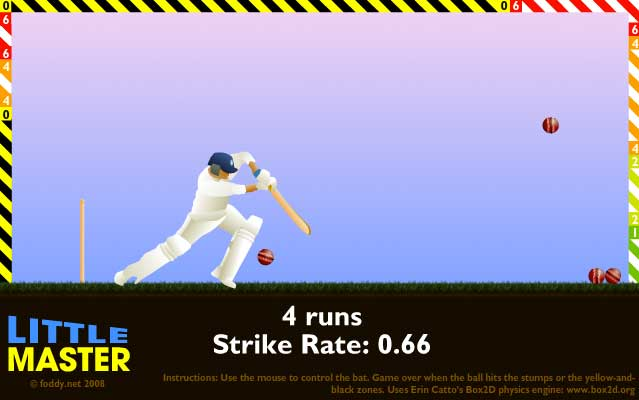
More generally, I think what's really animating both of these things is an interest in sport. Partly being from Australia, which is as sport-mad as the USA—a lot of my formative experiences were watching the Olympics, watching cricket, and being really fascinated with people at the extremes of athletic performance. I still watch every event when the Olympics are on. And that's part of what brings it back into the games. Yes, they're about bodies, but QWOP's an athletics game about track and field. GIRP is a climbing game. We can't really say Getting Over It or Baby Steps are sports games, but they're in that vein. That's probably what set me down the path.
Then something flipped in me after seeing Frank Lantz give his take on QWOP at GDC, a talk called "Hearts and Minds." His argument was that QWOP is a game about how we experience games—that every time you play a game, you're turning your attention inward on the process of learning to play it, and QWOP is a distillation of this.
Once I saw that particular interpretation of the work, I started to chase it in a certain way. Focusing on the body is a way of bringing that out. Think, for example, of knowing how to walk. If I'm given the task of walking in a video game, I expect it to be easy and fluid. It's not. So we start very slowly, very stumblingly, and it strips away those expectations, turning your attention to the process of building it back up.
One of the things you can say about all the games I've made about bodies is that there tends not to be a ton of mechanics. It tends to be one mechanic. That's a matter of taste—I like a deep, rich, expressive mechanic, but I don't want to make a pile of mechanics. Most of my games are just not that; they tend to be very, very focused. And if you want to make a game-focused one, the human body is a really great place to start, because it doesn't require much abstraction into different systems. We have a bunch of expectations about it. We have a lot of feelings about it.
Jamin: I do want to talk about Baby Steps in this regard. One of the things that struck me is that, unlike in your other games, there's a rationale for why Nate chooses not to use his arms. He is, in some ways, choosing not to use his upper body, and you're using that to say something about who he is as a character. You get the sense with Nate that there's a world in which he just uses his hands to balance himself, to touch the rocks. What triggered that change, going from non-narrative structures to something that explicitly gives motivation to this character?
Bennett: I guess the actual reason Nate doesn't use his hands is not that different from the reason the guy in GIRP doesn't use his feet, or the guy in Getting Over It has his body in a pot. When I was making GIRP, the original idea was that you'd control his feet, too. And then I discovered, as I tried to play it on different people's laptops, that laptops have two-key rollover. You can only really hold down two keys plus shift. It's just a hardware constraint. So I made it so that he was climbing with his hands, like Sylvester Stallone in Cliffhanger. Same with the legs in Getting Over It—it's heavily inspired by Sexy Hiking, and in Sexy Hiking he has legs, sort of weirdly, but they're awkwardly just there. I decided I didn't need that. For Baby Steps, we didn't want to use very many buttons, because it was complicated enough already just to move the legs around. And Gabe had a huge, crazy technical design lift to make that system work, and didn't want to do hands, on top of everything.
But one of the weird things that happens when you work on a game for five or six years is that the narrative stuff starts to coalesce around the design choices you made early on. It starts as fourth-wall-breaking jokes about how he's not using his hands, but then it becomes part of his personality. Why isn't he using his hands? Because he's awkward. He's a dork. Everything he does is a little bit off, and if he would just observe how other people hike, he'd see that they use their hands, of course—but he's got to do it his own way. That personality flows out of the system's choices.
Killscreen members get the Friday Playlist, the members-only podcast, and the full run of back issues. Two dollars a month keeps interviews like this one free to read.
Why isn't he using his hands? Because he's awkward. He's a dork. Everything he does is a little bit off.
Human beings are like this, too, right? You have the constraints of your life—material constraints, your social class, your background, what your parents are like, where you go to school—and all these things shape your personality over the years, until you become a very unique person. And if we were to pluck you out of that and put you somewhere: "what a weirdo." This person has such a weird way of talking and behaving. But it's all for reasons—just too many reasons to count.
It was nice to have that experience for the first time, of really iterating something for six years and giving it space to breathe and to seem motivated. If it comes across as if he's not using his hands because of his personality, that's fantastic. That's amazing news. But the causation flows in the other direction. That's what we want in making narrative work: for it to feel as though the narrative resonates with and is of a piece with the game design, the level design, the world design. And it's so much easier to do that slowly than fast. You'll be sitting with it for weeks and weeks, and then it'll be like maybe his dad is disappointed that he's not using his hands, because his dad is very famously good at climbing. You pull that thread and get a little more richness.
Jamin: Baby Steps still, "works" as a game even if there were no cut sequences—it would be of a type with other things you've made, a very Bennett kind of thing to make, regardless of whether there's a narrative layer. But it does enhance the experience to feel there's a reason why he is the way he is.
Bennett: We wanted people, eventually, through playing, to orient to the stuff that we were interested in as level designers and systems designers; the micro-variations in how you have to move his body to overcome two very similar-looking obstacles. There's just an infinity of subtlety: this rock is one percent smaller and two degrees tilted, and it's a completely different thing to walk over it. We were in love with that aspect. But you also know you can only get players to that point after they've played 40 hours. So the thought was: we've got to give you a reason to be playing until that stuff becomes apparent to you. Narrative comes off as a way to bring people in, and a way to convey where they should walk and what their motivation is. But yeah, we could've done a version with no narrative. It might have been more sensible. [laughs] But also, having never really done narrative before in my games, speaking for myself, I started to find it interesting. I started to enjoy having that additional creative palette.
Something we were trying to do with Baby Steps from very early on was to borrow from and satirize the tropes of AAA—to use that design and visual language to say something a little different from what you get in Assassin's Creed or Uncharted. And cutscenes are just a huge part of those games. To really sell the idea of a dark mirror on Assassin's Creed, you have to have a little bit of narrative work. You work on something for a really long time, it takes on its own life and becomes what it wants to be.
"It's what we call the problem of good hands."
Jamin: You've historically been OK with the reality that many players will not complete your work—you talked about that with The Creative Independent back in 2018. And in Baby Steps, things like Nate's dreams, which really help you understand who this person is, are distributed in a way where you may never actually experience them. Has your perspective changed since 2018?
Bennett: I think it has. Partly, this is a game made in collaboration with two other people who have their own taste, and you're exchanging tastes. Something that's in my work, but is an even stronger preference of Gabe's, is a sense of needing things to be real, in a very particular way. Matthewmatosis recently did a video about what he calls aesthetic deception—where the game appears to function a certain way, but it's a lie. The ur-example is the invisible wall. Personally, I definitely have an inclination to avoid that as much as possible, but Gabe was adamant. We couldn't have mountains that you couldn't climb, for example—everything had to be climbable. These are things I agree with, but I have to give credit where it's due: the real force of opinion was coming from Gabe. We talked about making it so that if you fall and lose a lot of progress, you could reset back to the last checkpoint. He really didn't want to do that. He felt like, if I fall off a cliff knowing I can warp back to get my progress back, then I haven't really fallen off a cliff. It's not real. It's fake falling off a cliff—I'm playing pretend. Whereas if I know I have to do the work to get back, it's real in a way that video game losses are generally not.
That's the same sense of reality that drives not wanting invisible walls, not wanting mountains too steep to climb. It's one of the heaviest ethoses in the game, and it commits reasonably hardcore—not infinitely. I think maybe it does rain in Baby Steps, and things maybe get a little wet, but things don't get slipperier when it's wet. For the most part, though, we really committed to things being real. And I do think that's a vein of my work generally. Getting Over It is, for the most part, purist about avoiding what we call magical forces. Most physics games, the designer will eventually give in. When you're playing Trials, your motorbike goes off a jump, and you can press the shoulder buttons to rotate in the air, which is just not a thing you can do on a real motorbike. Whereas in Elasto Mania, you lean forward and backward over the handlebars—a very small change in your momentum. Those are real forces, motivated by the real movement of bodies. Gabe has this ethos times 10. It became the defining ethos of Baby Steps.
Jamin: There's an element of trust though; you trust the designer. That seems like a benefit for you: you get a reputation for making certain types of games, and people trust that the difficulty is meaningful. You have to trust that the process is worth it, in a way that has to be earned over a longer period.
Bennett: This is actually something I've recently been talking about with my game designer friends; it's what we call the problem of good hands. If I'm playing a game by a designer whose work I have previously loved, who was really thoughtful with my time, then I have some reason to assume their future work is like that. But also, within a single game, there's language to let you know they're not wasting your time. It can be a level design flourish that's compact and delivered early on. It can be that there's polish everywhere, or that the narrative shows there's intentionality, that care has gone into the whole shebang. Indie games face an interesting problem: we can't polish everything the way a 5,000-person organization can. We have to show good hands in limited ways.
I'm interested in this because it's something I worry about as a designer, but it's something I'm kind of bored of as a player. The games I'm really loving lately are the ones where I can't tell if I'm in good hands. The more I feel in good hands, the more I feel I can predict what the experience will be like through the end. This person is a fan of Jonathan Blow's design thinking, they've set up four puzzle mechanics, they're going to combine them in every possible way, and when we've fully exhausted the combinatorics, the credits will roll. That takes an expert designer. But sometimes I'll pick up a game on Steam with three reviews, and it's not clear to me whether the designer knows what they're doing. Maybe there'll be something absolutely glorious and beautiful, or maybe it will fizzle. Either way, I'm in uncharted territory. I feel like I'm on a voyage of discovery in a way that I'm not when I'm in good hands.
Jamin: Some of that reflects that you're a professional game maker.
Bennett: Totally—maybe I should be correcting for this kind of jadedness. But it is about the question of jadedness. How do I go back to a beginner mindset to make another video game? That's the problem to solve as you reach the middle or late stages of your career in any field, I think. We get more literate and more competent, we get a better sense of craftsmanship—and those things are good —but we also get more jaded. Somehow, you have to square that circle. You have to allow yourself room to build ambition and learn your instrument, but also not become completely adrift from how others receive the work. It's one of the great unsolved mysteries of making art.
Jamin: There are different approaches. One is the Picasso approach, or Joyce Carol Oates—become extremely prolific, and release yourself to the idea that in the midst of all of this is something that will be important or remembered. Another is to become, like David Byrne, completely peripatetic—just go from genre to genre. And the other, which may bring me to you, is to have a central, animating idea that you continue to explore in different ways. I think about that with Michael Mann—if you watch his early films, like Thief, he's been remaking this thief over and over. That's one of the things that has interested me about your work, whether intentionally or not: seeing you work through these different ideas about the body as a core interface between player and game, and keep coming back to them with fresh eyes. I don't know if you feel that way, or whether you're ready to move on. Maybe the next thing will have nothing to do with humans whatsoever.
Bennett: Well, part of it is that by working in collaboration, you get a little bit of new perspective and freshness. But when we were prototyping in 2019, I think we were trying to do anything but this at first. We made a golf game, a twin-stick shooter, a competitive SimCity, a god game in the Populous vein. We were really trying to do anything but a body-oriented, difficult physics game. And it was after making 10 prototypes we didn't like very much that this one—it was Gabe's idea—clicked. So it was not for lack of trying to do the David Byrne thing. Some fascinations just keep coming back. I've given myself the occasional side quest—I'm proud of the emulator hack I made with AP Thomson, Multibowl, and I'm proud of the thing I made for the Playdate console by dribs and drabs over six or seven years. But I do keep coming back to this vein somehow. It's so hard to make a video game—I think putting too many filters on what you're allowing yourself to make is probably making it too hard. I tend to just noodle about until something feels like it has legs, and then commit to that. So we'll see. We'll see where the jadedness takes me on this occasion.
This interview has been edited for flow, grammar, and clarity.
Bennett Foddy is a game designer and taught at the NYU Game Center. Baby Steps, made with Gabe Cuzzillo and Maxi Boch, is out now.
Disclosure: More than 15 years ago, Maxi Boch was a patron and investor in Killscreen.
Read next: We talked about this interview on the podcast · Miles Buckle makes games you can’t play · A paper notebook is the entire HUD in Boring Car Stories
Killscreen has been interviewing the people who make play strange since 2011. The weekly newsletter is free.