Carlin Wing's Bounce Traces the Ball From Ulama to FIFA
The open-access MIT Press history moves from ancient tennis courts and squash walls to animation, computing and the Mesoamerican ballgame.

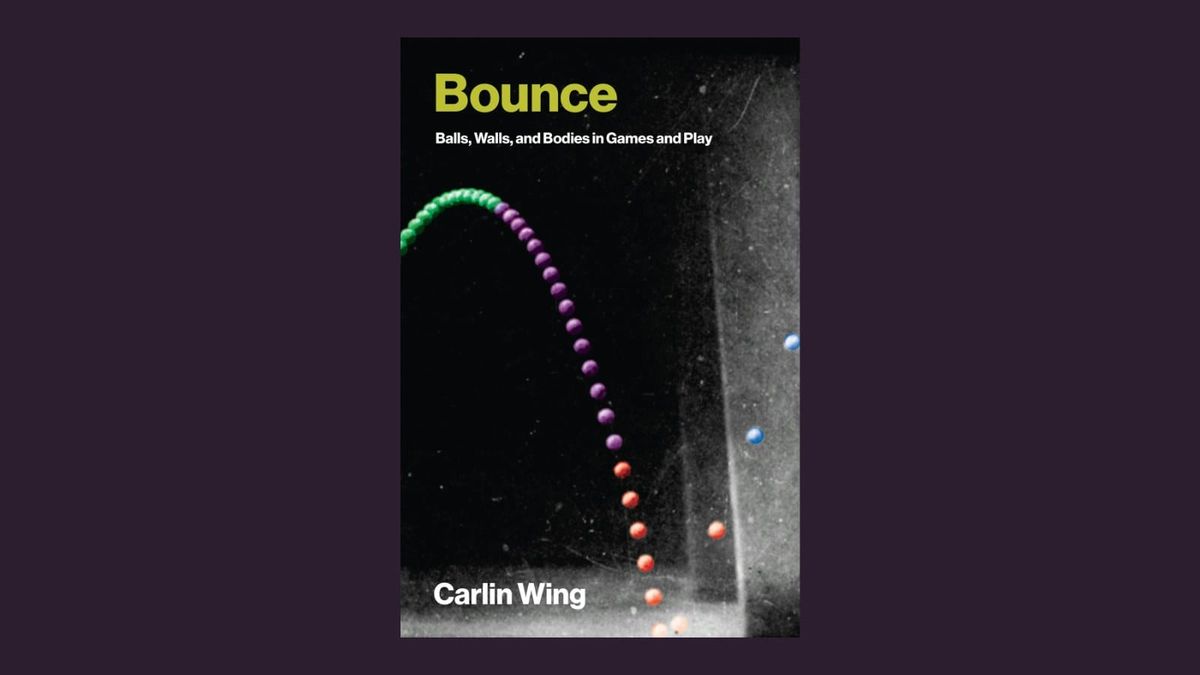
The artist and media scholar Carlin Wing has written a history of the bouncing ball. Bounce: Balls, Walls, and Bodies in Games and Play came out from the MIT Press in January as part of its Game Histories series, and the press has also released it as a free open-access edition through MIT Press Direct under a Creative Commons license. Wing teaches media studies at Scripps College, and the book grows out of an ongoing art project of theirs called Hitting Walls.
The book follows bouncing balls through nonelectronic and electronic games, across play, game and sport, and into physics, material science, animation and computing. In the publisher's description, focusing on bounce "sidesteps the focus on play" found in much of game studies and widens game history to an interaction shared by thousands of physical and digital games and sports.
It is organized in three sections: the matter of the ball, the virtuality of bounce and bounded spectacle. Ricochet in ancient tennis is set against the "true bounce" of the modern game. The squash and stretch of character animation is read as a mirror of the pings and pongs of computer bounce. The last section sets the bounce feel of Electronic Arts' FIFA series beside pok ta pok, the Mesoamerican ballgame ulama. The paperback runs 354 pages with 87 black and white illustrations.
Videogames have always been in debt to the ball, from tennis on an oscilloscope to physics engines tuned for how a shot should feel. Wing's argument is that the bounce, the moment a body meets a wall and comes back, is where physical and digital play share a vocabulary.
For more reading see the open-access edition of Bounce at MIT Press Direct, Ryan Bradley's 2020 Killscreen essay "The Swing and the Super Ball" on Norman Stingley's 1964 Super Ball and the toys that shaped Ray and Charles Eames, and Killscreen's 2016 report on a real-life table version of Pong.
Game history that starts with a ball against a wall is the Killscreen beat. The free newsletter brings the books, artists and odd histories at the edges of games every week.