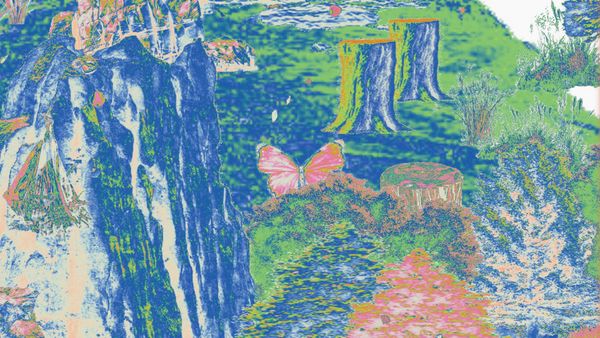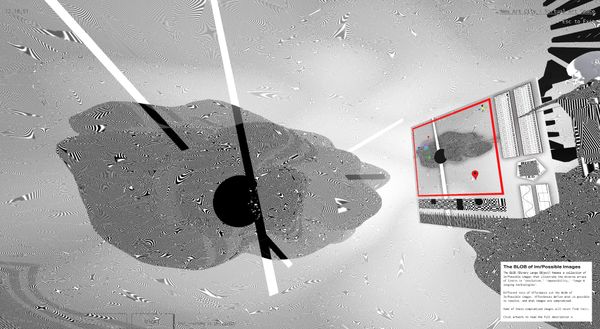
Andrew Thomas Huang made an art game at Rhizome's 7x7
With scientist Stephanie Zhang and coder Sebastien Zany, the Björk collaborator built a playable myth around a mirage-breathing mollusk deity.

In Chinese mythology the Shen is a gigantic bivalve, sometimes an aquatic dragon, that exhales vapor and builds mirage cities on the horizon; per Rhizome's writeup, the everyday modern Chinese word for optical illusion still descends from the creature. That is the deity at the center of the game Andrew Thomas Huang announced in a July reel: “a mythopoetic sci-fi art game uncovering the memoirs of a Chinese mollusk deity by feeding a far future slime mold intelligence.”
The announcement reel. Video: Andrew Thomas Huang on Instagram
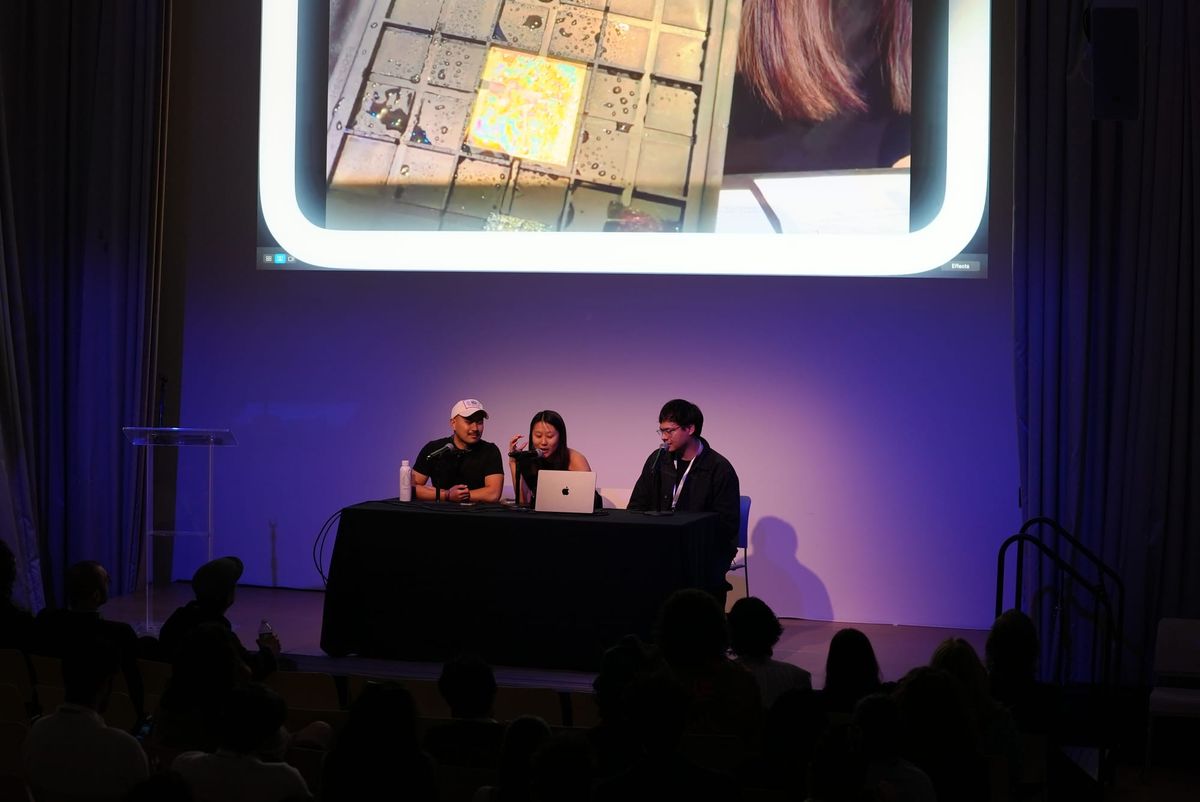
The project came out of 7x7, Rhizome's art-and-tech conference at the New Museum in May, which paired the Grammy-nominated director (collaborator to Björk, FKA twigs and Perfume Genius, and the creative director behind Björk Digital) with Stephanie Zhang, an artist-scientist who 3D-bioprints living sculptures and engineers cuttlefish-inspired photonic skins. The shared obsession was nonhuman intelligence: cuttlefish camouflage became the story map, and slime mold (the organism that famously re-derived Tokyo's rail network in a 2010 study) became the memory system, a network 500 million years in the future in which, as the collaborators put it, “the organism is its memories.”
Sebastien Zany wrote the code, simulating a quarter-million slime mold entities on simple rules and then treating the result as a found object rather than an asset: “I cannot really control it that well. It felt more like... sculpting this thing together.” The cuttlefish skin runs on real iridescence data measured in a materials lab by Siddharth Doshi. The reel promises a release soon, with support from Onassis ONX and Fuser.
Slime mold already has form as an infrastructure planner. Killscreen once covered a historical sim about fixing New York's subway, the human-committee version of the same problem. Huang's game hands the network the harder job: archiving a civilization's ghosts.
When film directors, bioartists and coders make a game together, Killscreen is usually the only outlet in the room. The free newsletter catches what the art world and the games press both miss.