A cabinet of curiosities is playable at Peckham Digital
Sabina Oțelea's Hidden Key joins Minimal Viable Home, the four-artist show of games as an art form at Copeland Gallery, Oct. 22 to 25.

- When
- Thu., Oct. 22 to Sun., Oct. 25, 2026
- Where
- Minimal Viable Home at Rabbet London, part of Peckham Digital, Peckham, London
- Cost
- Free, booking recommended
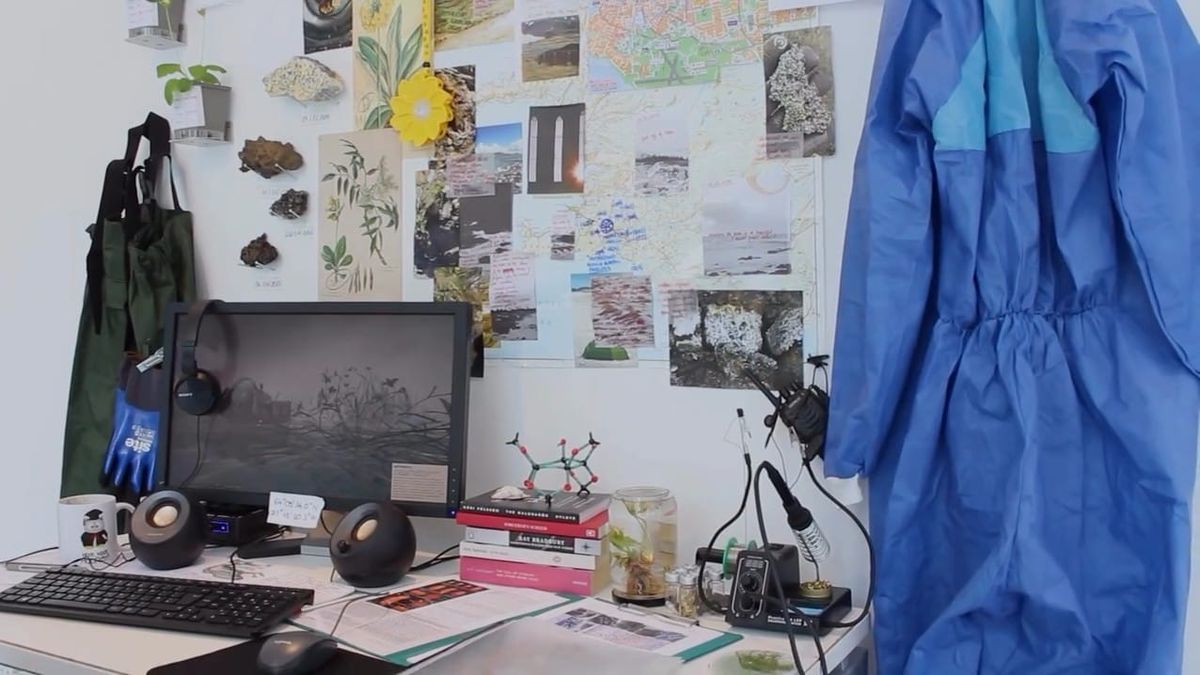
The cabinet of curiosities was how the sixteenth century organized wonder: a world in miniature, filed in drawers for whoever was allowed to open them. Hidden Key, Sabina Oțelea's world-building installation of interactive curiosities and sonic speculative fiction, updates the furniture with the one thing a Wunderkammer never had: it answers back. The drawers hold what Oțelea calls strange natural entanglements and rogue scientific experiments, and the video announcing the show carries long-overdue documentation from the piece's earlier outing in an ARCADE exhibition this year.
Sabina Oțelea’s documentation of Hidden Key at an earlier ARCADE show, from the announcement reel. Video: Sabina Oțelea
It shows Oct. 22 to 25 at Copeland Gallery as part of Minimal Viable Home, one of two exhibitions at this year's Peckham Digital, the south London festival of creative computing now in its fifth edition. Where the larger show, Mediating Behaviours, surveys creative technology at large, Minimal Viable Home is devoted to games as an art form, and it is a four-hander: Oțelea alongside Ama Dogbe, whose work crosses video games, digital animation and audiovisual installation; Cristina Bianchi, who comes to game design from web development; and Jade Lin, the computational artist behind strawberrycongee, whose playable studies in alienation have shown at the Tate and the V&A. Booking is free.
Oțelea, a critical designer, researcher and educator who lectures at UAL, describes a practice of non-anthropocentric futures and feminist techno-ecologies built through what they call affective world-building. That is the strand's curatorial argument in miniature: a game here is not a product but a way of building a world to think with.
Killscreen is already booked for this one: Side Quest's Elliott Burns puts the question "What even is an art game?" to a live audience vote at the same festival. Peckham gets four days to work out the answer; the cabinet closes Sunday.
The art game argument is being settled in rooms like this, and Killscreen Radar is where the evidence gets filed. Free, three times a week.