The mouse in this AI war game is a demonic latex hand
freeculture.api built an idle game about autonomous weapons into a field-deployable hardshell case—and the critique is in the hardware.

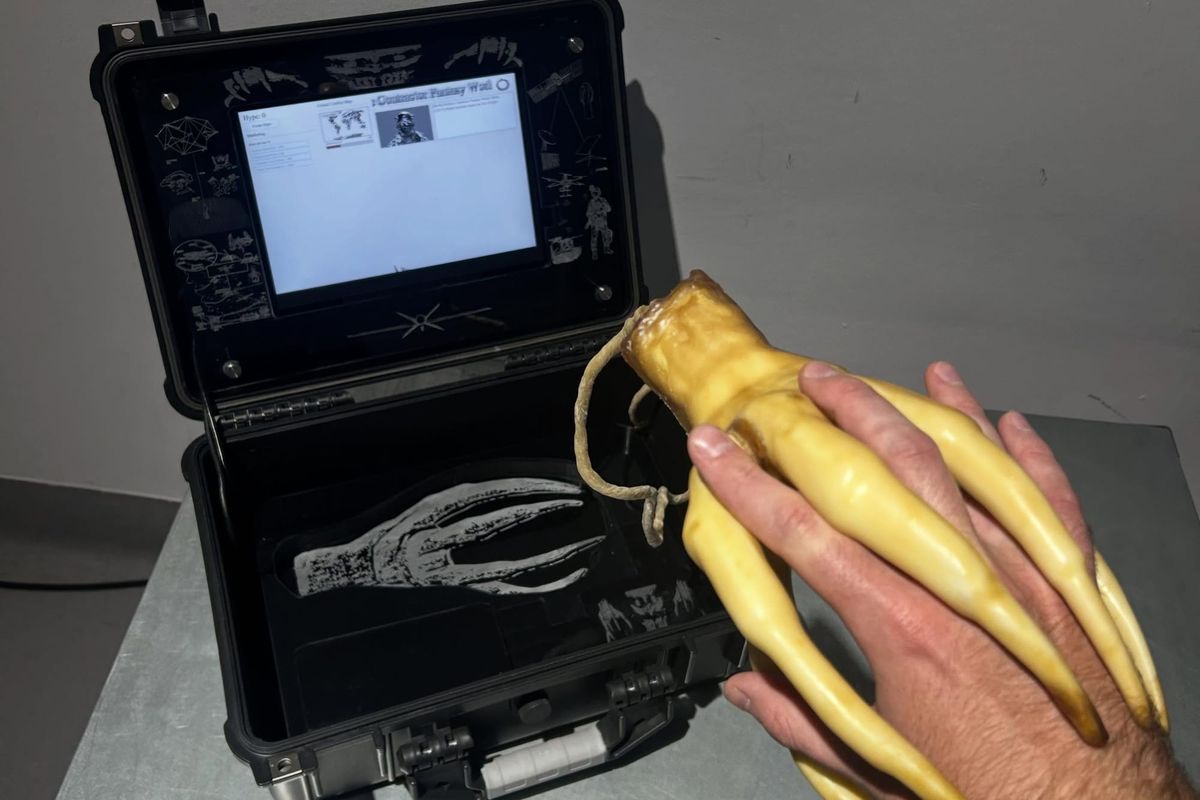
The mouse is a demonic hand cast in latex. You play Defence Contractor Fantasy World by holding it, interlocking fingers with the thing while the numbers climb on a screen mounted inside a hardshell field case. freeculture.api—the account of an artist named Joshua Mattson, connected to the Interface Cultures program in Linz—shared the documentation in July: a Raspberry Pi, a power bank good for roughly eight hours in the field, and semi-transparent acrylic panels engraved with demonic faces and military network diagrams.
The case in action. Full documentation in the original post.
The game itself is an incremental, like Cookie Clicker and Universal Paperclips—numbers that mostly grow themselves. Here the numbers belong to an AI defense contractor: develop fully autonomous weapons, generate public AI hype, raise venture capital. The piece "aims to demonstrate how the violent progression of AI-powered warfare can be concealed behind digital veils," Mattson writes, citing real-world deployable interfaces—Skykit is the named example—that compress networks of sensors, weapons, and analysis into a single operator.
What makes the project land is that the critique lives in the hardware rather than the text. Idle games already model unattended growth (I'm playing Universal Paperclips as I write this); building one into a ruggedized, field-deployable case makes the metaphor physical, and the demon hand makes it intimate—procurement as a handshake you are not allowed to let go of. The latex mouse was made with artist Giulia Olivieri; a collaborator, Marwin, designed and printed the slide-in mechanism for its electronics. The response under the post has run to awe shading into dread—less admiration for a prop than recognition of a system people already live inside.
Games have carried this argument before—Killbox made drone warfare's asymmetry playable back in 2016—but rarely as an object you could carry into the field, which is precisely the point. An online release is promised once the game is, in Joshua's words, "a bit more complex and polished."
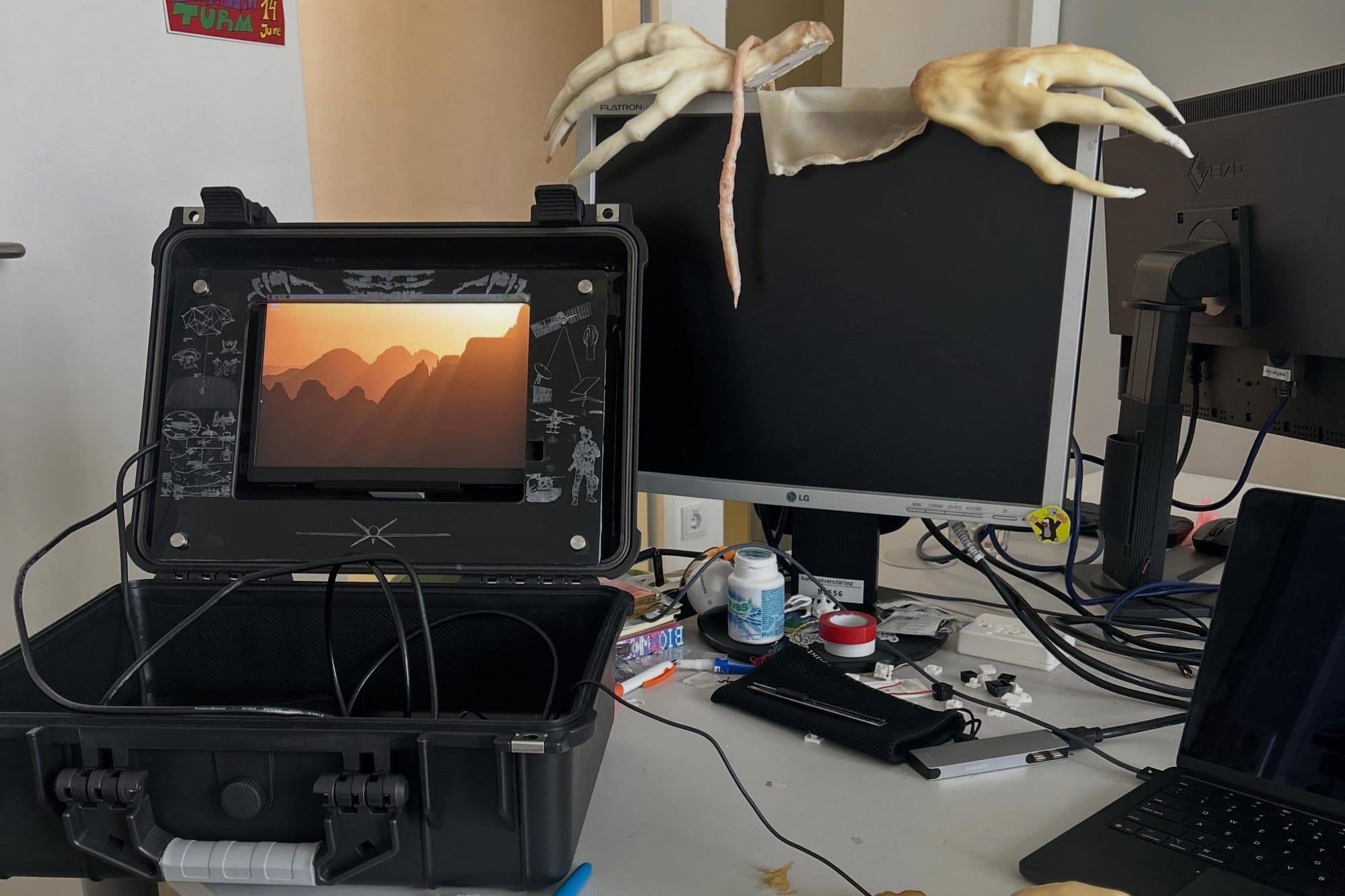
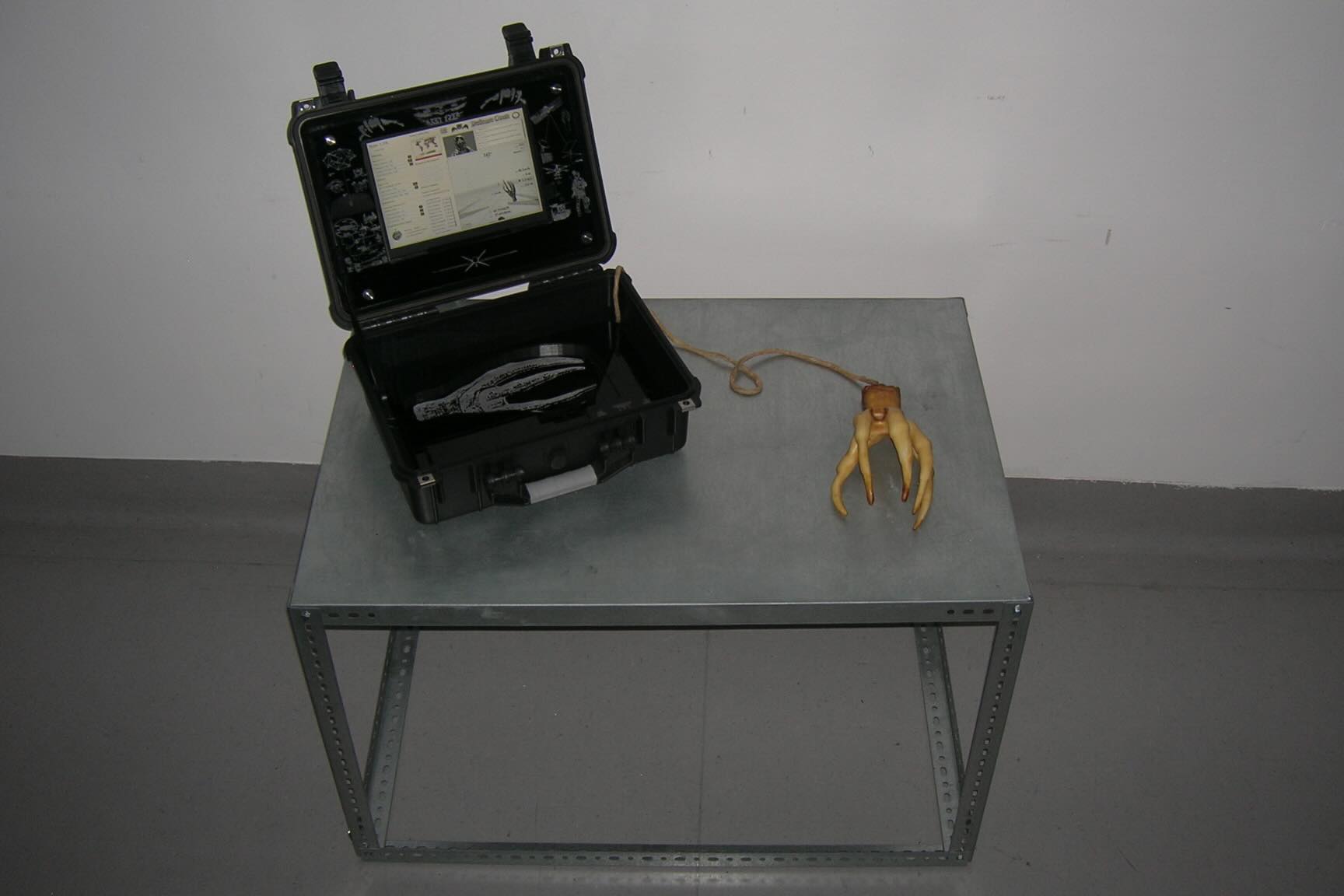
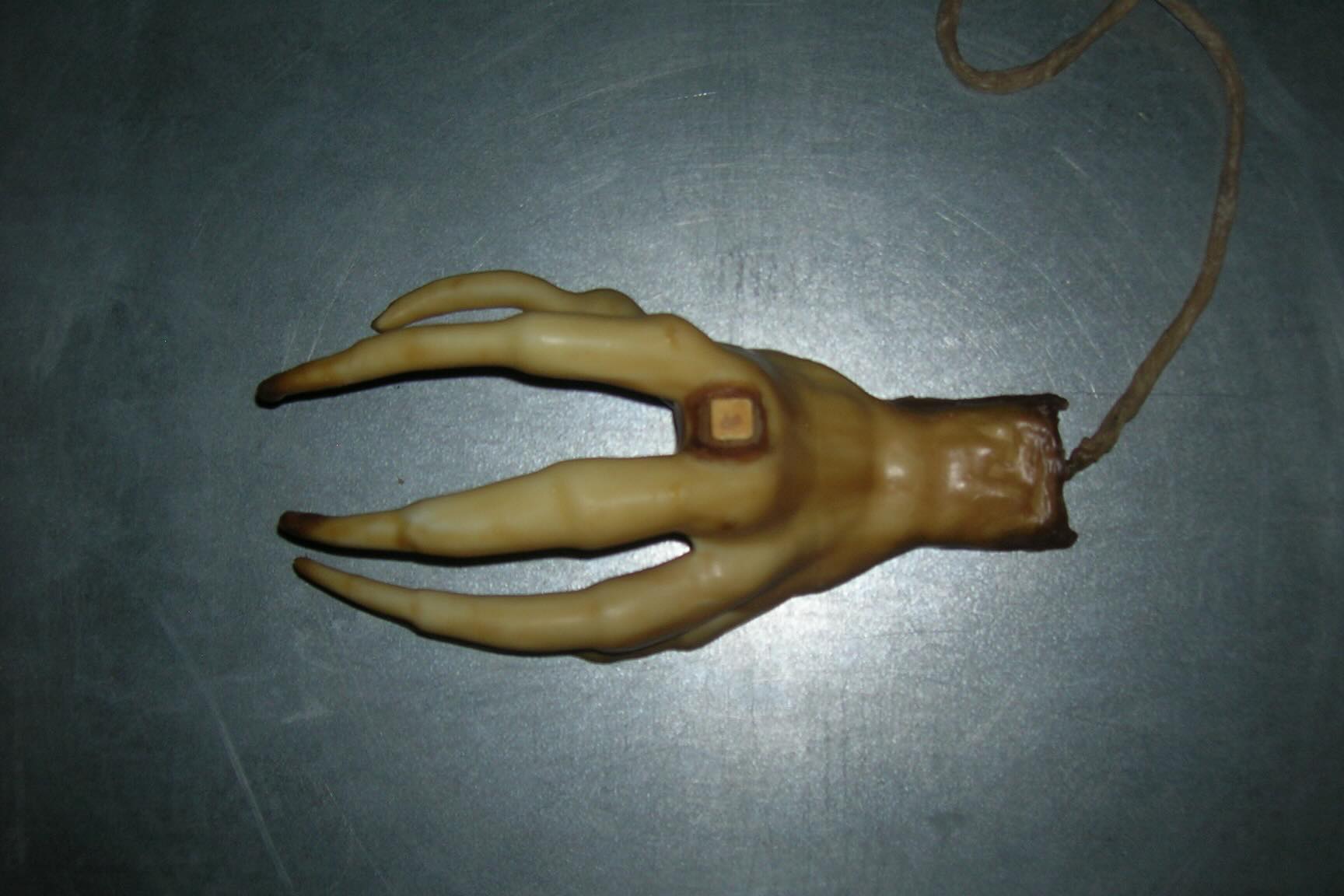

Engraved acrylic, the slide-in electronics, and the latex hand. Photos via freeculture.api
Read next: Playfool built a working bot farm that hands you the controls · What happens when you can do nothing in a war zone?
Killscreen covers the games that build their own hardware to make a point. Once a week, free.