Sound Design Is the Most Ignored Art Form in Games. One Researcher Is Changing That.
A new study asks why there are so few sound-first games—and what you'd hear if you finally stopped shooting and started listening.


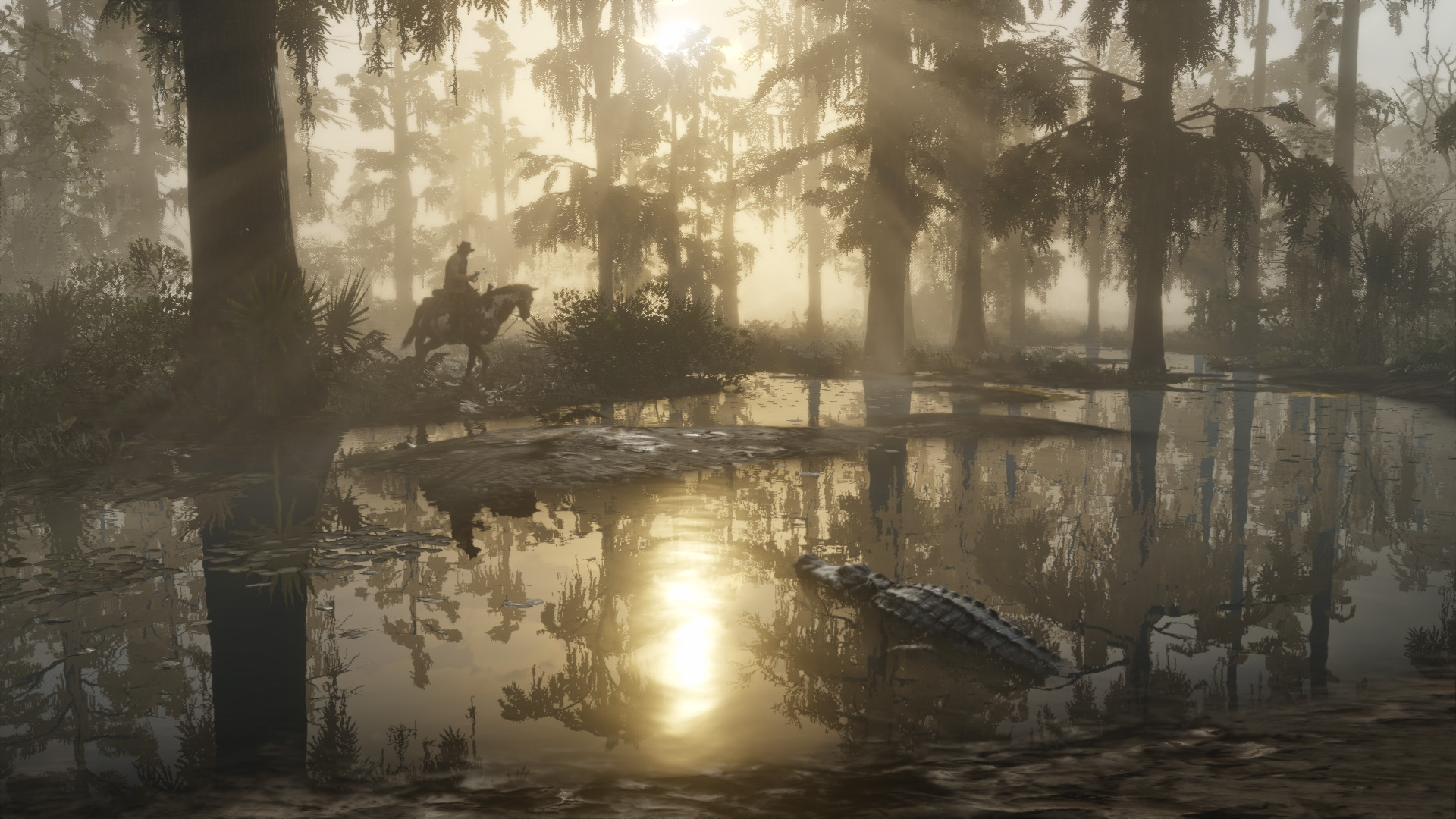
In Red Dead Redemption 2, you can hear a whippoorwill before you see one. The call drifts in from the left, maybe behind a stand of pines, and if you're paying attention—really paying attention—you might notice that how the sound changes changes depending on where you are in the game's map, the rustle of your steps, the holler of crows, and the beating of distant hoofs.
Vadim Nickel wants to know what happens when you stop shooting and start listening.
Nickel is a researcher at Concordia University's Centre for Interdisciplinary Research in Music Media and Technology (CIRMMT), and together with his advisor Gabriel Vigliensoni, he recently published "Sonic Lead: A Survey of Sound-First Games" at DiGRA 2025—a paper that attempts something that sounds simple but turns out to be surprisingly difficult: cataloging every game where sound actually drives the experience rather than decorating it.
The scarcity of sound-first games tells you something. It tells you that games, for all their sensory ambition, remain stubbornly visual. We talk about graphics, about art direction, about frame rates. Sound, when it gets discussed at all, tends to get filed under "polish"—the thing you notice when it's absent but rarely celebrate when it's present. Nickel's paper makes the case that this imbalance isn't just an oversight. It's structural.
For Nickel, the path into this work started with RPG Maker as a teenager—building small games, hearing melodies in his head, wanting to put them somewhere. Piano lessons didn't take, but music production did, and eventually the two interests converged. The crystallizing moment came in 2014, when he played Fract OSC, "framed using a gently sloped learning curve designed to introduce non-musicians to the world of electronic music production," Killscreen wrote at the time.
The Three Ways We Hear — and Why Games Only Use Two of Them
What makes the paper useful, beyond the taxonomy, is the framework Nickel and Vigliensoni borrow from film sound theory to describe how players actually listen. The three modes—causal, codal, and reduced–to describe ways to engage with sound in games. Causal listening is about identifying the source: where is that sound coming from? Codal listening is about meaning: what does that sound signify? And reduced listening is about the sound itself, independent of source or significance—its texture, its grain, its weight.
Games are reasonably good at the first two. Every shooter teaches you to locate an enemy by footsteps. Every Zelda game trains you to associate a chime with progress. But reduced listening—that deep, contemplative attention to sound for its own sake—is almost entirely absent from game design. As Nickel puts it, the environments are too dense, too fast, too full of things demanding your attention for any other purpose. A first-person shooter is not going to pause so you can appreciate the timbre of a ricocheting bullet.
Why the Loudest Rooms Leave No Space for Listening
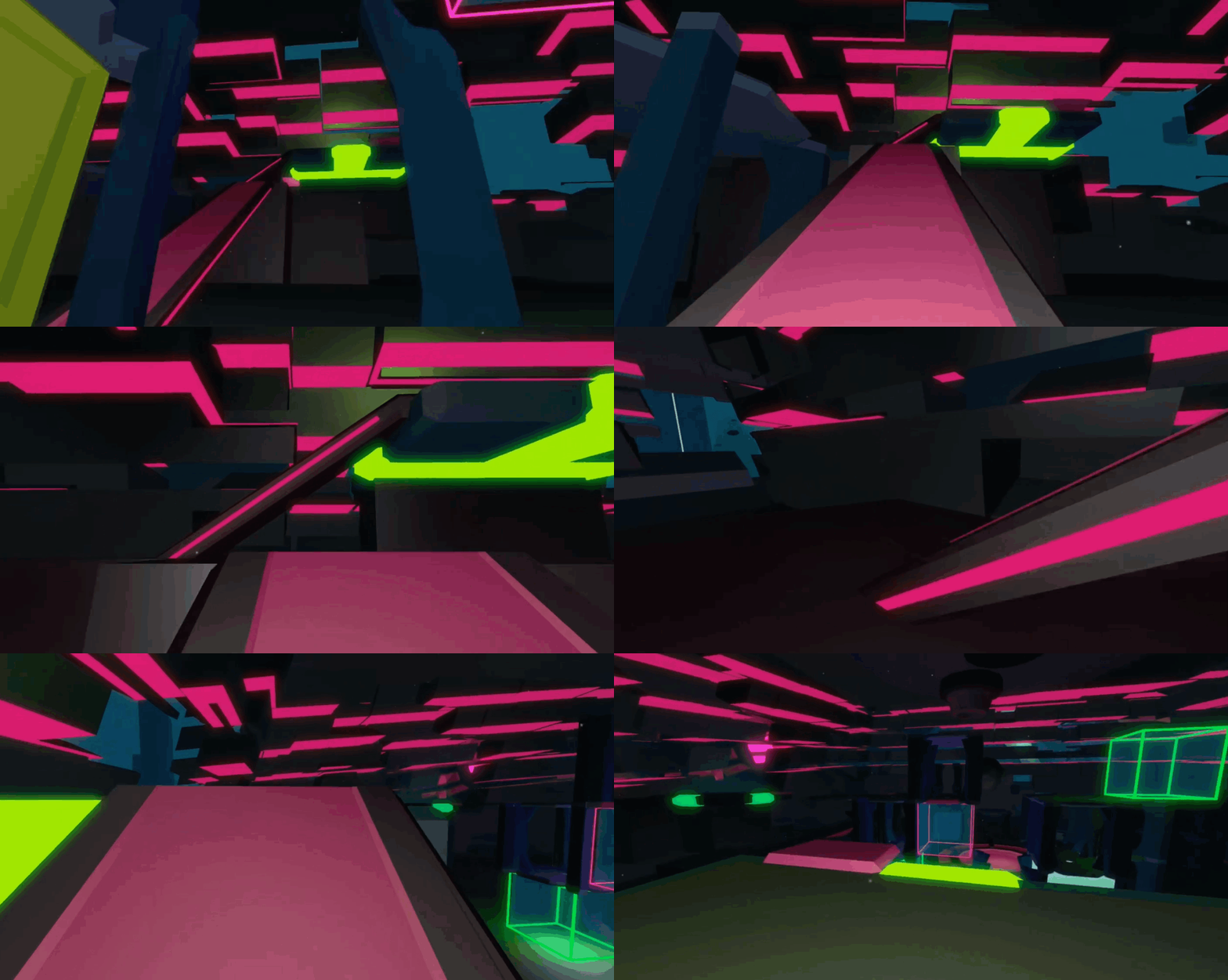
To wit, a couple weeks ago, my friend Estevan invited me to a performance by Sara Devachi and Robert Takahashi Novak at the Broad Museum here in LA. Both contemporary experimental musicians demanded an extraordinary amount of concentration from me as one of the several hundred attendees crammed into the Broad’s atrium, facing each other instead of the performer. Novak washed the space with found sound and pulses, but Devachi’s work was truly meditative. Two trombonists walked towards each other and, through the audience, played notes of near-imperceptible distance that phased in and out as they echoed through the ripples of the atrium ceiling. It was nearly an anechoic experience as I could feel my blood rushing, and the tones were only punctuated by the occasional creak of a chair. It was absolutely fascinating and not something I experienced in media, especially in games.
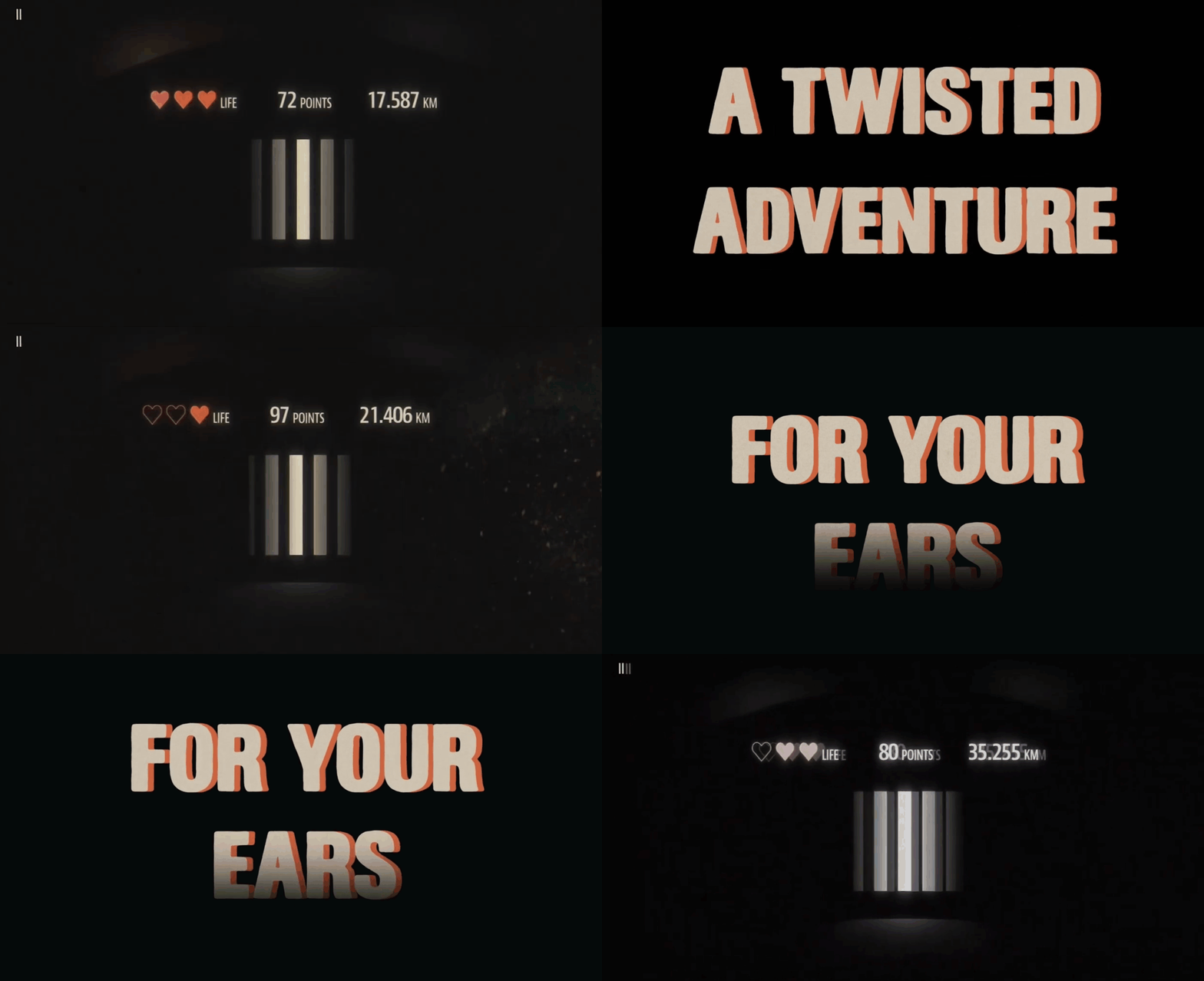
Nickel outlined some technical reasons why games have been slow to walk the labyrinth of sonic reflection, but even with better tools now available, the flood of sound-first games hasn't materialized. The golden era of music games—the Guitar Hero and Rock Band years of the mid-2000s—came and went, and the market correction that followed may have left a residue of skepticism. But Nickel's point is subtler than that. The innovative sound-first games that do exist—titles like Blind Drive, which asks you to navigate traffic with your eyes closed, or Unheard, which has you solving a crime by listening to layered audio recordings—don't even register as music games. There's no Steam tag for "sound-focused." There's no category, no shelf, no search term. If you want to find these games, you don't even know what to call them.
The Sound Walk Was Invented Long Before Video Games
What Nickel's work points toward—and what he's building in his own practice-based research with a game called Soundgarden—is a design space informed by traditions outside of games entirely. He talks about R. Murray Schafer's concept of acoustic ecologies and the practice of sound walks, where you move through a physical environment with deliberate attention to what you hear. (Yoko Ono’s 1962 Map Piece, for example, reads, “Draw an imaginary map. Put a goal mark on the map where you want to go. Go walking on an actual street according to your map.”He talks about Pauline Oliveros and deep listening (who actually co-scored 2014’s exploration game NaissanceE), who wrote in 1974: "Take a walk at night. Walk so silently that the bottoms of your feet become ears.” These are practices rooted in mindfulness, in slowing down, in treating the sonic world as worthy of the same sustained attention we give to the visual.
It occurs to me that this is something players could already do, even in games that weren't designed for it. You could take a sound walk in Red Dead Redemption 2. You could put down the controller, stop pursuing objectives, and just listen to what Rockstar's sound designers built—the whole ecology of birds and wind and distant hoofbeats operating like tracks in a piece of generative music, overlapping and evolving. Brian Eno coined that term, "generative music," to describe compositions that are always changing, never repeating. A game world, if you attend to it the right way, is already that. We just don't have the habit of noticing.