Something lost, something found
Read on for a new take on collage in games and a world of felt and clay


I'm off to the DEMO Festival in New York City this week, one of the few media arts festivals in the United States. NEW INC is an arts and tech incubator run by the New Museum, and a place I have a real fondness for. The first Killscreen office was on Chrystie St., just on the back side of the then two-year-old building, and we were delighted to get reflected light in the SANAA-designed space. The museum was also the home to the first virtual reality arts conference I co-organized with Julia Kaganskiy
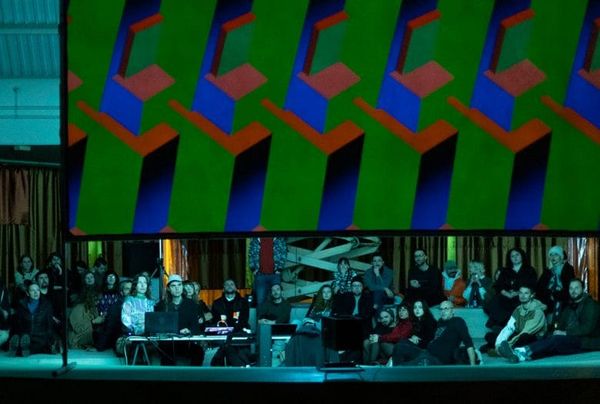
Earlier this year, NEW INC asked me to teach a six-week workshop on gaming literacy for artists, and we spent equal time on introductions to game design, audience development, and exhibition design, all aimed at artists at different stages of their work. So I'm delighted to see some of my students presenting work this week, as well as some talks from game-based artists like Mitchell Chan, Jacky Connolly, and Skawenatti.
If you're there, please give me a shout! Ok, on to this week's newsletter.
So It Goes
Lisa Jamhoury's Lossy is a memorial to the physical body in the age of the digital body—and a reckoning with what we lose when we let ourselves be averaged.
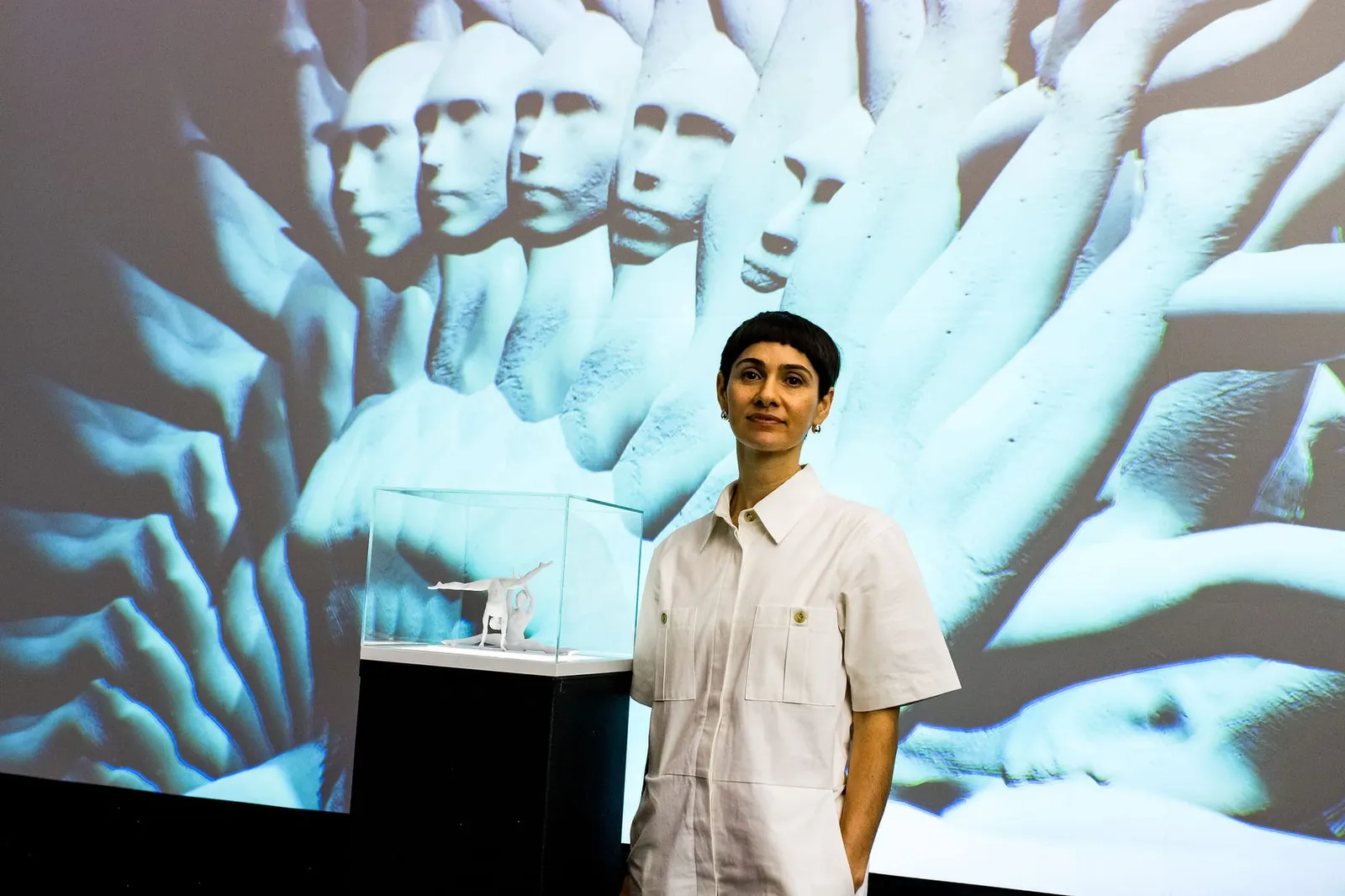
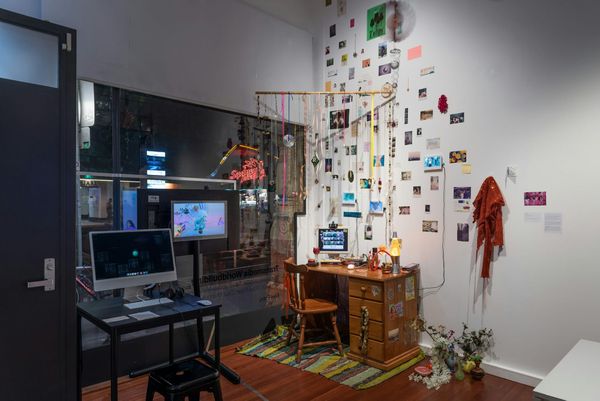
At that moment Lisa Jamhoury was making a piece about loss; she, too, was losing an unimaginable part of herself. Pressed cheek to cheek, breath to breath, she prepared to say goodbye to her mother as she prepared to grieve what would come next. "I could have never imagined the world without my mother; it feels so empty," she told me. "It's like I've lost an appendage."
She had been working on what would become Lossy for some time already—a walkthrough installation that premiered at SXSW this spring—but it was her mother's passing that gave the work its emotional center of gravity. "The work itself is about losing what it means to be purely physical. It's losing the physical body in the age of the digital body." In a sense, Jamoury was now letting both of those bodies go. Lossy is the culmination of Jamhoury's five-year investigation into what she calls "living through capture"—the increasingly strange condition of experiencing ourselves primarily through our digital representations.
SPANDREL
On the radar
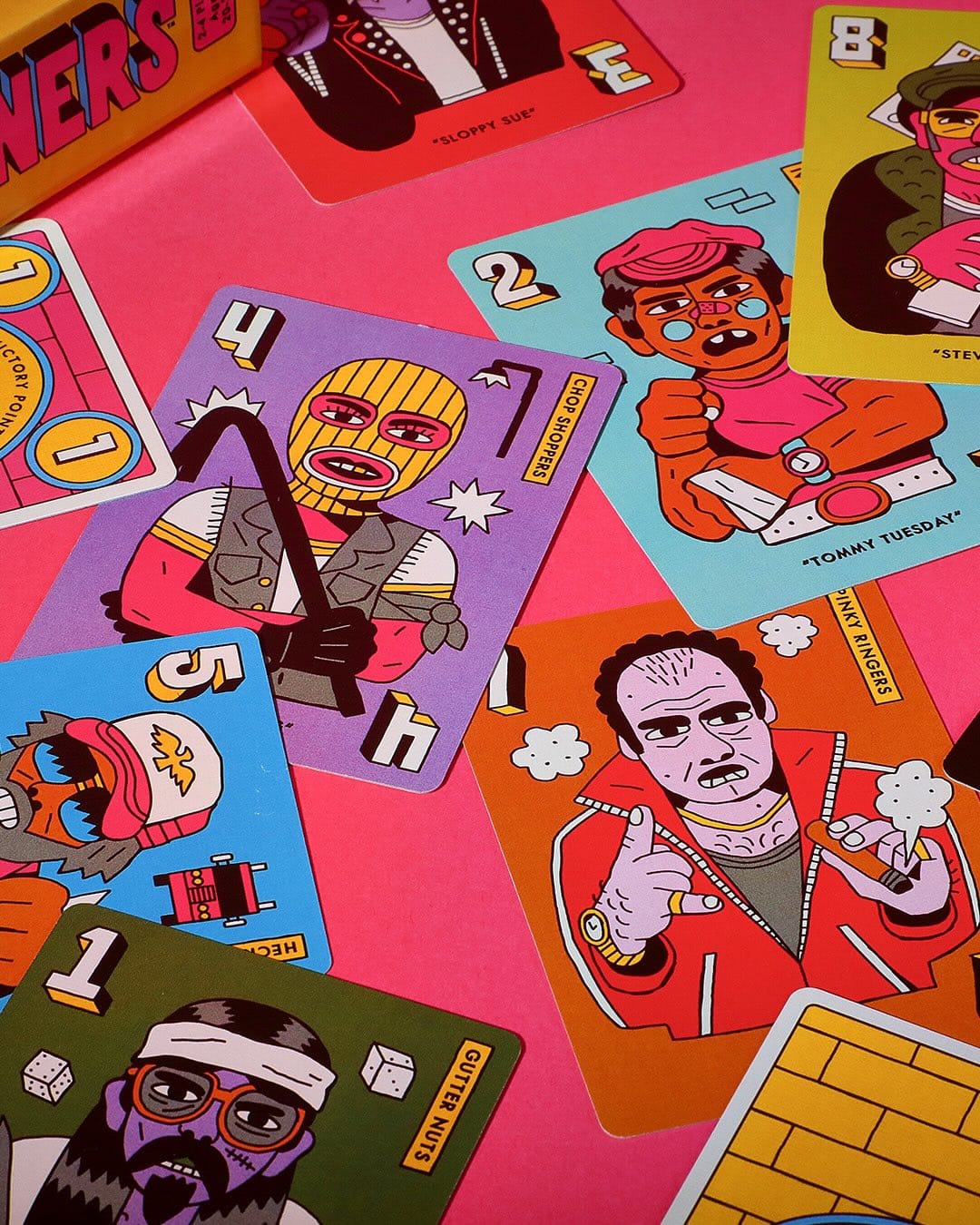
Poor graphic design, frankly, has plagued board games for time immemorial. Cards Against Humanity was a real breakthrough for its visual distinction, even if its subject matter hasn't aged so well. (Crossing boundaries in group settings feels like quite a pre-2016 activity. I'm no longer in the mood.) But with the exception of CMYK, it can be difficult to find visually distinct work in the space, in part because communicating a board game's cultural fit is a part of the process, for better or worse.
Approaching games as a brand and identity design problem first is how Brooklyn (of course!) design studio Young Jerks operates. Their imprint Weast Coast Games publishes bright, broad-stroked card games with a focus on short play cycles. Their newest release, Loners, pulls from 80s genre fight films. You pull together a crew to take down the block, call in a wild-card to take advantage, or flip the arrangement to play as a security guard.
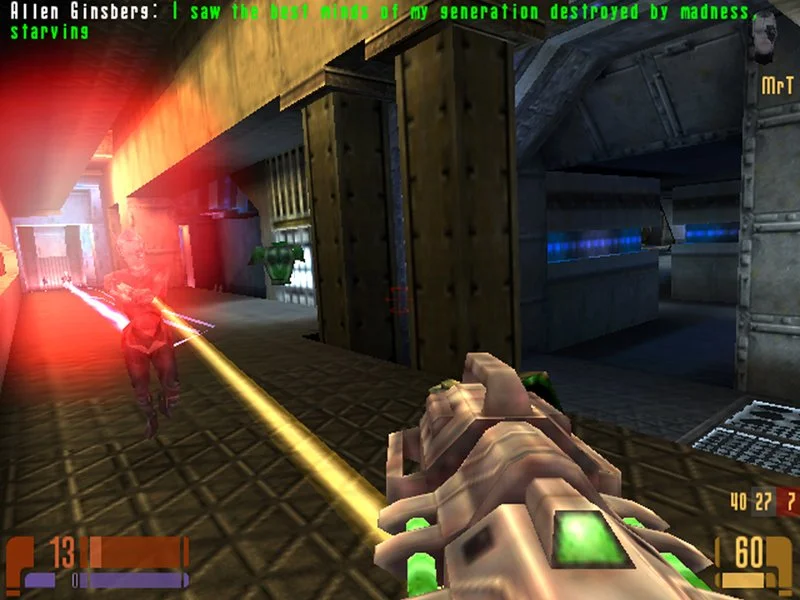
Artist Joseph Delappe was constructing interventions as long as anyone, and we covered his work 2011 for the No Fun issue. Back in 2001, Delappe started his practice with Howl: Elite Force Voyager Online, a work that placed him at the forefront of experimental performance in native game environments. After logging in to Star Trek: Elite Force Voyager Online, Delappe spent the next six hours typing in Alan Ginsberg's poem Howl, line by line. Rather than participate in wanton violence, Delappe sought connection through poetry, and with each death, he re-emerged elsewhere to complete the process. This week at ZKM Center for Art and Media Karlsruhe, he'll revive the performance over the course of four hours
It's hard to understate how novel this approach was twenty-five years ago, and although role-play of various sorts has been a staple of online games since their evolution from multi-user dungeons in the 80s, a deliberate attempt to change the context of live social play is quite new. Since then, there have been attempts at either intervention or documentary, such as Grand Theft Hamlet or La vraie vie.
“I am now 78 years old, but from here on, I feel a growing curiosity toward the unknown music that my new self will create, while also embracing the music of my former self—as if I now carry two musical worlds within me,” Yellow Magic Orchestra’s Haruomi Hosono wrote this week after announcing his first new music in seven years.
Many people know Hasono for his groundbreaking boundary-pushing work cited by everyone from Harry Styles to Vampire Weekend. But writer Shy Thompson tracks Hosono's other contributions: "the first to release an album of video game sounds as music."
You’d be forgiven for thinking the music contained within Hosono’s 1984 album Video Game Music is simply audio collected directly from games, but it’s something far more impressive: a recreation of music from video games, made only with a synthesizer. The tracks sound shockingly indistinguishable from genuine playthroughs of a handful of Namco classics including Pac-Man, Libble Rabble, and Mappy. Starting screens, gameplay, and high score entry are all featured, offering a vertical slice of the audible experience of getting a quick game in.
Hyphens
Intersections at play
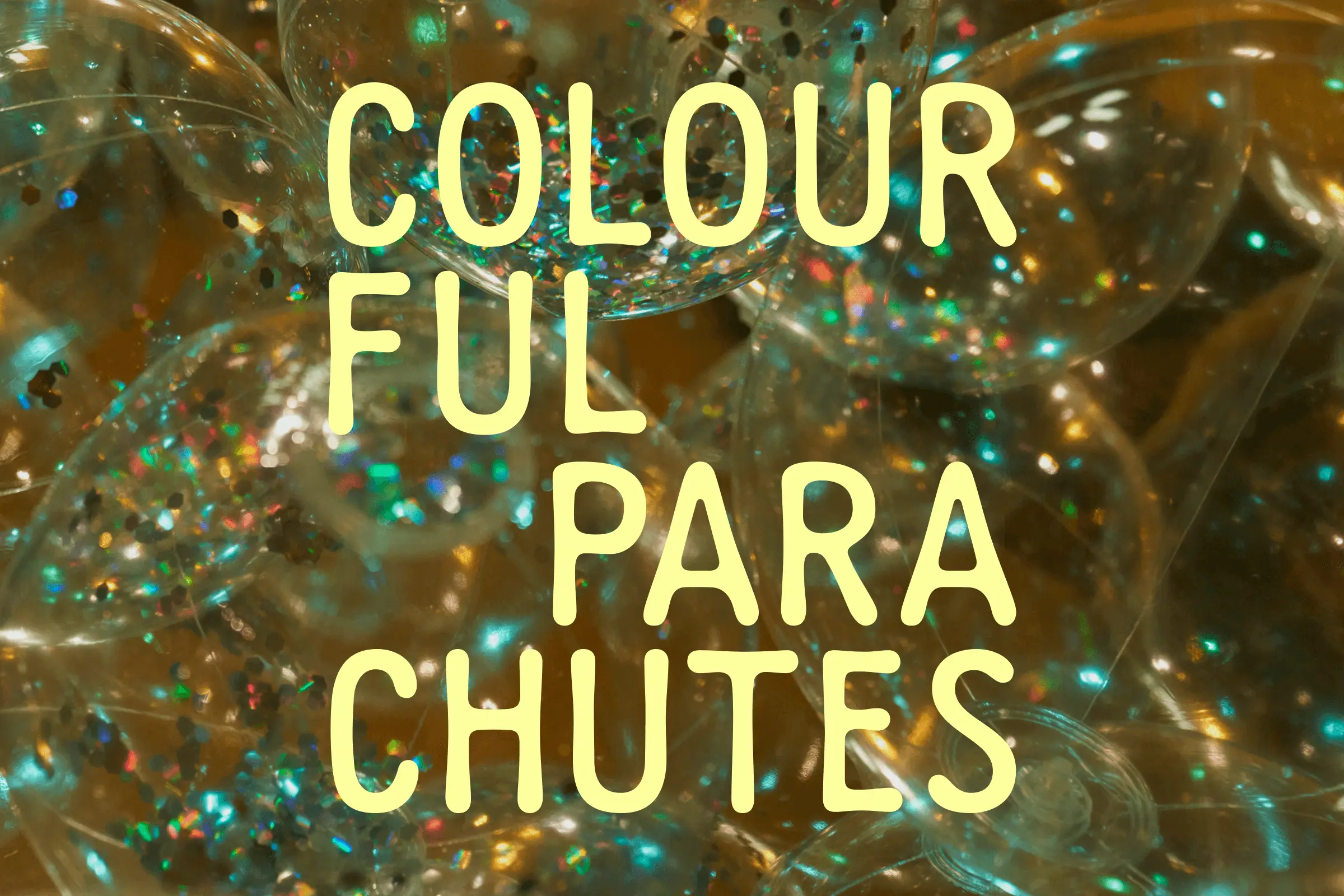
I learned about this exhibition Colourful Parachutes: Imagining Alternative Futures Through the Power of Play from artist Temitayo Ogubiyi, who works with found materials to create play structures. I'm profiling her next month, but this exchibition at Toronto's The Power Plant treats children as its primary audience, a delightful about face from the expectations of the contemporary museum. Drawing on Palle Nielsen's The Model (1968), which transformed Stockholm's Moderna Museet into an adventure playground, the exhibition reads the gallery as a microcosm of society: reconfigure it for children, and you begin to see what a different world might actually feel like.
CLASSIC
From the vault

Killscreen's very first editor Ryan Kuo did this interview with Krystian Majewski about his game Trauma.
In a lot of first-person shooters and third-person shooters, the computer draws the map for you as you’re exploring it. In these terms, they present a seamless objectivity that you occupy. Crysis is drawn out for you; it’s very literal, you move through it, and there’s a map—and that’s the map. How can that be an expressive space? Where’s the subjectivity in that?
One of the things that inspired me—a book called Space Time Play—there’s an essay by someone who suggests that movies and literature organize their story along a line. But he suggests maybe games aren’t linear—so what kind of model can we take to tell stories, make statements? He suggests space as being a skeleton for expression for games: things like spatial storytelling, developing an alphabet or a language of expression through space. That was something that really struck a chord with me. Trauma, in many ways—these are spaces, but these spaces represent different thoughts and different aspects of a person. It is, in many ways, literally environmental storytelling.
One To Watch
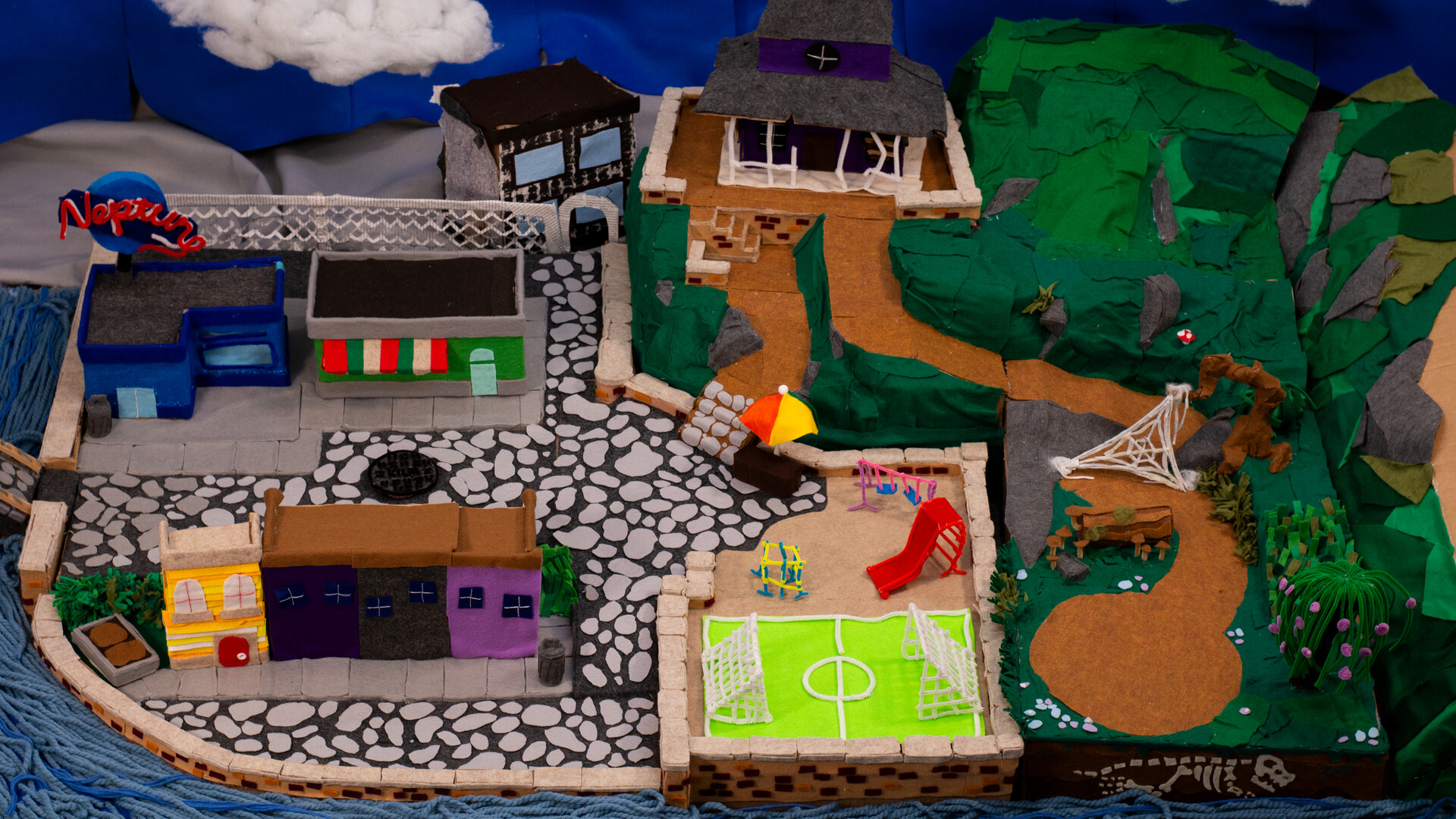
Way back in 2008, I received a small book from a publisher by the filmmaker Michel Gondry. I love The Sound of Sleep and his music video work, but this book You’ll Like this Film Because You’re in It chronicles the events of his DIY film installation at Deitch Projects. Gondry built a process for working amateurs into his work that is highly laudable.
So I was delighted to see this workshop from Hapshapen Games that followed a similar tack of bringing the public into the game making process. Abigail grows out of this work to bring raw materials from clay to felt into games in a meaningful way,
Run-ons
BASS VAN. Adding this one to book club lists. " Fallon is the court jester of the Anthropocene, a figure who invites us to watch celebrities play parlor games on stage while the air outside the studio begins to smell of tear gas and smoke."