The Long Way Around
Kalp Studio built Raahi around the thing most games treat as dead time—the ride between two places—and set it in a 1990s Goan town that never existed.

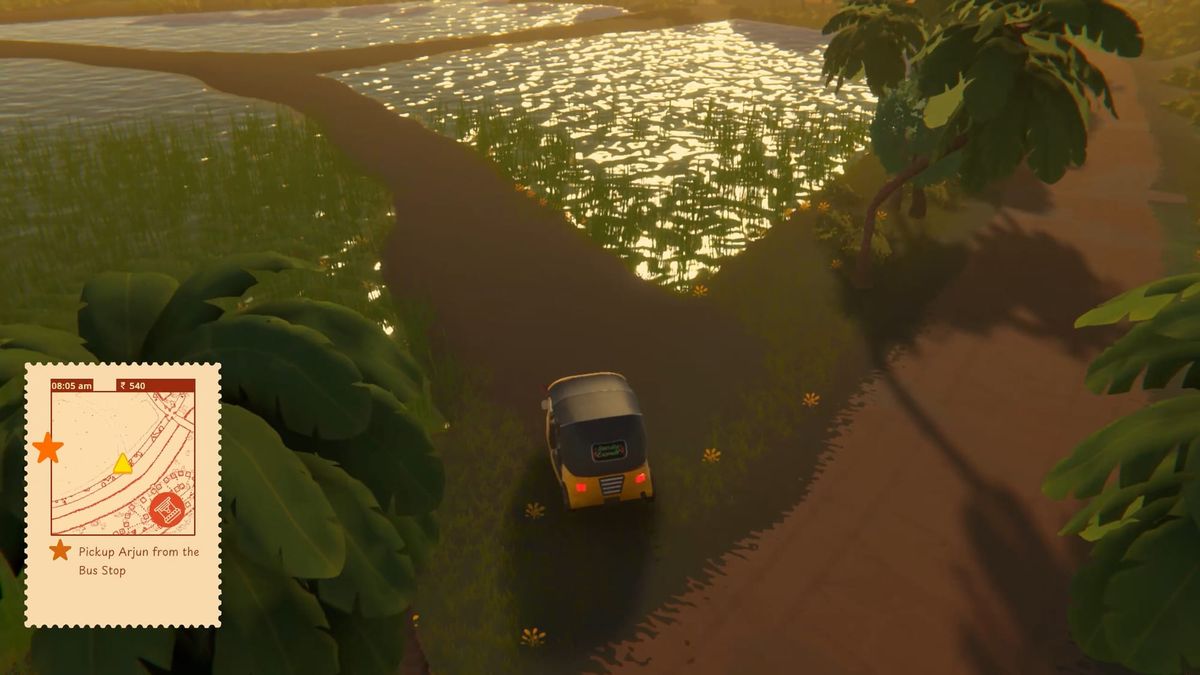
For more than half a century, R.K. Narayan set his novels in Malgudi, a town that appears on no map of South India and yet reads as more legible than most places that do. Invention, in his hands, was not evasion but proximity—a way of getting close enough to ordinary life that it could be seen at all. Kalp Studio's Raahi works the same seam. Its setting, Majili, is a fictional coastal town assembled out of 1990s Goa: Portuguese facades, Hindu temples, a fish-shaped pond that exists nowhere. You play Sandy, an auto rickshaw driver, and the rickshaw functions much as Abbas Kiarostami's cars did—a moving room where strangers say things they would not say standing still.
Kalp was founded by Mannat Jain, Rishabh Raj, and Akshat Sinha, three college friends who studied game design together. Jain handles narrative, business, and marketing. I spoke with her about intimacy, nostalgia, and why a specific place is not a smaller subject than an invented one.
Pre-alpha Gameplay
Jamin Warren: The word raahi means traveler in Hindi, and that's exactly what you and your co-founders have been building toward at Kalp Studio. Can you give me some background on the studio and how you formed this team to put the game together?
Mannat Jain: We started as college friends—we did game design together in college, and we always wanted to make our own studio. We thought last year was the perfect time. My co-founders Akshat and Rishabh were already making this game called Raahi, and I found myself very attached to it, so I thought I'll join it as a co-founder. Our game is deeply rooted in culture, but at the same time it tells a very global story of an Indian auto rickshaw driver, and it talks about his dreams, and how people usually do not know the dreams of people that they see in their daily life. Our setting is a very analog time in the ’90s, where you would actually talk to your driver.
JW: What place does the auto rickshaw occupy in Indian culture? I'm used to taxi cabs here in the United States, and I've ridden them in European cities, but the intimacy seems pretty important to the experience of riding in one of these.
MJ: I come from Chandigarh, which doesn't have a lot of auto rickshaws, but in bigger cities like Delhi, Bombay, and Bangalore, auto rickshaws are a daily commute for so many people. They're almost like a mini scooter, but they fit more people, and the drivers are so skilled that they can get you somewhere in half the time a car would, and it's cheaper, too. There is intimacy when there is a daily route that they follow. Sometimes they would take the same kids to school every day, the same person to work every day. Which is why the setting of our game is a smaller town in the ’90s—we wanted to capture the warmth of knowing everyone and knowing all the routes. These days, even auto rickshaw drivers come by app in a lot of major cities. They don't know the routes, they don't know the people. We wanted to negate that.
JW: The history of video games has mostly been driven by companies in Europe, the United States and Japan, and genre-wise games still move into fantasy environments or war settings—they don't usually occupy a real place in time. So many books, movies, and TV shows focus on real locations, and games have been pretty allergic to that. Why Goa?
MJ: My co-founder actually lived in Goa for many years, so it comes from his lived-in experience. A lot of people think that Goa is mostly known for its nightlife. He wanted a different perspective of Goa, slower, more cozy, and how much culture it actually has. The Portuguese came to Goa around the 16th century and set up a port there for trading, and that is why Goa is heavily influenced by their architecture and the food also. The traditional Goan people still stayed, so you can see a lot of Hindu temples which look quite different than the other Hindu temples in India. We've taken quite a bit of inspiration from the Portuguese homes there, and we have almost the same houses in our game.
Killscreen members get the Friday Playlist, the members-only podcast, and the full run of back issues. Two dollars a month.
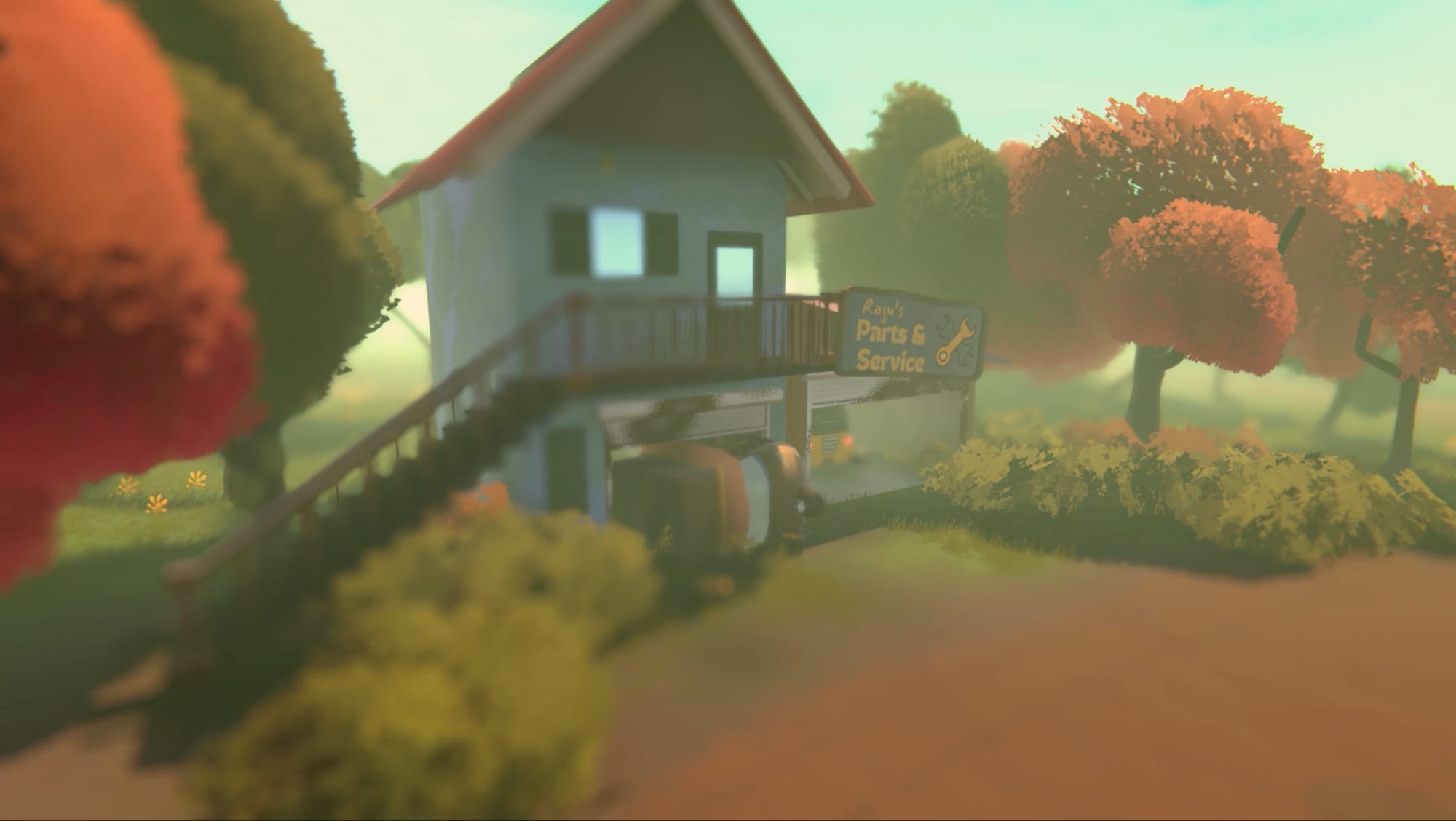
JW: Grand Theft Auto V was set here in Los Angeles. It is not physically Los Angeles, but it tells a story of the city in a meaningful way. What does the fiction allow you to do, since it isn't literally Goa?
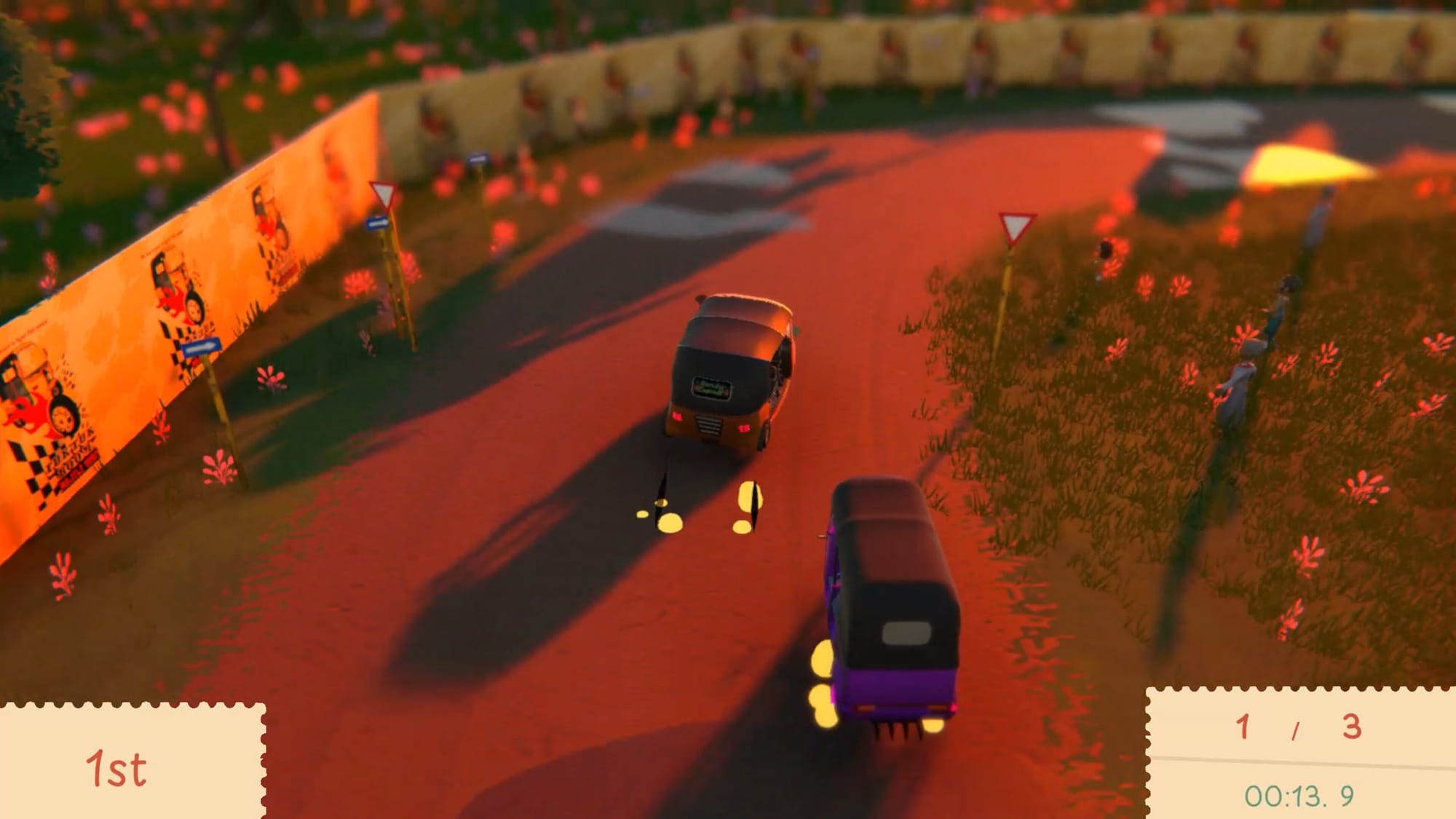
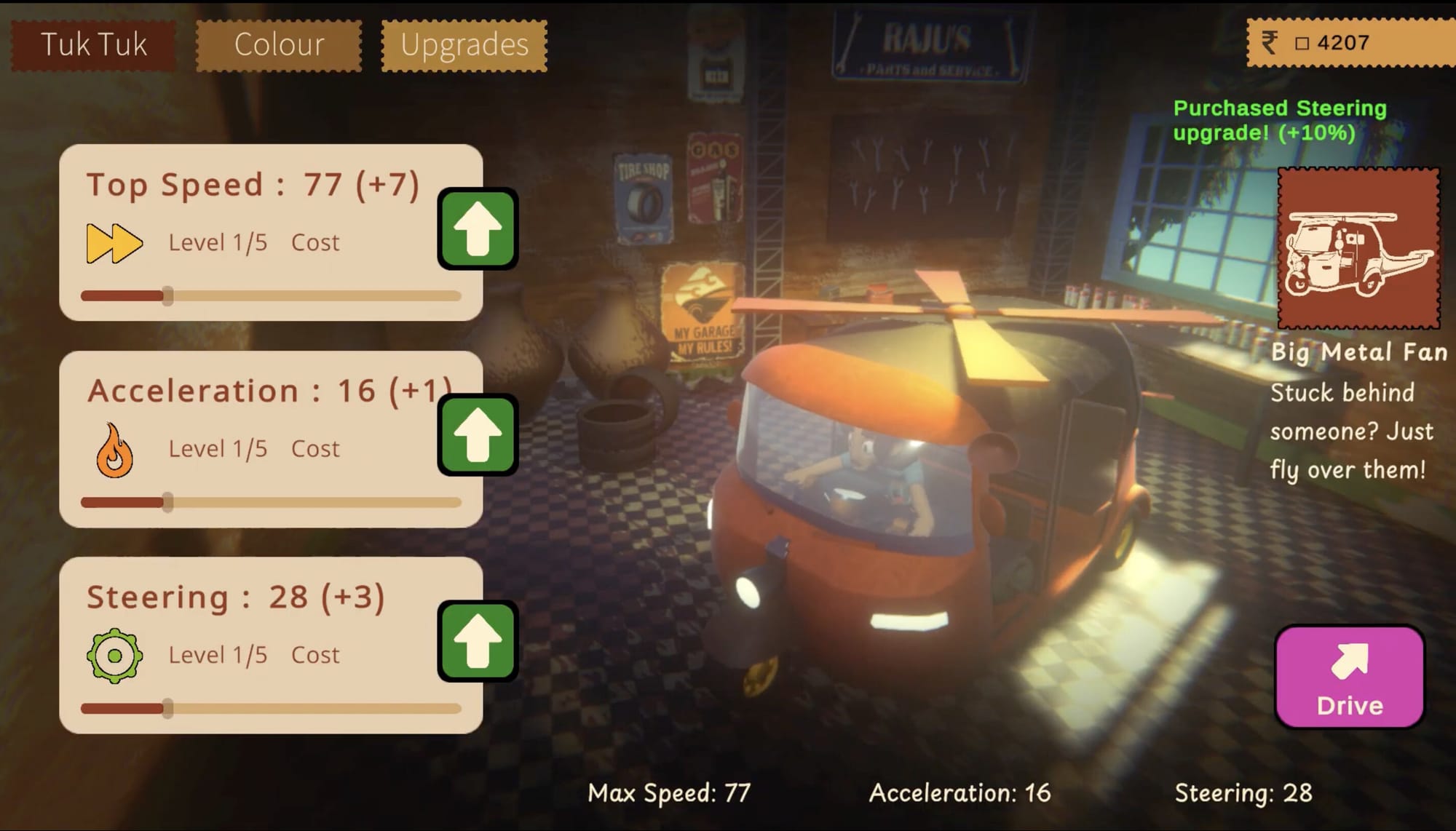
MJ: We've taken elements that we love, but it is fictionalized and stylized in our own way. In our world, auto rickshaw racing is like their F1, and that competition is coming to the town. Sandy is your town's auto rickshaw driver who likes to talk a lot—he is a smart mouth, he wants to know everything about everyone, and he is quite boastful, but he has a good heart and he has always been ambitious. His brother is kind of like a genius mechanic, so he helps Sandy upgrade his auto. There's one that flies. Goa has auto rickshaws, but not a lot, and the racing competition becoming a big thing there is not actually a thing. We also have a haunted mansion the player could go and explore, and a fish-shaped pond in the city.
JW: In the United States, there was a big push for global music in the ’80s and ’90s—the thinking was that it would expose people to music they wouldn't normally listen to, but it flattened everything into one bucket. With your work, the kinship seems more generational than geographic: there was something specific globally about the ’90s, and that's the common thread for anyone nostalgic about that period, wanting to understand it through a different lens.
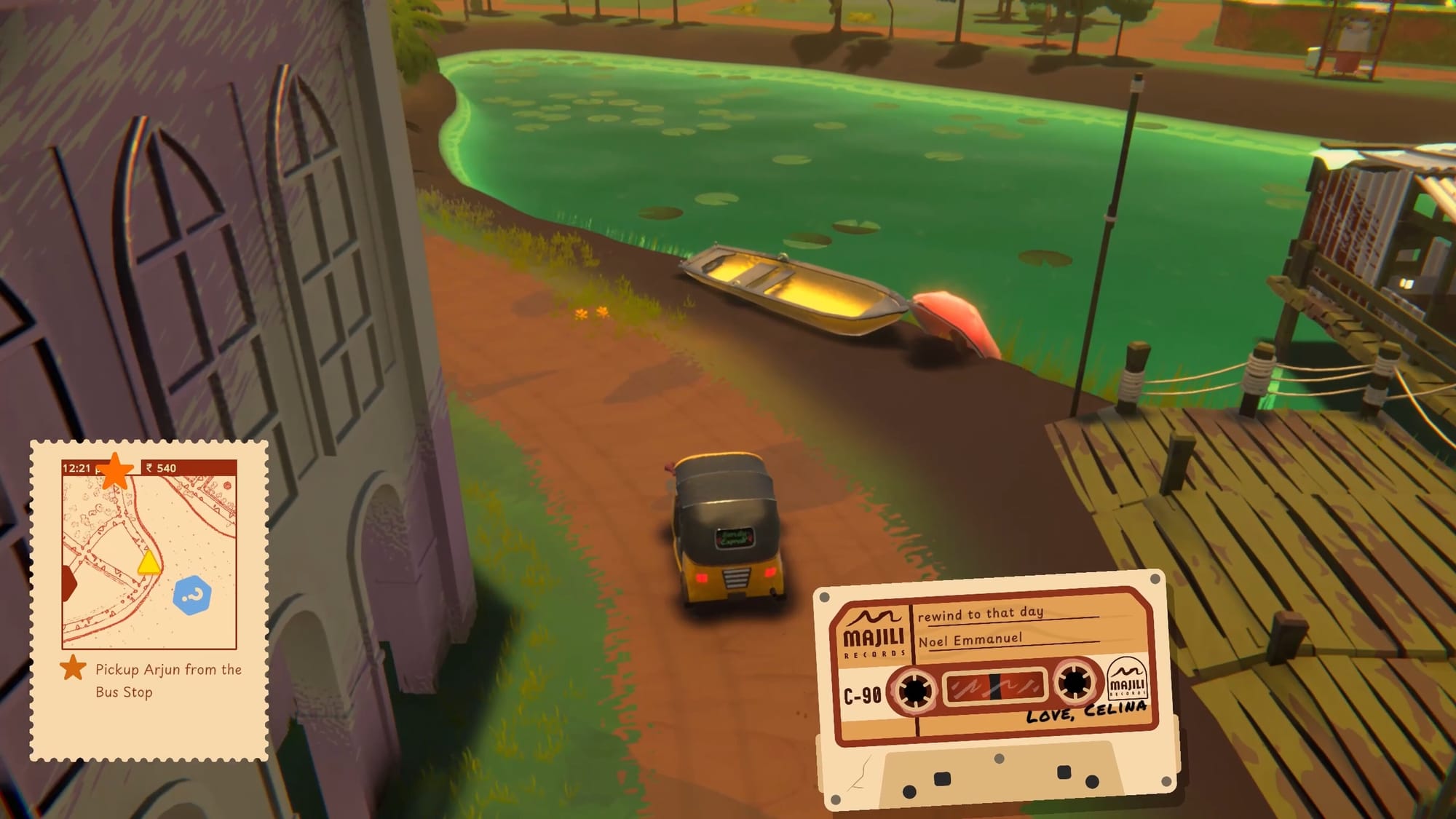
MJ: Yes, for sure, I think this could be another thread, 100 percent, because there's less representation of India in the ’90s. People like the simplicity of it not being present in the same time as today, because there's a certain kind of charm to retro things, and a lot of people in today's world are feeling nostalgic about the ’90s even though they've never actually lived in the ’90s, because they thought it was much simpler and people had connections there, real connections. Music is a big part of our game. We have indie artists who have collaborated with us, and you can actually listen to their music as a form of tape, and it plays in your auto whenever you journey, and you get them as gifts as you progress through bonds. My co-founder Akshat considers himself a musician first, so he did the original score. With Raahi, our main motive is to show the beauty of everyday life.
JW: Where are you in the process?
MJ: We just graduated from this incubator called LVL Zero, where we got a $10,000 grant, and we were completely bootstrapped before that, so all our money mostly went into production, paying salaries to people. We're looking for publishers because we need runway to complete production, and we would want to launch next year in July if we get it. A lot of people ask us, are you making a game based in India, and why not take something more familiar as a setting? For us, games are about experiencing newer things. Most of Persona is about Tokyo, and people love that. If you make something with heart, I'm sure people will love Raahi too.
Read next: What a rickshaw knows that a car doesn’t · A paper notebook is the entire HUD in Boring Car Stories · Mexico City street legends turn up as low-poly game skins
Killscreen covers the games that treat a place as more than a backdrop. Once a week, free.