Playground Safety is the Enemy of Joy
Artist Temitayo Ogunbiyi bends Lagos security piping into playgrounds, arguing that risk, not safety, is what makes play matter.

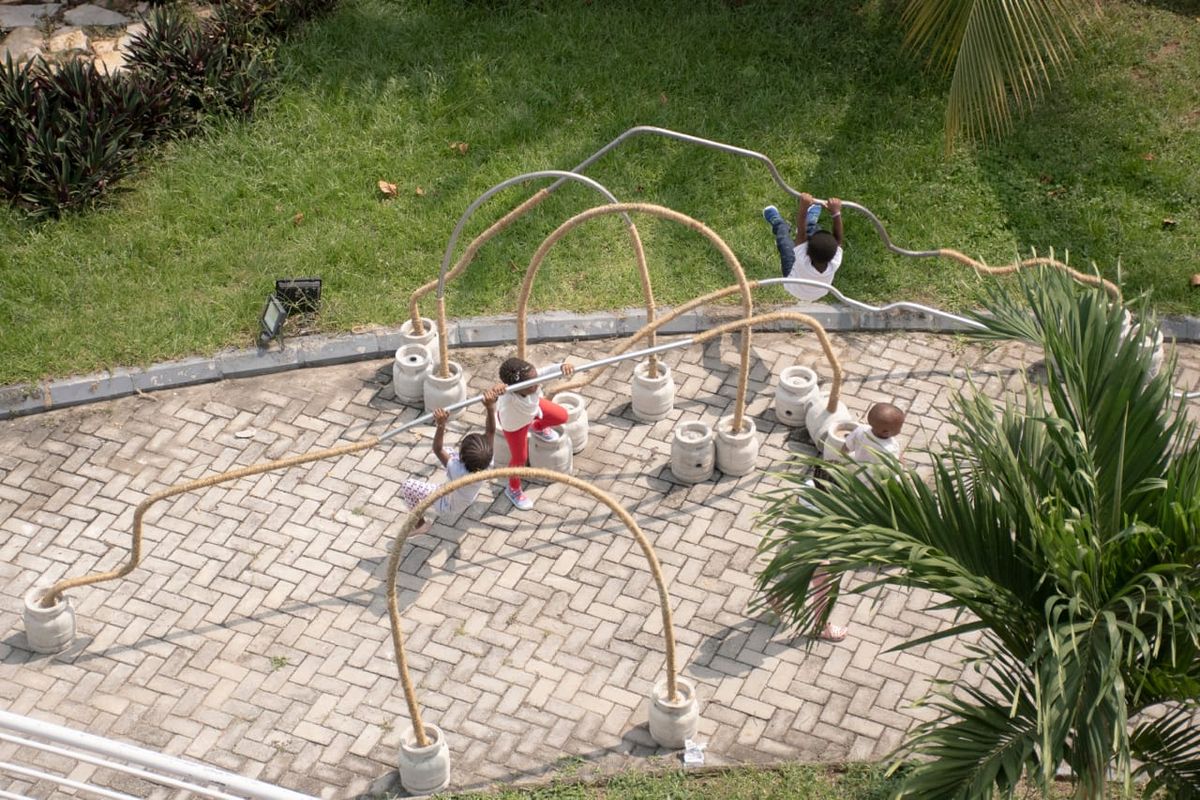
When you have kids, and they can start to walk, crawl, and dash, the first thing you will do is find a playground. If you're lucky, you'll have one within walking distance. If you're very lucky, it'll be something to remember with ample space for danger, dangling, running, spinning, launching, and the rest. And if you are blessed, you will be close to Temitayo Ogunbiyi's work.
A self-described "play practioner," the Lagos-based artist draws from a long lineage of artist experimentation in the play structures, from Isaumu Noguchi's unbuilt Play Mountain (rejected by Robert Moses in 1933) to Aldo van Eyck's 700-plus postwar Amsterdam playgrounds. All established the playground as a site where sculpture, urbanism, and pedagogy have collided for a century. But for Ogunbiyi, the prompt to build play structures stemmed from a simple realization that there weren't enough accessible places to the people of her community of nearly 25 million, who had almost no play infrastructure to speak of.
Here, I caught Ogunbiyi between appointments, and we chatted about the affirmations that dot her work, why she never brings children in to test a structure before it's installed (engineering tests, yes; play tests, never), and why risk is essential for a well-lived life as a child.
Members get access to the full conversation, transcript, and a video here.
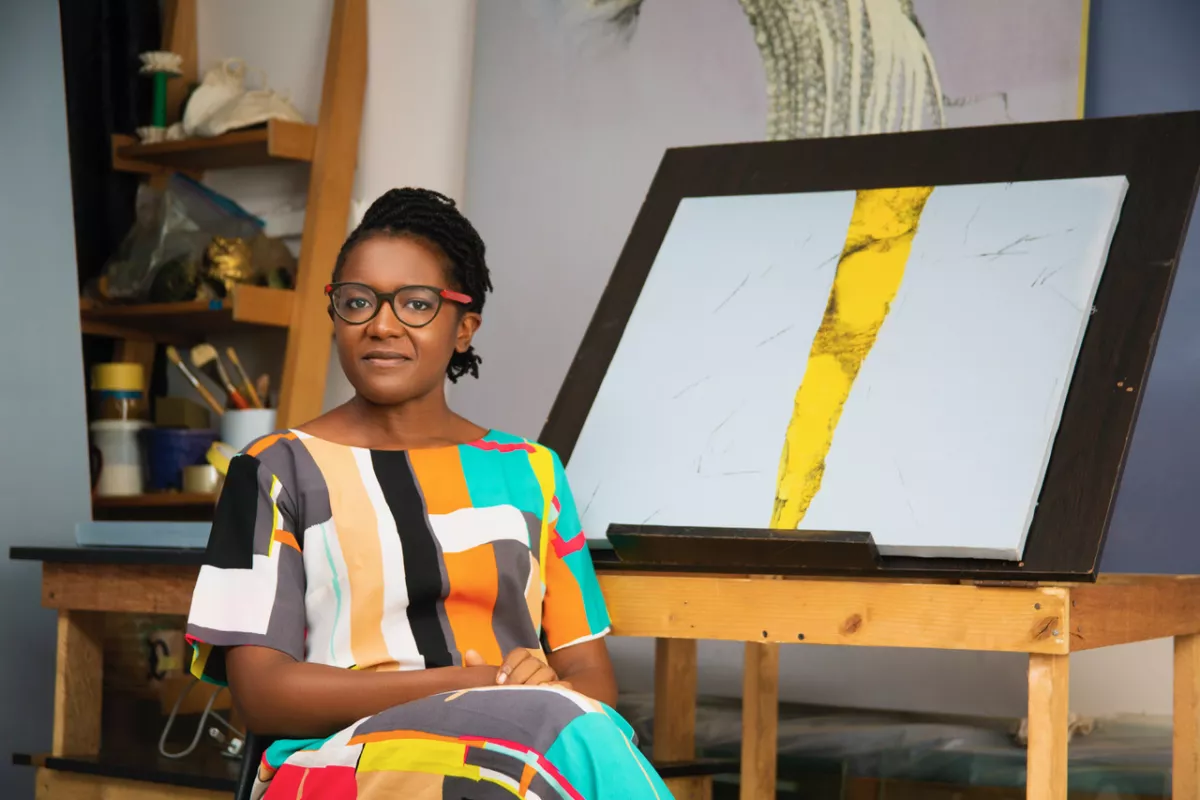
How do you introduce yourself at a party?
I prefer to be called a play practitioner. I'm interested in all things play, and in finding ways to integrate play into the most banal, everyday routine scenarios.
Do you know where that started for you—an interest in play as part of your practice?
I've always been interested in the experimentation that comes with making anything, whether a cake or a salad, and a lot of that comes from my upbringing. But as an artist, the real turning point from fine art to play was when I became a mom.
I have three children, and Lagos, where we live, is home to between 25 million and 30 million people, with very few public play areas for kids. Those I could find were often secondhand material from the West, which doesn't weather elegantly here on the equator—things get bleached out, they start cracking.
I think they're borderline dangerous, to be honest. So I wanted to create opportunities for play that are non-prescriptive, that invited people to just explore how their body could move.
Was there a particular moment that forced you to fold playground design into your art practice?
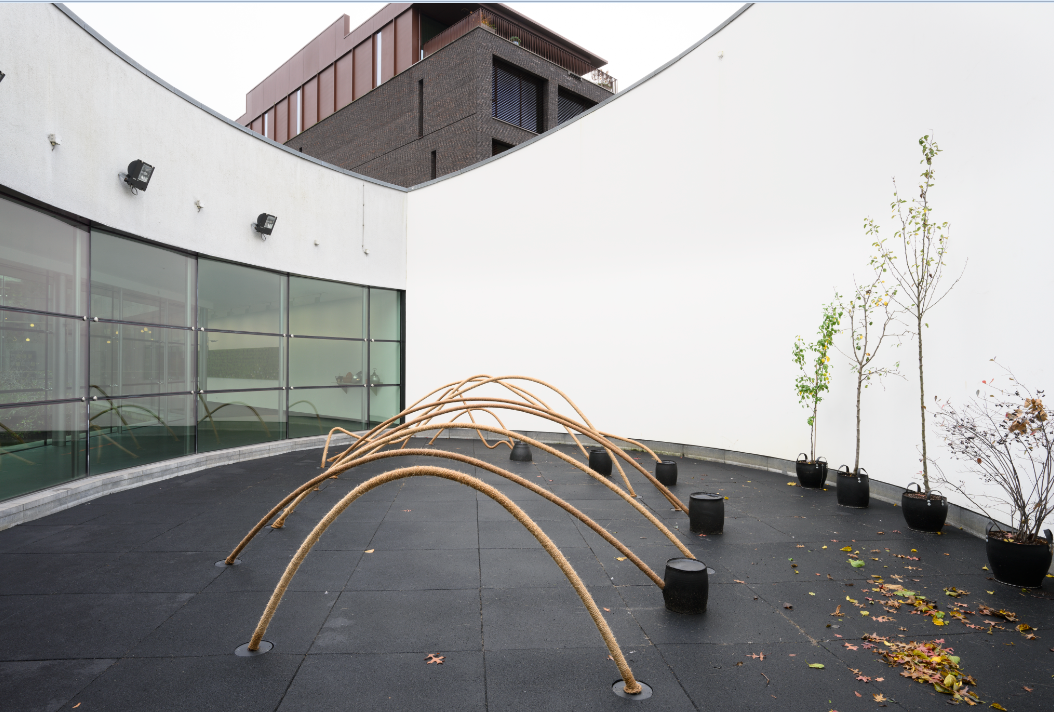
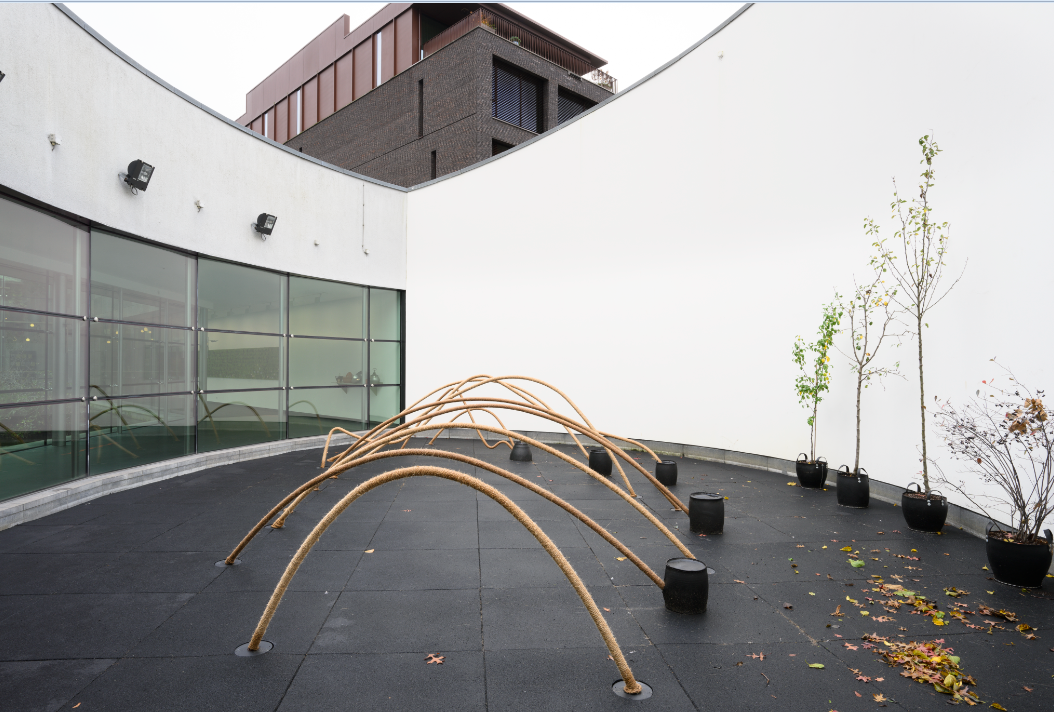
There were a combination of factors. I've been very interested in drawing and line—how line can be manipulated and contorted to take on different meanings and functions. I distinctly remember driving through Lagos, almost approaching the gate to our compound, and there was a security partition made from galvanized steel bars. I just said, this is so interesting to me. Once I saw it, I started seeing it everywhere in the city, and I found out it was affordable—something I could experiment with. That localized the possibility of play practitioning in Lagos, with materials I could source almost endlessly.
At the same time, I was researching Isamu Noguchi, and I was really taken by one of his playground sculptures, designed from four plumbing angles reconfigured into this beautiful, undulating infinity-type form. It was these two moments in conversation that set me on this path of play exploration with objects one can find in domestic space that often aren't given much love.
What does play culture look like in Nigeria?
For the most part, play—in the sense that we imagine it, anyway—is privatized. Swings and slides are restricted to schools. But play really is a part of how people interact each day. Interactions are filled with laughter and teasing and really interesting wordplays. Locally, play situates itself in linguistics first and foremost, and those are the most sincere expressions of play, which I try to honor in the way I use language to title the works.
Your titles use the second person—“you will,” “you will.” Who is speaking, and who is being spoken to?
I always think of the works as children of mine, so they're all connected. Sometimes the “you will” comes from something I've heard from someone else, with that word structure which is very popular here in Nigeria across many languages, including English. Somebody expresses a desire for something, and the response is: you will have it, you will prosper, you will gain acceptance at that university. It's such a powerful means of making a wish for another person.
When those phrases were used toward me, they gave me such strength, an ancho; and interestingly, whatever has been wished has often come to pass. Sometimes the words tilt more toward a prayer; they become declarations, they become wishes, and I like leaving them to be embraced by viewers as they feel. When I started, though, I was thinking about my kids and the importance of leaving words behind that they might revisit and pass along.
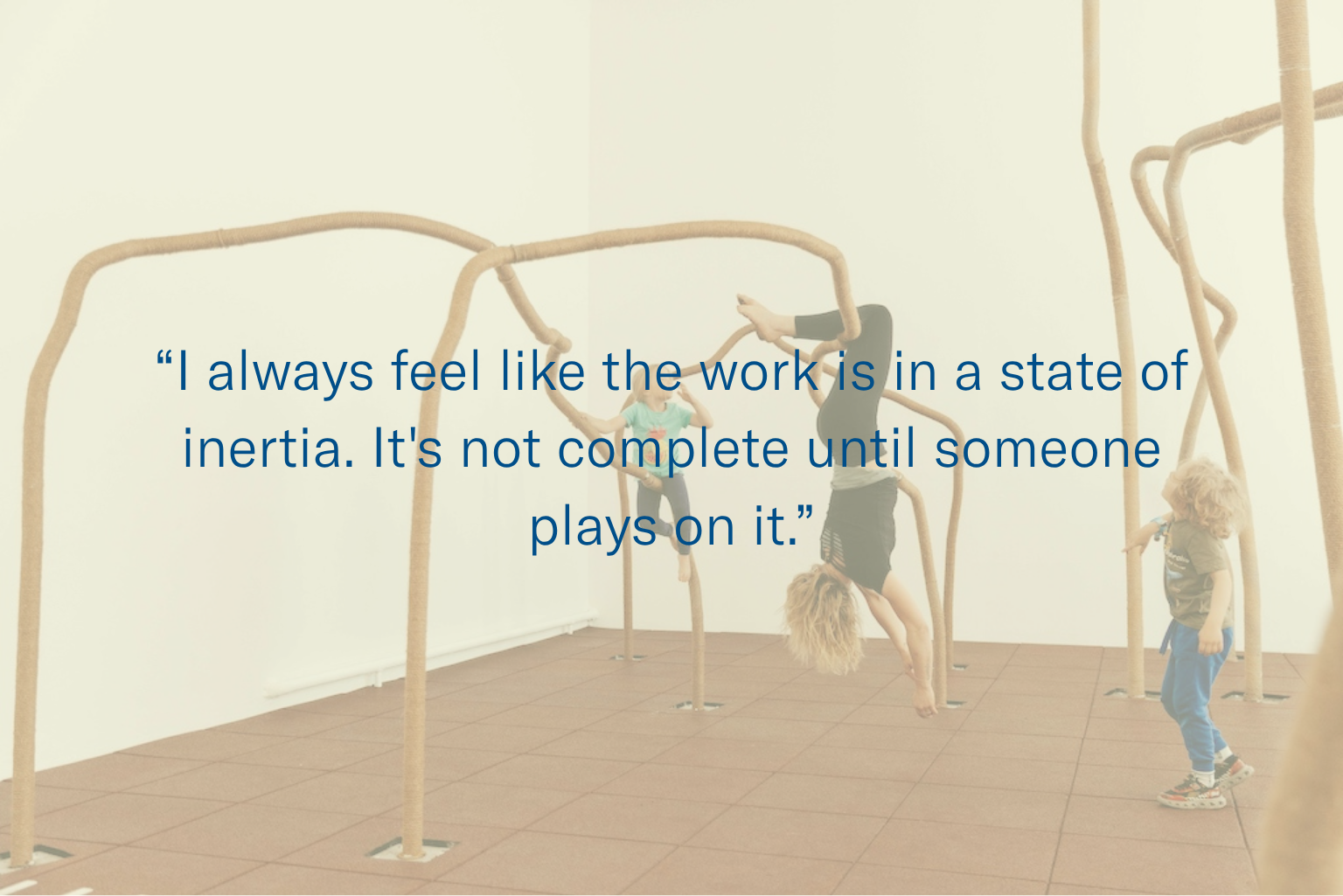
Your structures are designed to be touched—a dangerous proposition for an artist. What is it like watching people climb and hang on the work?
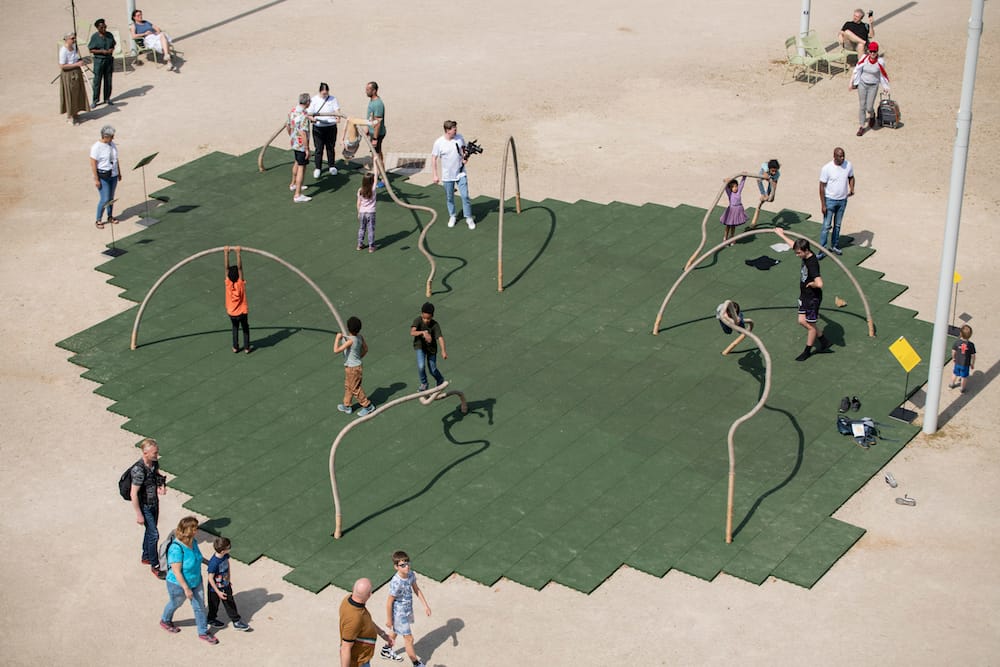
I always feel like the work is in a state of inertia. It's not complete until someone plays on it. More often than not, adults appear terribly clumsy, and it's actually hilarious to see adults try to do what they interpret kids to be doing. As adults, we become disconnected from our bodies. We drive the car, we sit down, we stand up. We're no longer curious about what our body can do.
What's so refreshing with kids is that they are just fearless. I remember watching one child walk one of my bars like a tightrope, and my heart was in my throat. He was totally fine. He got to a point where he was done and gently came down. I've never seen anybody fall. And watching how people interact gives me ideas about subsequent works. The piece in Lagos is the oldest structure, and sometimes I go there and see footballs; clearly somebody has been trying to create a game with a ball. These aren't things I can imagine when I'm making the work.
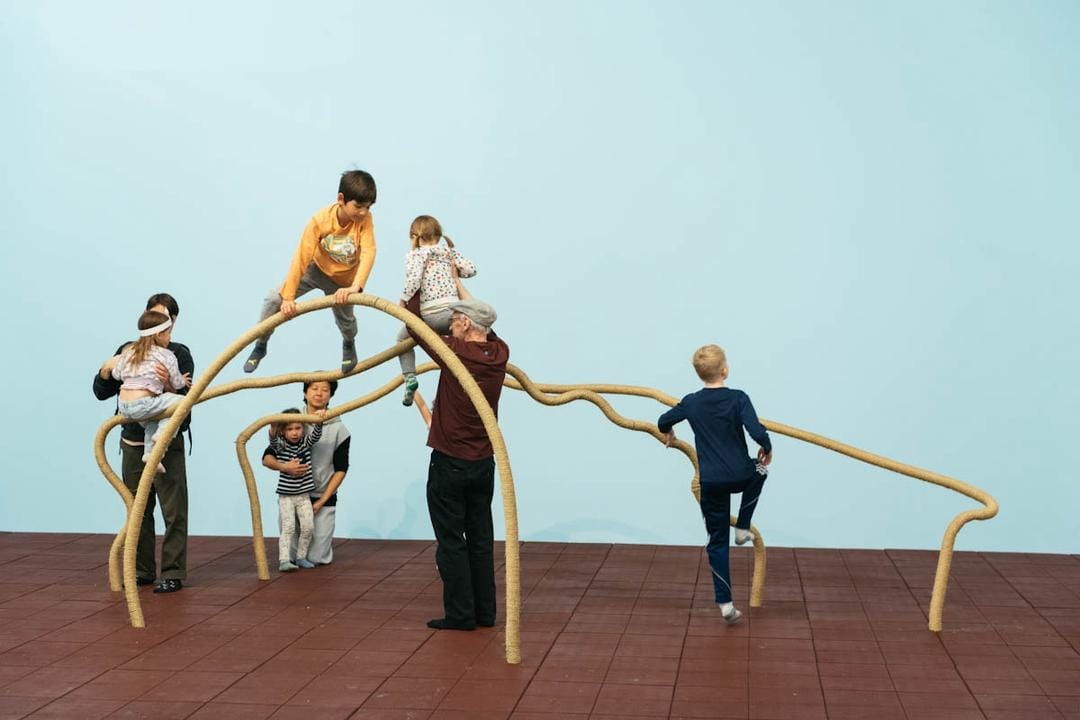
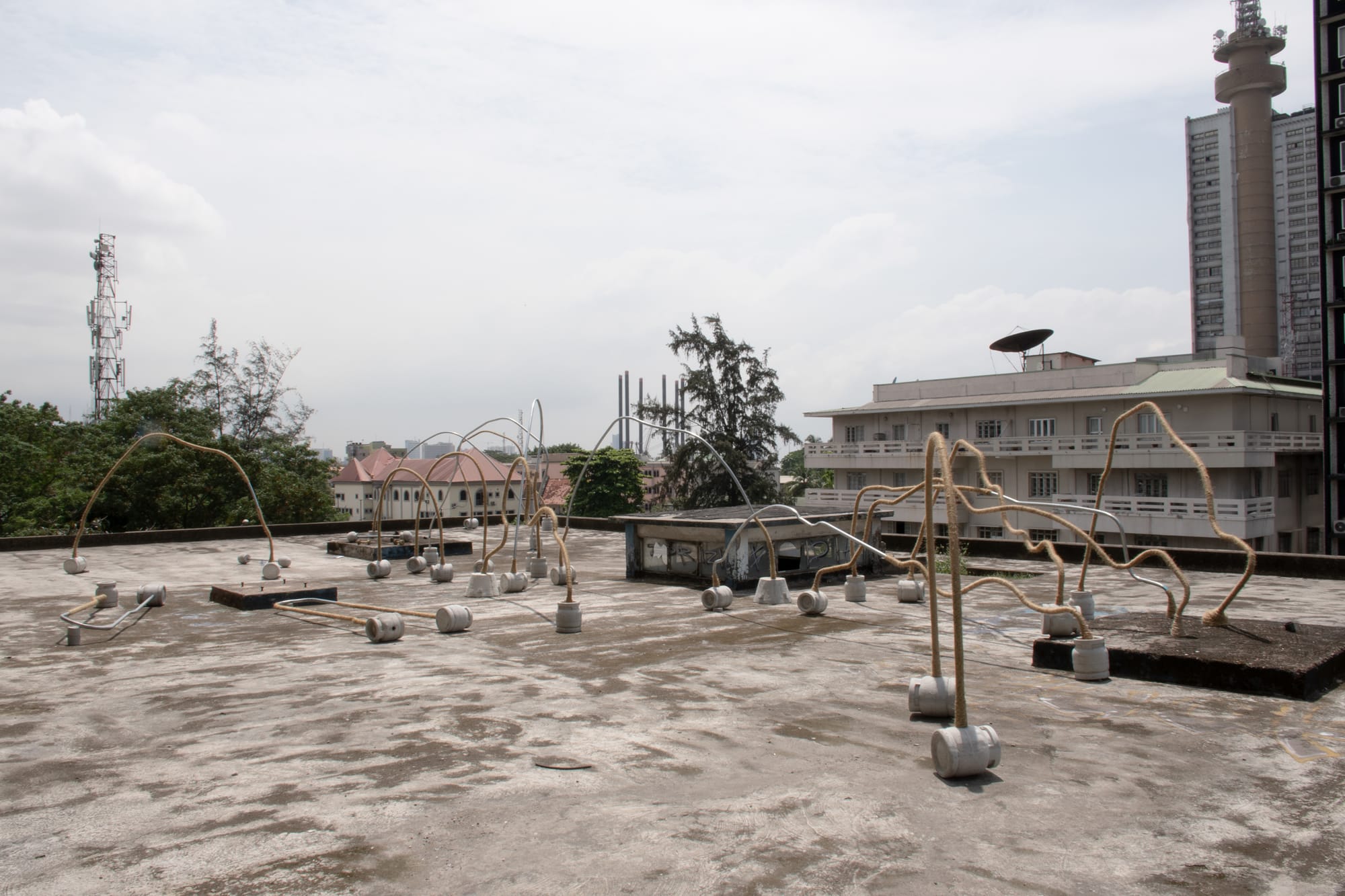
"You will find Lagos in Jand Living (Final Destination the T-dot), 2023-26 (Credit: LF Documentation) "You will find playgrounds among palm trees", 2019 (Credit: Temitayo Shonibare)
Playgrounds can be sites for politics. A designer at Monstrum, the Danish firm behind some famously dangerous playgrounds, once told me they don't build in the United States because of the legal anxiety around getting sued—it's why so many American playgrounds look the same. Do you view your work as having a political valence?
I always try to be careful about thinking consciously about politics with respect to my practice. I try to honor the communities that I imagine could interact with the work. But I definitely agree there is a risk-averse attitude to play. I grew up in the United States—we had monkey bars, and I don't see monkey bars anymore. Slides and swings don't go as high. There's a lot of the EPDM stuff, less mulch. I see play being suffocated by restrictions. If there's any sort of political gesture I try to offer in response, it's that I always introduce some level of risk, because I believe that play is not play without risk.
If you are raising children in environments where there is no risk, how do they learn to manage risk as adults? It's impossible.