Balling Out of Control
The fall and rise of pinball in New York

You wouldn’t figure Roger Sharpe as the peep-show type. His colleagues at Manhattan’s N. W. Ayer advertising agency never imagined that their down-to-earth, Midwestern copy writer—the unassuming new guy with the bushy mustache and wire-rimmed glasses—would patronize a skin-flick joint. But he did, every morning and night, always returning to the same place on 42nd Street near Sixth Avenue. (This was in 1971, before Times Square became toddler-friendly.)
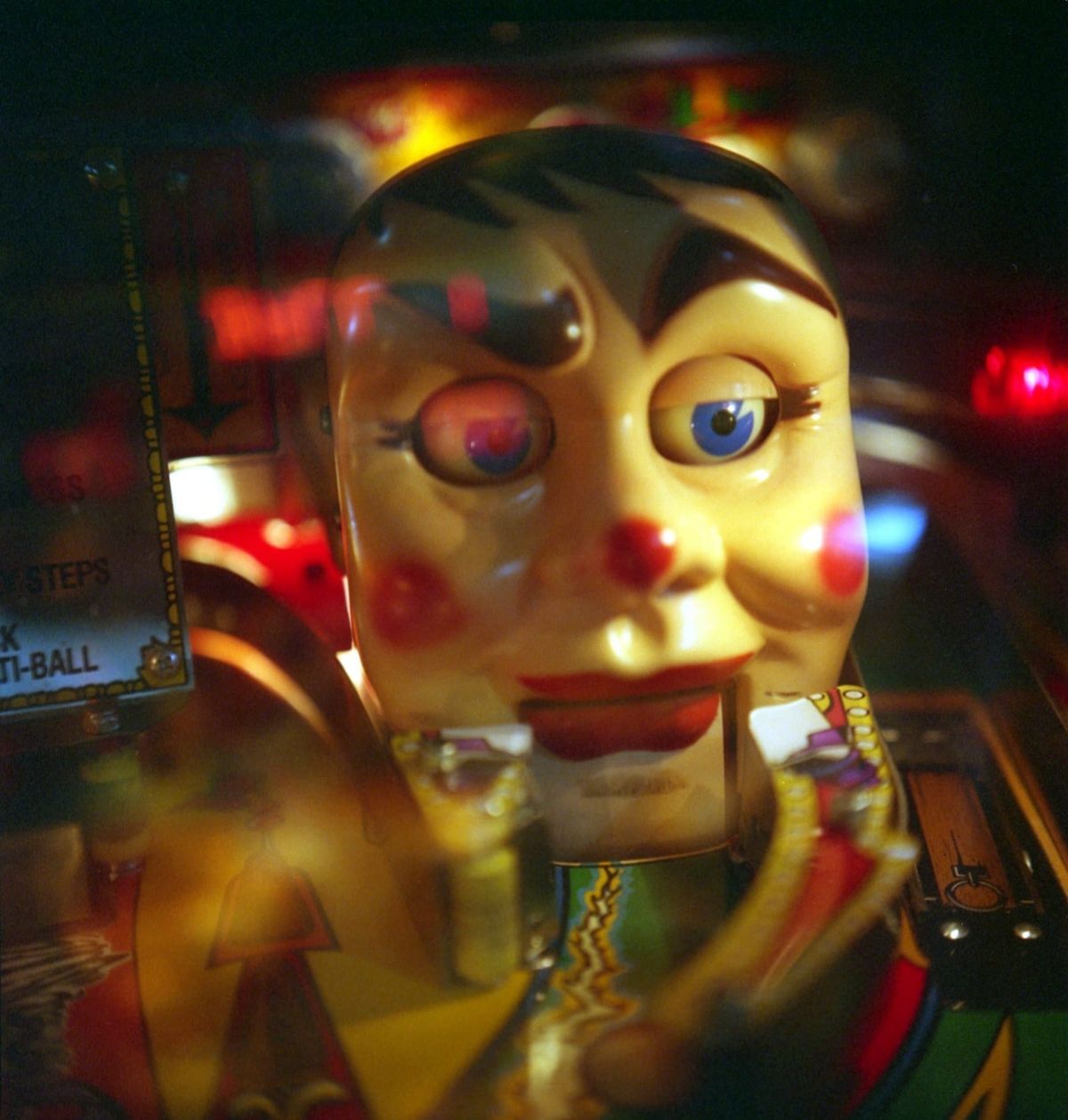
It’s not that Sharpe was ashamed. In fact, he cherished his ritual. Twice a day, weaving through the tourists and panhandlers, he ducked into a seedy storefront with darkened windows. He asked an attendant for quarters, and then he fed his compulsion: He played pinball—honest-to-goodness pinball, with flippers and pop bumpers and slingshots and whatnot, and he had his pick of four machines—four machines!—lined up by the door.
Sharpe may have been new to the city, and not yet sure how the subways worked, but he had a vague conception of the tawdriness that went on in the back rooms, behind the doorway with the black velour curtain. That held no interest for Sharpe, though—certainly nothing like the allure of the silver ball. His urge was to master the machine. So he stoked his pleasure center in the peep-show lobby before and after work, until the day he walked in to see all of the machines upside down, in pieces, on the floor.
Sharpe approached the guy who dispensed the quarters. “What happened?”
“The city came in and they busted us.”
“…For the pinball machines,” Sharpe said. Maybe once he said it out loud, it would make more sense. Or not. “They came in and took the pinball machines”—he gestured toward the black curtain—“and not what’s back there.”
The attendant shrugged.