Before making a game, Lotritsa Studio shipped the tool
Kaleidos makes Perlin noise, cellular noise and reaction-diffusion playable

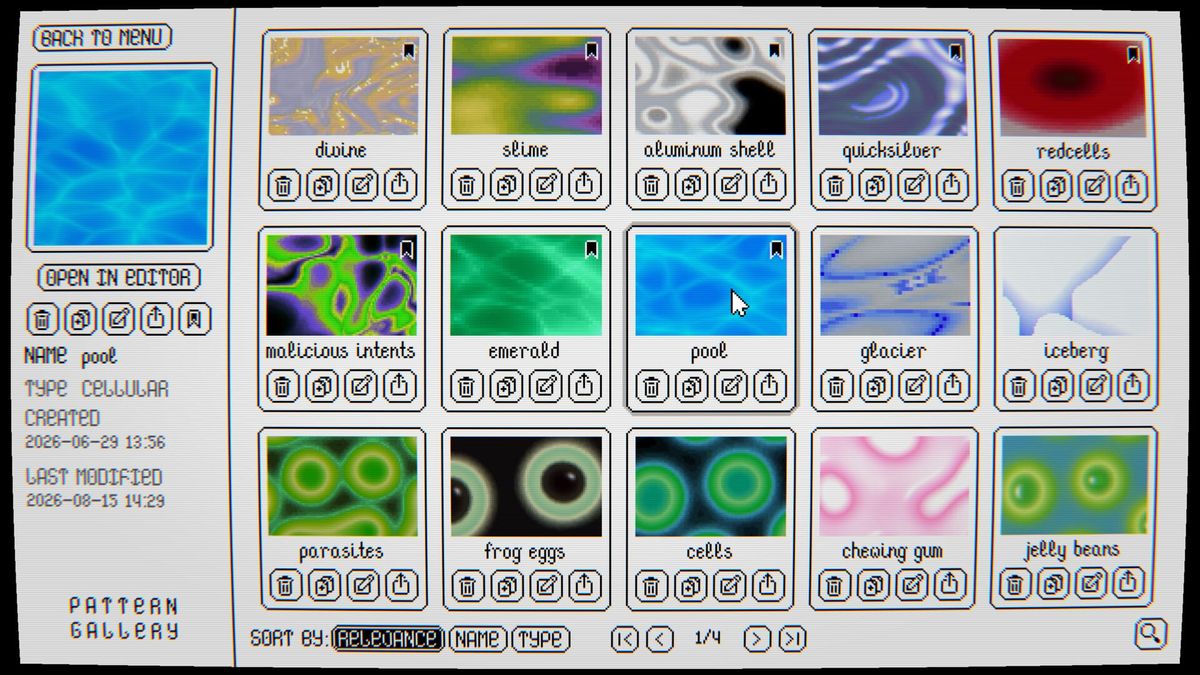
The plan at Lotritsa Studio is "50 years" of game ideas. The first shipped thing is not a game: it is the instrument. Kaleidos, a shader-pattern tool the developer built as a personal utility and then finished into a product, landed August 16 on Steam and itch.io at $7.99, announced with a launch reel whose caption is disarmingly plain about the arc: first completed project, first real marketing push, and a stated ambition to be “a hermit who crafts something in a cave for a year” and then release it.
Thirty seconds of the Kaleidos launch trailer, muted—the full version with null_harmony’s soundtrack is on Steam.
The tool itself is a playground for Perlin noise, cellular noise and reaction-diffusion, mapped through a finely controllable palette, with warp, movement and interactivity dials, a gallery, a sandbox for drawing with your own patterns, and a CRT dress-up layer—scanlines, curve, vignette, chromatic aberration—that you can switch off. Every shader it produces or bundles is CC0—use it anywhere, no credit owed.
We have a soft spot for instruments that make images misbehave—Hyperspektiv called itself a modern kaleidoscope back in 2016—and Kaleidos is the version of that impulse that hands you the source code on the way out.
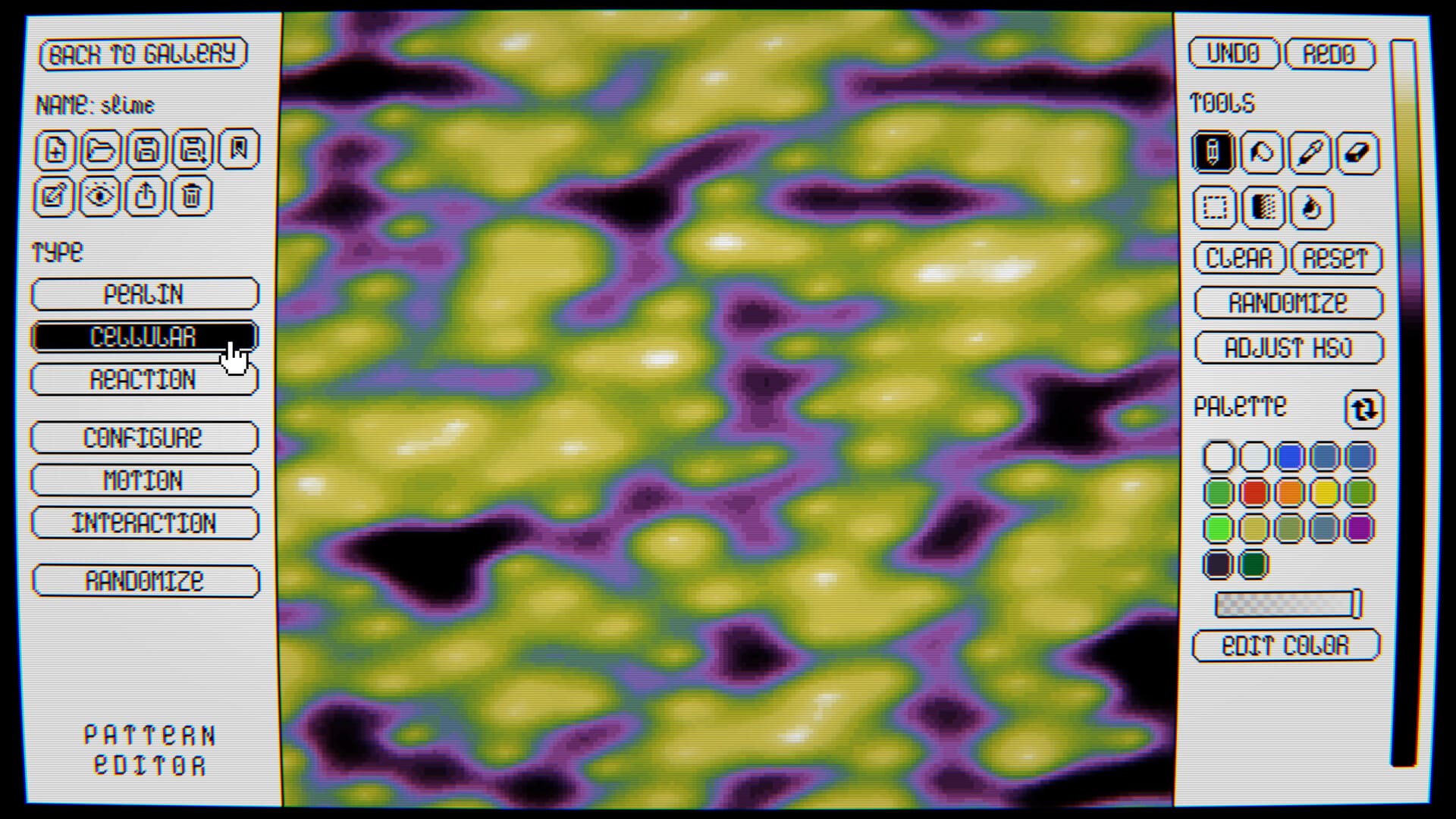
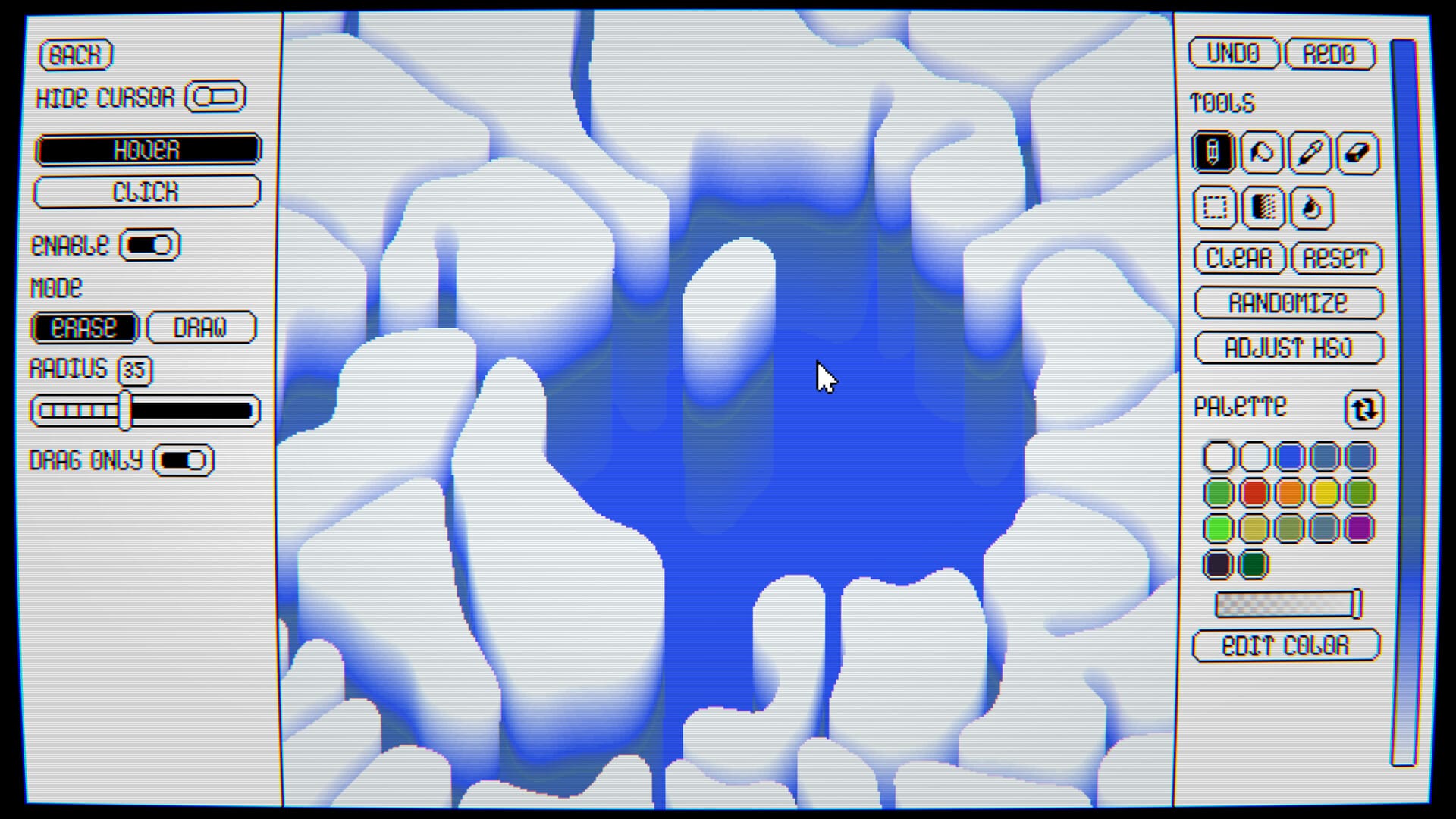
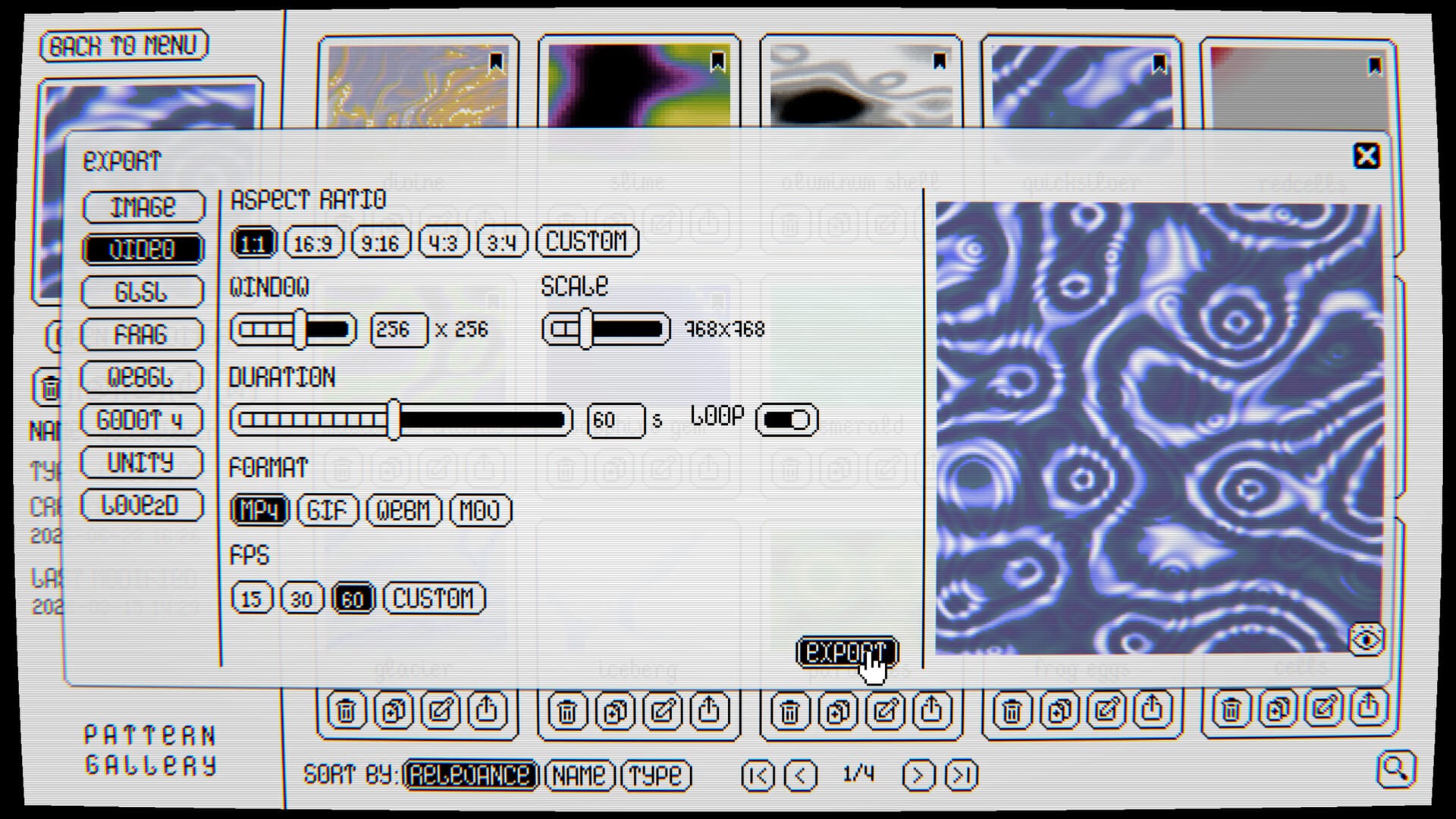
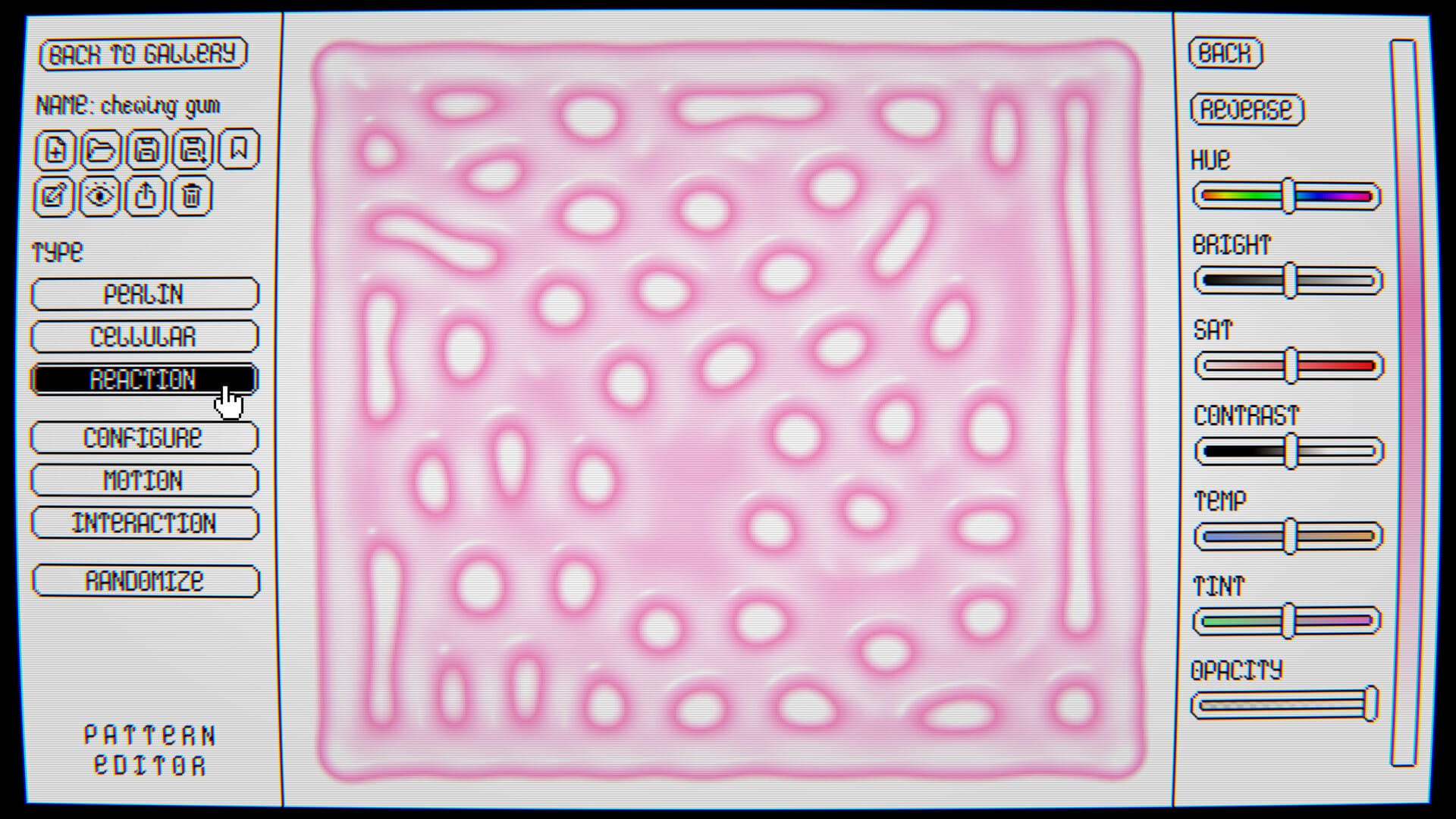
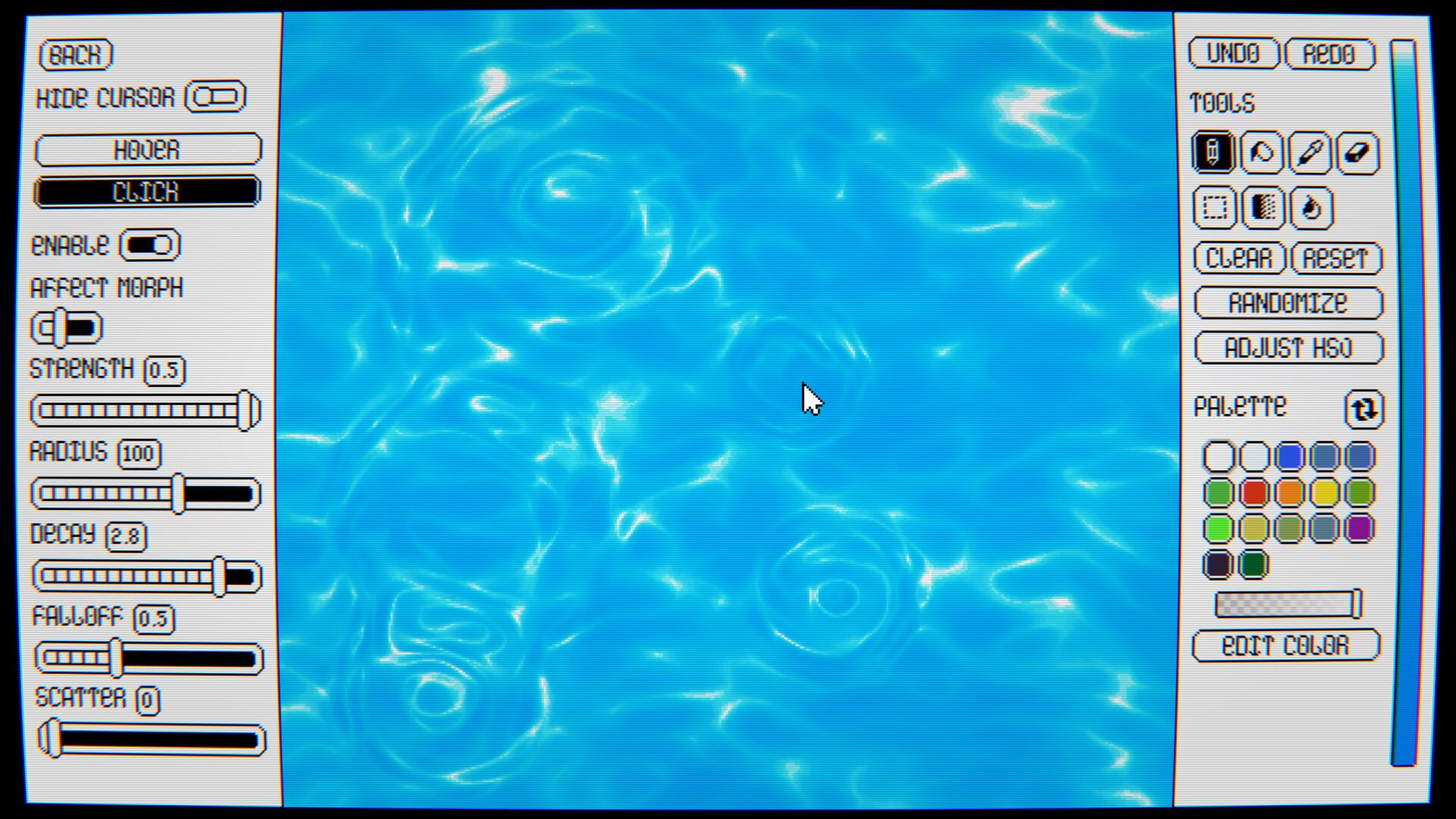
Patterns, palette work and the sandbox, via the Steam page.
Tool-makers like this are exactly who Radar exists to catch before the algorithm buries them. The free newsletter delivers the finds three times a week.