In FAKE ME, your disguise starts as a blank block
Eren Can Metin and Emre Gökçe put the verbs of 3D modeling into a multiplayer hide-and-seek round.

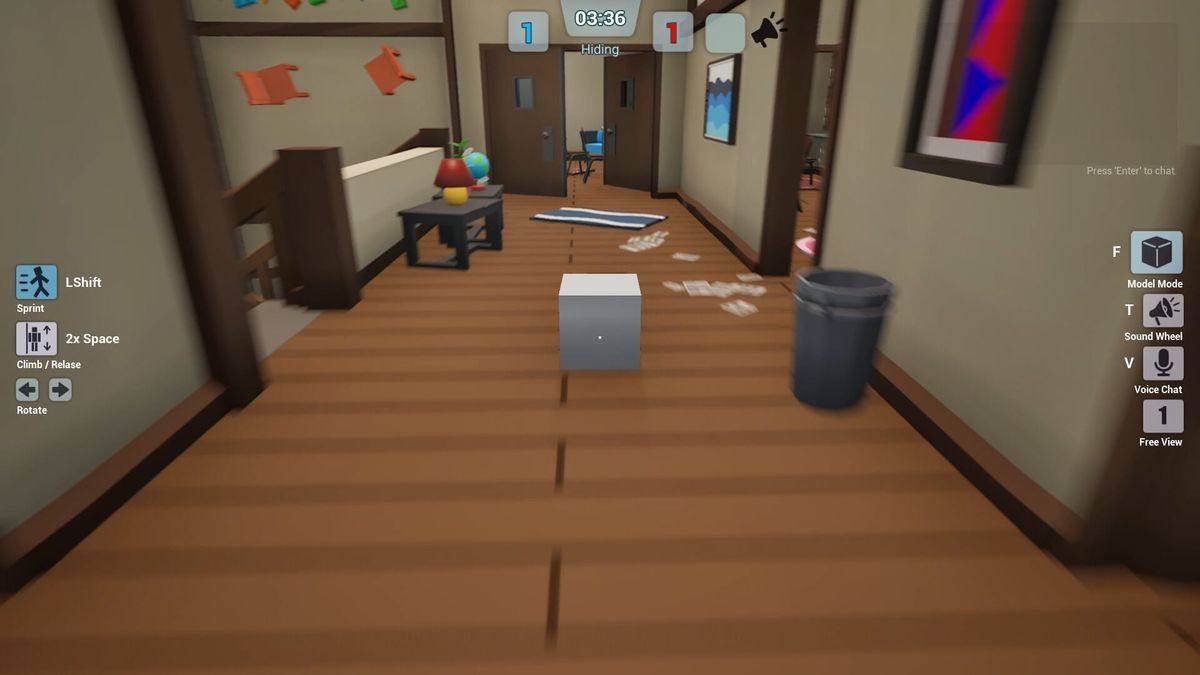
Every prop hunt game before this one handed you a menu of objects. FAKE ME hands you a cube. Fakers in this multiplayer hide-and-seek start each round as a blank block and model their own disguise live—move, rotate and scale with a gizmo, then extrude, inset, outset, and cut faces, then paint with a color picker and metallic and roughness values, while a host-set timer of 100 to 900 seconds runs down. This is competitive 3D modeling wearing a party game's clothes. The game is up for wishlisting on Steam, due Q4 2026.
The gameplay trailer, looping mute here — watch it with sound on Steam.
The developers are Eren Can Metin and Emre Gökçe of Turkish studio YUMEXE, building on Unreal Engine 5.7 with GradientSpace's Runtime Geometry Utils plugin, modified so UVs regenerate in real time and paint survives every edit. They told 80 Level the aim is that "players can become anything they want," with short GIF demonstrations beside each tool so nobody needs a modeling background. Seekers get the same toolset for cosmetics—sculpt your own armor before the hunt.
Killscreen wrote back in 2015 that hide-and-seek deserved better than videogames were giving it, and FAKE ME's answer arrives from an unexpected direction: not better hiding spots but better hiders. It lands in the wake of Meccha Chameleon's paint-and-blend success, and the question is: is this secretly a 3D literacy tool for kids? The friendliest Blender tutorial ever shipped might turn out to be a round of tag.
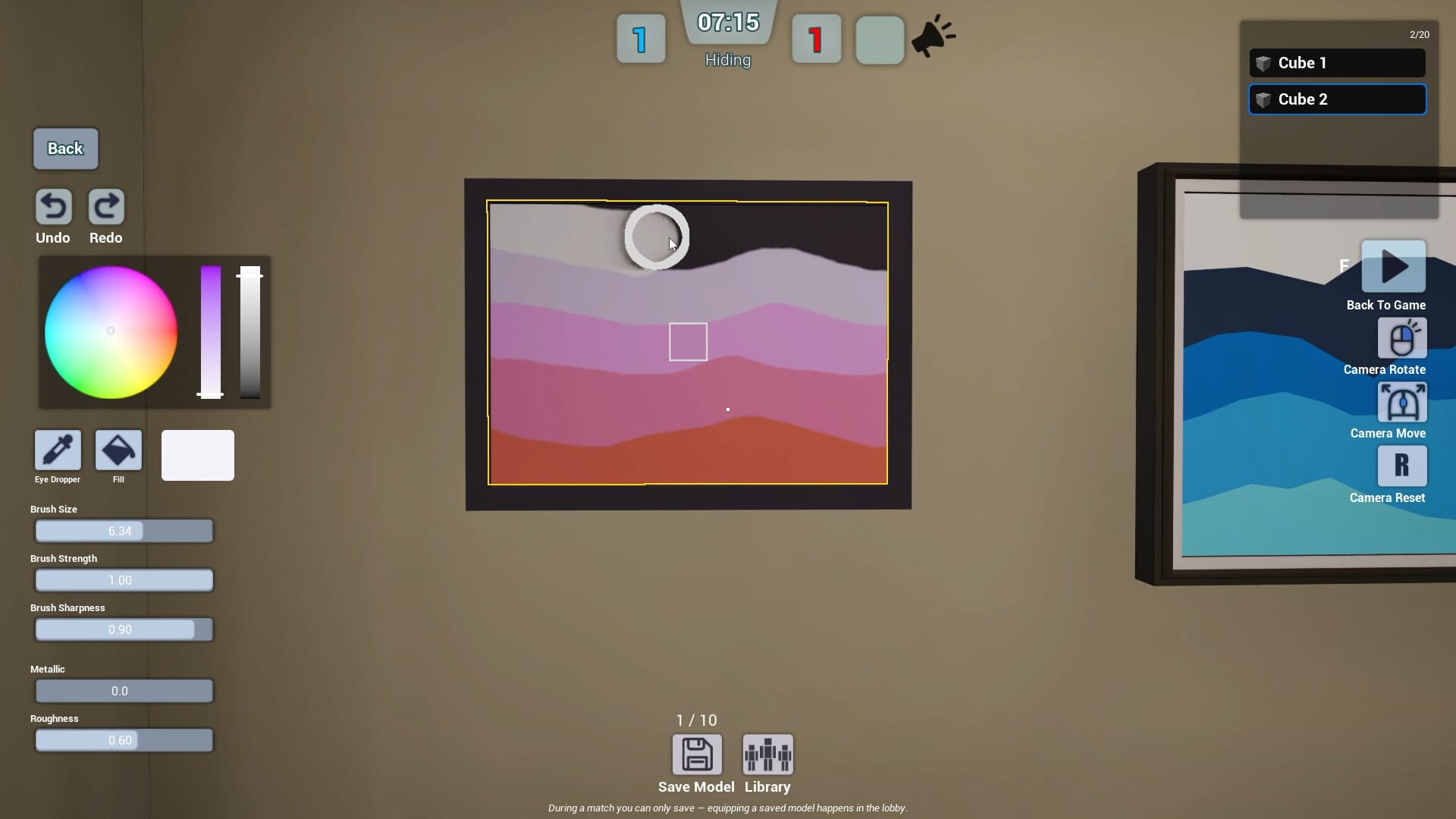
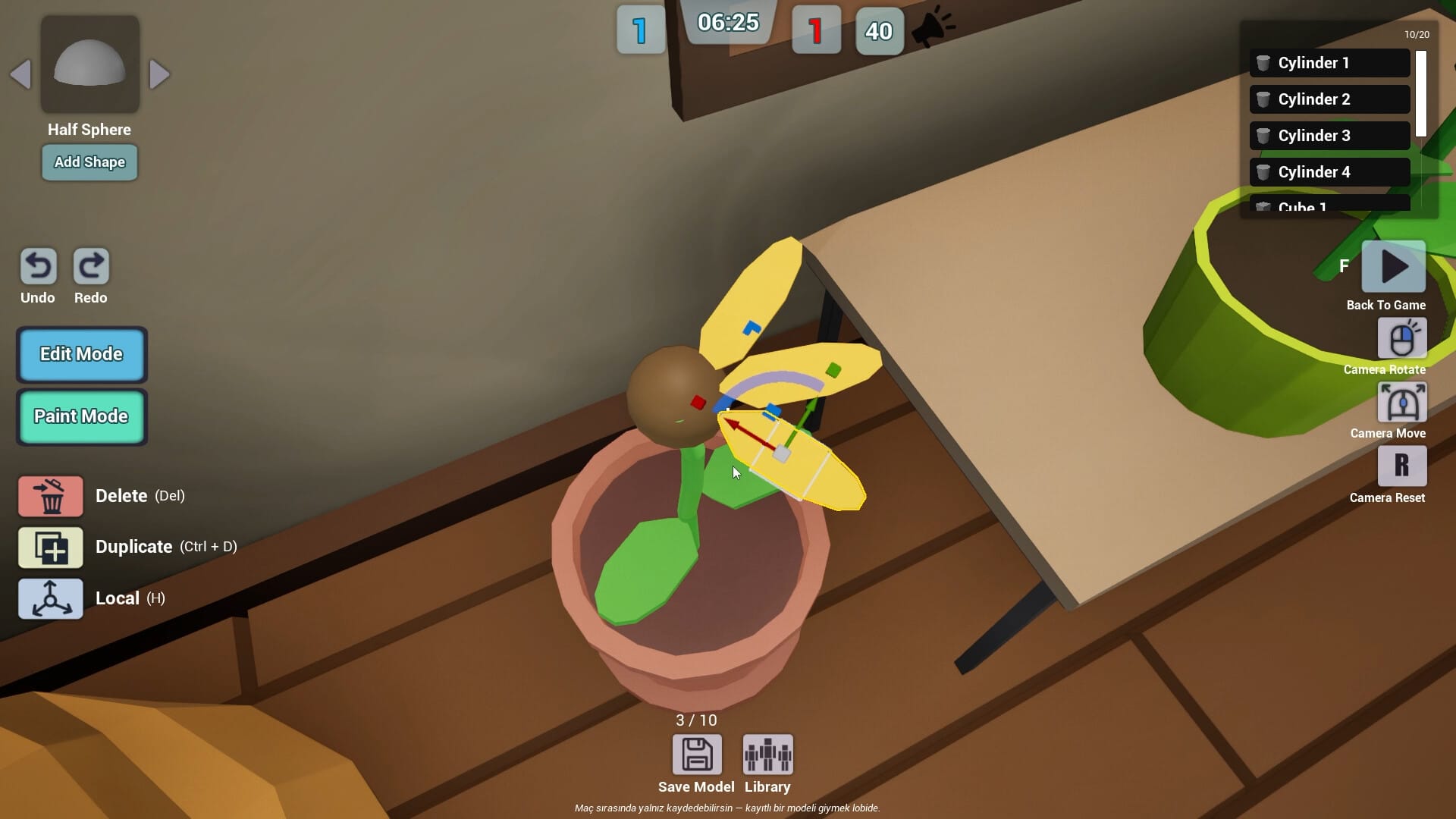
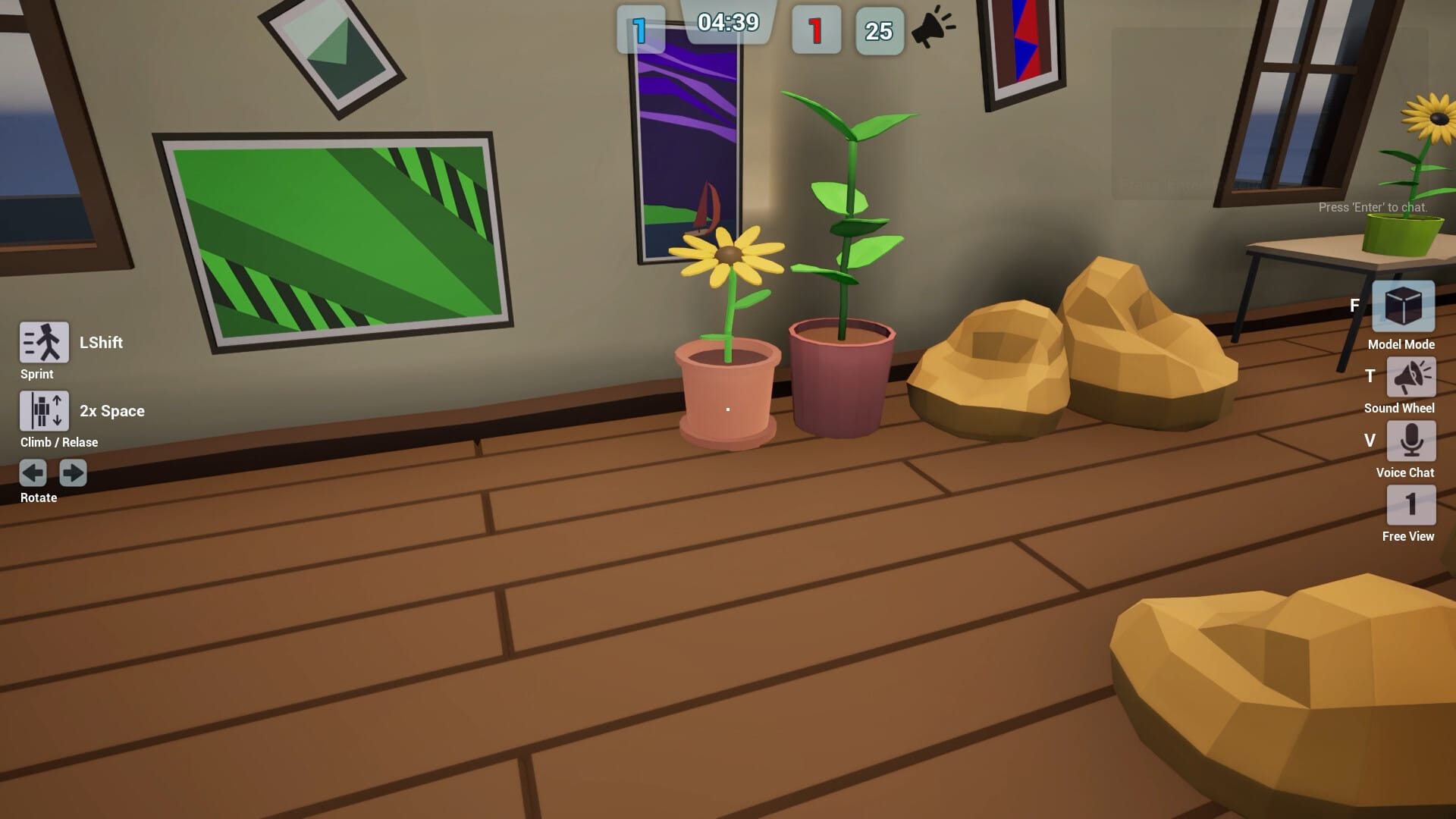
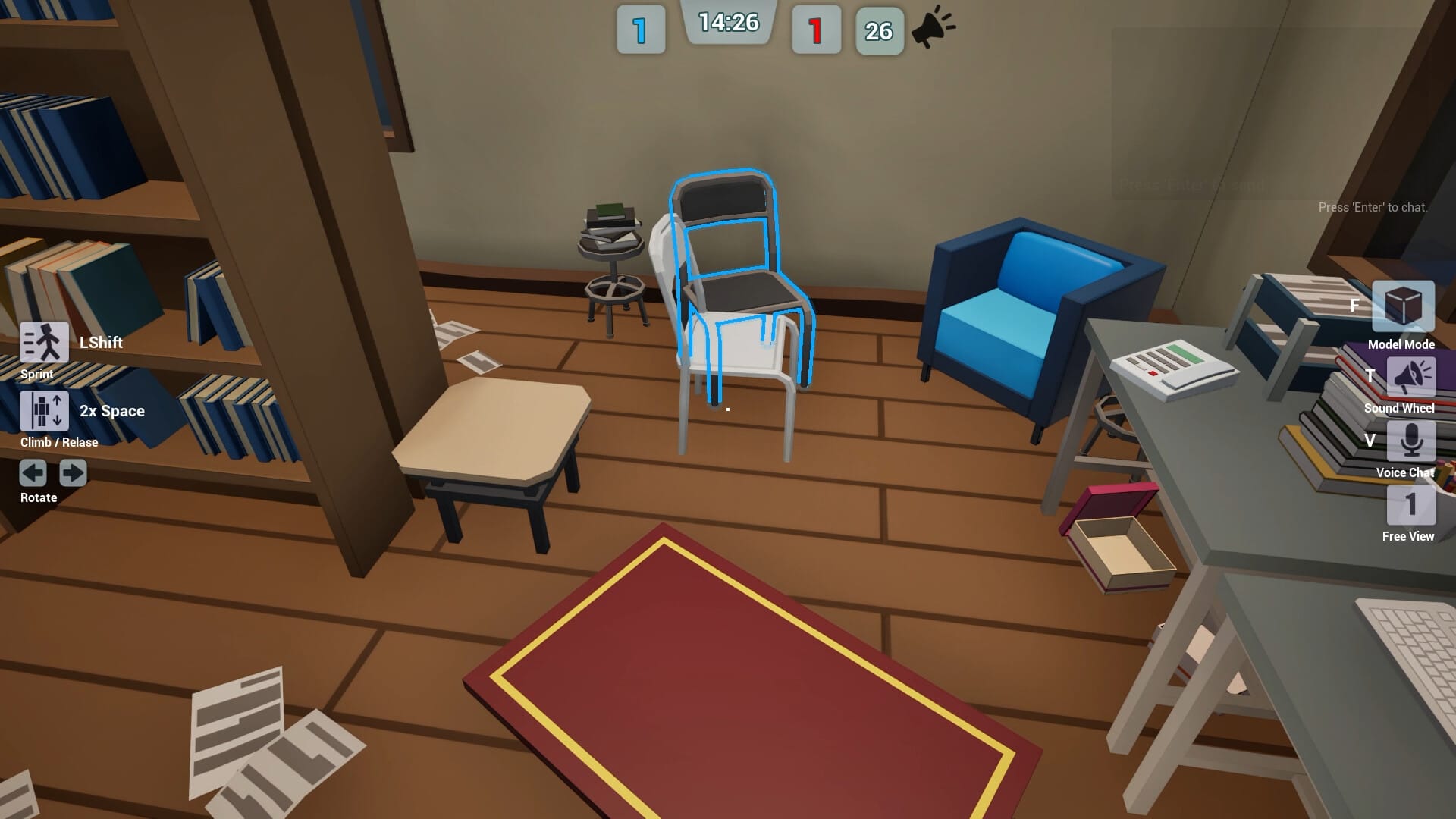
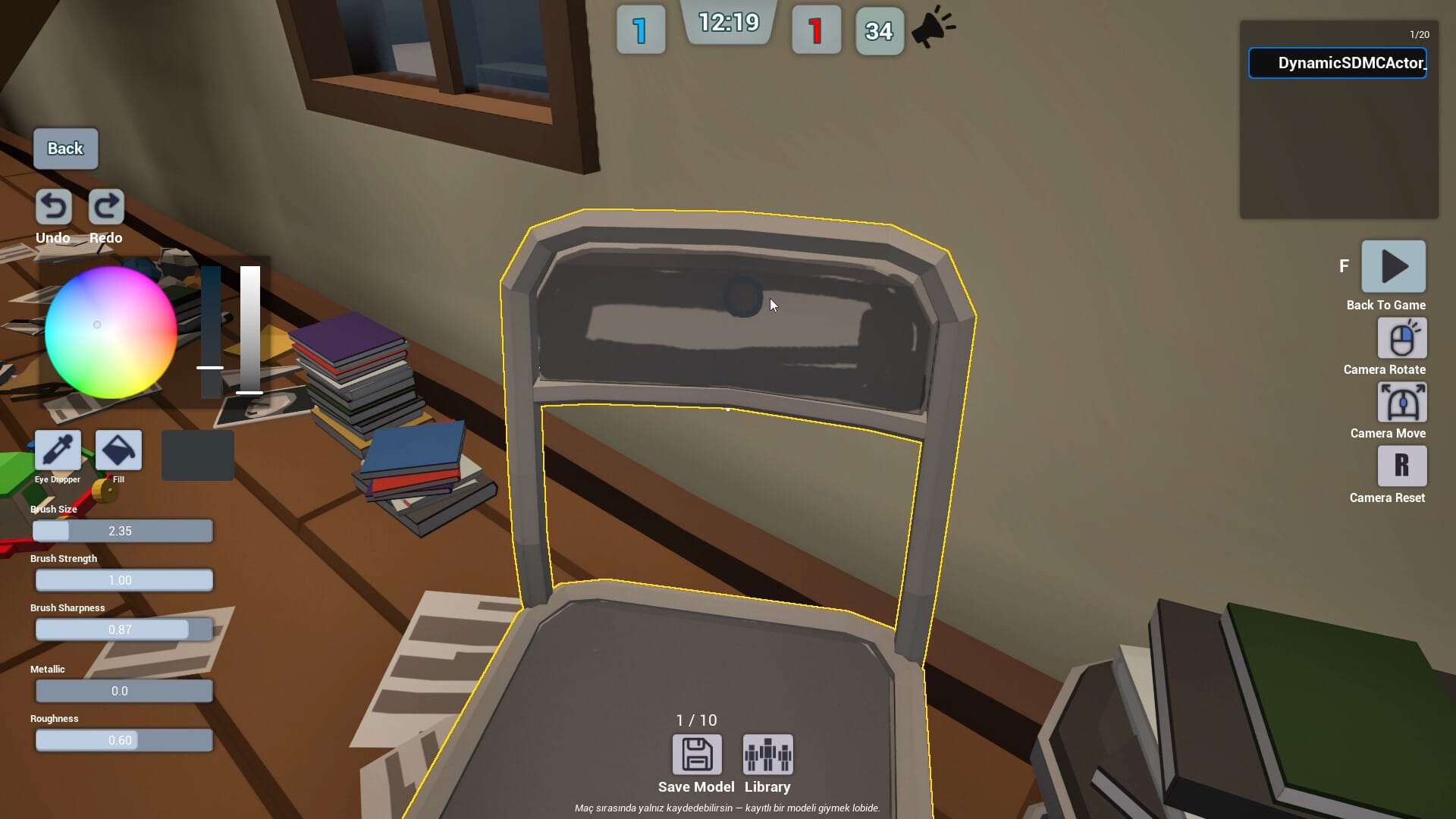
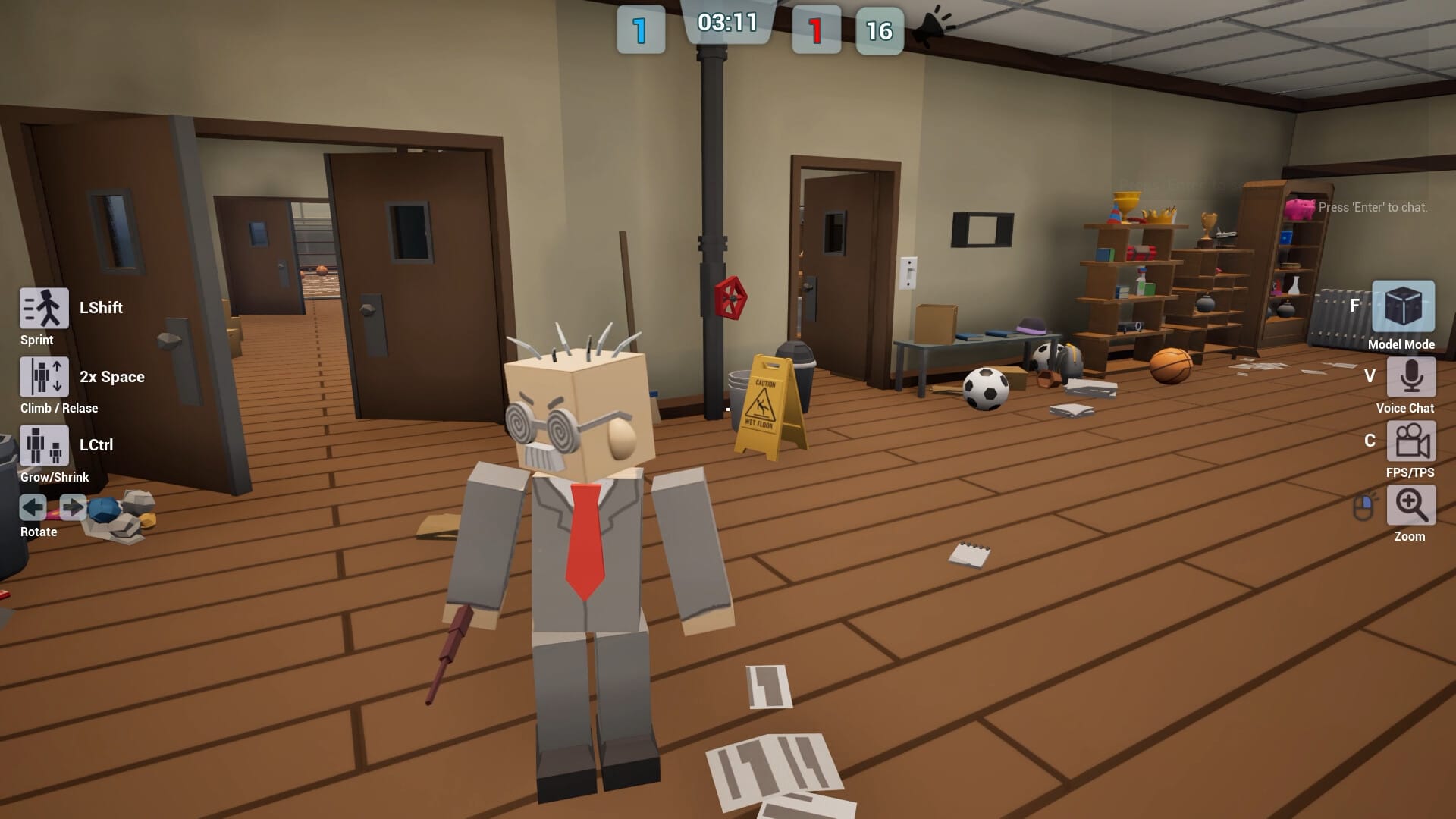
Build modes and bad disguises. Screenshots via FAKE ME on Steam.
Radar tracks the games that smuggle real creative tools into play — modeling, painting, printmaking. Three finds a week, free, in your inbox.