Why I Can't Stop Thinking About Grandma, a Game Boy Eulogy
Zhou Yichen's Grandma is a Game Boy-style elegy for his late grandmother—and a quiet argument for interactive media as a native form of mourning.

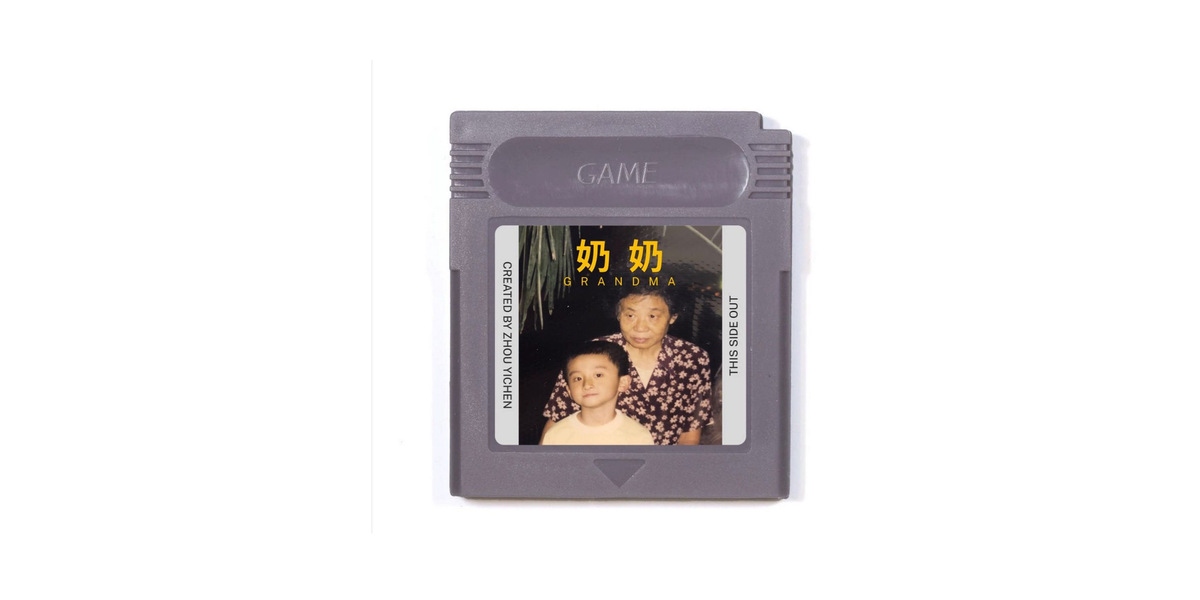
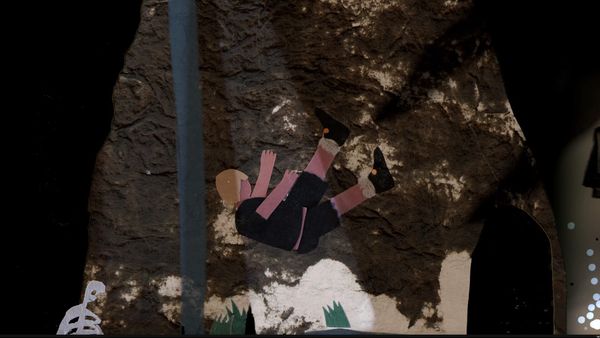
There's a moment in Zhou Yichen's Grandma, a Game Boy-style game about caring for a dying grandmother, where your character falls asleep from exhaustion. I had walked the narrow hallways and simply needed rest. In the next instant, she is away and on the wings of a bird, and all that is left are memories. "Thank you for taking care of me at this time," she says. And then she is gone.
The setup is simple and personal. In early 2024, Zhou's grandmother fell and couldn't move. He moved into her house to take care of her until she died that October, and Grandma is what he made afterward—a small, looping world where you chat with her, bring her water, watch TV together, help her to bed. Eventually, she leaves. You remain, wandering the rooms she used to fill, triggering memories as you interact with the objects she touched. The game just finished a run as part of the “Worthwhile Trip” public welfare exhibition at the Today Art Museum in Beijing.
What interests me here isn't that a game can be sad. Plenty of games are sad. It's that Zhou is working through a question games rarely take seriously in their own medium: how do we hold onto someone after they're gone? And for how long?
Grandma is part and parcel of a larger question of memory. He's been converting his new media works onto physical Game Boy cartridges, hand-drawing the cover art, building a small archive. Over 60 of them now. "Every time I see my works lying dormant in my computer as virtual files," he has written, "I feel a pang of melancholy."
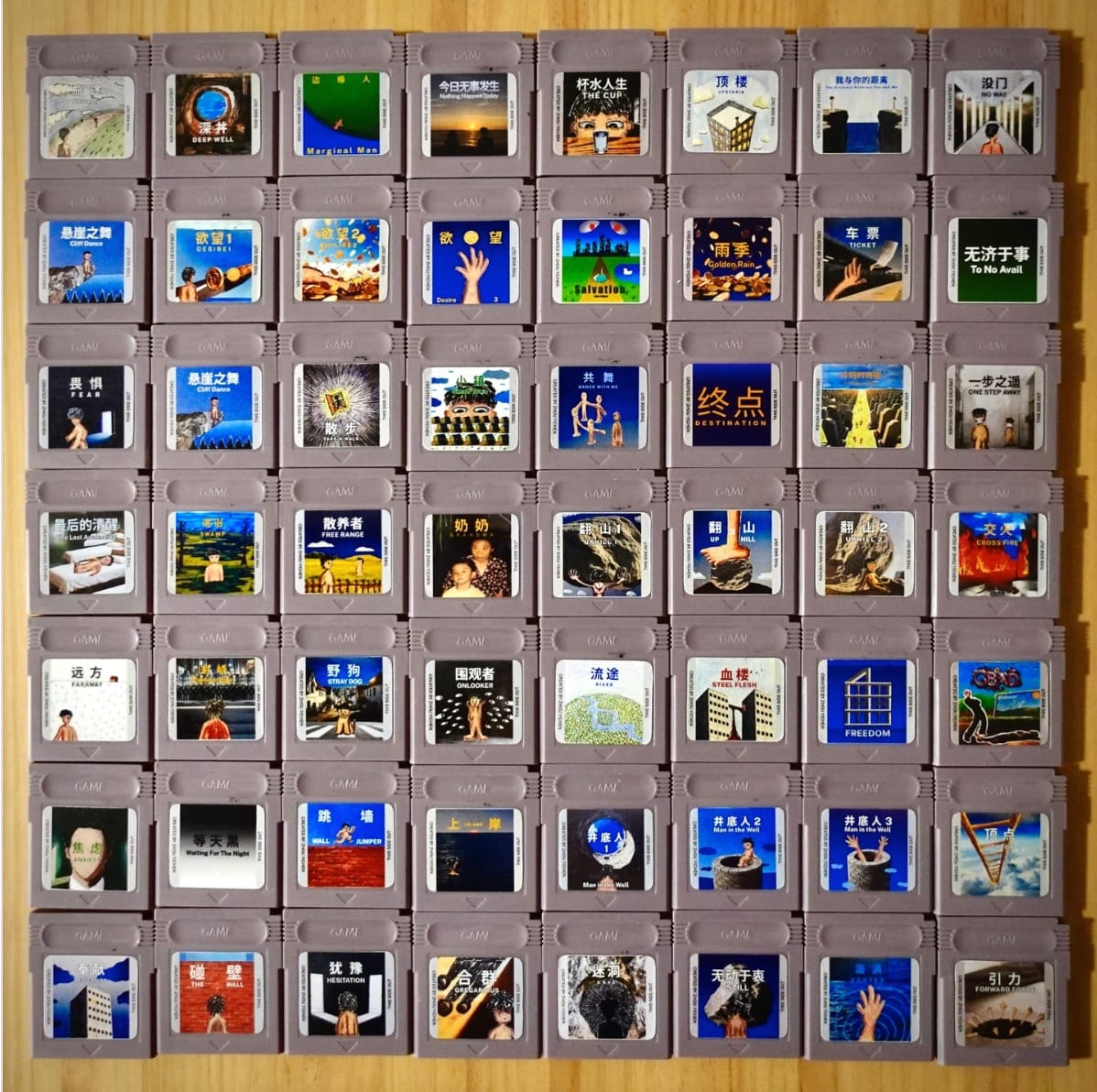
Why Zhou Yichen is putting his games on physical cartridges
I find that the second act is as moving as the game itself. Zhou is doing with his own artistic output what his character is doing with Grandma inside the game—trying to bind something ephemeral to a physical object so it won't disappear. The cartridge becomes a reliquary. The game becomes a eulogy. And the whole project asks what happens when a generation that grew up on interactive media begins to mourn through its native form.
The received wisdom about games and nostalgia is that pixel art cheapens it, that 8-bit aesthetics are a shortcut to feeling. Grandma uses the Game Boy's limitations differently. Memory here isn't a style—it's the subject. The grainy green-on-green frames don't look backward; they look like how grief actually works, your memories are condensed into a tiny window, that compesses each moment–a single walk–gets replayed on a loop until the edges fade.