“It's a Horrible Thing to Be Stuck in a Metaphor”
Irish game designer Stephen Gillmurphy meanders through his approach to horror one zine at a time.

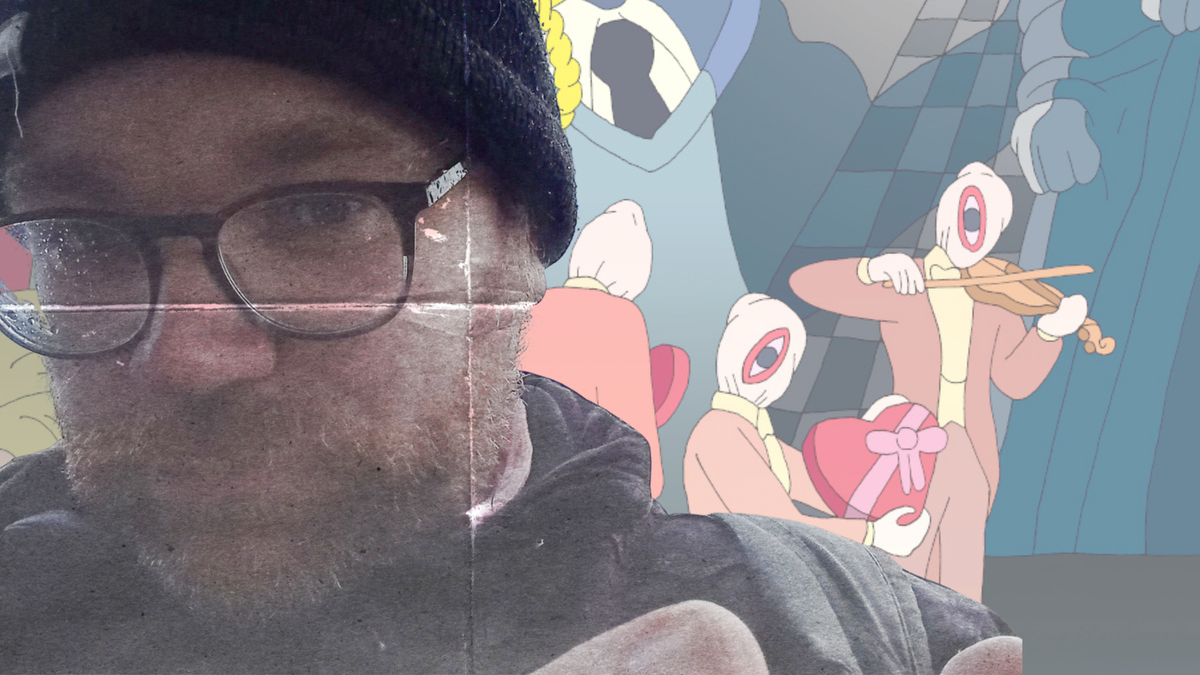
Game designer Stephen Gillmurphy tells me that he has a hard time finishing things from start to finish. Ideas come to him quickly, while daydreaming usually, but then something isn’t quite right, so he makes some adjustments. He calls it drift, but in Spanish, one might call it sobremesa, that byzantine logic of post-dinner conversations that starts here and moves poco a poco somewhere else entirely. Joan Didion famously quipped, “What's so hard about that first sentence is that you're stuck with it. And by the time you've laid down the first two sentences, your options are all gone.” To write is make a commitment, but if you keep replacing those bricks as the house is being constructed, as Didion did and Gilmurphy the tinkerer does, you’ll lead yourself to some truly strange places.
Gilmurphy assigns his itinerant tendency, in part, to a longer tradition of Irish writers. The aposiopesis of Tristam Shandy, Flann O'Brien's nesting authors, Beckett's voices winding down, treated that drift as a structural principle rather than a failure. Gilmurphy, who works as thecatamites, has spent four years building the same kind of maze.
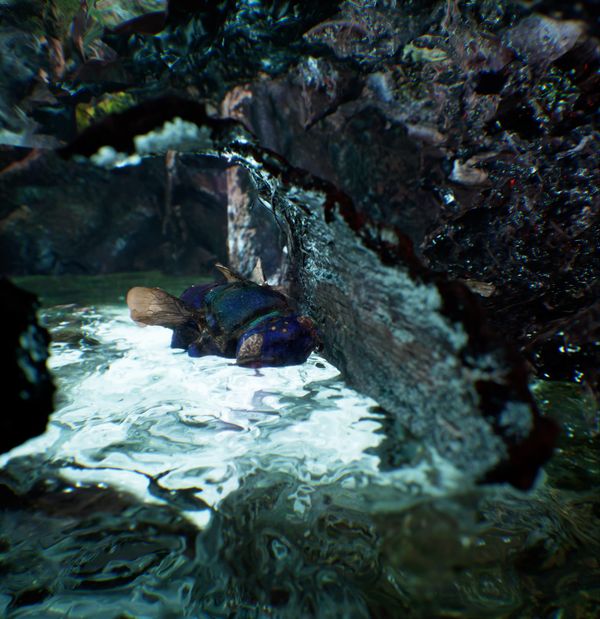
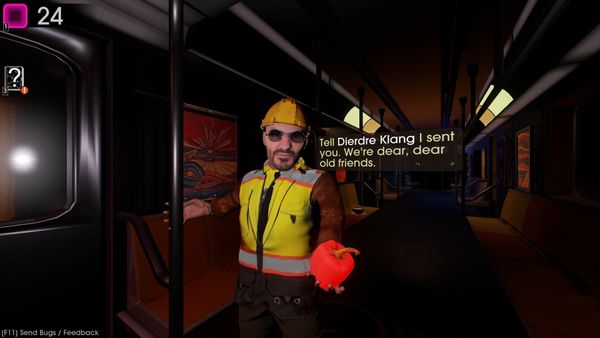
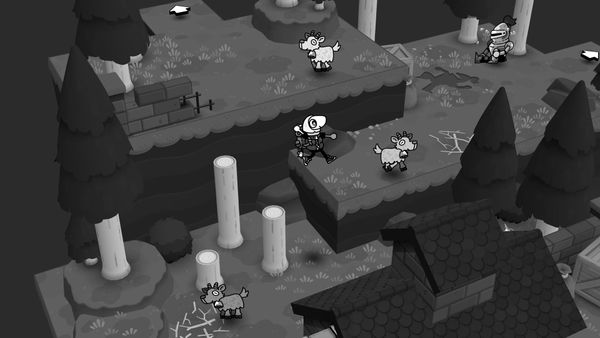
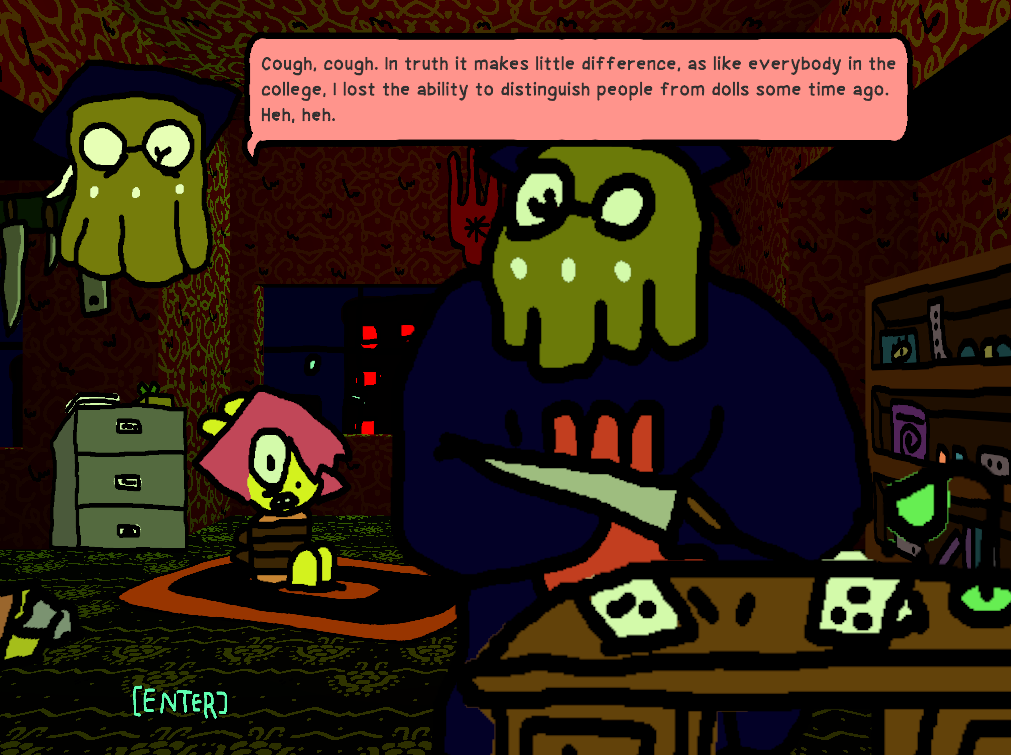
Anthology of the Killer, his nine-part comedy horror and winner of the 2024 IGF Nuovo Award (and a Playlist selection), follows BB, a zine-maker in a city where masked killers are part of the weather, through hand-drawn, scanned environments shuffled together until they tip from sense into something denser and stranger. Talking to Gilmurphy has its own gravity as he wanders through ideas in real time. We spoke about Irish humor, the politics of the RETURN key, poisonous Victorian wallpaper, and the horror of being trapped inside a metaphor.
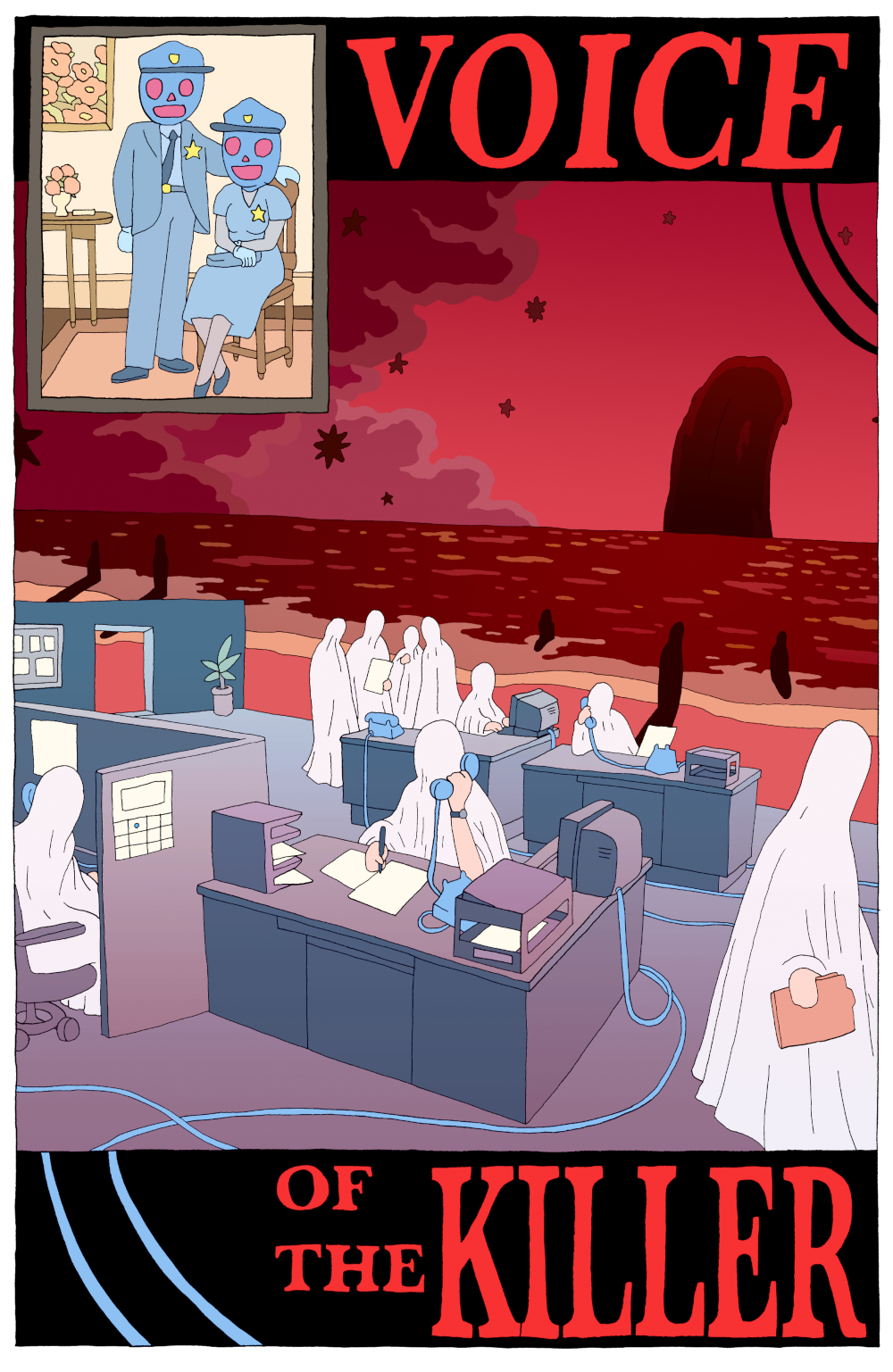
From RPG Maker Tinkering to a Nine-Part Serial
Jamin Warren: How did you make your way into game making, and why games?
Stephen Gilmurphy: It was kind of accidental. I wanted an excuse to hang out on my parents' desktop computer, and I wasn't sure what you were meant to do with one; it had all these inputs, but no sense of the output. The first hobbyist game I played was a Final Fantasy fan game, and it was playable because it was made with RPG Maker. It turns out you can open it in the editor and see how the scripts make little guys move around. That was more fun to poke through than the game itself. After that, I just wanted an excuse for a packrat tendency with RPG Maker. I found a tileset of the moon, so of course, I'm going to have a moon level when I'm done in 50 years' time, because it's one of those uncompletable, endless teenage projects.
JW: You're from Dublin originally, a city shaped by a particular Anglophone outsider humor. Were there Irish writers who influenced your tone?
SG: Definitely, though it's hard to know where it begins or ends. The writers I felt most connected to were Flann O'Brien's newspaper columns, Joyce, Beckett, Bernard Shaw, and Oscar Wilde. The Irish stream of English writing, even before an independent Ireland, felt more Gothic or perverse, so not realist fiction, which I find drab, but this odd, marginal thing, like Tristram Shandy, that tradition of the anti-novel. I've always been attracted to writing because I like stuff I find funny, and Irish writing was just where the best jokes were.
Trailer for Anthology
JW: If you could do a little self-psychology, what is it about an Irish sensibility that's unique to how you write?
SG: Earlier today, by happenstance, I was reading a Maria Edgeworth piece called on the “An Essay on Irish Bulls” that has a self-defeating phrase that starts as a cliché and goes somewhere bizarre: “It's impossible for me to be in two places at once, unless I were a bird.” Her point was that what they called distinctly Irish humor was essentially the vague ethnic jokes of the time, but it was all in the same language, just across the sea. So there's that sense of being the “exotic other.” With Oscar Wilde, the paradoxes and inversions are that same irony, stuck in an alien-seeming civilization you have no affinity for, but still playing by their rules.
JW: You studied mathematics, not art. I don't think of your games as deep systems games; the obvious route for a math person would be Tetris. Do you see any through-lines?
SG: A little. Game making involves similar planning and construction, alongside the painting. What interested me about mathematics is that it's a very lucid, definitionally logical form of thinking that also becomes unmanageably abstract and weird.
JW: Yeah, I remember hearing a comedian joke that the only people who can say they really hate math are people who study it. “Prove that numbers exist” and things like that.
SG: There were people on my campus who were the only extant professor of such-and-such hyperspecific field; checking the papers was done on trust alone. That mix interested me: very keen, very lucid, but with a deep weirdness. The more you try to be precise and exact, the more opaque you become, which I find funny.
"...stuck in an alien-seeming civilization you have no affinity for, but still playing by their rules."
The Logic of Drift
JW: With Anthology of the Killer, you split the work across installments, a serialized approach that's rare in games. What's different about releasing it that way, versus designing one game with nine chapters?
SG: To me, it's that you don't have to plan it in advance, you keep your options open and drift, because that's how I work. I plan the first little bit to get moving, then hit a point where my plan is deviating off-course, and I have to think about where this is going. Part of the plan was to track how weird the drift gets. I liked the soap-opera thing, General Hospital starts in the hospital, and then, oh, there's a guy with a weather machine. Or webcomics that start as “crazy college roommates with a talking cat” and end in alien abduction and clones. That's where the Killer games would have gone if I'd made 20 more. Everything tends toward that insular, dense weirdness. Part of the appeal was that it gets more and more off-model, which I looked forward to.
JW: That idea of drift, a small degree over a long enough period, and you overshoot by light-years. Soap operas outlive their creators, like a Gothic cathedral where multiple architects put their stamp on it. Did you find that BB changed for you over time?
SG: My idea of what horror was changed, what's even nominally scary, because the game itself isn't really scary. BB stayed a little cypher-esque, but every episode I'd add another weird detail—she's allergic to curtains, she reacts oddly when this happens, always shoving in something where it's like, oh, she's actually a strange person after all. Toward the end, it was more that you accidentally build a set of constellations: you rotate the pieces around and unconsciously find, oh, of course the policeman comes back in the theater level. It felt like a natural fit, even though I've no idea why on paper it should be.
Killscreen has spent fifteen years on the games that are funnier and stranger than they let on. Members get the Friday Playlist, the members-only podcast, and the full run of back issues. Two dollars a month.
Poisonous Wallpaper and the Art of Distraction
JW: How does script-writing work? Where does a chapter start, pen and paper, or in-world?
SG: I listen to music and daydream, and I have jokes, bits of dialogue, or a theme that seems funny as a blurb on a Wikipedia page. Like, “Episode 12: BB Lays an Egg”, and you say, OK, what happens in an episode where BB lays an egg? Then I'd write the dialogue in Notepad, dump it into the level in Unity, see how it looked onscreen, and rewrite based on that. The most underrated part of video game writing is the return key, where you put the line break, how you make a three-line textbox instead of a four-line one. That's why a lot of old computer games still feel like they had powerful writing, something lost now that text is an infinite resource.
JW: BB is a zine maker. How did you decide on that occupation? It seems to give BB a unique view of the world.
SG: I used to make zines, and I'm still trying to, I just came back from Glasgow Zine Fest, though I wasn't tabling anything. Part of it with BB was wanting something that makes sense, but also feels a little off. If BB were a TV journalist or a cop recording these stories, it would sound serious and intense. But for a zine, who's reading it? Would you really put your life on the line for a zine? No one's asking you to make one; it's totally volitional, something you do on your own, rather than there's a reason for it, she can't stop. It's self-inflicted in a bizarre way.
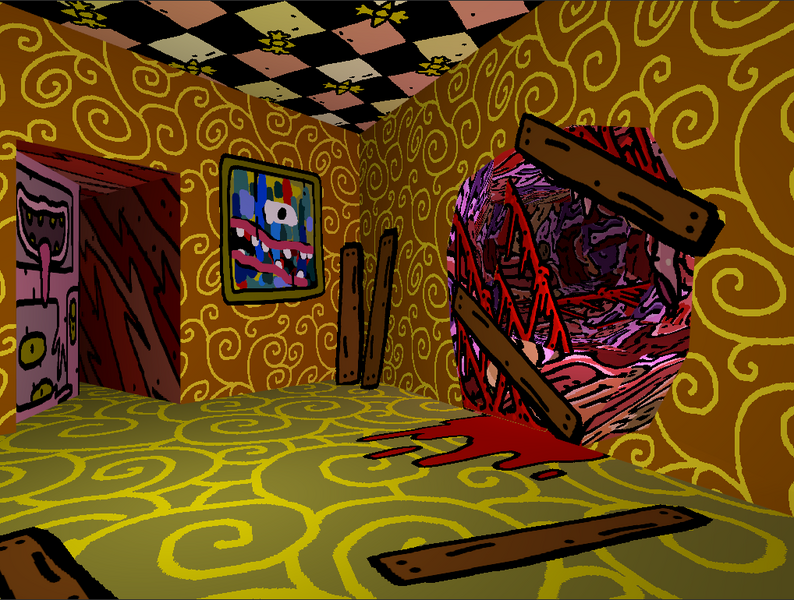
JW: You mentioned taking apart early RPG tilesets, figuring out which textures you liked. There are so many in your work. Can you talk about that process?
SG: Part of the appeal is you get to do all these little things by yourself, “This is the writing day, this is the wallpaper day.” I have this great book of poisonous wallpapers from the Victorian era, the ones made with arsenic paint. [Textile designer] William Morris, of all people, was like, There's no way people get poisoned by wallpaper, and meanwhile, people are dropping like flies from this particular shade of green. There's the Dario Argento, Giallo thing too: it's one thing to have a guy stabbing a woman, another to have him do it in front of the craziest wallpaper you've ever seen, drowning out the scene. There's no reason not to give people something interesting to look at, in addition to the thing that's meant to be happening.
JW: Traditional wisdom says color should be directed toward a game-design end, an exit, guiding the player. You seem to reject that, like color can exist as texture under its own terms.
SG: It was something I read in design notes by the developer of Skin Deep, the Blendo Games game, where they mentioned a limit on the number of things fighting for the player's attention at once. That makes sense in their game because it's systemic and dense, whereas in mine, there's not a lot strictly going on, so I can stage-manage what's there. It's mostly walking down corridors, so there's no sense that I'll make it unplayable if the wallpapers get too weird. Because that simple base is always there, you have total free rein. Distraction is the goal I'm shooting for, rather than the accidental thing I'm trying to avoid.
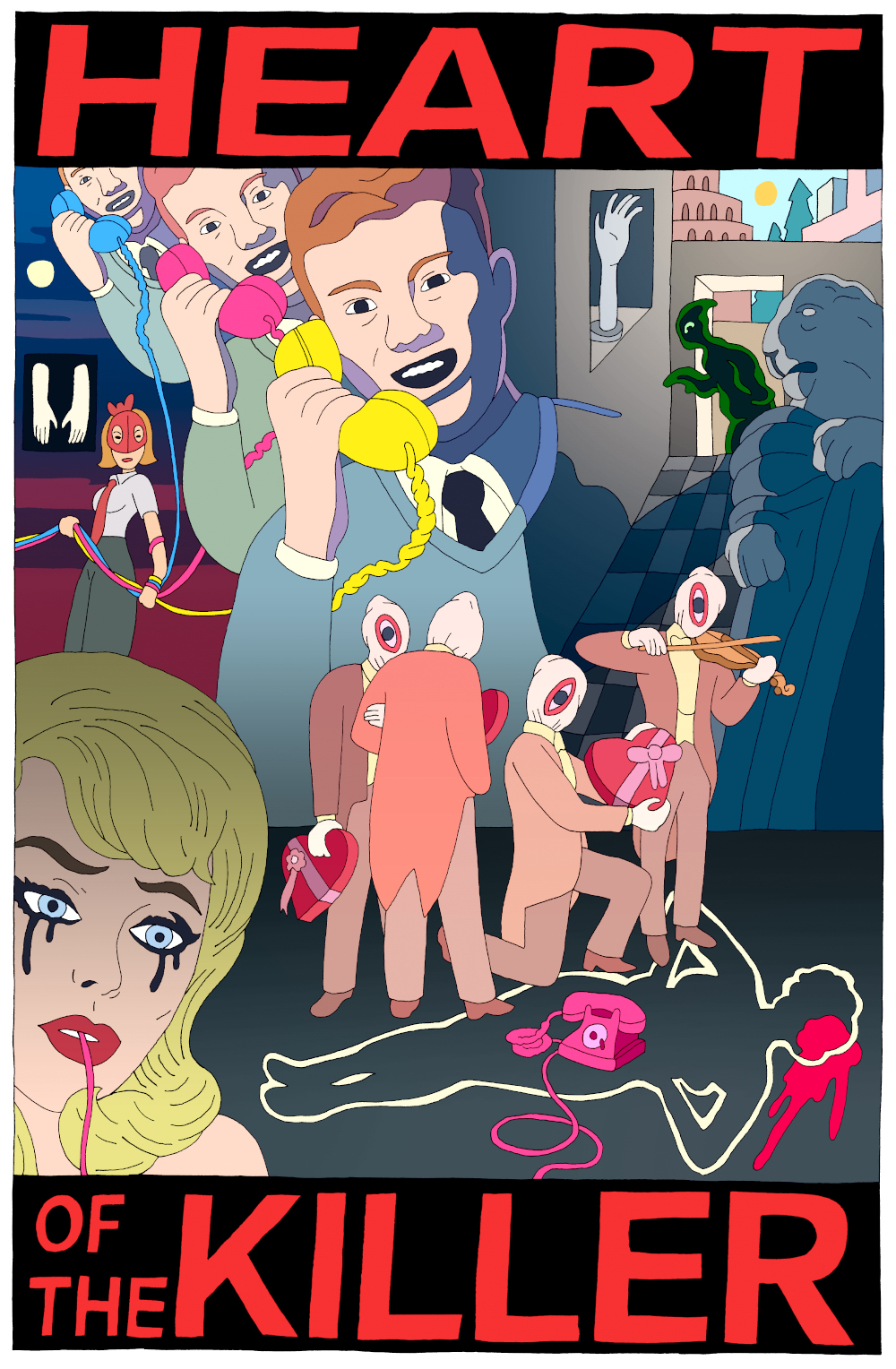
JW: You've said the game isn't scary but unsettling. How do you think about that balance, your relationship to those genre markers?
SG: I never really got into horror because I was too easily frightened by it, and I find the funny kind scarier than the scary kind. The films I'd glimpsed as a child were less frightening watched whole than as fragments; you'd catch the last five minutes of The Fly on an old CRT, this viscera, a creature you barely glimpse, then it cuts to commercials, a newscaster going, “And now the news,” in a soothing voice. That threat—an accepted baseline, and then this thing you feel will destroy you if you glimpse it—was scarier to me. My pet peeve in horror game design is when they don't only have the masked figure with the knife, they have him covered in blood so you know he's scary, big and muscular, with a fucked-up mask, because a regular mask chasing you wouldn't be scary.
The Horror of Being Trapped Inside a Metaphor
JW: Death is serious in your world, but BB seems bemused by how many people are being killed. I had a hard time placing the tone. Horror right now is a very serious genre, often an explicit political statement. Do you see parallels elsewhere?
SG: Megg, Mogg, and Owl, the Simon Hanselmann comics, written the way a kid writes a story: the screams are written “AAAH,” then a flat, affectless panel of something horrible, and the characters emotionlessly discuss it as it happens. I'm not really a narrative guy, and I don't like the emotionalism of a lot of horror movies, the piling on, “Oh my God, poor Freddy, I missed him so much.”
I wanted to see how much I could strip out and still have a run. And something I've been thinking about: it's not a horror game meant to be a metaphor, where the horror is the skin and the real story is underneath. It looks like a metaphor, but it's actually a horror game; the horror is that it's a horrible thing to be stuck in a metaphor. You're in a political cartoon trying to walk down the street, and there are all these guys in a T-shirt that says “The Economy” chasing you with whistles. Being stuck in one of those worlds was terrifying to me: everyone's acting out some metaphorical system you're not aware of, trying to impose those values on you, as if, of course, you know this, why wouldn't you chase people around with a hammer? That's what we're all here for.
"That threat—an accepted baseline, and then this thing you feel will destroy you if you glimpse it—was scarier to me."
JW: Where does the work go from here? Will you keep returning to this world?
SG: I've no real plans to make more horror for the moment; I didn't want to burn myself out. I like the fantasy of doing it until it becomes Dick Tracy in the '50s, where the characters are going to the moon, but I'd probably get bored and cranky, and people would tell. The thing I'm working on now: It's a spy game. The joke is that “spy” is the sequel to “horror” as a genre: all the horror villains, the guys with metal teeth on the skull-face island, just work for the State Department now. Same universe, but they grew up and got proper jobs. I'd love to put a series up under a weird name, Hentai Starburst 2, Secrets of Fraggle Mountain 1, Secrets of Fraggle Mountain 2. As long as you call it that, no one investigates the merits of the work. You're free. You have total artistic freedom for the first time in your life.
This interview has been edited for style, grammar, and flow.
Read next: The humour behind Toby Fox’s Undertale · The funniest videogame show you never saw · Love Eternal and the ambient design of intuition
Killscreen has spent fifteen years on the games that refuse to explain themselves. Once a week, free.
![Brass, Flesh and a Genius Grant [Podcast]](https://storage.ghost.io/c/25/84/2584b75d-4bd6-4cce-8259-f1d1c65abbb5/content/images/size/w600/2026/09/murlo-08-steam-screenshot-03.jpg)