Fish Make O-Faces, and Other Lessons From the Redding District
Sagan Yee's hookup sim asks what if mermaids lived like Pacific salmon: go home, spawn with everyone you grew up with, then die alongside the whole town.

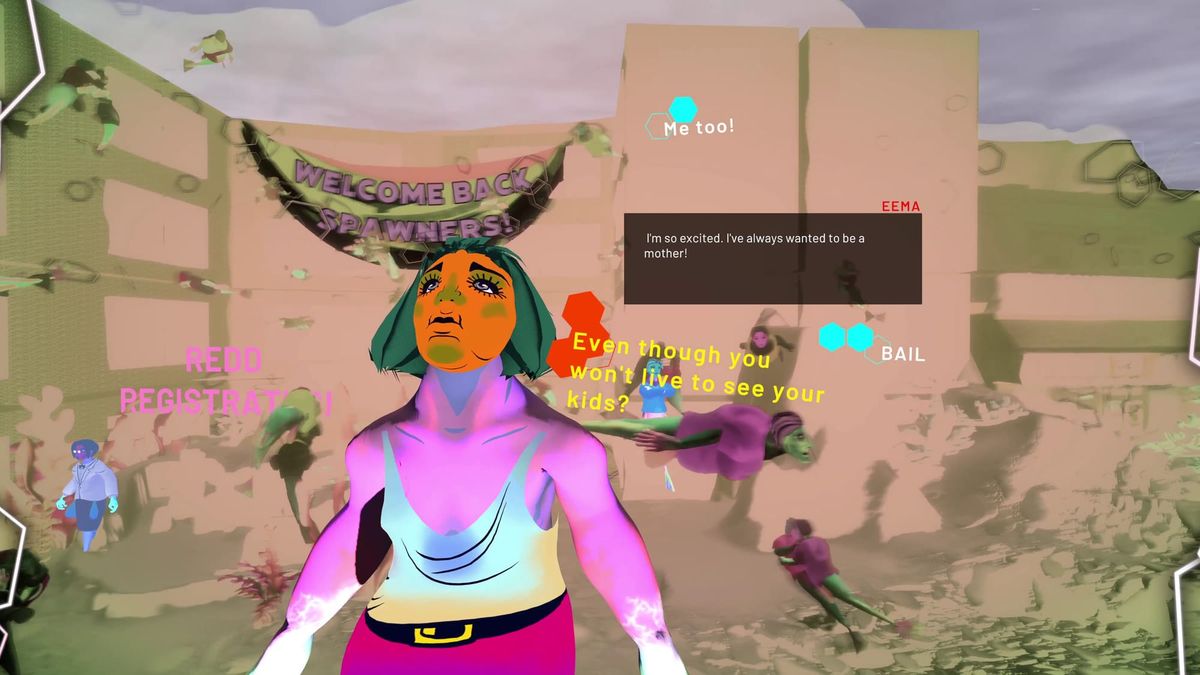
Thomas Wolfe's posthumous novel told readers You Can't Go Home Again, and generations of writers have mostly taken him at his word. Sagan Yee's answer is stranger and more biological: you can go home, you have to, and it will be the last thing you do. Last Call for the Redding District, the game Yee built for his MFA in UCLA's Design Media Arts program, asks what would happen if mermaids had the life cycle of Pacific salmon. The player returns for spawning season to a suburban hometown modeled on Yee's own Saskatoon, catches up with everyone they grew up with, decides who to spawn with, and then, along with everyone else, dies.
Yee came to games sideways. Trained in classical animation, they spent nearly a decade at Toronto's Hand Eye Society, the videogame arts nonprofit they led as executive director from 2016 to 2020, before turning to their own practice. They also write speculative fiction, and Redding District began as a short story.
I spoke with Yee in September, shortly after his move to Eugene, Ore., about salmon, dating sims, the virgins who keep his fictional society running, and the workshop that changed how he builds worlds. The game is still in progress, and Yee hopes to finish it within the next year.
Jamin: I had the chance to see your newest game at the New Wight Gallery as part of your MFA show. Tell me about the origin story for that project, and why you decided to focus on salmon, of all things.
Sagan: The game is called Last Call for the Redding District. It's a 3D narrative game about sex, death and coming home. What if mermaids had the reproductive cycles of Pacific salmon? The game tries to answer it with, well, it would be like the worst high school reunion ever. Imagine a world where you've never had the urge to have sex, and then, as an adult, you suddenly get the overwhelming urge to return to the place of your birth and make babies with everyone you ever grew up with, but you're all 15 years older.
You go back to your suburban hometown for spawning season, which is modeled after the neighborhood where I grew up in Saskatoon, Saskatchewan. There's a 24-hour in-game clock, and then, not to spoil anything, but everyone dies at the end. Just like real salmon: there's a mass die-off, all their corpses are clogging the rivers, and then the bears come to feast.
Jamin: Of that triumvirate, sex, death and coming home, is there one that leads the three of them, or are they all on equal footing for you?
Sagan: They came in as a trio because they ended up becoming completely entangled. Death was the one I wasn't sure about including, actually. Sex and coming home were the two main ones, because I thought that aspect of the salmon life cycle was a really intriguing, kind of tragic but beautiful thing to explore. Then I had to really think about whether to include the fact that they all die at the end, and I decided to go with it, because how could I not?
Jamin: Coming home is the basis of every Hallmark special: you go out into the world, and then you come back, and that's when you meet the person, and you're torn between being out in the world and being with the person you care for.
Sagan: The Hallmark way of doing it always presents it as a totally unique thing that is only happening to this one couple. I wanted to go the opposite direction: what if this is the normal for everyone on the planet? A lot of people say, "Oh, like that episode of Futurama where Zoidberg has to go back to his home planet and spawn with everyone." Or the Vulcans in Star Trek, pon farr. But I wanted to make that the entire world-building premise, and not just a one-off episode or a punchline, so I can dig into the social implications of remapping human social mores onto this nonhuman biology. Some things are quite alien and some things are very familiar, and I love to play with that remapping.
Jamin: Dating sims are a category of game I never really spent much time with, but it's obviously a place where there's room for subverting existing norms. What is the genre still not doing, and how do you see Redding District filling into that space?
Sagan: I started off thinking of Redding District as an anti-dating sim, but then I changed it to a hookup sim. In a classic dating sim, the strategies to court NPCs have to be somewhat transparent, which, to me, is the opposite of how it works in real life. People don't have a little bar inside of them that fills up every time you give them a golden acorn or whatever, and it kind of has to be that way if you want it to be an enjoyable experience. In Redding District, an NPC might just reject you and not explain at all why, and I think that's much closer to real-life dating.
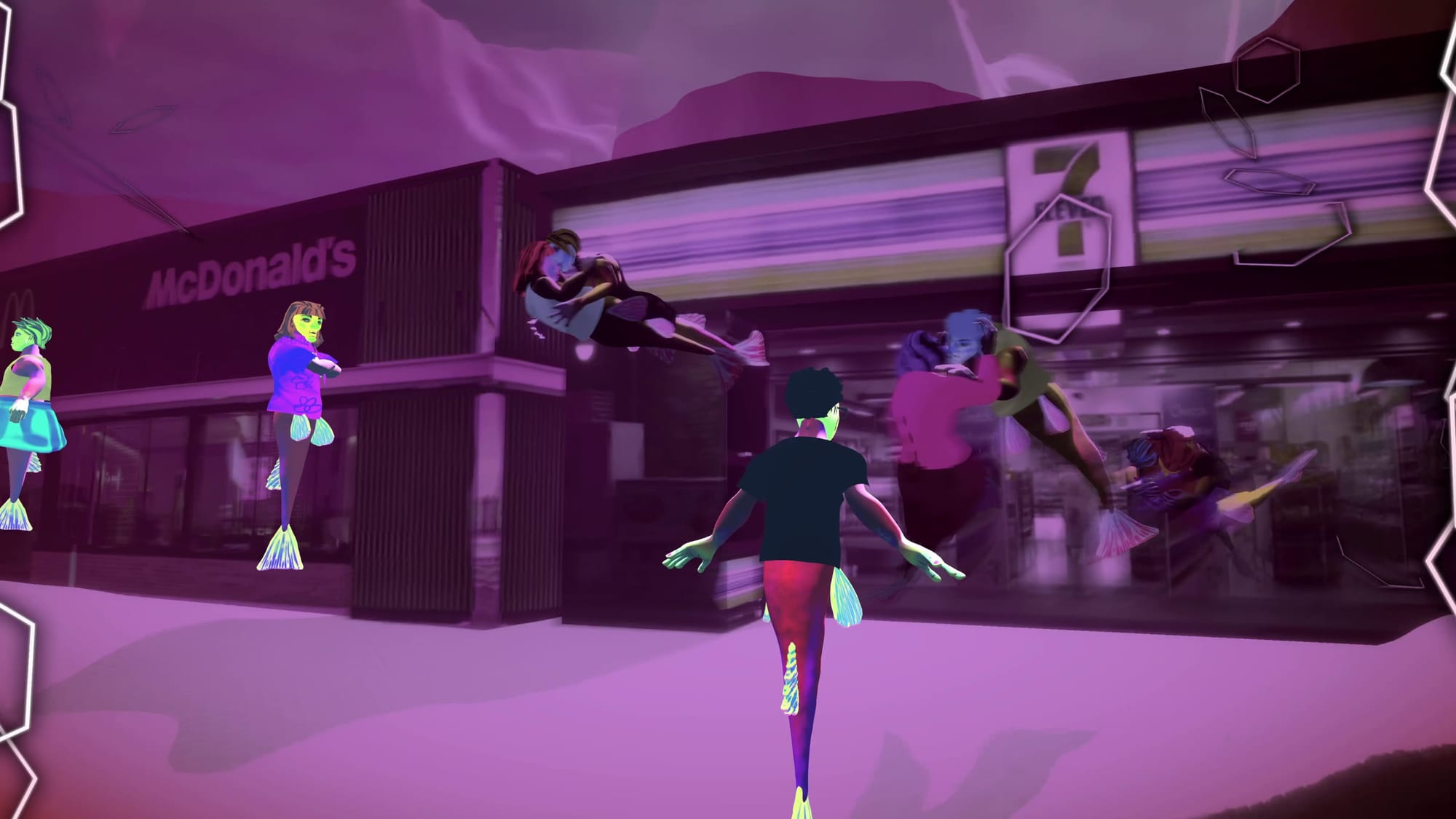
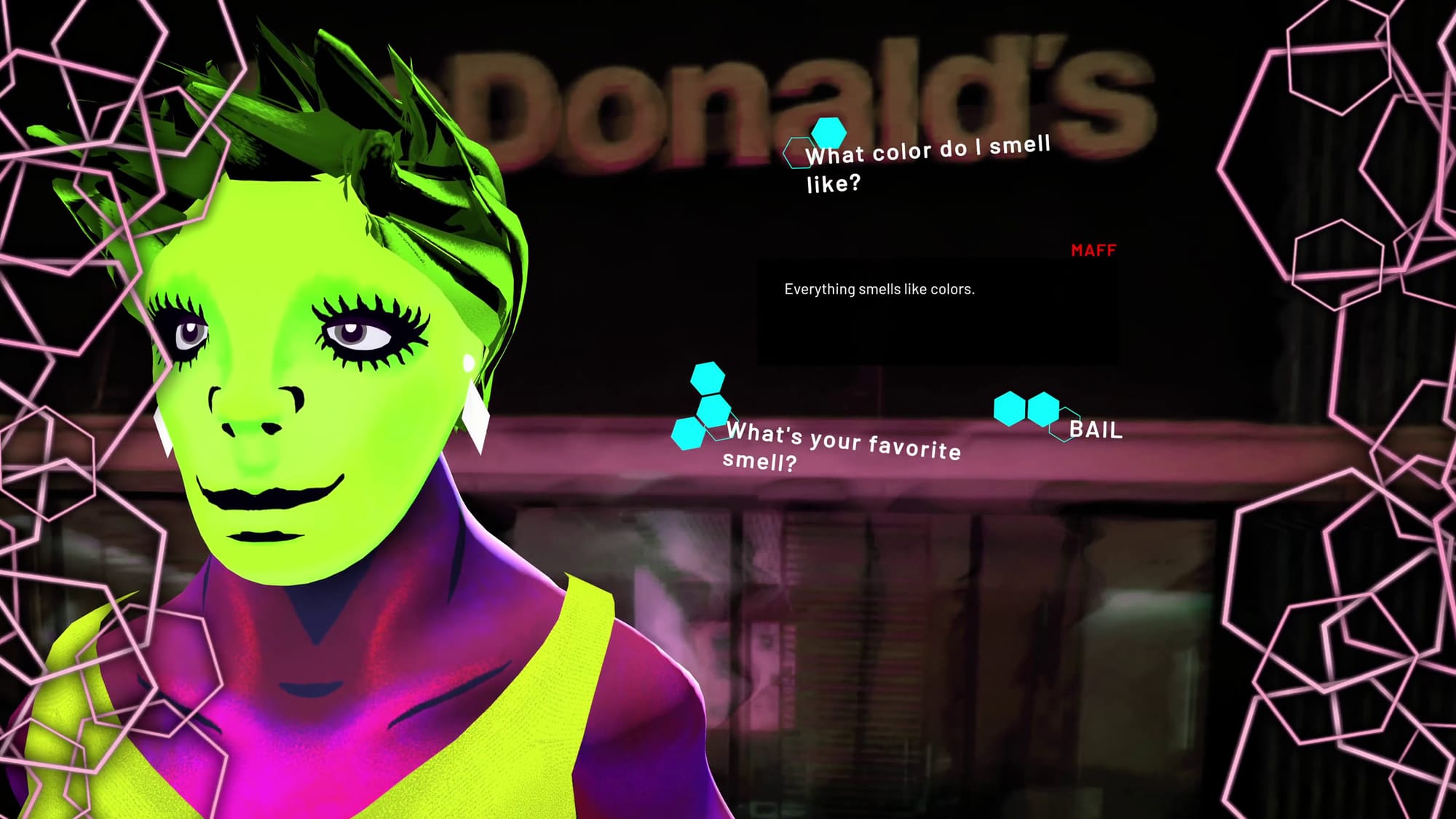
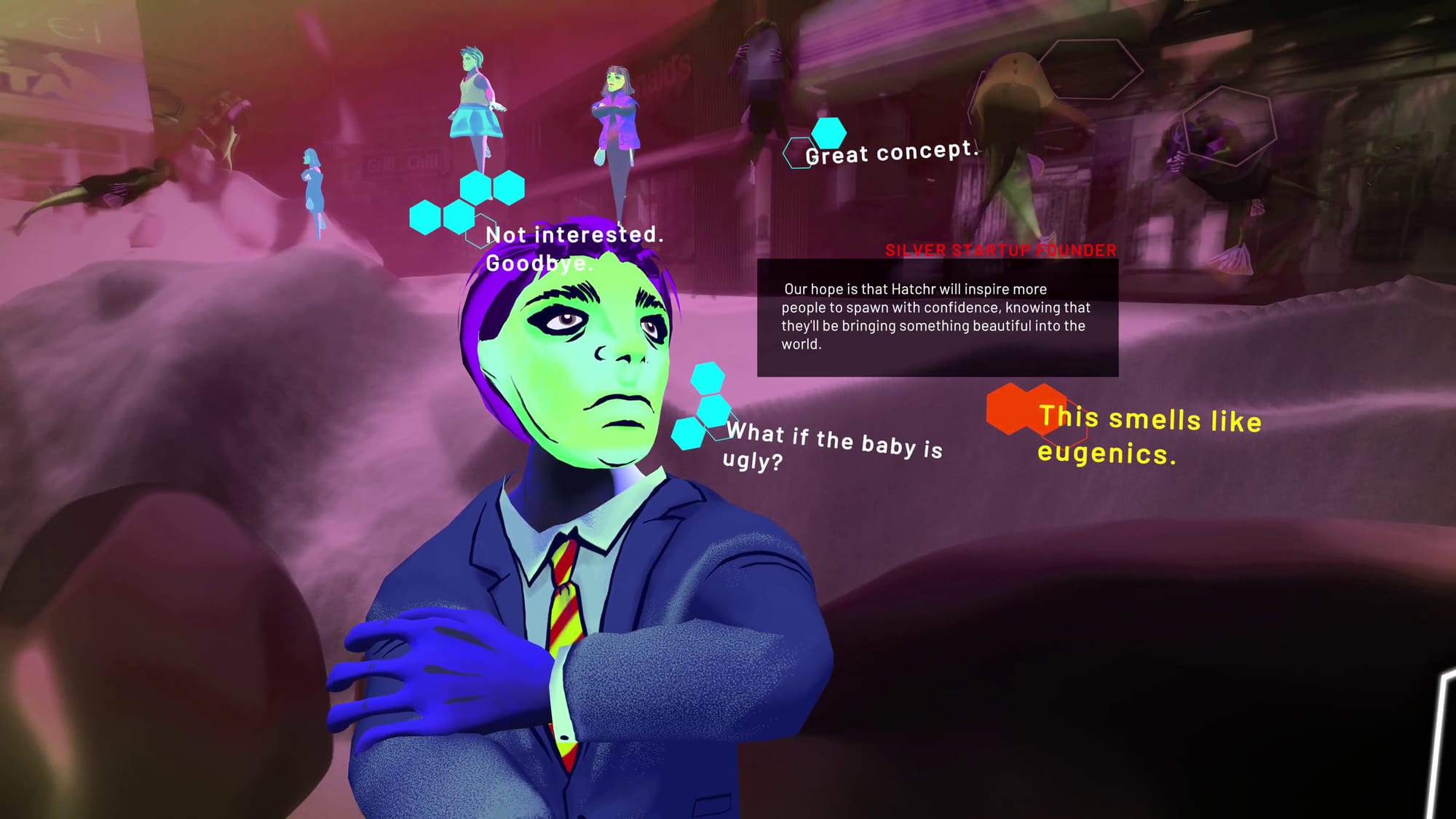
Hometown encounters in Last Call for the Redding District
Jamin: People watch romantic movies because you always know what the result is going to be, and the visual novel template is much more akin to that. But that's maybe also what prevents that style of game from making something that could speak to who we are as people. I think of Portrait of a Lady on Fire, a tremendously romantic and highly erotic film that does not resolve at all. The characters do not get what they want. That avenue runs counter both to the cis, macho, Witcher conquest-style avenue and to the softer, deterministic version where you play visual novels to have your explicit expressions of romance be received. There is that gonzo third category, Doki Doki Literature Club and Hatoful Boyfriend, but those are satires. They elide the question of what interesting things we can say about sex and intimacy in games, as a piece of culture or as a piece of art.
Sagan: I think the dating sim is just as much of a power fantasy as those macho games, maybe even more of one, in terms of the amount of unrealistic agency you're given over your interactions with other people. For some reason that label doesn't get applied to that genre as much.
Jamin: The thing that hangs over all the characters in the Redding District is that they die at the end. What does that thanatological element, tying sex, death and intimacy together, say about the world you're trying to build?
Sagan: I think death had less to say about hookup culture than it did about the world-building. A big part of the story I built out because of it was the small percentage of the population who never spawn. In the game, they're called silvers, because, just like with some salmon populations, their scales turn from oceanic silver to red when they spawn, and if you don't spawn, your scales go back to silver. I was trying to think about how queerness manifests in a world where sex and gender don't have the amount of cultural accumulation they have in our world. It is pretty weird that humans have to advertise whether or not they're sexually available through fashion and the way we behave. I don't think that would happen in a world where sex doesn't matter until the last few months of your lifespan, so if you look at screenshots of my game, everyone's quite androgynous.
So if queerness is just a marker of difference, who would the different people be in this world? It's these virgins, who have become a non-sexually reproductive labor class. Because they live longer, they're the ones who raise and educate the spawning majority.
Jamin: There's a world where I can see other game designers stopping at the system: this is sufficient; it's a generative engine. You have game design in your locker, but you've been writing science fiction for years. How are you approaching wedding the two together?
Sagan: The connection between my fiction writing and making games is really deep and internal, and probably not immediately obvious. In 2021, I did a six-week workshop called Clarion West, and our mentor for the sixth week was Ted Chiang, whose short story "Story of Your Life" was adapted into the movie Arrival. It is quite something to have your totally rough first draft dissected by someone like Ted Chiang, and I got a deep glimpse into his approach to world-building, which is not a Tolkien-esque lore dump where you map out the entire backstory of a universe, but a single premise extended to its logical conclusion. I think it informed Redding District in a profound way that I didn't realize until I turned the short story draft into a game. I don't think I'm 100 percent of the way there yet, but I'm closer than I ever have been before, which is exciting.
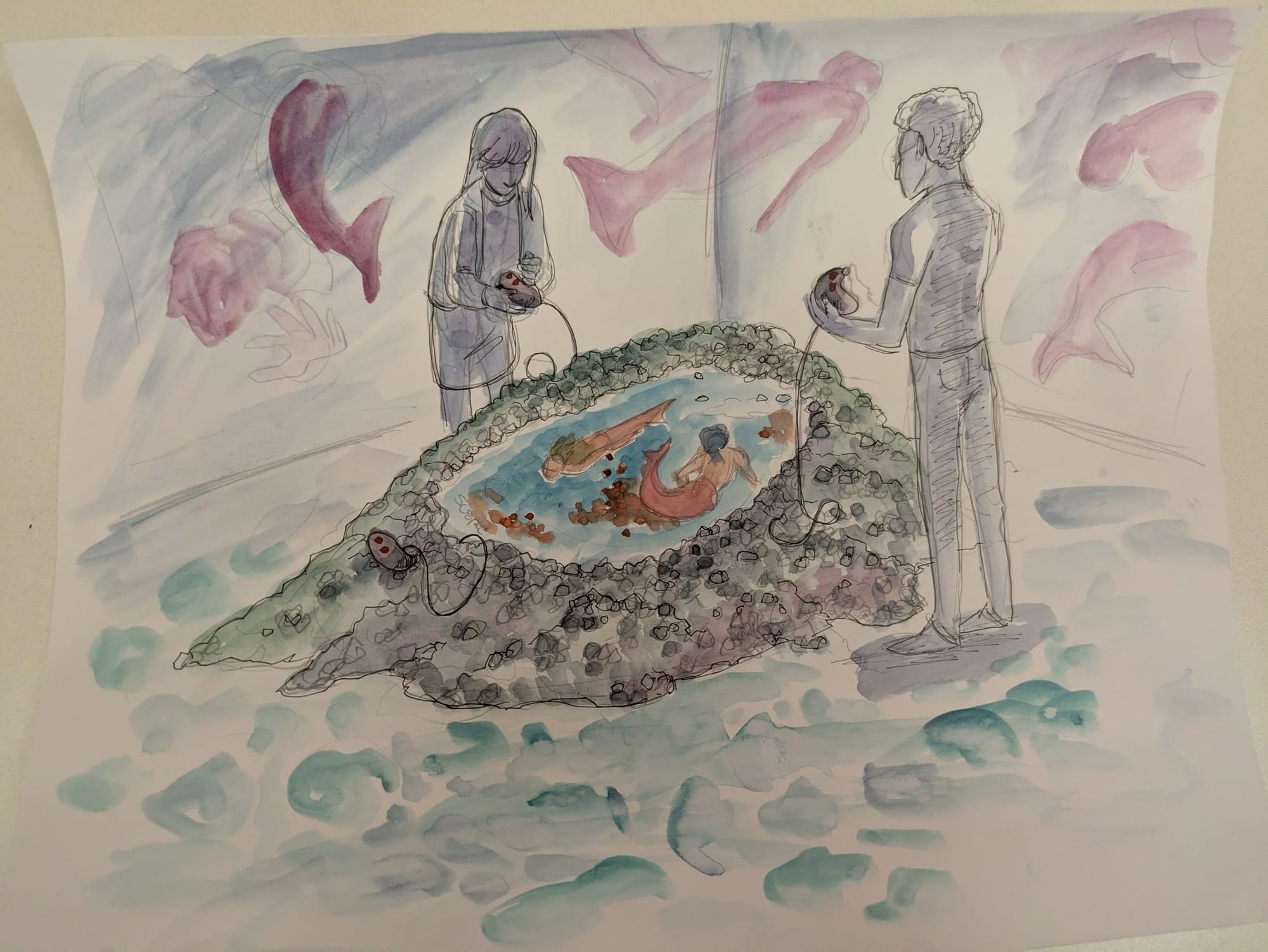
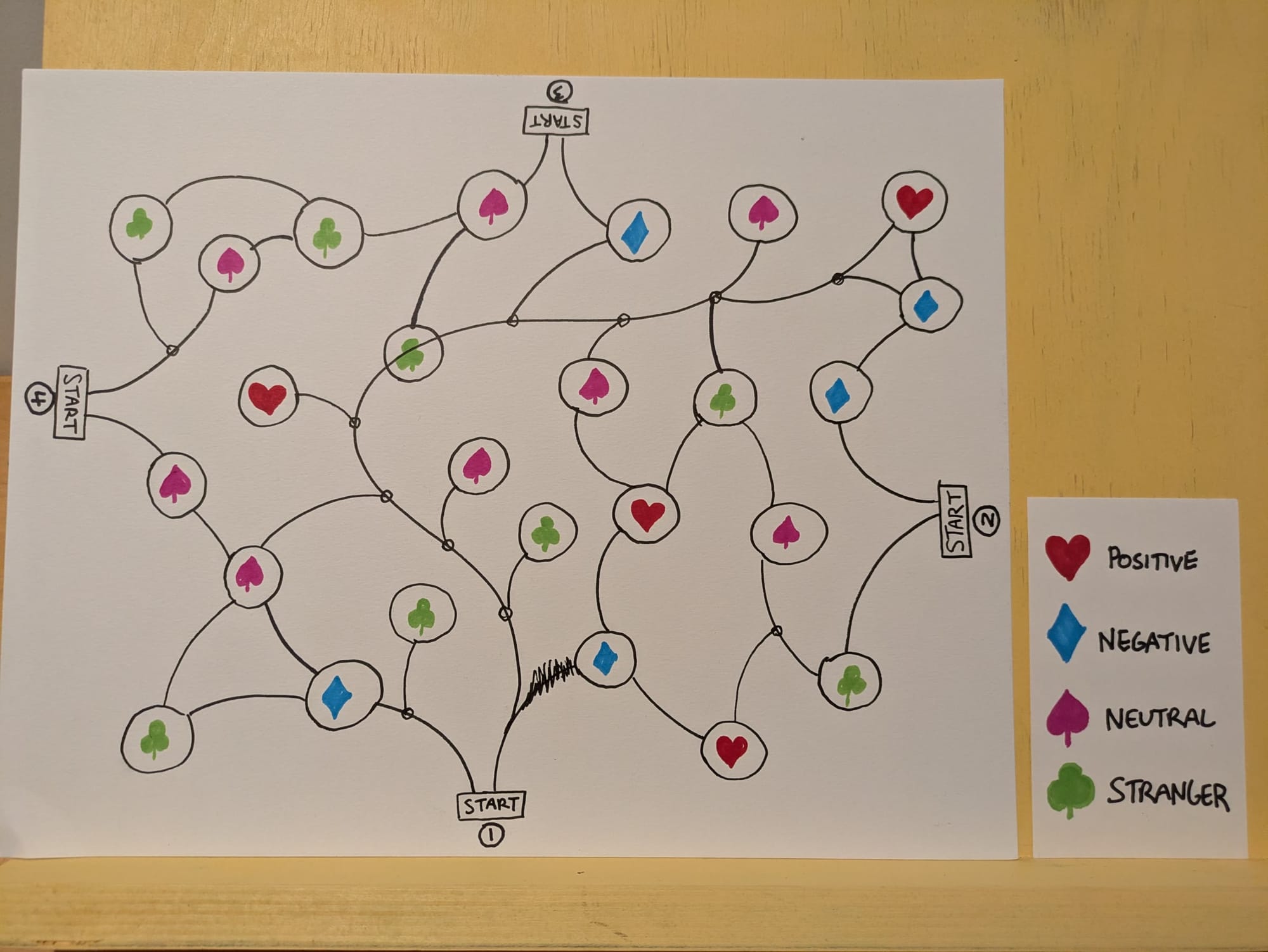
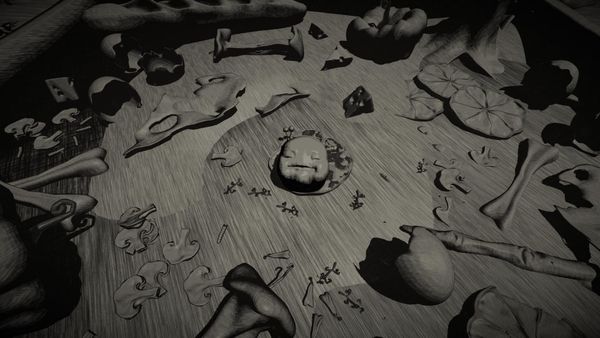
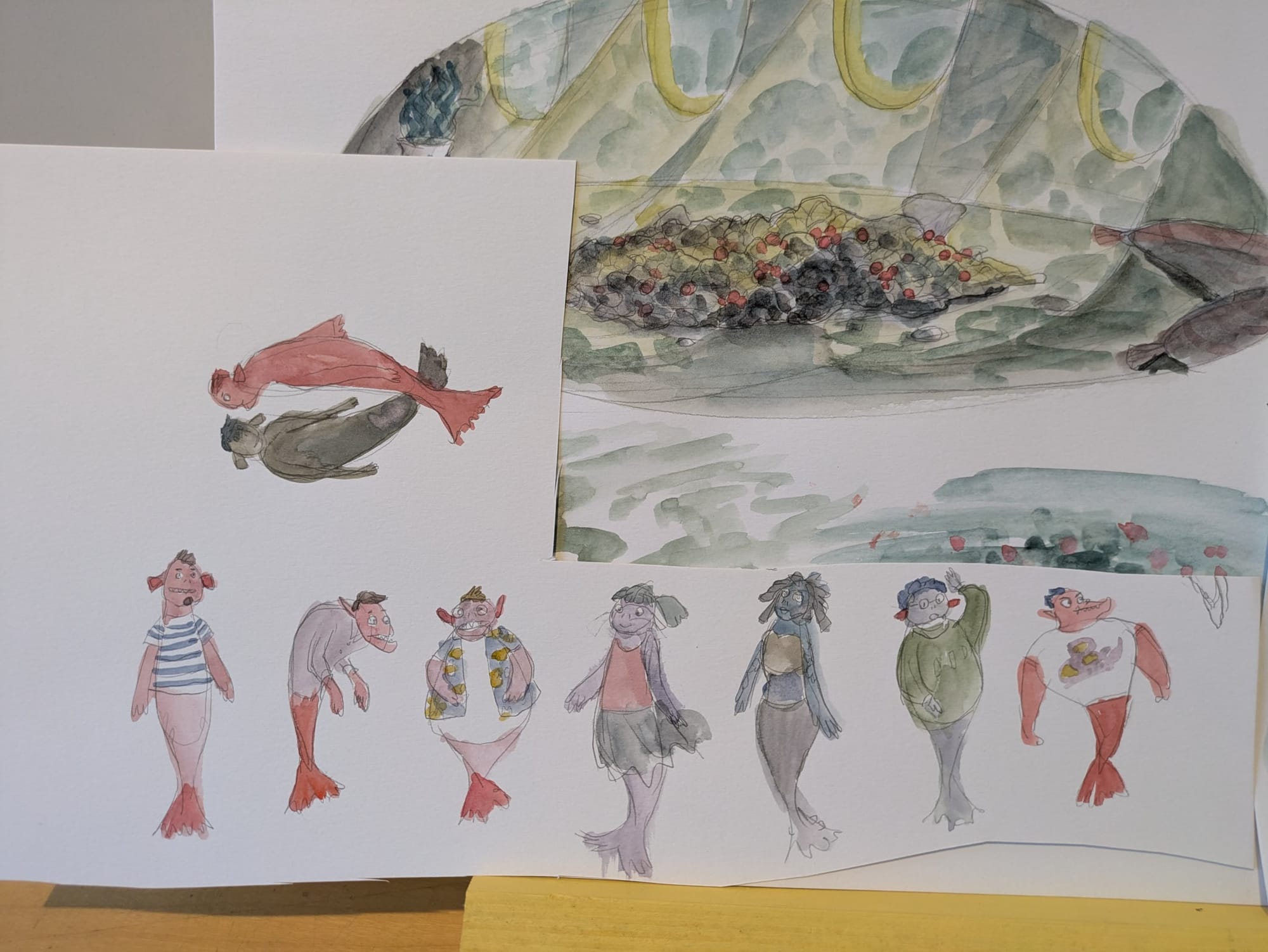
Process work for Last Call for the Redding District: a watercolor study of the redd and the analogue prototype board
Jamin: Was there a favorite salmon fact that made it into the game, or one that didn't?
Sagan: I watched this amazing video of multiple male salmon all basically ejaculating on a redd at the same time, and you can see the milt coming out of them in this white plume. But they're making an O-face. Before that video, I didn't know that fish made O-faces. They're very clearly orgasming and spasming, and their mouths are wide open. I was like, I've never felt like fish are so relatable to me. I don't know if that's going to be part of the game, but where would you ever see that, except on this kind of blurry YouTube video?
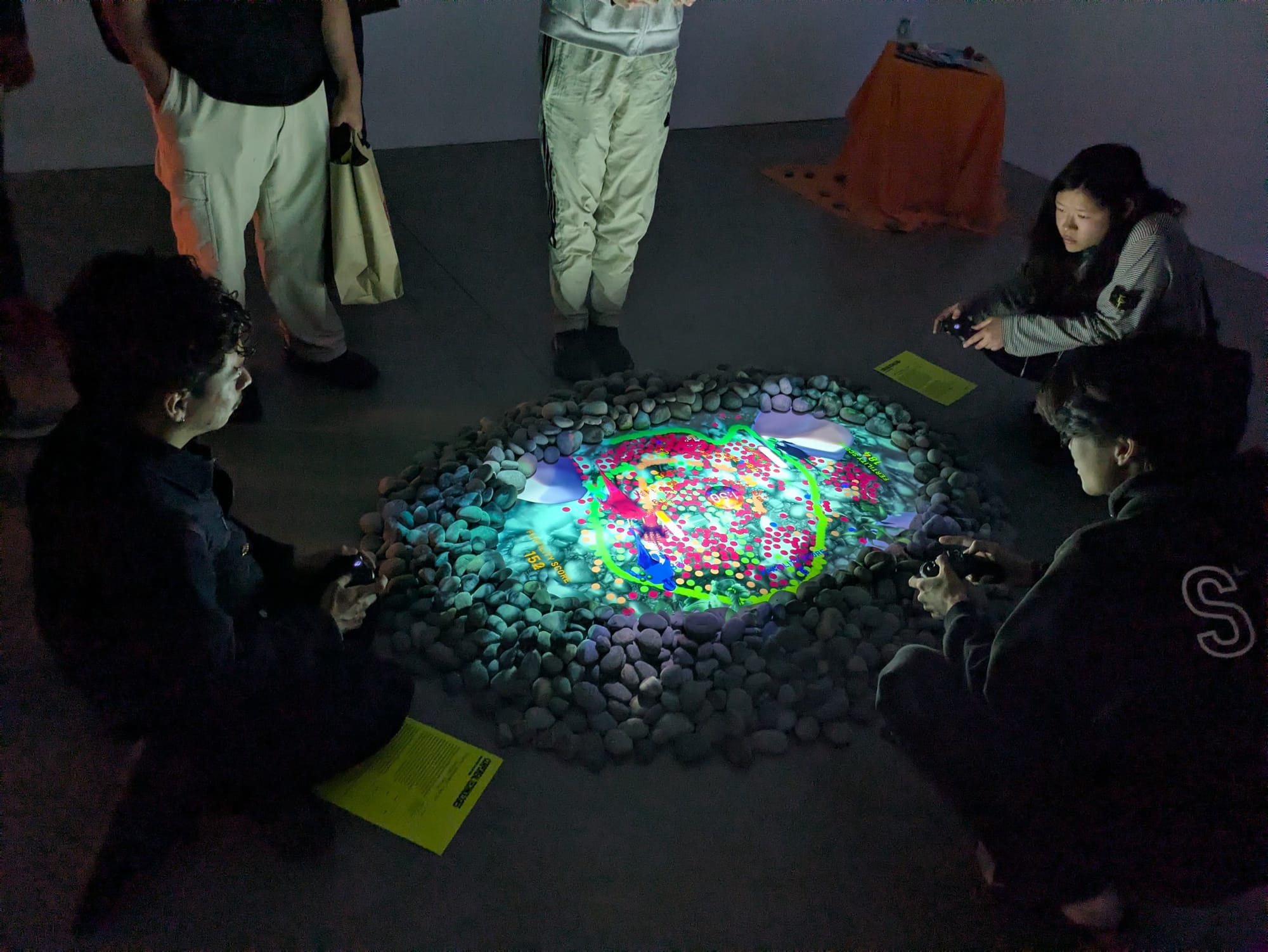

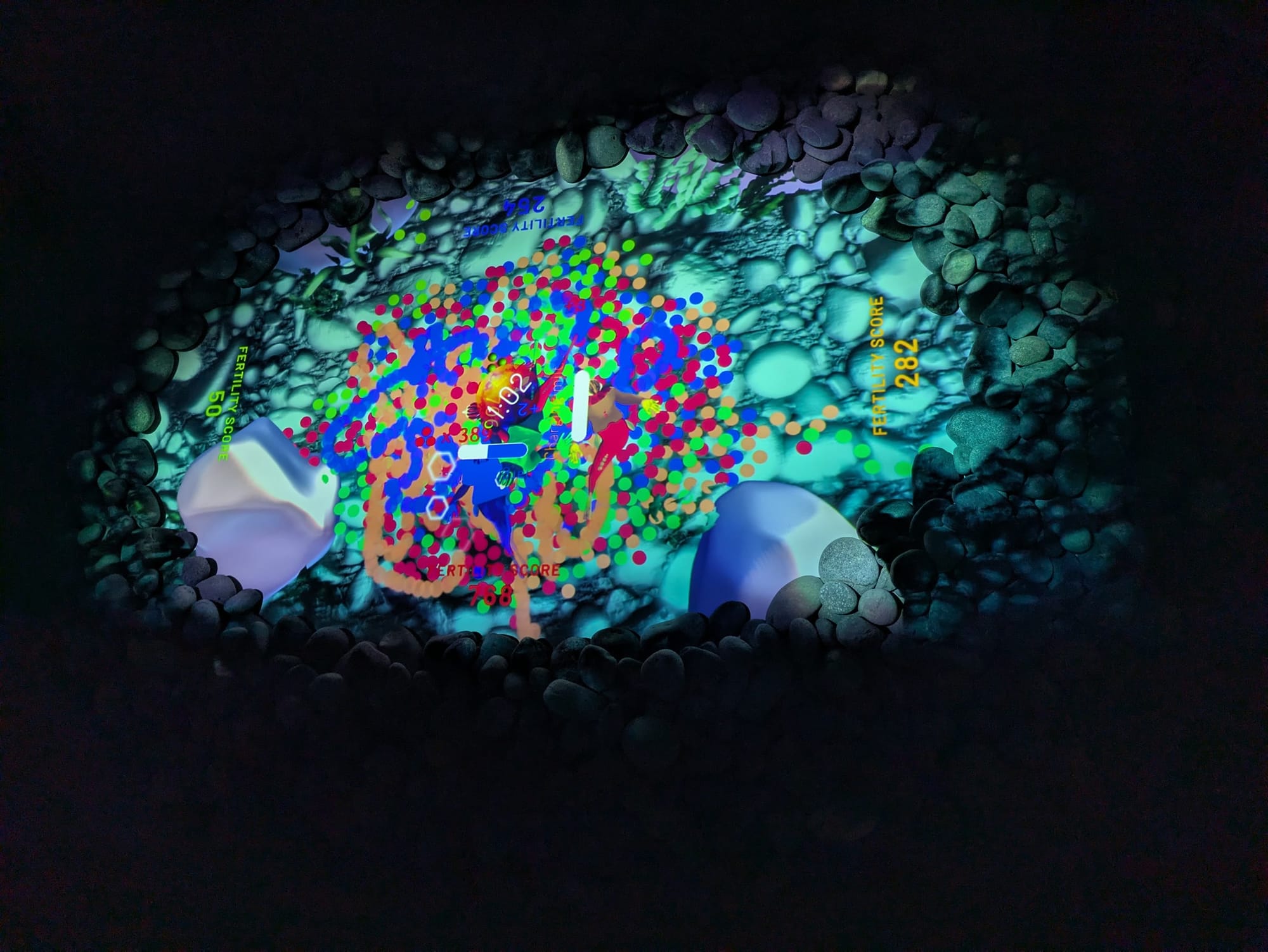
Last Call for the Redding District at UCLA's New Wight Gallery, 2026
Video and stills courtesy of Sagan Yee. Installation photos by Charlie Powers and Sagan Yee. Portrait by Airis Encarnacion.