Save-point typewriters turn up in the Resident Evil film
Cregger says he set out to write a game as a movie, and mimicked Resident Evil 4's healing items exactly. The props do work the film cannot actually run.

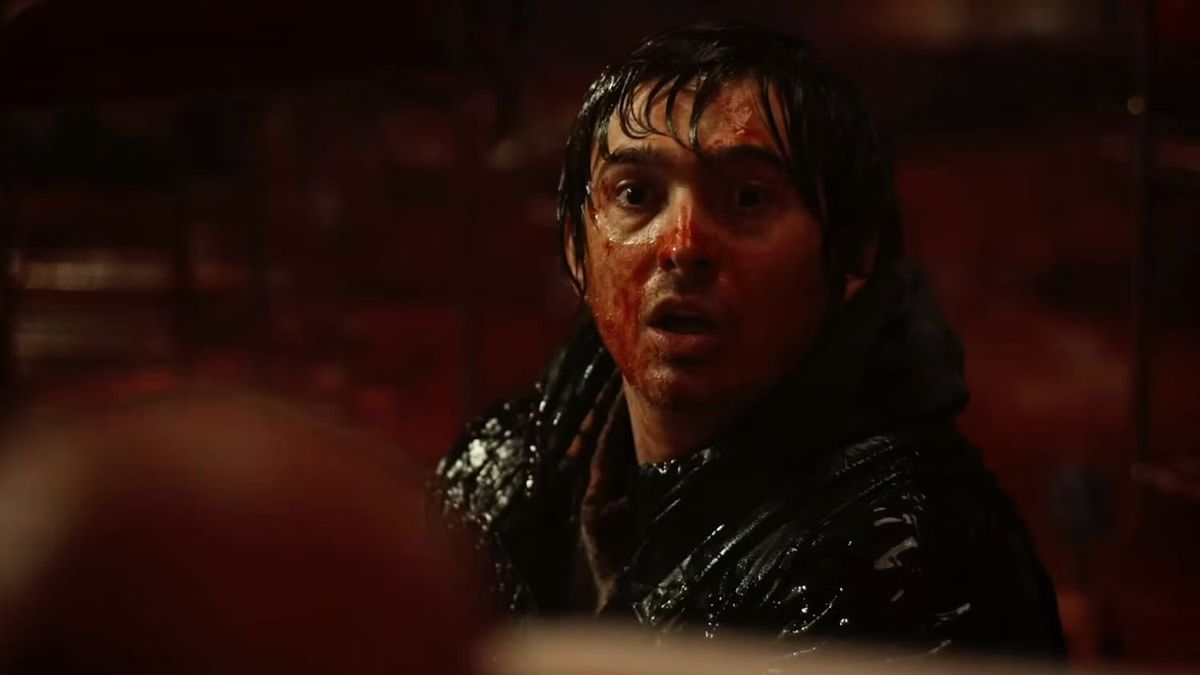
There is a typewriter on a desk in the trailer for Zach Cregger's Resident Evil, and a box of shotgun shells not far from it. Neither is set dressing. In Resident Evil 2 a typewriter is a save point, and because ink ribbons are finite, its presence doubles as a warning: the game has decided you are about to need one. That is a whole grammar built out of an object, and now it's made its way onto the screen.
Cregger built the film that way on purpose. "It was such a fun challenge for me to try and write a game as a movie," Cregger told PlayStation Blog in April, and the literalism is the point. Resident Evil 4's healing items were mimicked "exactly" and put onscreen. The games' weapon ladder is intact—pistol, then shotgun, then an MP5. What mattered from Resident Evil 2 was "moving slow and with deliberation," plus the constant arithmetic of how many bullets are left.
A film cannot actually run any of that. There is no inventory, nothing is finite, and the audience never decides what to carry and what to leave behind. What a film can do is put the object in frame and rely on twenty-eight years of fluency to supply the rest—which, judging by how quickly the trailer got taken apart after sabukaru circulated a breakdown of it, is a safe bet. Austin Abrams's courier is built for the same job. Cregger describes the character as "an avatar for me," a stand-in for however an ordinary player might react to being dropped inside the game.
One more borrowed rule: the environment "has to keep changing," Cregger says, every new location harboring a new danger. In 2015 we wrote about the Raccoon City police station as architecture—an Overlook Hotel of impossible spaces where the dread lives in the floor plan. Cregger is adapting the floor plan. It opens September 18.
Killscreen publishes one email a week on games, play, and the culture around them. No roundups, no review scores. Subscribe free