Jérémy Griffaud started a watercolor game built on Shinto animism
A month at Akiyoshidai International Art Village went to game design, Gion Matsuri and an ecosystem the player is in relation with, not in charge of.

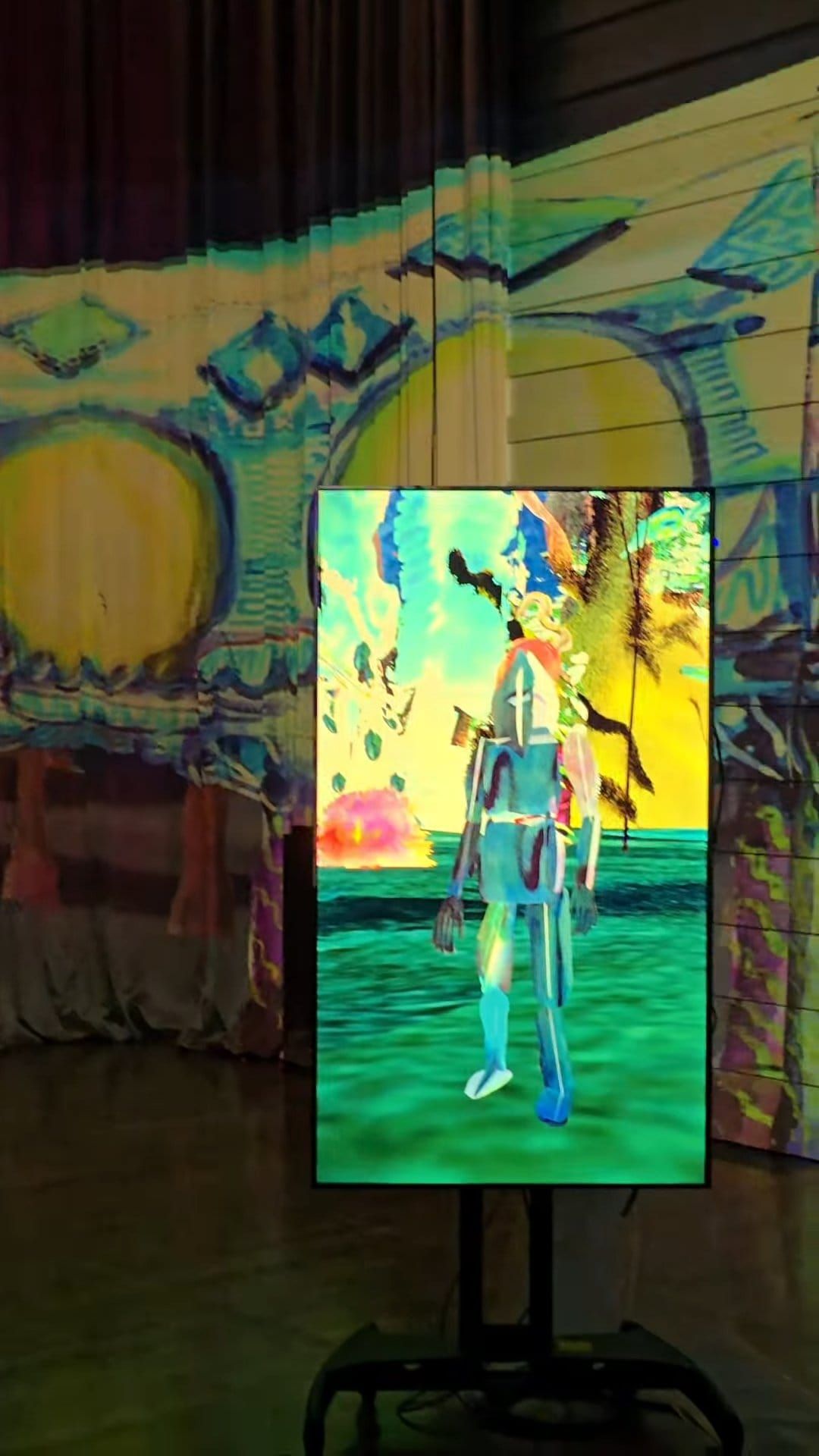
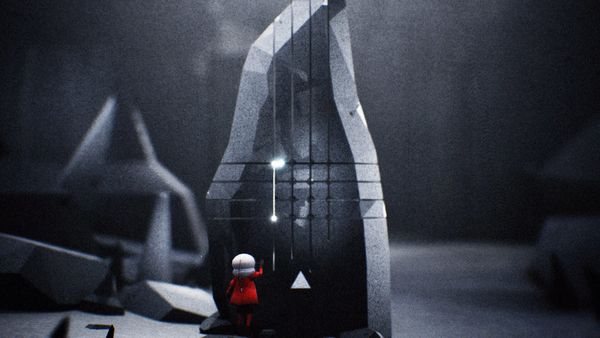
Jérémy Griffaud paints first and builds games second. The French artist's pipeline runs on watercolors—painted on paper, scanned, then animated inside a game engine—which he has used for interactive installations and the VR piece Under the Sky, carried in the Institut français XR catalog. His newest project points the technique somewhere older: The Prayer, an art game about animism that entered production during a July residency at Akiyoshidai International Art Village in Yamaguchi, Japan.
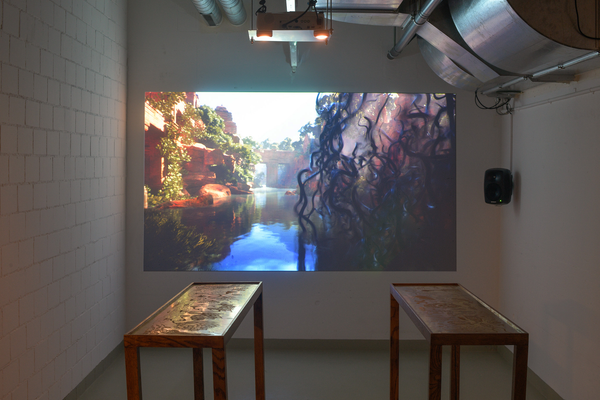
In his write-up of the residency, Griffaud says the month went to game design and "the structure of the narrative intention," drawing on Shintoism and Gion Matsuri, the Kyoto festival held each July since the ninth century. The goal, as he puts it, is "to enrich the animist relationship to ecosystem in this parallel universe." A first prototype showed at a short exhibition at AIAV—a hand-painted figure pacing a saturated landscape on a vertical screen, projections spilling across the room's curtains.
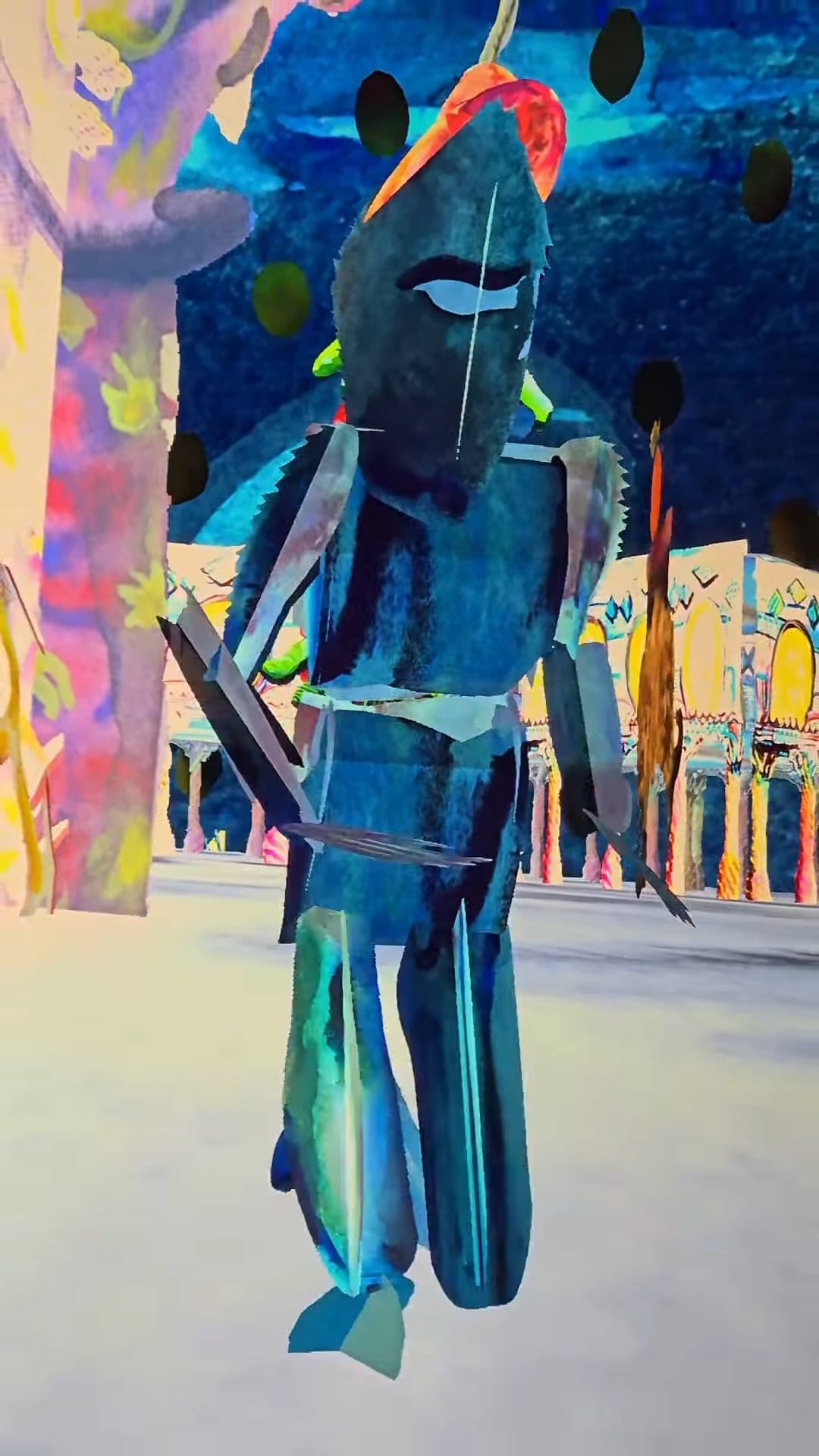
Games have borrowed Shinto's furniture for decades—we traced its influence through the whole medium back in 2016—but usually as set dressing. Griffaud is working from the belief structure instead: an ecosystem you're in relation with rather than in charge of, rendered in a medium that behaves like something alive. Wet paint bleeds and blooms on its own schedule, which makes it a strangely good material for animism. It puts him in a small lineage with The Coral Cave, the watercolor adventure threaded with Japanese spirits whose yōkai inspirations we covered.
The Prayer is early—prototype-early—and Griffaud says the residency was as much about exchange with the audience as output. But he returns to this territory rather than visiting, and the rest of his painted-engine work is at jeremy-griffaud.fr.