Dollar-store junk becomes the item sprites of Lucid Blocks
Eric Alfaro photographed household clutter into a Minecraft that runs on dream logic

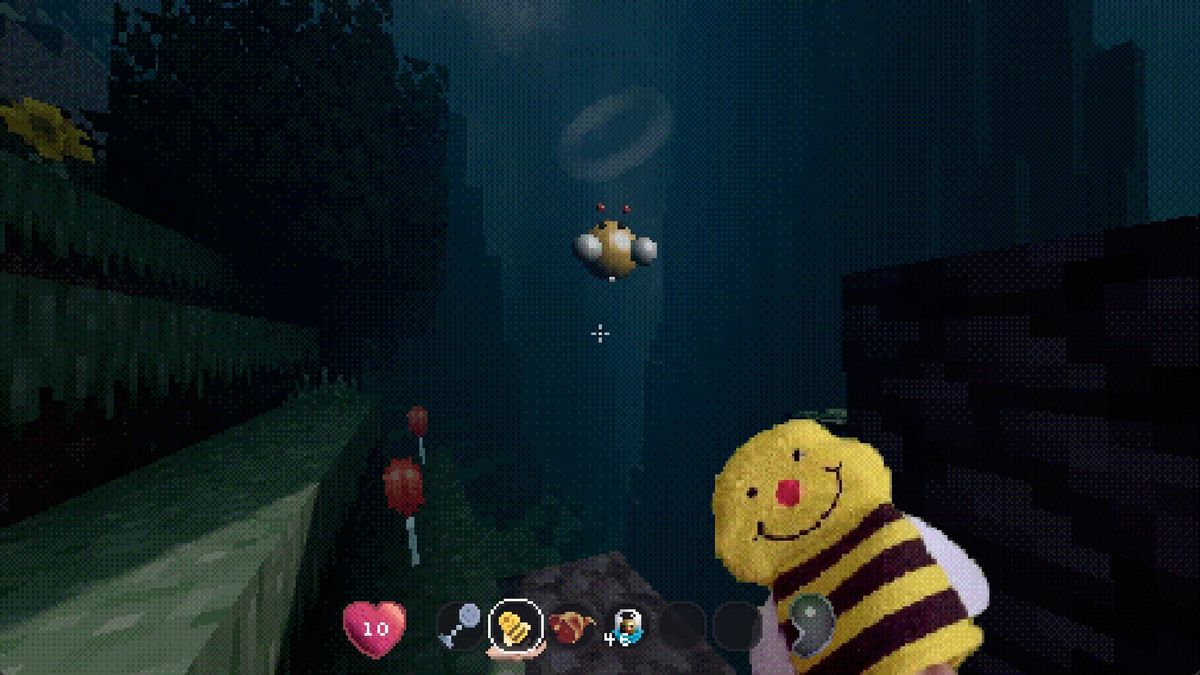
Hold any piece of food in Lucid Blocks and your hand grips a photographed clownfish plush toy. Many of the game's item sprites are photographs of junk from around the developer's house, padded out with dollar-store finds—a sandbox survival game collaged out of the physical world's leftovers.
The shape of it is familiar on purpose: infinite procedurally generated voxel worlds, resources, monsters, building. It is Minecraft held together by dream logic, and the vocabulary has been swapped accordingly. Game sessions are Qualia. Equipment is Paraphernalia. Enemies are Vermins. Crafting is Apotheosis, a system that fuses any set of items into something new with no recipes to look up—the surprise is the point. The game describes itself as "an entirely new way to experience your subconscious." It started as a Godot engine test by Eric Alfaro, an MIT student who publishes under the pseudonym Lucy B. Locks, and grew into a 10-dollar Steam release that came out in March and has sat at Overwhelmingly Positive since.
The clip that crossed my feed, captioned "genetic engineering," shows a segmented spider skittering through the mist, and the response pattern is wonderfully specific: people want to eat it. The comments read the creature's segments as chewy candy, as artificial meat patties—a synesthetic reaction you do not get from painted pixels. Photographic texture makes the dream tactile. We have watched Minecraft get stretched into new shapes before, but Lucid Blocks stretches it somewhere stranger: a block game where the blocks feel like things you once held.
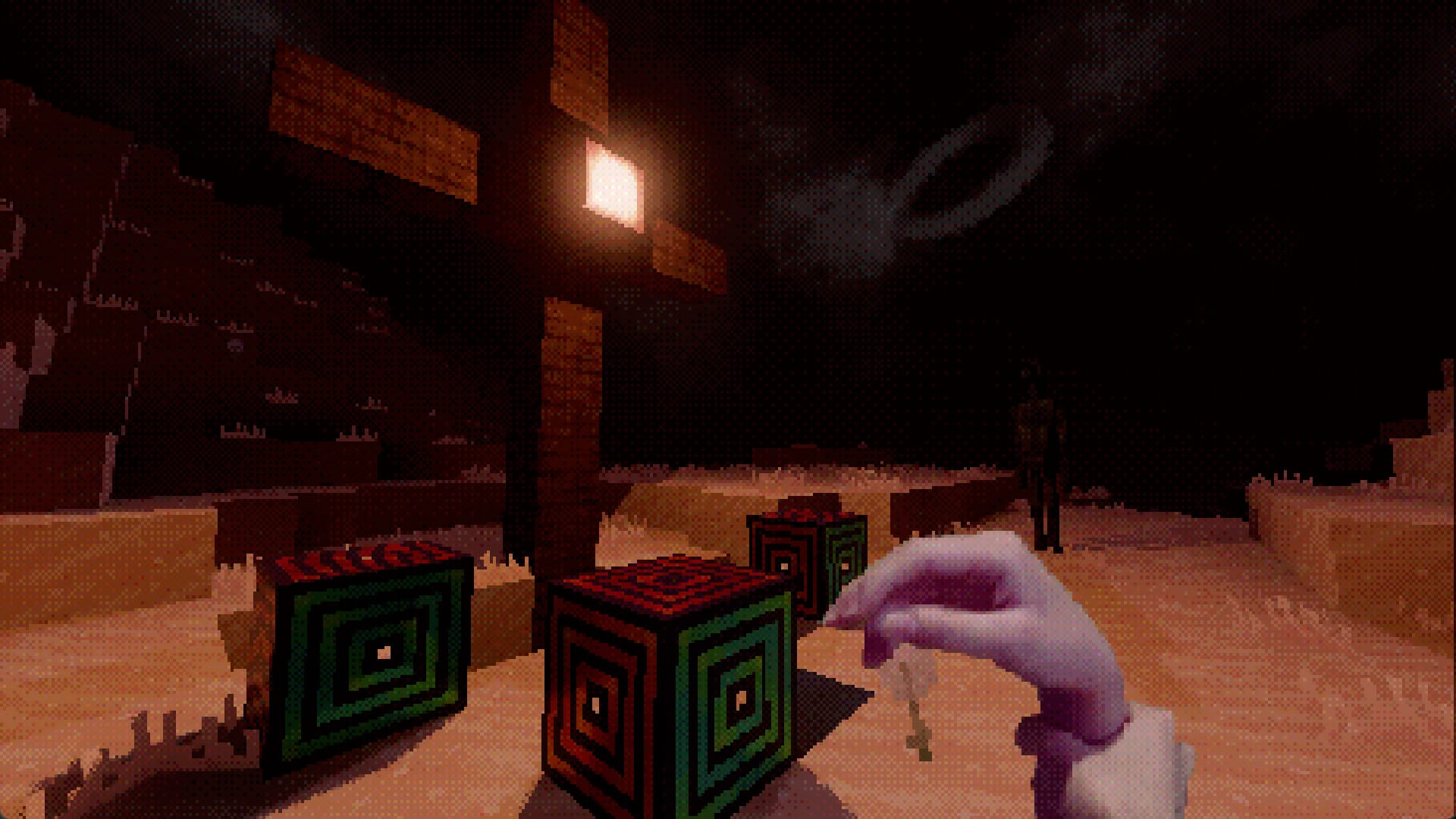
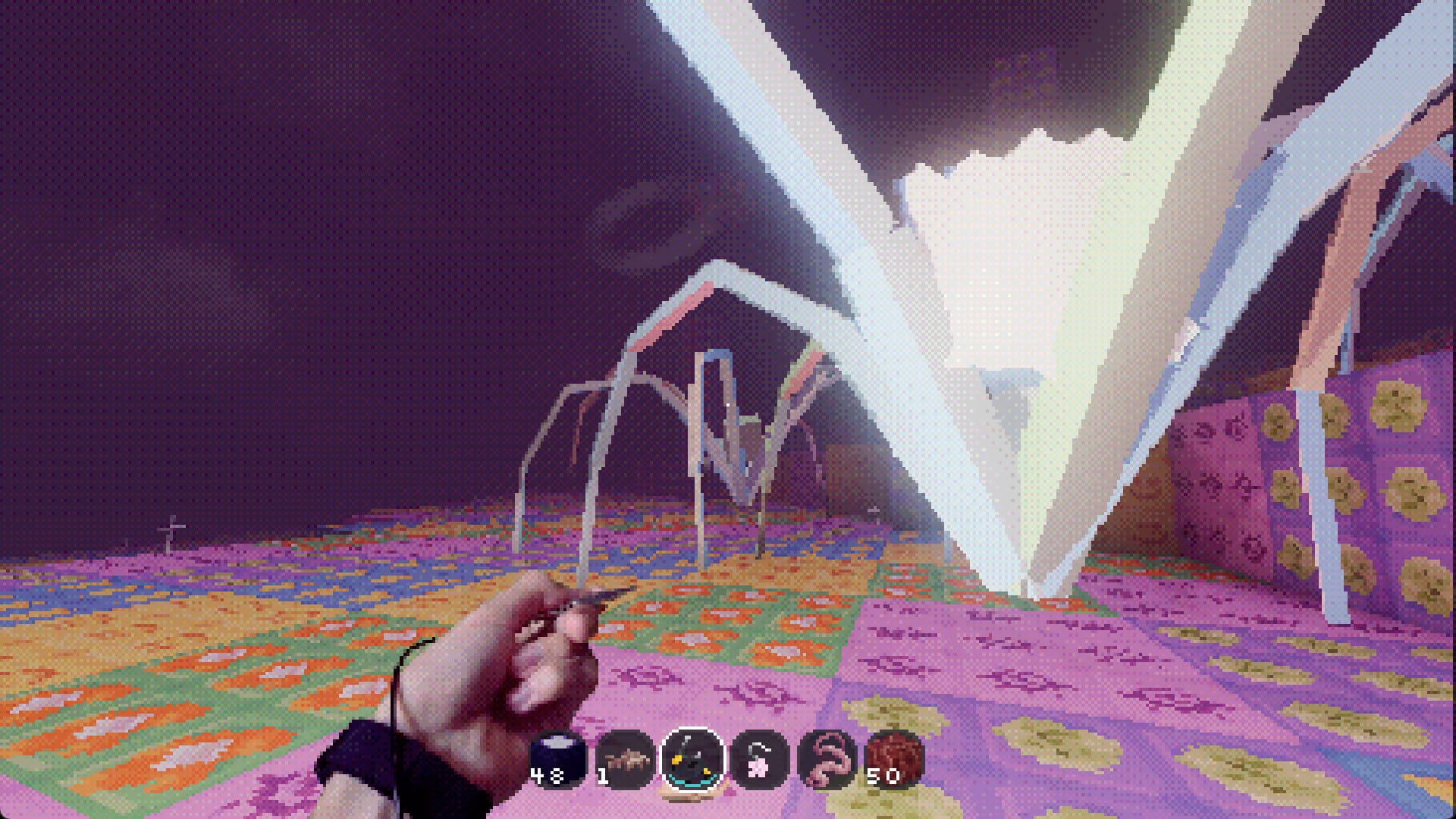
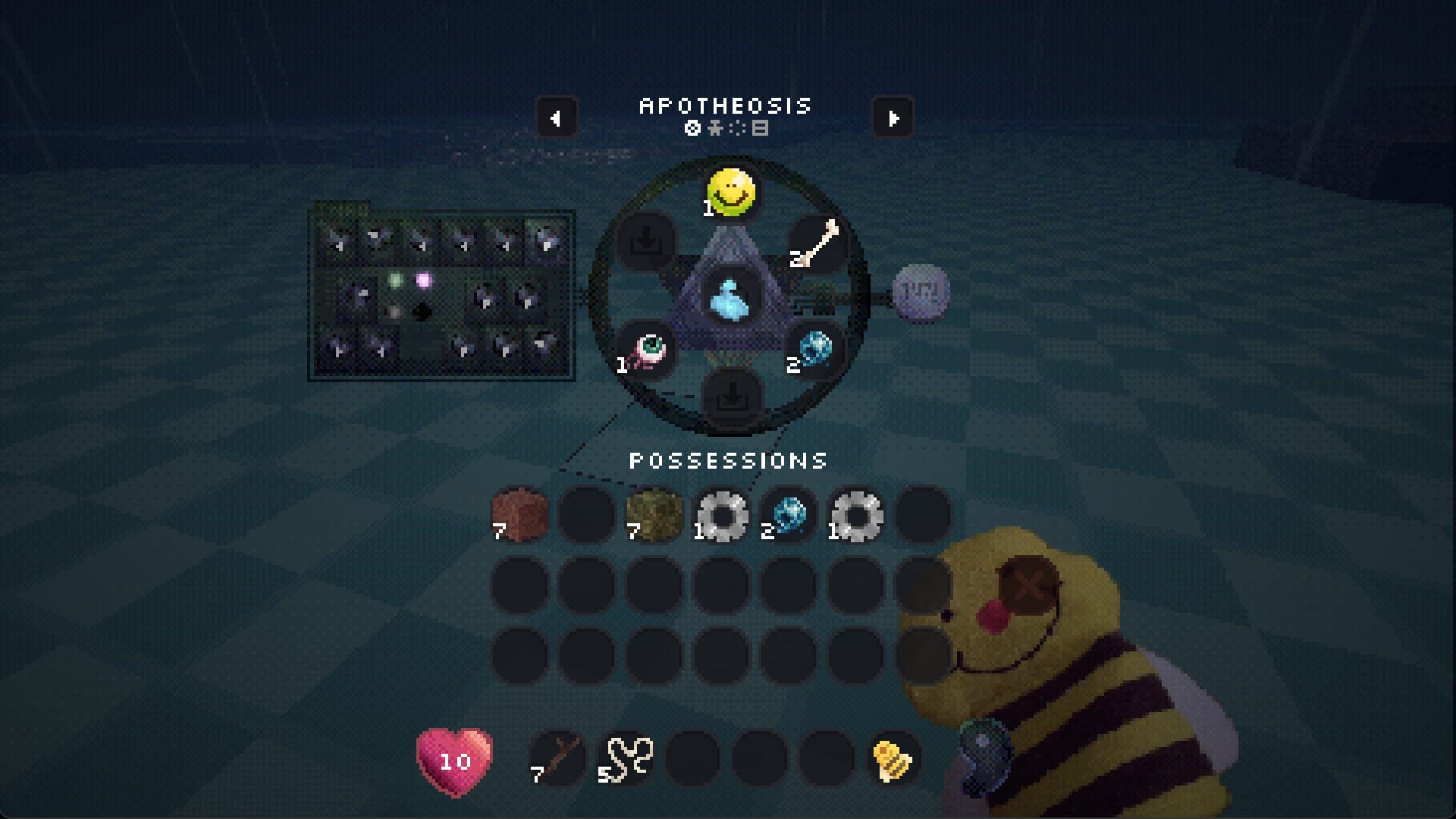
Lucid Blocks screenshots. Images: Lucy B. Locks