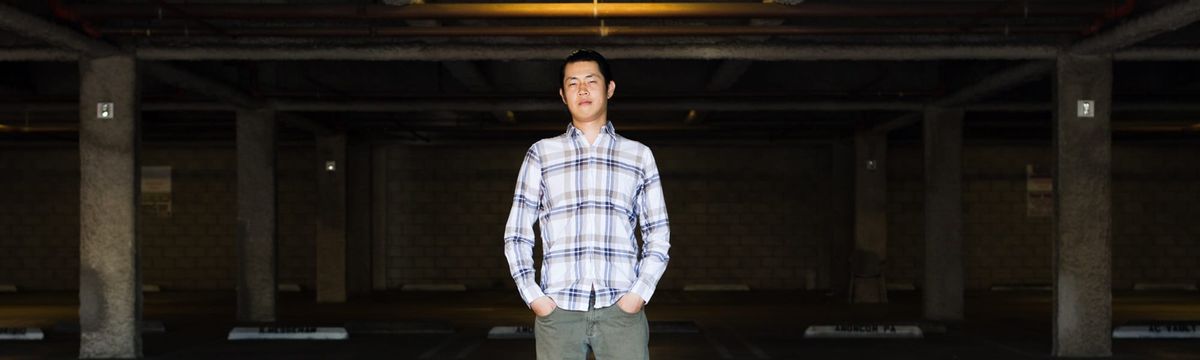
Brendon Chung and his love for big dumb plastic switches
This article is part of Issue 8.5, a digital zine available to Kill Screen’s print subscribers. Read more about it here and get a copy yourself by subscribing to our soon-to-be-relaunched print magazine. /// The midpoint of Daft Punk’s 2013 album Random Access Memories is marked by an effusive, spra
This article is part of Issue 8.5, a digital zine available to Kill Screen’s print subscribers. Read more about it here and get a copy yourself by subscribing to our soon-to-be-relaunched print magazine.
///
The midpoint of Daft Punk’s 2013 album Random Access Memories is marked by an effusive, sprawling ode to touch. An unidentified narrator walks the listener through memories and speculation on feeling as they try to recall what seems like fading indicators of what feeling ever was. On “Touch,” we get a sense that the narrator was once organic like us. But now, metallic and glistening under a desert sun, they lament their cold, inorganic state—touch, we hear, was everything to them. Feeling, it seems, was what they left behind.
We aren’t robots yet, but that doesn’t mean the sentiment of “Touch” isn’t already brewing as the technology we use becomes more and more a part of our actual bodies. Besides Daft Punk, others have lamented the current trajectory of our most precious devices— one which favors interoperability and abstraction over the discrete functionality, heft, and feel that made them seem separate and different from ourselves. Swedish design and product group Punkt is one of the latest to surface these tensions with the release of their “dumbphone,” the MP 01, a cellphone that can only call and text and looks like a modern imagining of a bulky Casio calculator. The MP 01 comes after a 2016 piece in The Atlantic that discussed the merits of going back to a “dumbphone” and the Light Phone Kickstarter campaign more than doubling its initial goal to craft a dumbphone of their own, or in their words, a “phone away from phone.”
In the sphere of gaming, the neverending popularity of pixel art leads the charge in terms of keeping a similar holding-dear of retro appearances alive. But the quest to create a holistic encapsulation of retro feeling is being led by the indie king of analog, Brendon Chung.

![Riding a Bike Through San Andreas [Podcast]](https://storage.ghost.io/c/25/84/2584b75d-4bd6-4cce-8259-f1d1c65abbb5/content/images/size/w600/2026/08/brunoabib_films_mea-02.png)