What Happens When 100 Strangers Share a Single Controller for Eight Hours?
Patrick Blenkarn and Milton Lim built a game that hands its labor back to the audience. asses.masses is eight hours of collective donkey revolution.

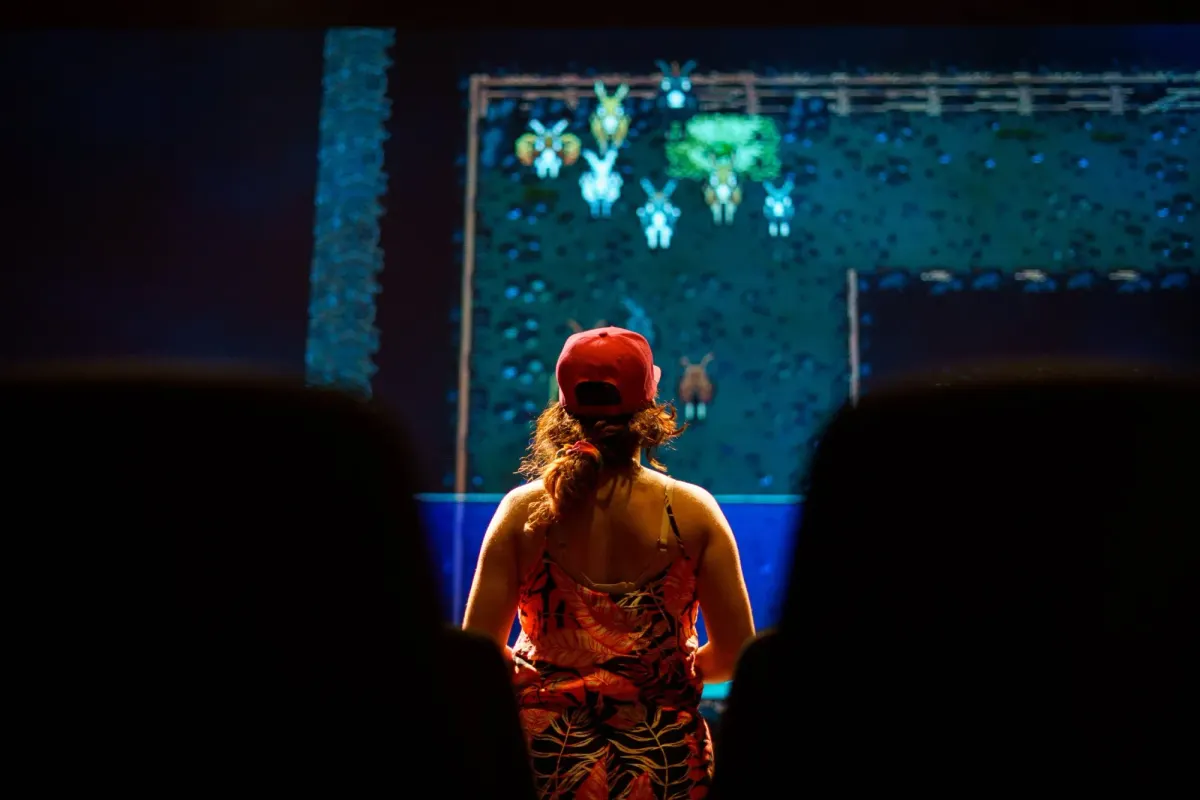
When I first watched the six-hour documentation of asses.masses, I kept thinking about what Patrick Blenkarn and Milton Lim had actually built. It wasn't a video game, exactly. It wasn't theater, exactly. It was something rarer—a system that had absorbed the grammar of both and started braying its own dialect, not unlike the donkey of Balaam who portended God's wrath in its own divine voice.
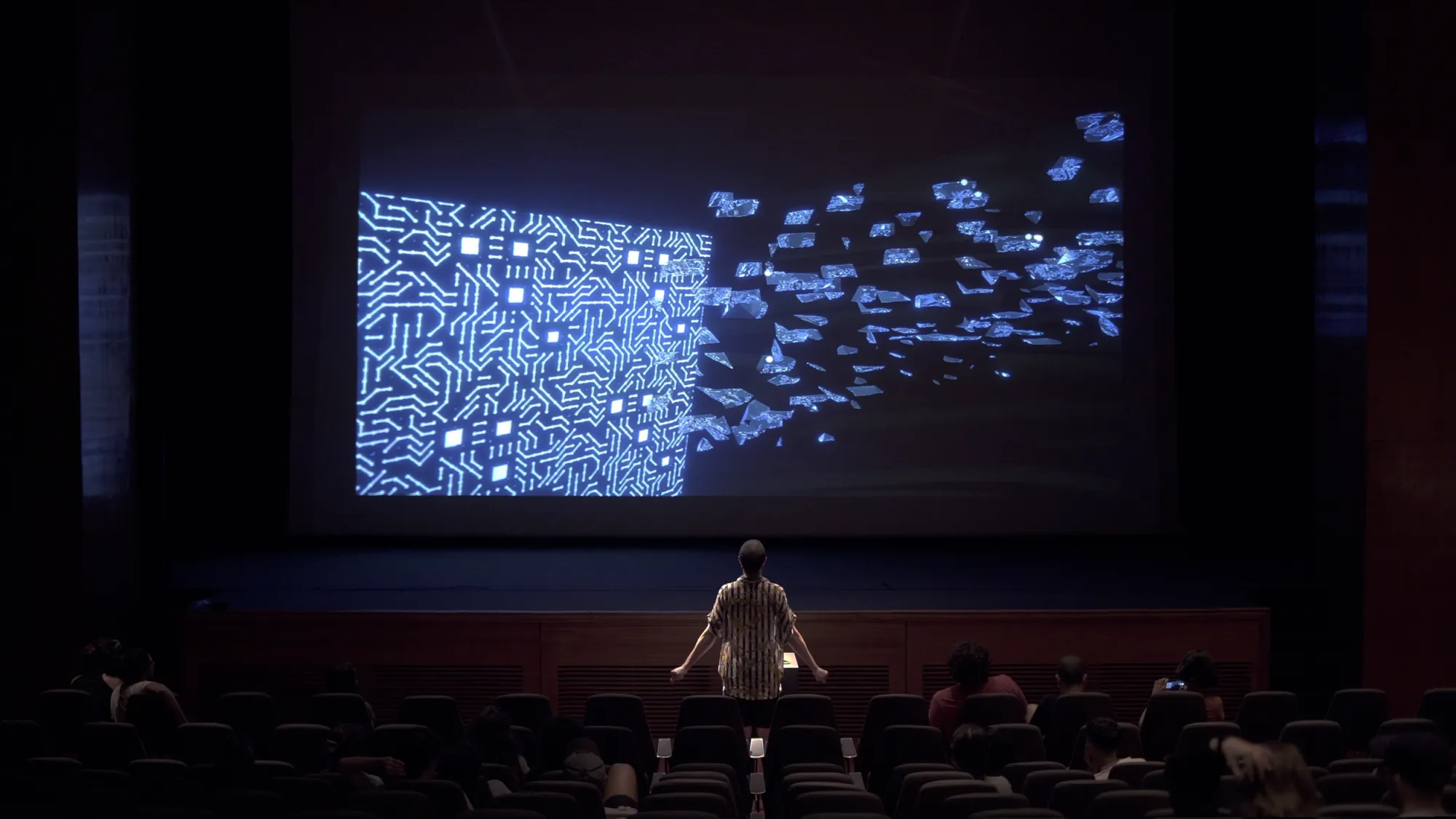
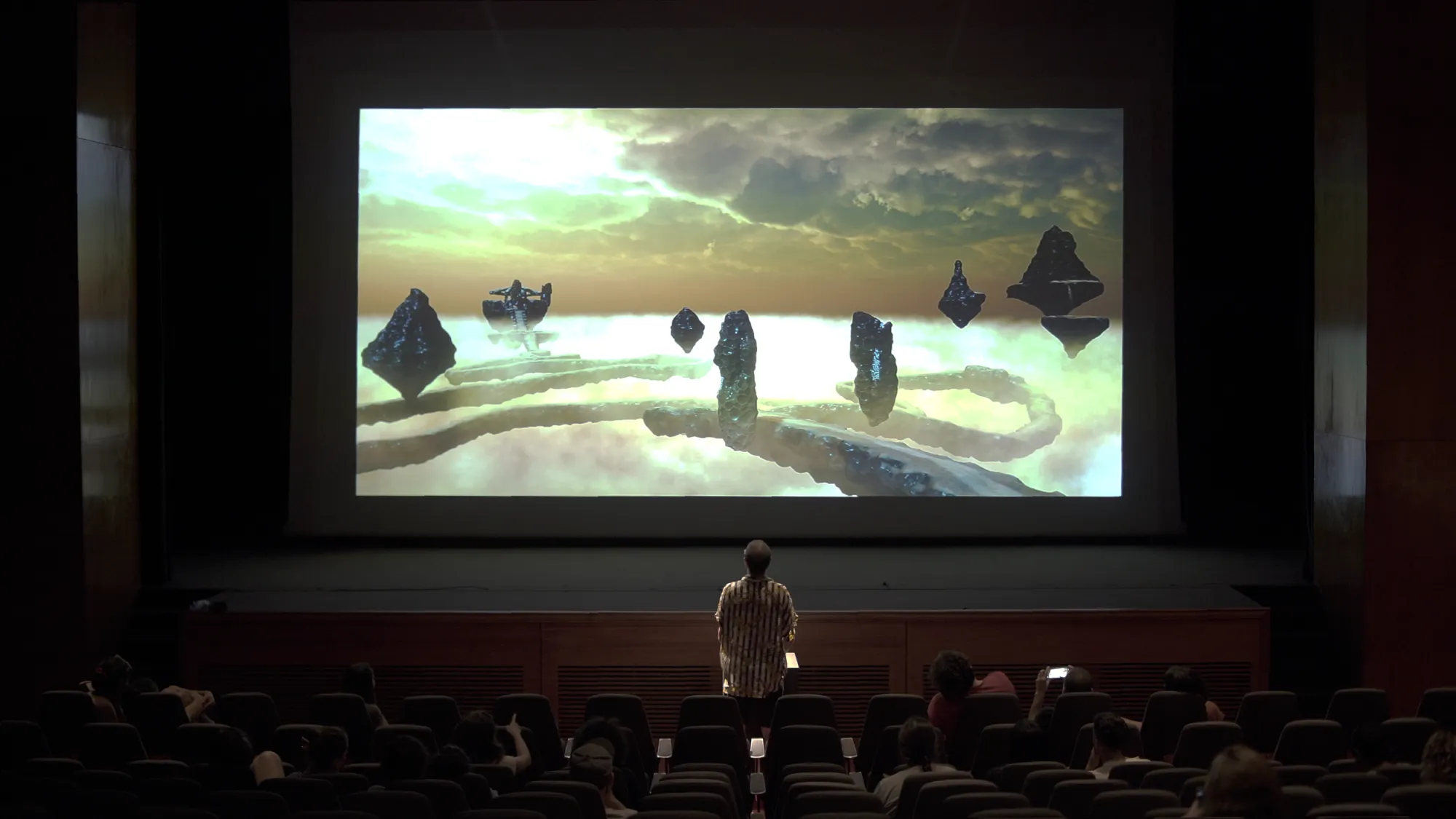
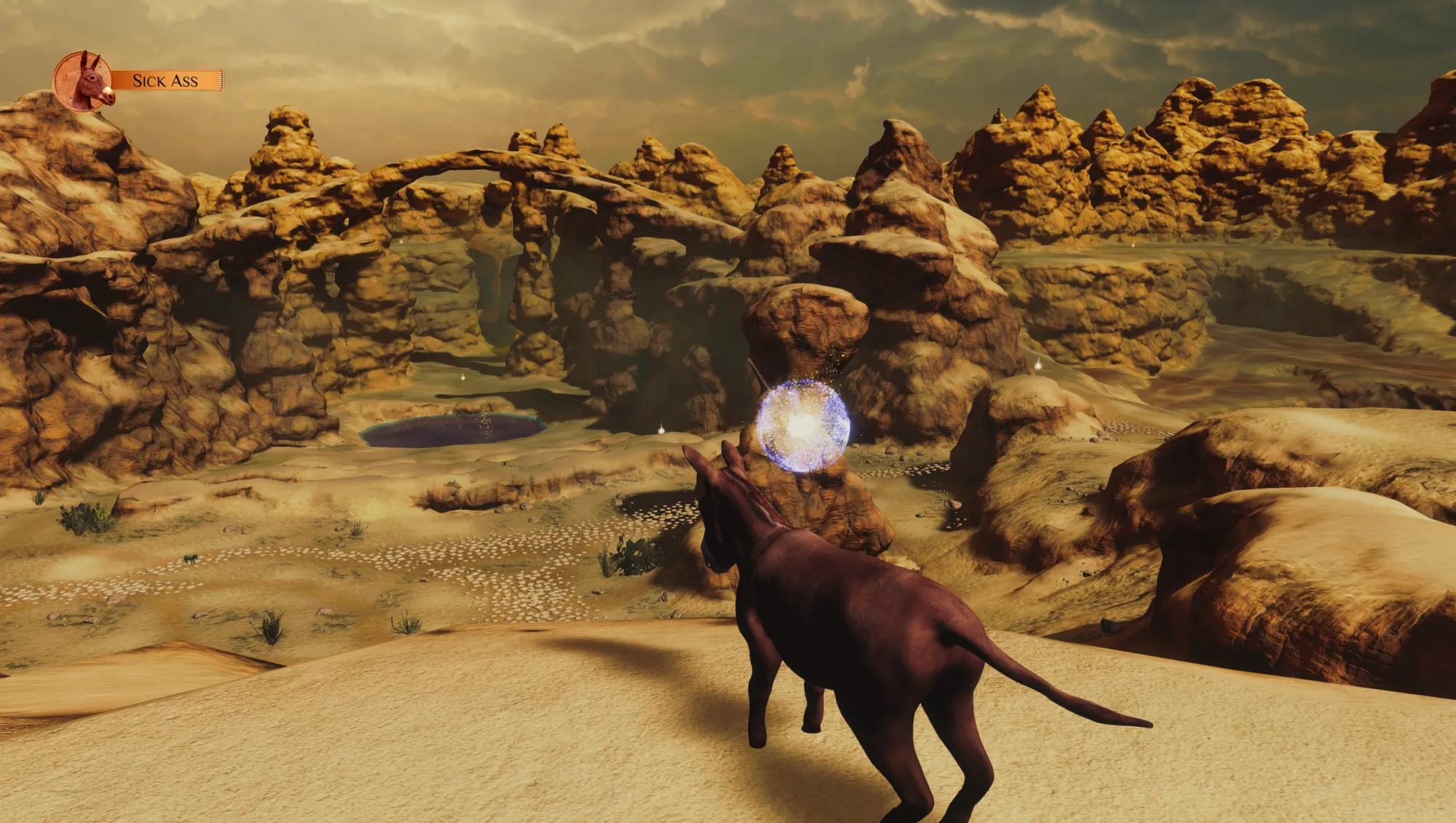
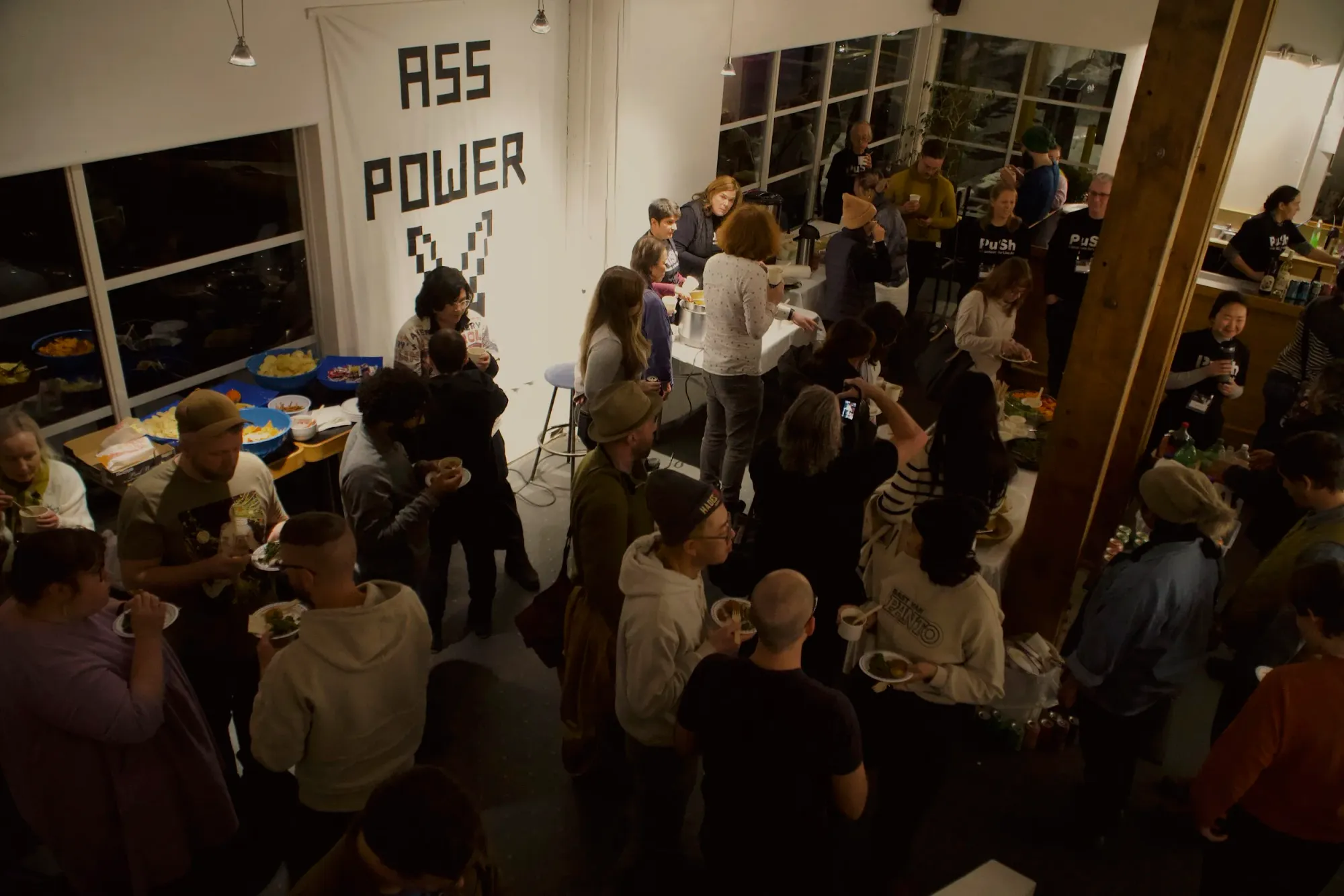
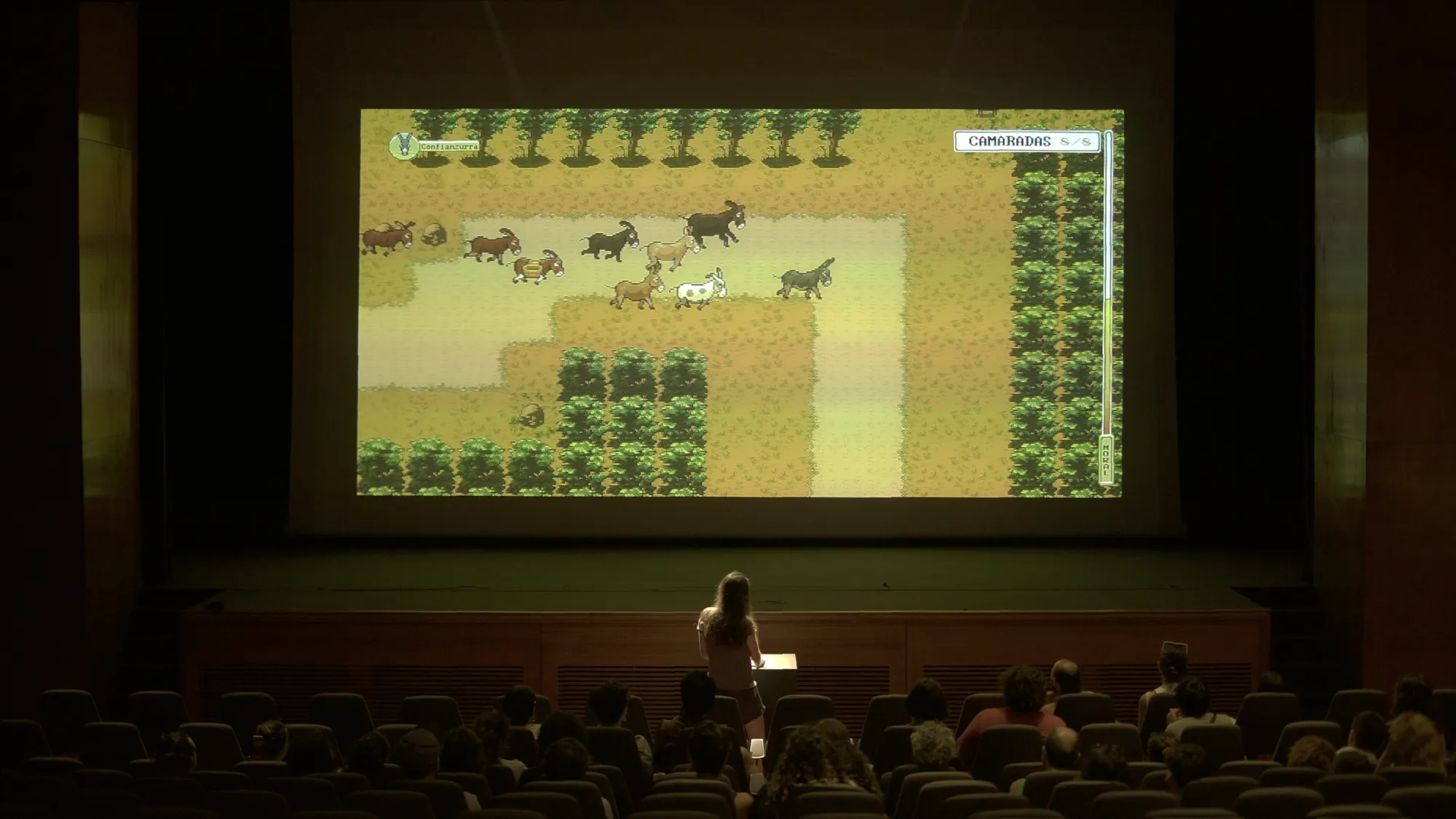
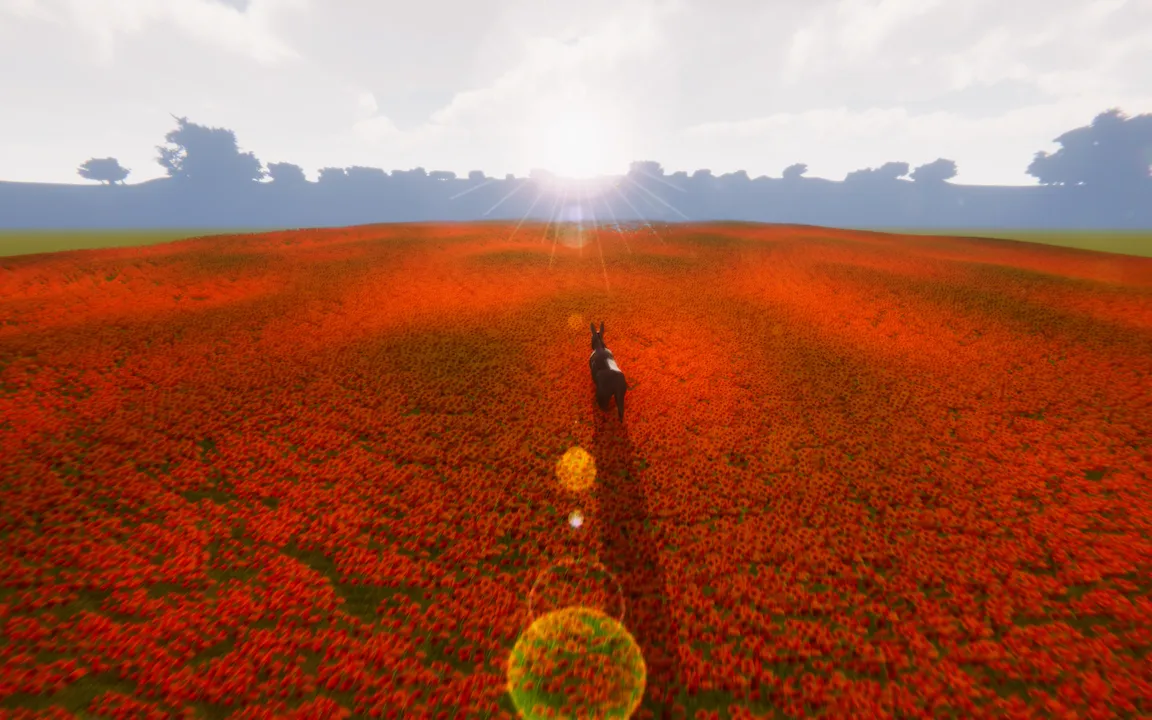
asses.masses is a custom-built RPG played from beginning to end by a live audience. A single controller sits in a spotlight. Someone from the herd (everyone is a donkey here; the audience is the herd) walks up, picks it up, and plays until they hand it off. The herd on screen is a group of unemployed donkeys trying to win their jobs back from the machines that replaced them. (The eight-hour length, which includes meal breaks, is a nod to the British workers’ movement, which fought for limits to their labor.) The herd in the room is the audience, negotiating the controller, reading dialogue aloud in voices they're inventing on the fly, figuring out together how to move forward.
I've spent a long time looking at games, and I hadn't really seen this before. eSports puts a wall between the performer and the spectator—the pros play, the rest of us watch. Streaming does something similar, mediated through a chat window. asses.masses collapses that wall. "Everyone in the audience has the capacity to influence," Blenkarn told me. "Everyone in the audience is to some degree a player because they have the capacity to contribute to the room." The bottleneck is the single controller that makes the current occupant the hero, at least for a moment. They're just the person currently holding the thing, before that person can hand off their work to the next person. It's another fitting metaphor for the intergenerational nature of resistance, where we sublimate our agency to the next player in the fight.
Blenkarn and Lim met through Canadian performance circles—Lim co-founded the interdisciplinary company Hong Kong Exile; Blenkarn came out of experimental theater that had been trying to put "shit on stage that didn't belong." Their first collaboration was a trading card game about arts funding. asses.masses started, improbably, as a Shadow of the Colossus–inspired installation with a kid in a donkey mask playing in the corner. When the funding fell through, the two of them had two weeks left in a residency and used that time to teach themselves Unity through YouTube tutorials.
What the Donkey Actually Knows About You
The donkey came from an image Blenkarn found years earlier: a 15th-century woodcut of a donkey teaching other animals. Scratch the surface, and donkeys aren't stupid—they're emotionally intelligent, desert-dwelling, historically maligned. Scratch it again, and you find the global skin trade, the slaughter of millions of donkeys for collagen. "An image of this particular generation [in China] of nouveau riche citizens of a communist country literally consuming the historical worker was poignant," Blenkarn said. The donkey sits at an intersection of labor, automation, and cultural contempt—the same intersection that games themselves have occupied as a medium.
That last part matters. There's a parallel the two of them didn't see at the start but found over four years of development: the way people have treated donkeys resembles the way people have treated video games as a cultural form. Maligned, underestimated, and asked to work without being seen. I couldn’t help watching the playthough of asses.masses breaks with the depictions of gaming over the years: collective over individual, co-operation over violence, cohesion over isolation. The crowd moaned over every untimely death and cooed in unison as the donkeys would sing their fallen compatriots into a type of donkey Valhalla, called the Astral Plane. Everything bad thing that games have ever done drifts away on that in-game chorus.
Subtracting the Safety Net
What struck me most was the design philosophy underneath. Lim calls it "subtractive design." Most games automate the labor—the mini-map, the glowing outline around the NPC you're supposed to talk to, the math happening silently, in complex role-playing games. asses.masses hands that labor back. Who remembers the map? Who can recall what the Song of Ascension was? Who speaks German for this one scene? The game assumes no single person holds all of it.
This is a game about the cost of friendship, the pains of disagreement, and the accordion nature of human existence, where people drop in and out of our lives, over disagreements big and small. Some gaps are too large to ever be surmounted in this life, and only the dream of a divine intervention seems enough to bring the change we’d like to see in the world. After five plus hours of one-person play, asses.masses breaks with the conventional and asks 2 or more to press every button simultaneously, a feat only possible by joining hands.
Eight Hours Is a Enough Time to Figure Out Who You Are
Of course, the politics have sharpened as the piece has toured. The decline of unions in the US, the new-old again spectre of robber barons, and many of the themes of the early 20th century are resonant once again. "When we started the show, AI was not at the tip of everyone's mind," Lim told me. Now every audience arrives with a new set of anxieties about automation, labor, and what work even is. Blenkarn thinks the conversation is still slightly off the target: "We're talking about what is the thing that I feel like I have a divine right to. And what are rights?"
Over 55 performances, no audience has played it the same way. A London crowd cast Jennifer Coolidge impressions on the fly. A Helsinki player (and well-known voice actor) read every line of dialogue solo. Somewhere, someone sang Mission Impossible every time a donkey scuttled on its belly. The herd keeps deciding what the game is, and we’re all along for the bumpy ride.