
A video synthesizer is the control scheme in Hypnogenesis
Allen Riley and Andy Wallace wired a bullet hell into the guts of an image feedback loop, then demoed it on a CRT for the games-research crowd.

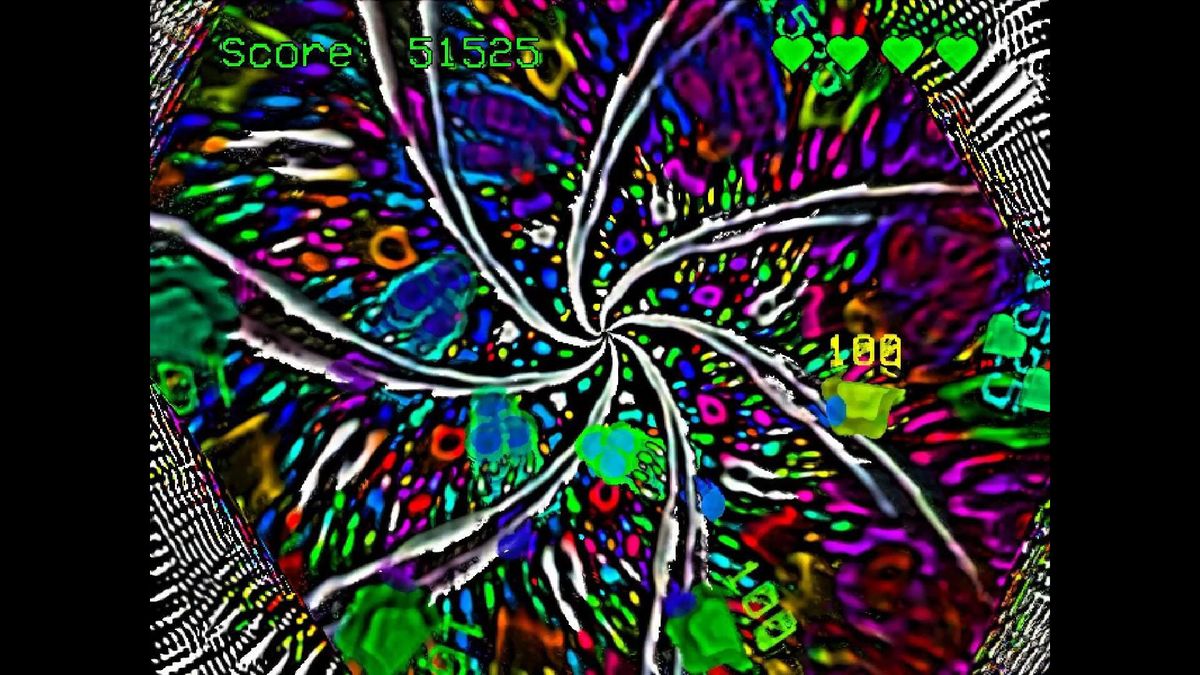
The equipment list for this year's Foundations of Digital Games conference in Copenhagen included a Bang & Olufsen CRT, and on it ran Hypnogenesis, a bullet hell that is also, literally, a video synthesizer. Allen Riley presented the game in the Games and Demos session, curated by Dooley Murphy, at the Royal Danish Academy on August 11, and the reel catches what a scanline-fat tube does for it that no flat panel can.
Hypnogenesis on the Bang & Olufsen CRT at FDG Copenhagen, from Allen Riley’s reel.
Game state in Hypnogenesis directly modifies frame buffer values in a customized build of Andrei Jay's open-source Video Waaaves software, and the player's controls are wired to parameters of the synthesis itself, so flying the ship is simultaneously performing the image. Riley and collaborator Andy Wallace frame the project as belonging to "an alternate history of games"—the one that would have followed from Nam June Paik dragging a magnet across a television, or a camera pointed at its own monitor until patterns bloom. Killscreen has been partial to that lineage for a while; in 2013 we covered Limits & Demonstrations, an adventure game built as a Paik-inspired gallery show.
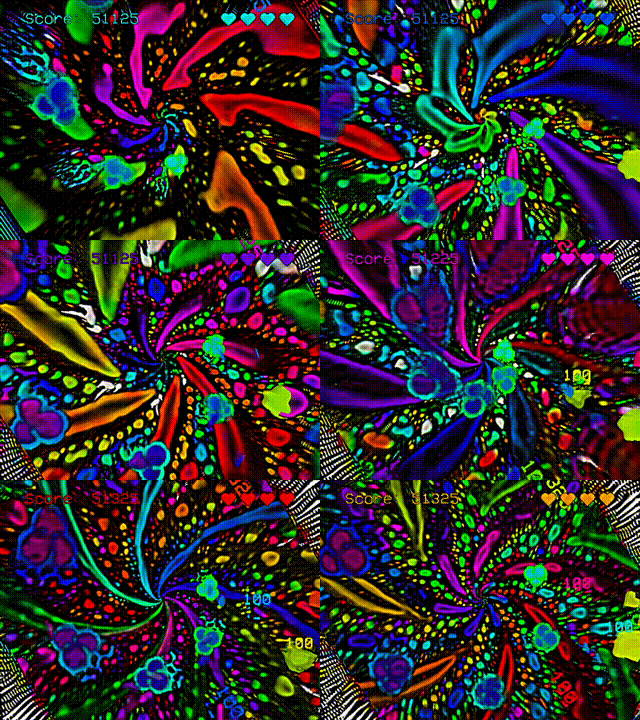
The pairing is practice and research meeting on one table. Riley is a PhD candidate in Film & Digital Media at UC Santa Cruz whose previous game, Videofreak, ran its feedback through circuit-bent video mixers and guitar pedals; Wallace is the New York designer behind Particle Mace, and the two met as board members of the arcade collective now called Arcade Commons. Hypnogenesis is built for arcade furniture—dual joysticks, standalone CRT—but a Steam page is up, listed as coming soon, for those of us stuck with the wrong kind of screen.
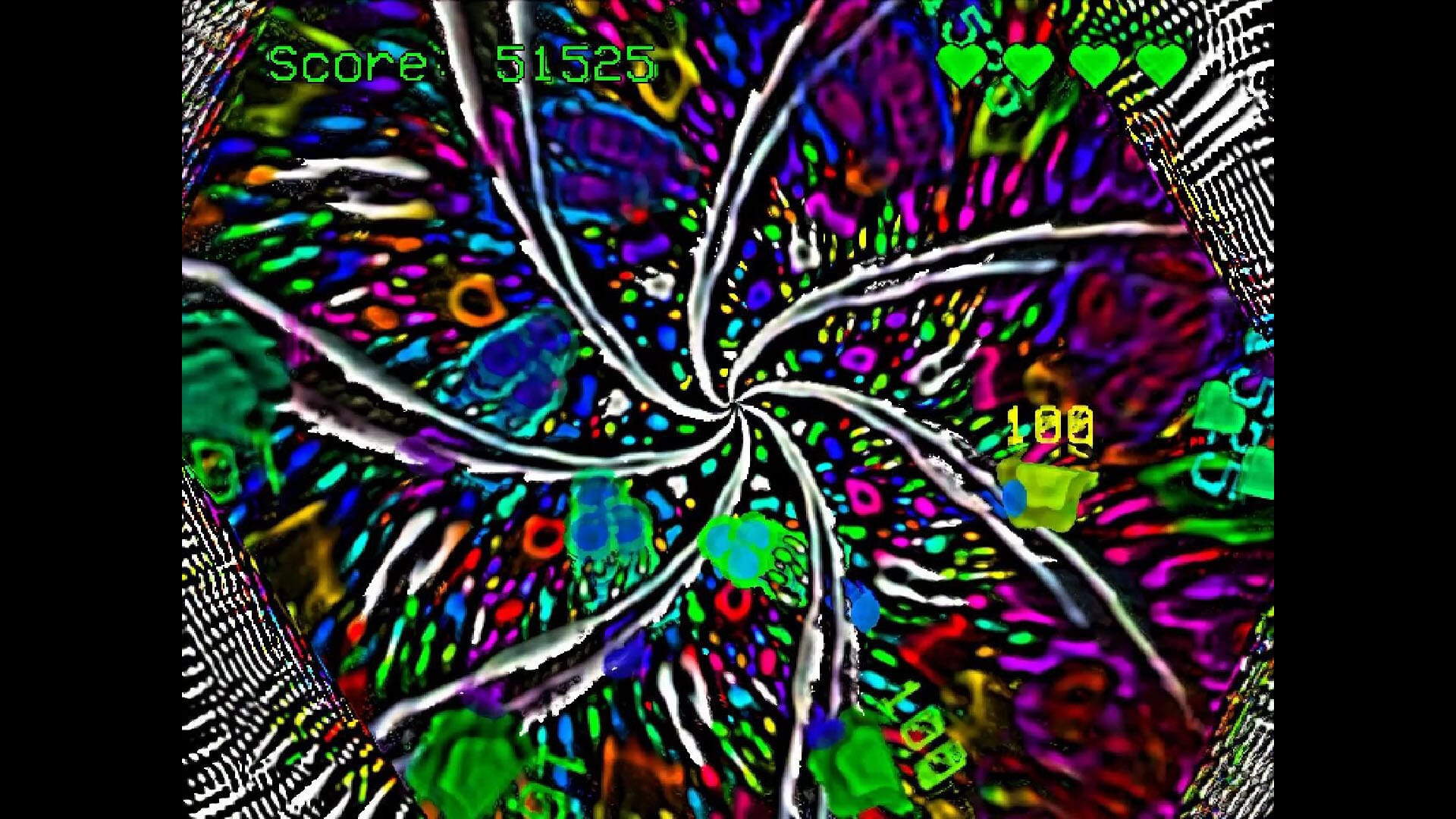

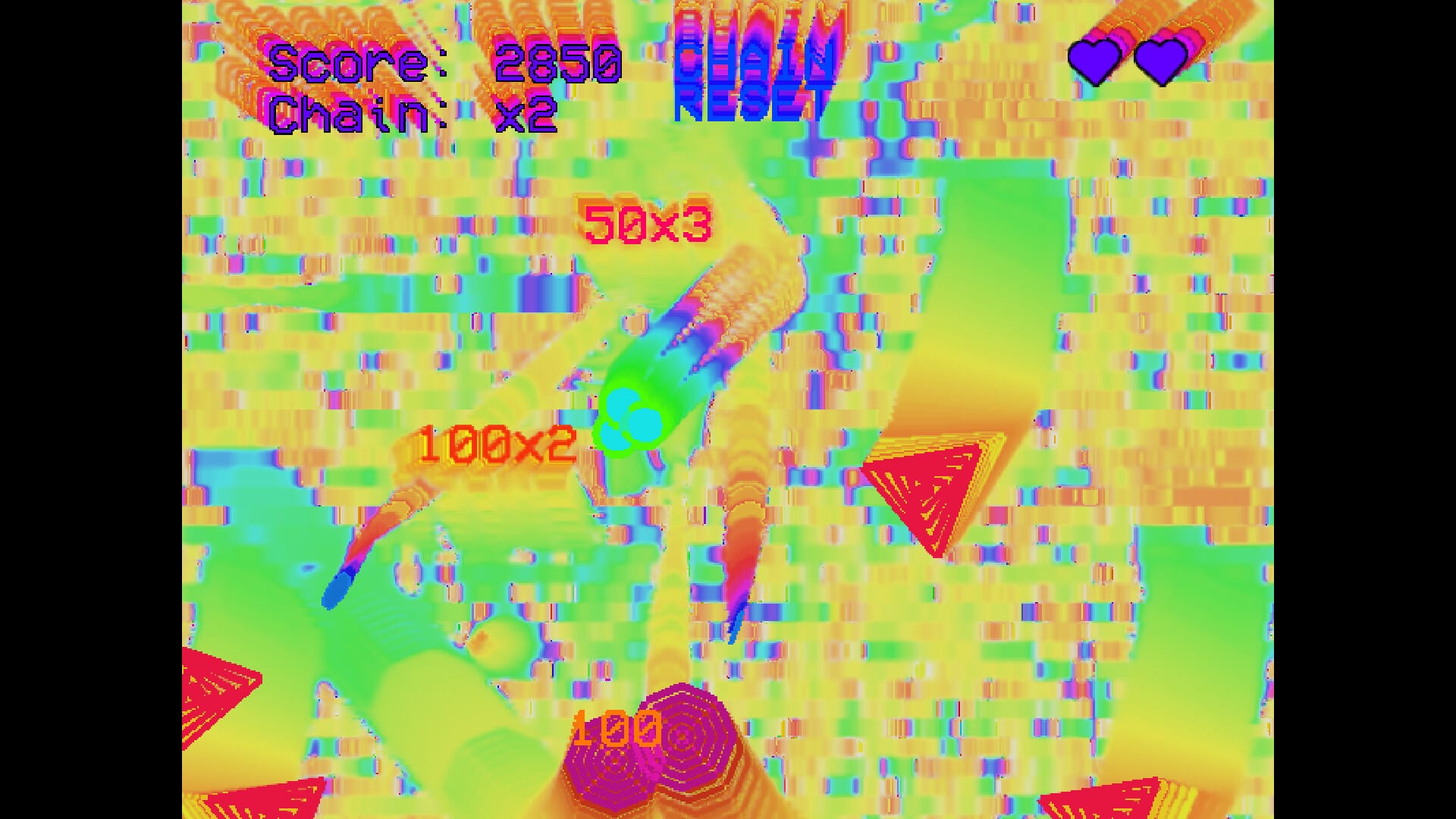
Feedback states of Hypnogenesis. Screenshots via Steam.
Games that only fully exist on one particular television are Killscreen’s favorite kind of hardware problem. The free newsletter tracks play at the edges of the machine.