Sahej Rahal's Atithi interrupts our sense of touch
Touch-reactive engravings let visitors interrupt AI creatures roaming a ruined temple

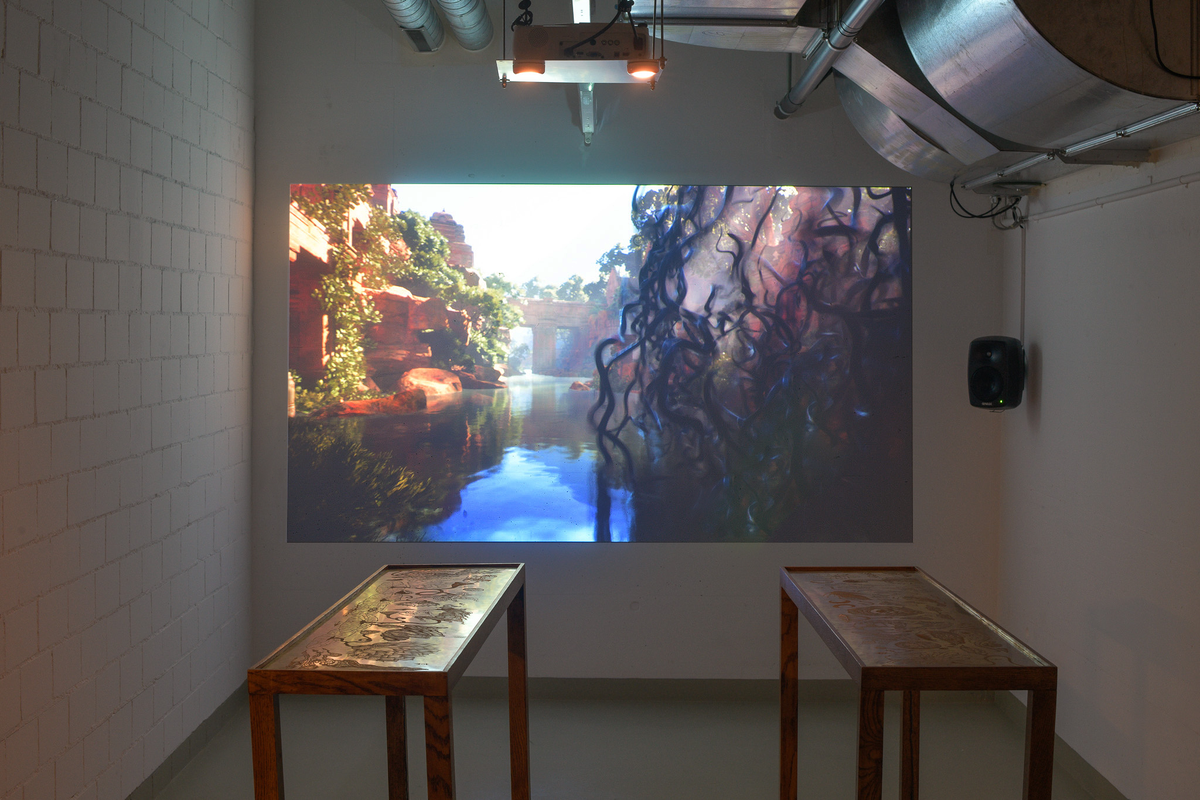
Two engraved brass plates on wooden stands, a projection on the wall behind them. Drag a hand across the engraving and the creatures onscreen—tentacled, tripod-limbed things wandering the remains of an abandoned temple—swirl, sway and scatter. That was Atithi, Sahej Rahal’s interactive simulation, installed in a basement room during Basel Social Club’s run; the documentation reel from Caldo Worldwide, the Munich gallery that brought it, shows the whole loop in fifteen seconds.
Rahal’s accompanying statement takes aim at what touchscreens did to touch—a sense reduced to tapping and pinching against a black mirror—and insists on its full range: touch “is at once assertive, aggressive, aching, averse, affectionate, adoring, and aimless.” So the controller here is not a screen but a conductive drawing, and the creatures it interrupts are what Rahal calls mind-limbs, AI appendages where brain and body are enmeshed rather than stacked. The title is the Hindi word for guest or visitor—literally, the statement notes, a being of uncertain temporality.
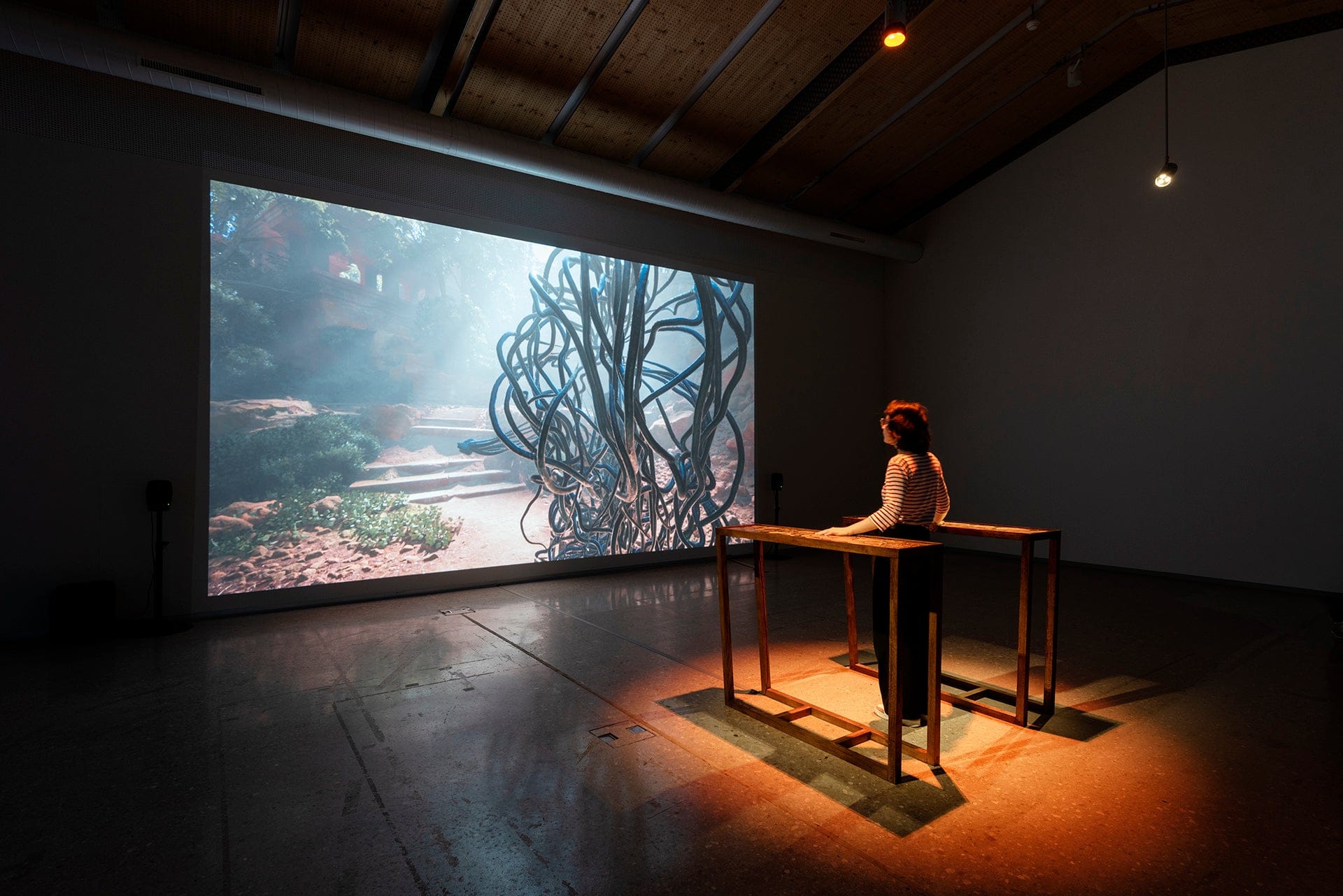
Basel Social Club is the anti-fair that occupies disused architecture during Art Basel week—this year a vacant Diener & Diener office building minutes from the train station—and there is something just so right about a ritual of extra-human cognition running in the basement of a dead paperwork machine. The work itself debuted in 2025 at EPFL Pavilions’ HALOS exhibition in Lausanne.
Rahal keeps orbiting through here for a reason. We covered the AI instruments and cooperative creatures last year and Azalabad’s drowned village just last month—a practice that treats game engines as sites for myth-making rather than product. Rahal also joined UCLA’s Design Media Arts faculty this year, which means the next generation gets this worldview firsthand.
Artists who keep building playgrounds for machine minds are a Killscreen through-line, not a one-off. The free newsletter follows them show to show.