Tomo Kihara Will Not Sit Comfortably in One Chair
A cabinet in Tokyo runs a language model that writes a stranger's life from census data, and its maker is still deciding what to call the work he does.


Milton Bradley’s Checkered Game of Life arrived in 1860 with a moral spine: virtue advanced you, vice sent you backward. Its distant ancestor, Moksha Patam, made the same argument with snakes and ladders centuries earlier. Both agree that a life can be compressed into rules, and that the rules ought to mean something. Tomo Kihara’s cabinet What Plays You? — Game of Possible Lives, shown at the Mori Art Museum’s Roppongi Crossing 2025, inherits the form and abandons the moral. The person you play is assembled from Japan’s national census, and the language model running locally inside the cabinet writes their life as you go. Nothing is scripted. No one, Kihara included, knows what the machine will say next.
Kihara came to games sideways, through an MSc in interaction design at TU Delft, where a student project called Street Debater turned a wooden balance scale into a job for people begging in London and Amsterdam. His work has since run at the V&A, the Exploratorium, FACT Liverpool, Science Gallery Melbourne and Miraikan, and Deviation Game, made with the art-design unit Playfool, is also in Early Access on Steam.
“My ultimate goal as an artist is to make a new genre, or a new form of rule, that can transcend 2,000 years into time.”
Jamin Warren: I want to go way back. Street Debater came out of you interviewing more than two dozen people who were asking for help on the streets in London and Amsterdam, and what you built for them was a tool rather than a piece about them. There’s a thread from that to the work you’re making now—in both cases you’re taking a social issue you’ve encountered in the real world, translating the feelings it evokes, and turning it into an interaction system. Does a project like that start with a concern about the world, or with a mechanic that seems to want a place to be deployed?
Tomo Kihara: Street Debater is a project I did during my master’s at Delft University of Technology. It’s an initiative, or like a job that I made, which has the aim to bridge social divides by opening dialogue between passersby and often ignored people on the streets in Europe—which I found quite new at the time, because I was living in Japan, where it’s a bit hard to find homeless people around cities. Compared to places like London, it was quite unique to have the interaction, and I was also slightly surprised that a lot of people were just ignoring them, which I also understand why that can be now. And as a 20-something student back then, I thought, OK, is there something I could do to change this interaction?
Through this coursework, I came up with a scale-like device that asks questions. It has two parts where you can put a coin on and vote on a certain subject. So you could ask, approve basic income, yes or no. Passersby vote their coins on each side, and based on how much coin it has, the scale will tilt. In a sense, you’re visualizing public opinion. What’s interesting is that the interaction changes from just giving money to someone on the street, which is the act of begging and giving money as a gift, to you’re more expressing an opinion as a passerby about a social subject. And the person holding the scale is kind of initiating a social debate. So it kind of becomes like a job. It was really pre-2020—I don’t think I could do it now, because people don’t carry cash anymore. But it was interesting to have one person who managed to get off the streets in London using this, because he earned quite a lot from it.
Jamin: Tell me about the design of the object, because a scale specifically encourages a certain type of behavior. In game design, there are these concepts of positive and negative feedback loops—the blue shell in Mario Kart is a negative feedback loop, where the further ahead you get, the more likely you get hit, versus StarCraft, where you can just get overrun. If there’s a lot of money on one side, does that encourage people to balance it, or discourage them because the question already looks settled?
Tomo: What I like about the scale is that there’s this tension of when that scale tips, and you don’t know when that tip occurs. So you’re kind of inclined to pay more, which is obviously not how voting works, but let’s say you vote on something and the scale doesn’t tip—you’re inclined to pay more to tip that scale in your balance. As a gamer, I thought that’s an interesting mechanic. And the color—I was really into playing Splatoon 2 back then. Not obviously but subconsciously, my mind reflected the color scheme of the Nintendo Switch, which I realize now looking at it. I was like, OK, this is my subconscious gameplay.

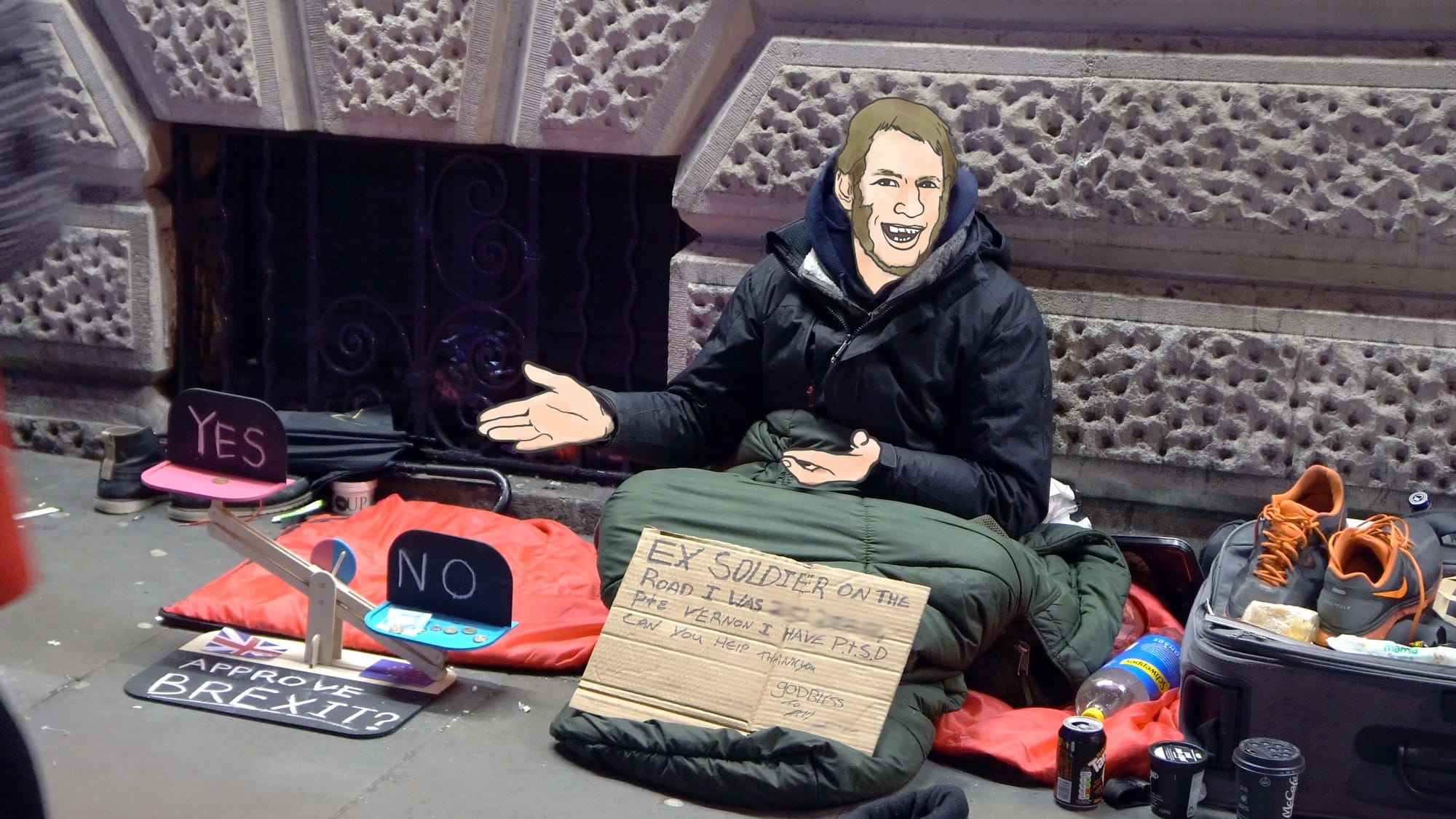
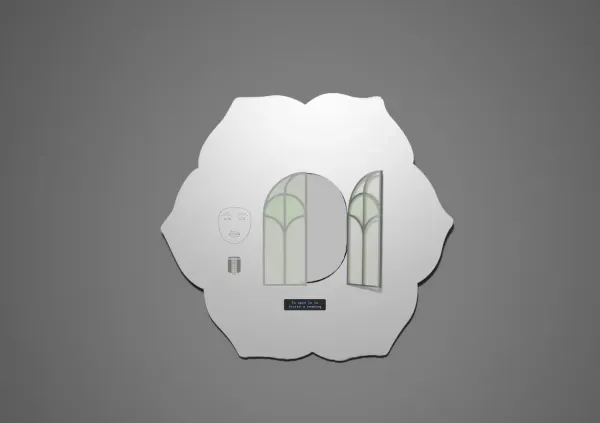
Street Debater (2017–19): the coin scale in its Nintendo Switch colorway, and Kihara with the device. Courtesy Tomo Kihara.
Jamin: Let’s talk about Game of Possible Lives, because there’s been a shift in your practice. The model runs locally inside the cabinet. Why structure it as a physical object you walk up to and play, and how much is dictated by the system—on one hand, you have something 100 percent scripted; on the other, something completely open-ended.
Tomo: One reason I made it in an arcade format is that there’s something very interesting about presenting games that way that makes the work standalone, in a sense that it can exist outside any kind of context. After the group exhibition ended, it’s now shown in a hotel lobby in Kyoto, where regular travelers come in and play, which is quite interesting to me. The other factor is that since it’s running a local language model, I needed a beefy desktop PC, and I didn’t want a bulky thing, monitors and everything. I also made it resemble a gravestone, since the game really talks about life and death, and it felt fitting to use a material similar to an actual gravestone.
Nothing is scripted is the shorthand answer. So that’s the scary part. Everything is generated on the fly, which raises an interesting question of, as an artist and game designer, what am I authoring? And to what extent do I own the responsibility for what it has generated? You start off with a statistically plausible person assembled from the Japanese national statistics, so you could be anyone currently living in Japan who has answered the census—not just Japanese people, but people who have stayed more than three months of any nationality. From there on, the local language model always generates two choices based on the likelihood of what could happen to this person at that point in time, using statistics such as birth rates, marriage rates, and what kind of work they might do. Initially, you could go back more than three or four times, as long as my small GPU allows, but I really settled on just once, as that makes people conscious and decide where they want to go to start their life again. The place gets really loud because people come with their friends and talk about their own life decisions through the decisions they make in this fictional world.
“Nothing is scripted is the shorthand answer for it. So that’s the scary part.”
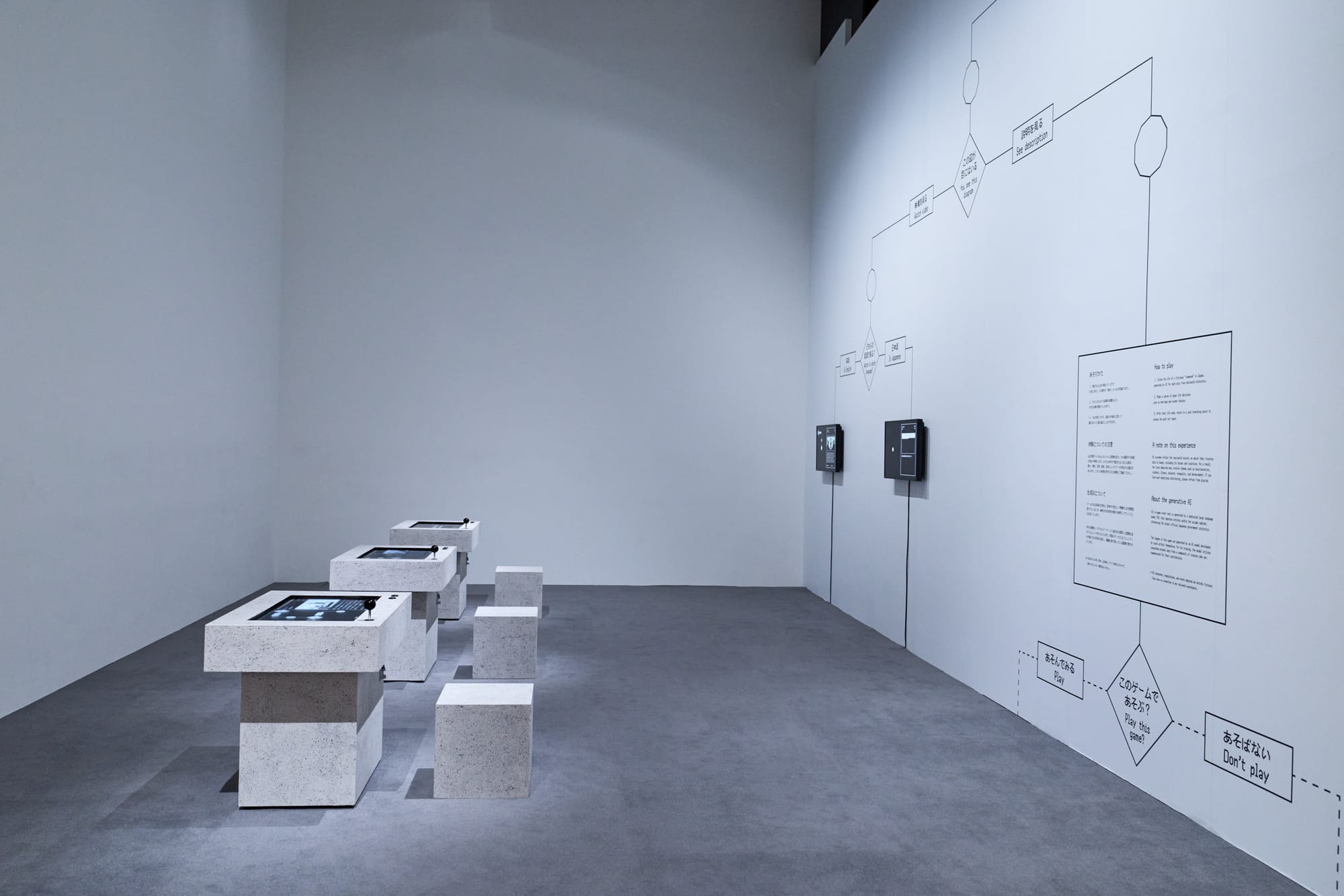
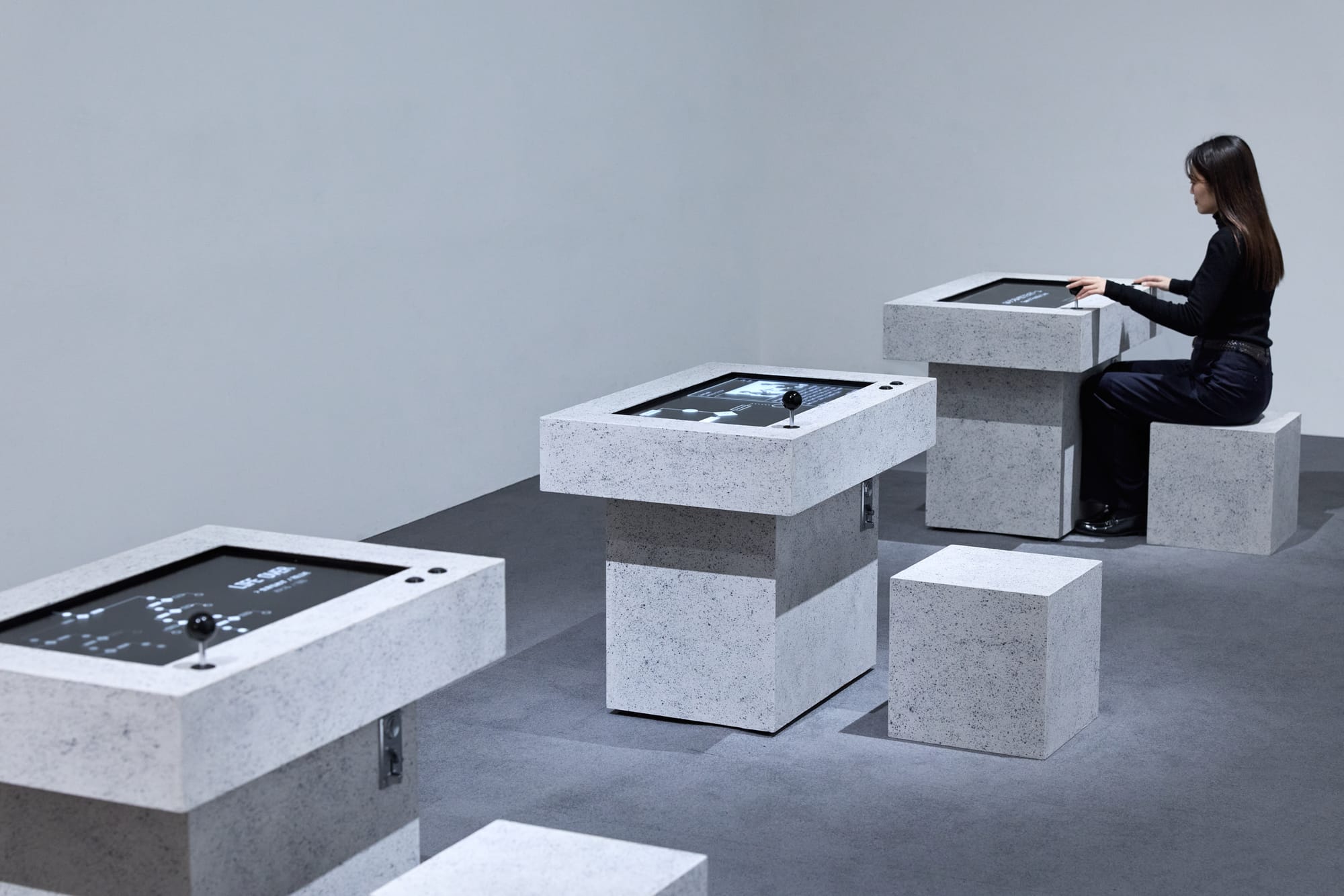
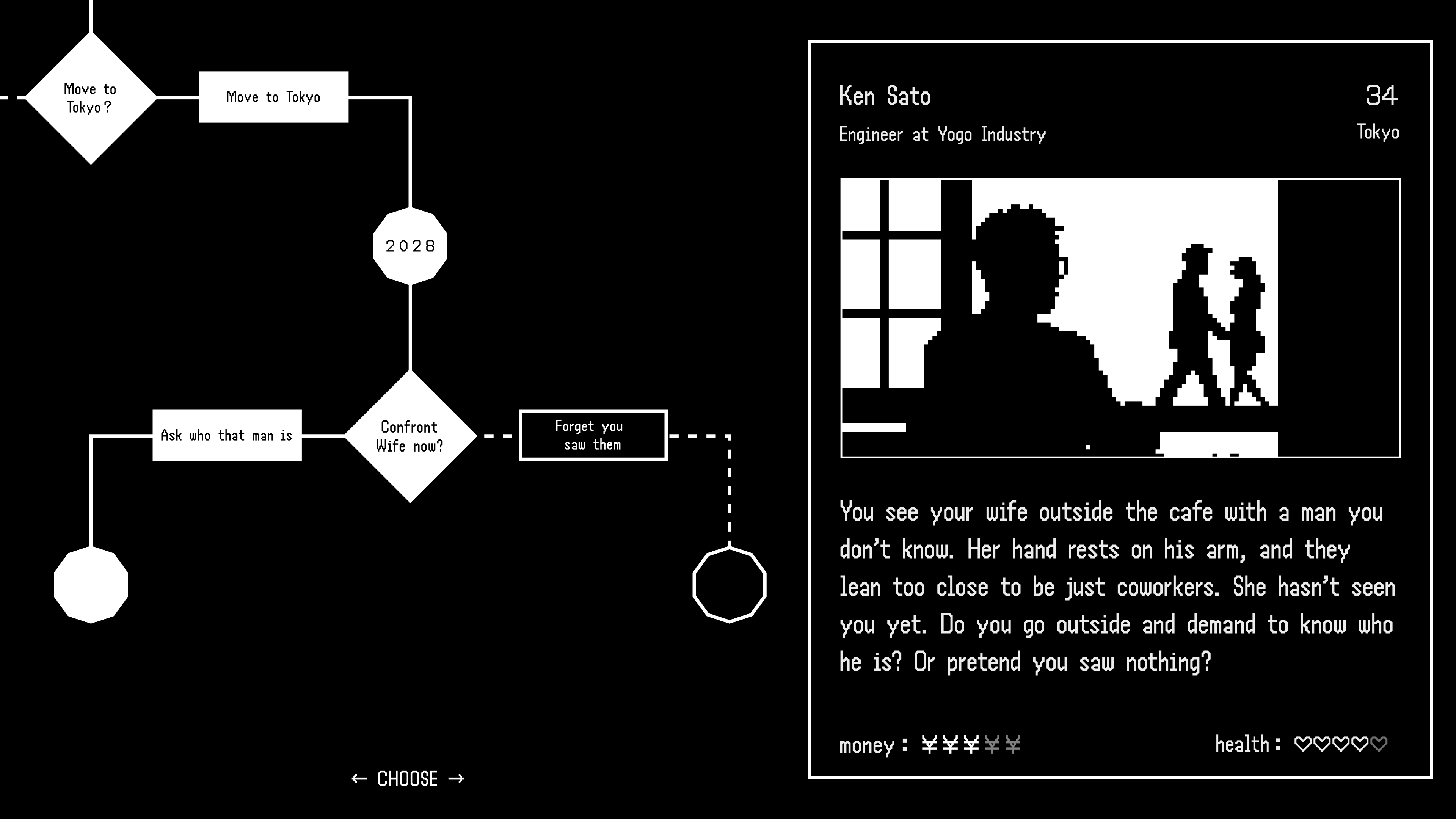
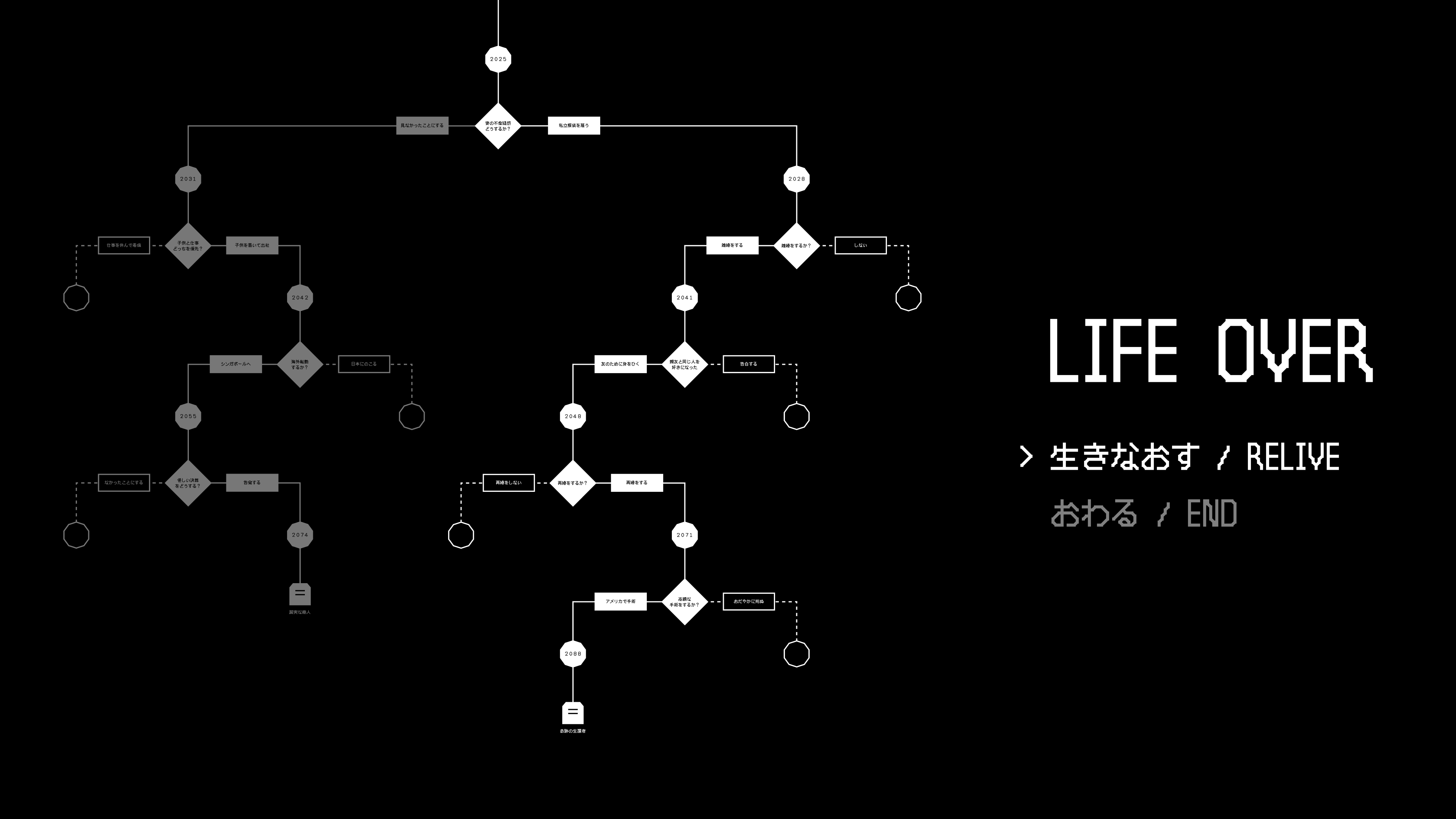
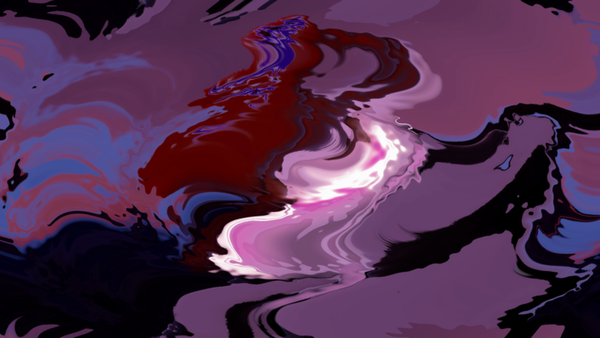
What Plays You? — Game of Possible Lives (2025): the cabinet in the room, and the branching life the local model writes onscreen. Installation view by Aya Kawachi. Courtesy Tomo Kihara.
Jamin: Let’s move to Deviation Game, which I played recently at ONX. The game asks you to draw something a human would recognize but a machine wouldn’t, so you’re training people to be legible to each other and illegible to a model. Maybe that’s what’s at issue when people get sensitive about AI—they feel something a human would be doing is being replaced. Whereas this is a mechanic that could not exist except with AI.
Tomo: Deviation Game is a game I’ve been making with my friends Dan and Saki, also known as Playfool, a design and art unit. We’ve been working on it since 2022, so this was almost the early days of ChatGPT, and it ran in parallel with how AI got better every few months. The premise is that it’s an experiment exploring the human potential to create beyond the knowledge of AI models. Players must draw prompts like “cat” in a way that fellow humans can recognize but an image recognition model can’t. So if you were to win with the prompt “cat,” you really have to abstract it or do crazy things with the notion of a cat that the AI doesn’t know.
It used to be possible to win in 2024 or 2025 with just the whiskers of a cat, but now it’s not. The latest in this series has gone so meta that, at least in Japan, where the Deviation Game players are most active, there’s this method of drawing the famous fiction author Natsume Sōseki—his face is quite famous because it was on one of the money bills—and he is known for writing a book called I Am a Cat. So if you understand what he wrote, you would understand, OK, why is this random Asian guy drawing a face, but then he’s referring to the cat. And sometimes even the AI gets that. If you draw the portrait too well, the AI will be like, OK, this is Natsume Sōseki, so maybe this is referring to the cat, since this context is about living things. So it’s interesting how the meta is developing as we speak.
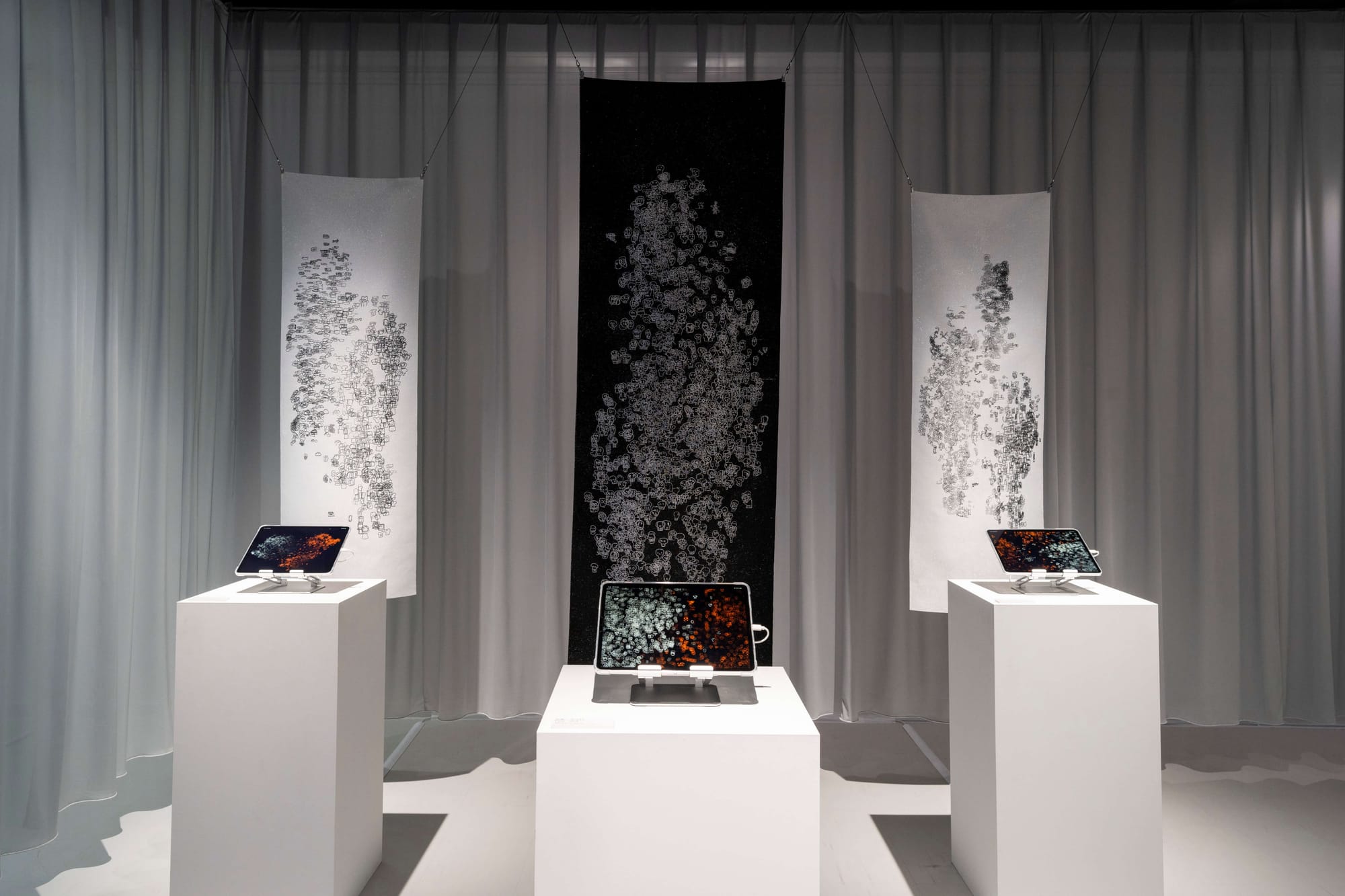
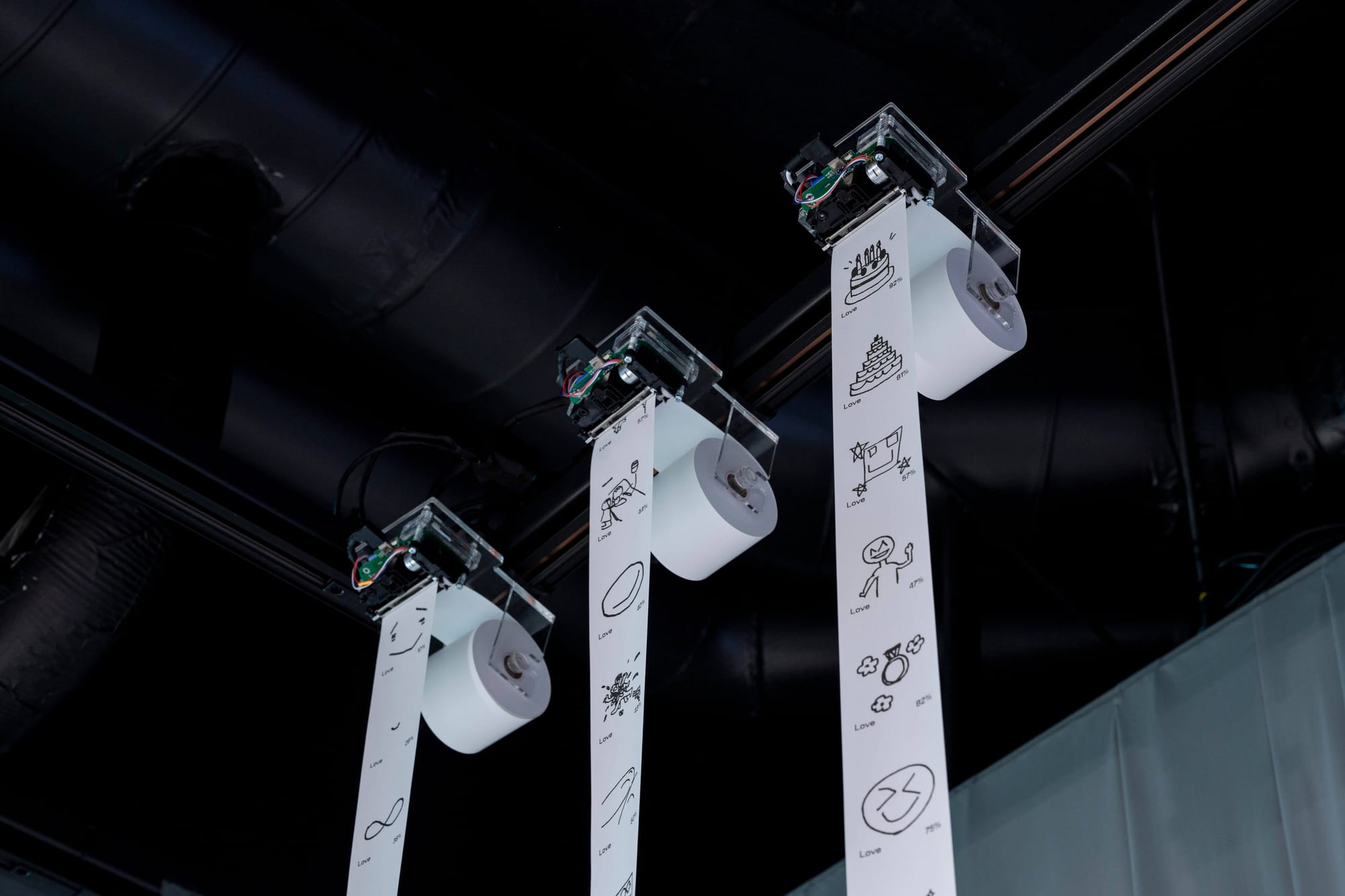
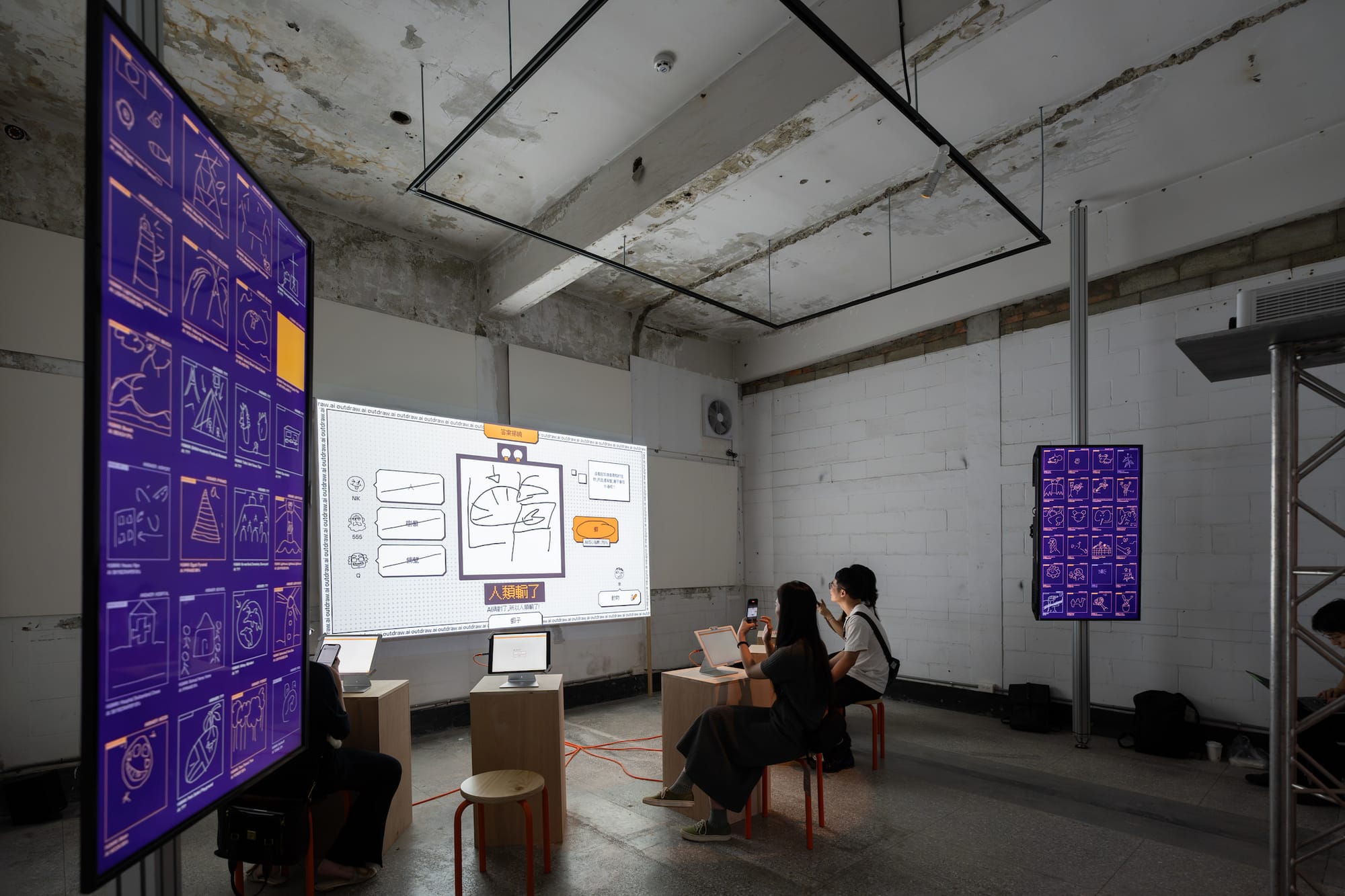
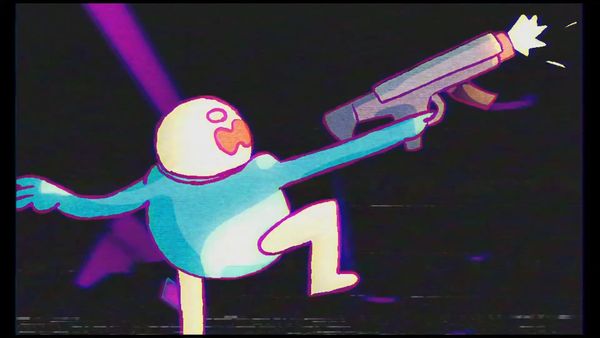
Deviation Game, made with Playfool: the gallery installation, the printers spooling out players’ drawings, and a play session in Taiwan. Courtesy Tomo Kihara.
Jamin: You and I have been talking over the last couple of months about what it means to figure out where you fit, and that’s an enduring challenge for artists making game-based work, because they’re pulled in different directions. On one hand, there’s the gallery context your work is well suited for—your background as an interaction designer, work that’s performance-based, a structural and physical component. But there’s this other door: independent game design. You’ve got a social performance piece, an installation piece, and a commercial videogame, and by commercial I just mean it’s available for sale. Does it keep you up at night, how you should talk about yourself? Because it stresses me out.
Tomo: Yeah, it does keep me up at night sometimes. How do you explain yourself in a manner that fits all these different contexts that I’m exploring? I’ve come to terms with the fact that I will not sit comfortably in one chair, and that’s fine. There is an old Buddhist saying I like: the cicada does not know summer. As cicadas are only alive during summer, the saying means that it does not know autumn, winter, or spring; therefore, it cannot really understand what summer is. The blessing of bouncing between very different disciplines—the game world, the art world, and dipping into design—is that you tend to see how unique and how niche each of these fields is, and you get to take the good parts of each and create your own practice.
Ultimately, I think I’m interested in rules as a medium as an artist. There’s something interesting about games as an art form of rules, and if you really think about that, it does have a universality that crosses time and culture. My ultimate goal as an artist is to make a new genre, or a new form of rule, that can transcend 2,000 years into time—so that some human being is playing it somewhere in this universe. Maybe they’re on a spaceship to Mars, and they’re playing it. That’ll be really fantastic. We don’t know the actual designer of the game Go, but so many people play it. Football as well; it’s such an amazing game. And I have a feeling a lot of museums and art stuff might not be around in 2,000 years. Heck, countries might not exist in 2,000 years. But if we do not mess up with a huge nuclear war or something, there will be people playing football, rock-paper-scissors, and Go.
Kihara has made peace with not fitting in one chair. Killscreen goes looking for the people working between the categories, and sends what it finds to your inbox for free.