The Halls of Power
The side-scrolling beat-em-up put a fallen city on the screen and a devil at the top of it. What gave the end boss away was never his crimes. It was his taste.
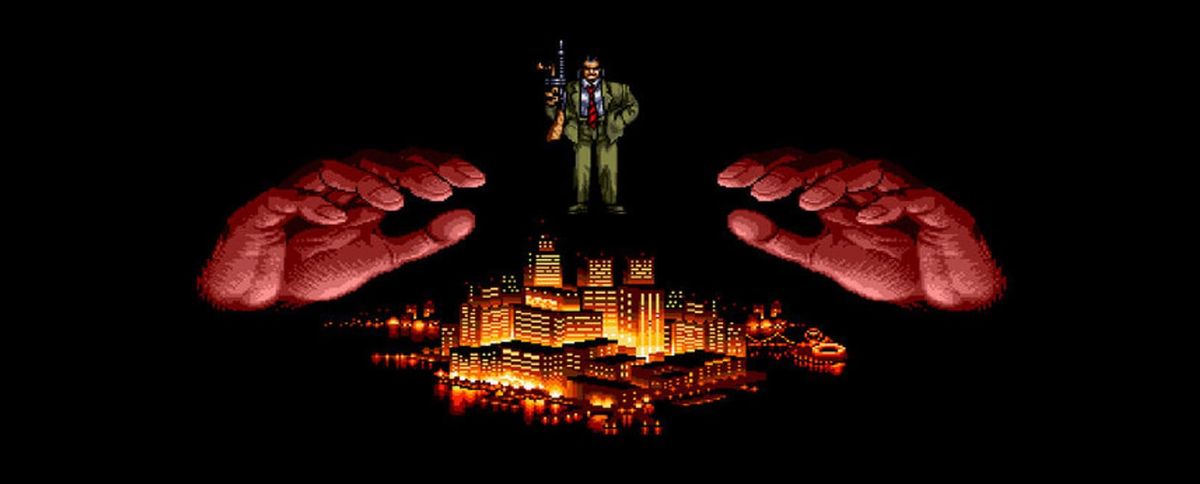
Old money sneers at new money for its vulgar ostentation. Consigned to a gilded antechamber of gaudy celebrity are the sports star’s rococo crib, the pop star’s mini-theme park, the dictator’s golden mermaid chaise longue, and the end boss’s penthouse suite.
The reign of side-scrolling beat-em-ups was brief, but revealing. It took the common damsel-in-distress quest and urbanized it. The metropolitan setting was crucial. The city was luridly seductive, with temptations rendered in pixelated neon, but it was also a fallen place, riddled with crime and corruption from the subways to the skyscrapers. This was not just a politicized vision; it was also a religious one. Vigilante crusaders would battle upwards through crime networks, killing their way through packs of chain-wielding hoods to the diabolical figure at the pinnacle of power.