Rough Riders
Australia looks different from the driver’s seat.
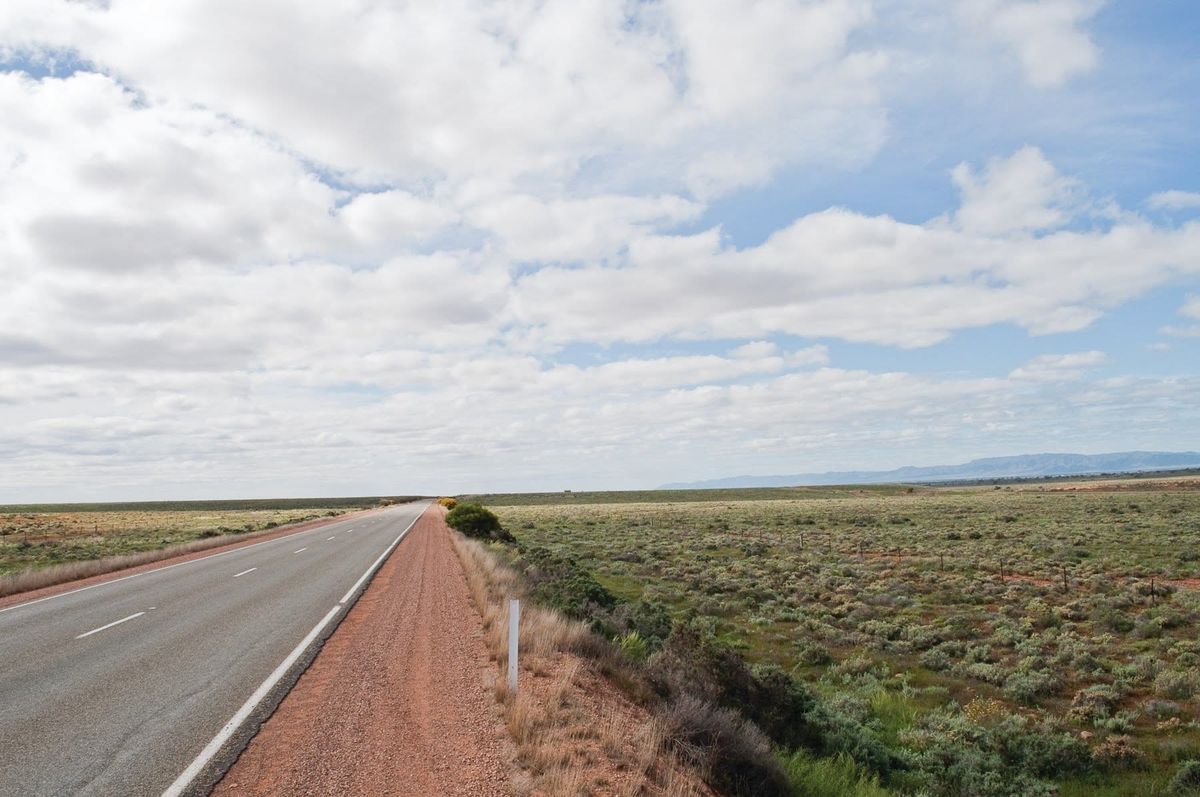
There was a particular hill that I came across in Fuel, in an area that was covered with a tall field of crackling brown and straw-colored grasses. The battered remnants of a series of wind turbines crowned the rise. I stopped my quadbike and gazed around at the horizon, stretching away as far as 40 km. Trees bunched together in small, ragged clumps that followed the contours of the mottled greenish-gray and brown landscape. The hill reminded me of hot summer holidays spent at my grandmother’s farm in rural New South Wales, of riding around on bikes and quads in grass that came up to the knee, grasshoppers spastically jumping onto chests, hands, and faces. The vista brought up memories of the property near the town of Wyangla (famous only for its dam, with a capacity three times that of Sydney harbour, which has been drought-stricken to a pathetic three percent of its capacity for the past five years).
The Australian environment is unique among the world. An island fortress in evolutionary terms, the entirety of the landscape—the dirt, grasses, rocks, trees, and shrubs—all bear the distinctive stamp of antipodean separateness. While the Australian bush has often been captured in film and moving image, painted, drawn, and even sculpted, until Fuel, there was nothing close to a digital version in a videogame.
With the attention of the Australian development community locked firmly overseas for funding, investment, and (dare I say) inspiration—and only a handful of studios big enough to handle the sprawling nature of “AAA”-style productions—the result is a resource on the Aussie doorstep that remains entirely untapped. While tourism is a cornerstone of the Australian economy, people do not visit our shores to see Movie World. Instead, they spend thousands of dollars to see the remarkable beauty of the wild and untamed Australian bush. Yet aside from Fuel, no one has had the enterprising thought to make it virtual—and not even Fuel, an open-world racing game released in 2009, did it intentionally.