Play It Again, Samus
In jazz as in games, freedom starts with following the rules.
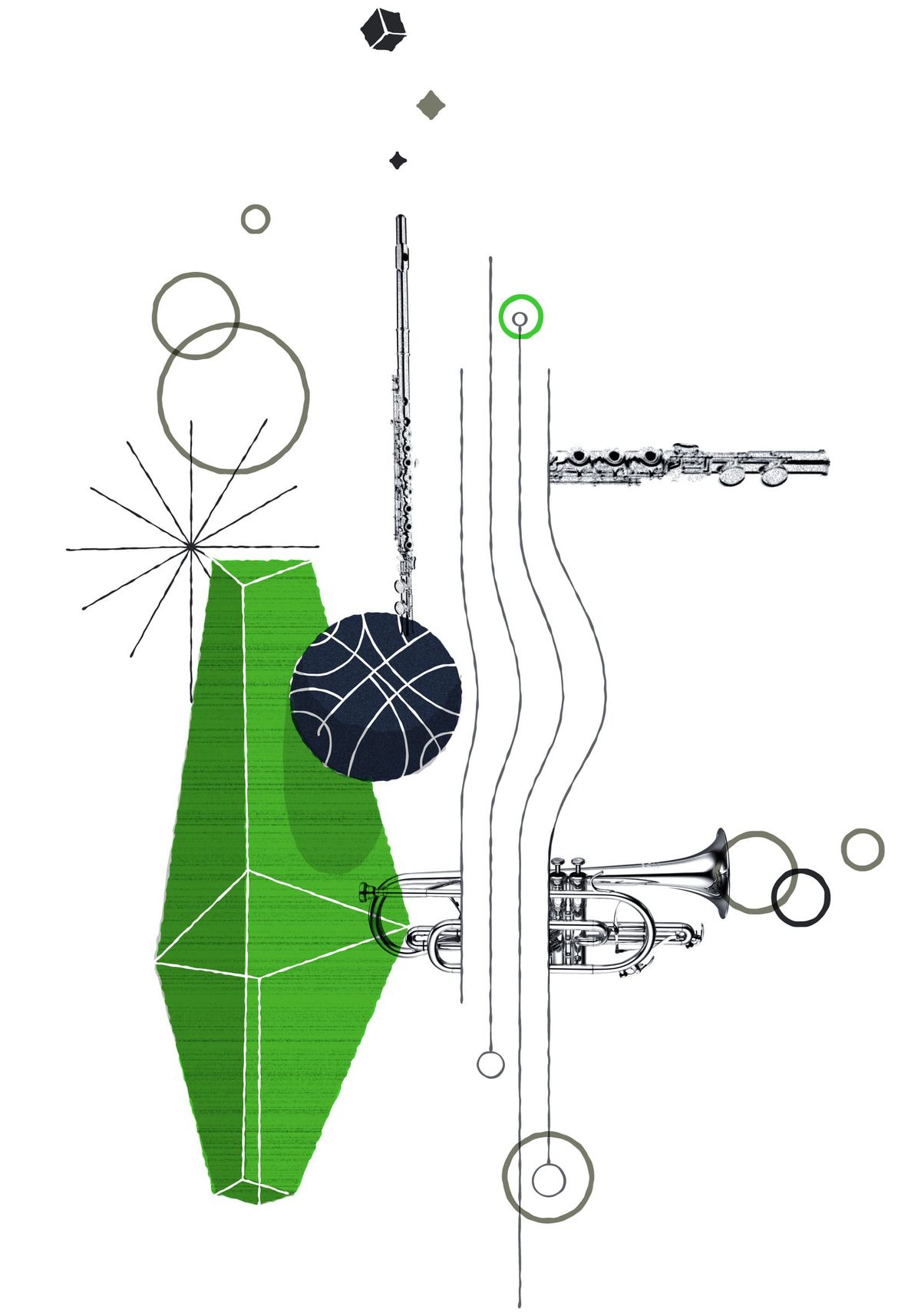
Walk into a jazz club on a weeknight in the city; pause at the bar, mosey over to an unoccupied spot near the back of the room. The band, a five-piece, is set up on a makeshift stage, or more accurately: on a raised piece of floor that has had the title “stage” thrust upon it. A drummer sits behind a small bass drum, a snare, and a couple of cymbals. Center stage, the bassist gently sways in place, his right index finger plonking up and down on the lower end of his instrument like a child playing duck-duck-goose. A guitarist is standing to the side, hands flitting about his fretboard as he warms up, soft, woody sounds escaping from a tiny amp he’s placed on a chair offstage. There’s no room up there for the horns, so the trombonist and saxophonist nonchalantly take their places on the floor out front.
They begin to play. Right off the bat, the drummer seems to be taking a solo; sticks fly about the snare and cymbals, and feathered kick drum hits drop without apparent regard for rhythm. The bass player is almost inaudible; the guitarist only slightly less so, his chords soft and light, humming and indecipherable. For a time, the horns give some order to the chaos, playing a unified melody amid the ka-dunking and the ker-splashing. Maybe it’s a familiar song, some dusty standard from a high school musical revue. But soon enough it evaporates: the trombonist weaves a series of twisting eighth notes; the saxophonist sips his beer. Ten minutes of chaos later, the two horns reprise the melody, and the song ends.