


This is part of a series on emerging voices in contemporary game-based arts.
There's a moment in the early days of my arcade days that I revisit from time to time. I used to watch a guy at my local arcade play Killer Instinct—he'd execute a 64-hit combo and then walk away from the cabinet before the round even ended, a mic drop performed for an audience of teenagers who understood that games were, at their core, a physical act. Your posture, your gestures, the way you slapped the buttons—all of it was performance. When games came indoors, that entire language of the body disappeared into couches and headsets.
Symoné is bringing it back—though not from any direction that games would have predicted.
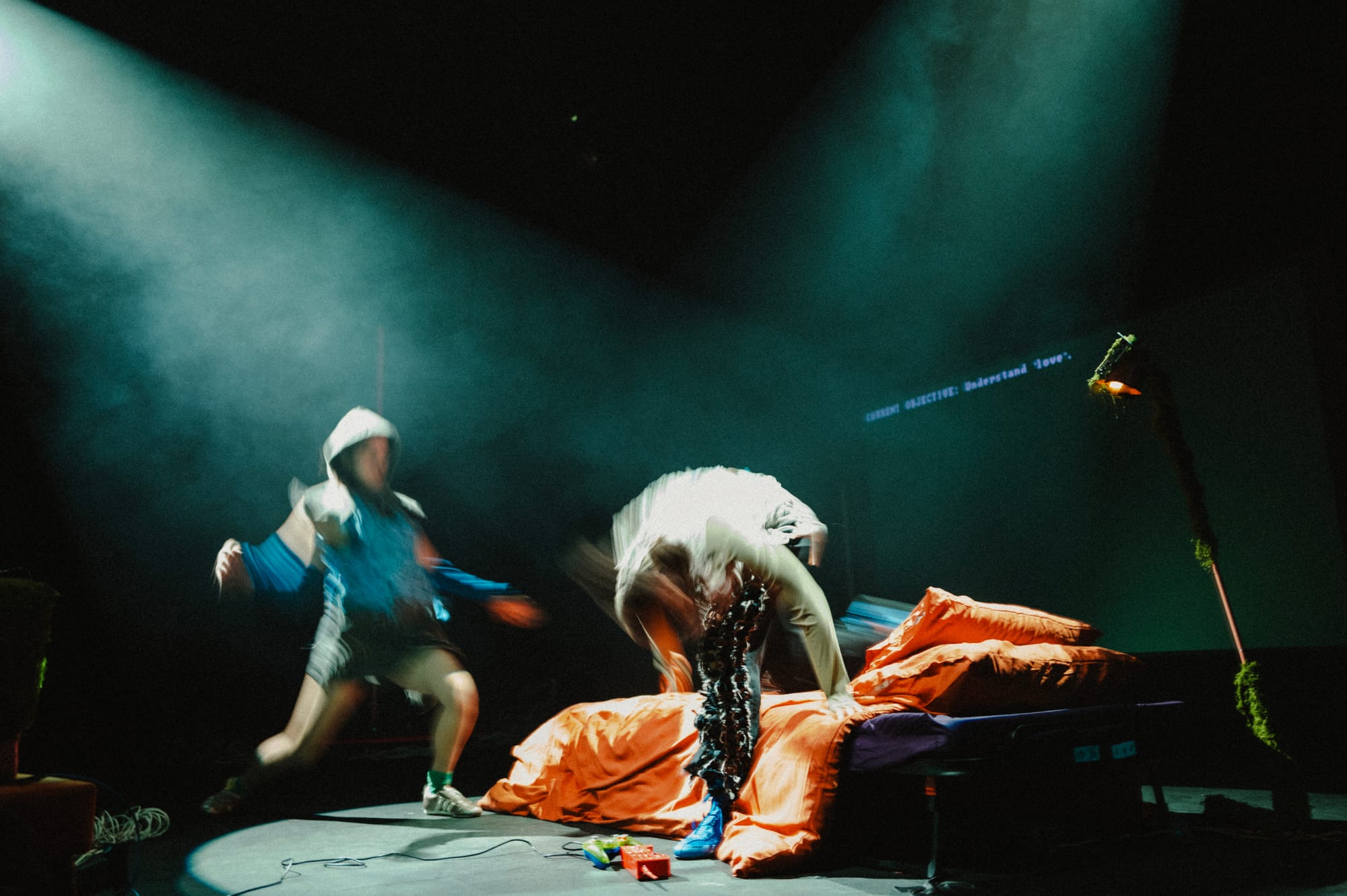
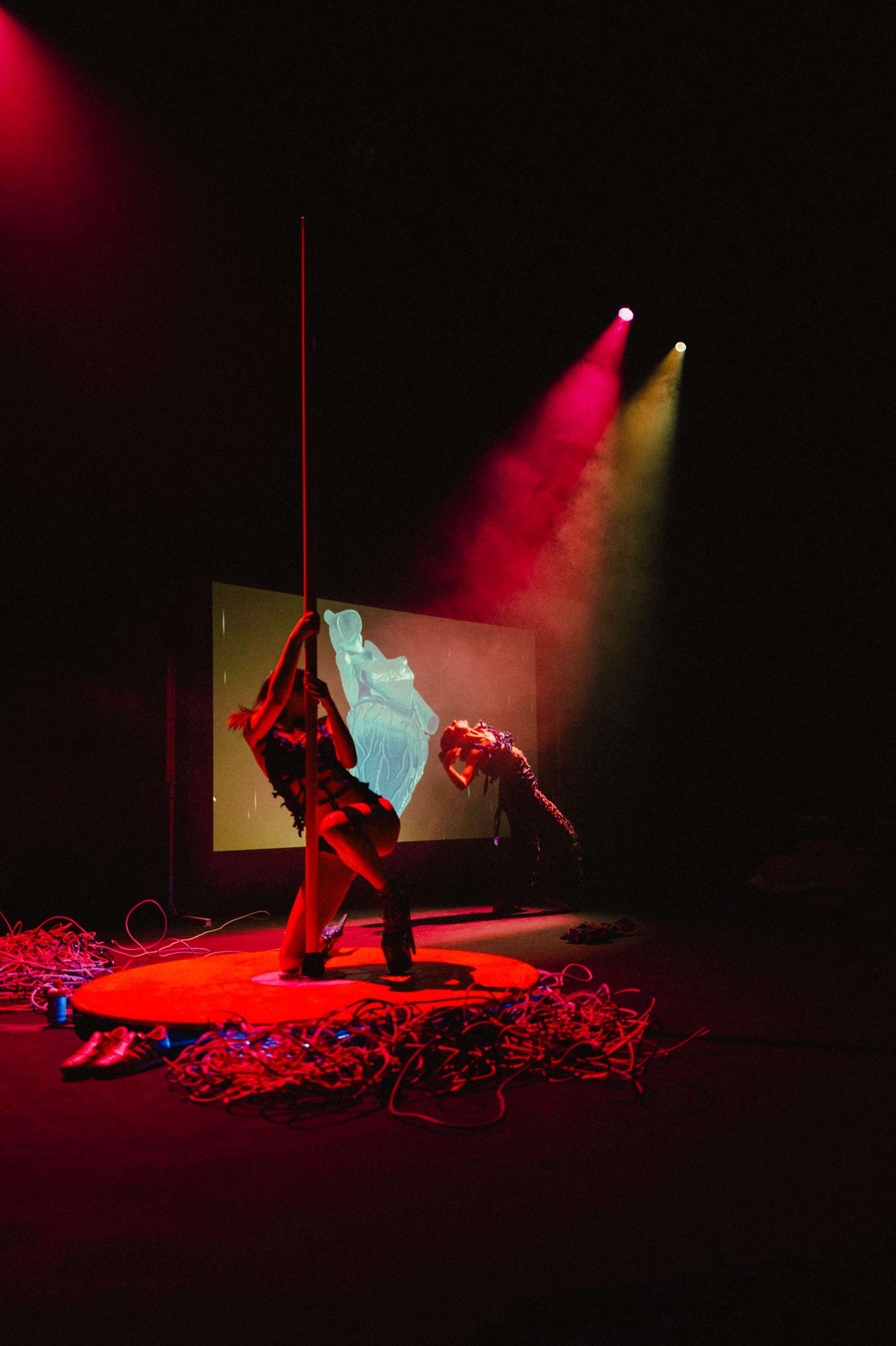
The London- and Kent-based interdisciplinary artist has spent the last decade building a practice that fuses circus, cabaret, pole dance and roller skating with experimental game design. Her most ambitious project to date, Nullspace Motel, is a 40-minute live art production that places audience members in an orange lounge chair, controller in hand, while two dancers—a pole dancer and a contemporary dancer playing lovers named Dusky and Hayden—perform a fractured love story onstage. The choices players make in three philosophical mini-games ripple into the narrative unfolding in front of them. "The design wasn't so much winning or losing," Symoné told me, "but it's the shaping of a narrative that is affecting the story."
The piece centers on Ish, a bio-digital being who can only communicate through a 3D character onscreen or through voiceover. Ish has lost parts of their memory, and the audience is tasked with retrieving them across a dreamy, nonlinear road trip. The performers have their own timeline. The game has its own timeline. "The piece feels very much like a collage," she said, "where the dance and the game are happening, the audience is there, and they have this intersection and timeline and narrative, but people can interrupt in their way."
Raised across multiple countries by a military father, Symoné moved to London at 18 to study anthropology at the School of Oriental and African Studies. She had no formal training in performance. Instead, she fell into the circus through underground parties and a mentor at the Roundhouse, London's legendary performing arts venue. Her first show was the 2012 Olympic Torch Relay at King's Cross Station—an eight-minute hula hoop performance with a troupe of about 10 performers, staged on one of the upper levels of one of the busiest train stations in England. "I remember getting off stage and thinking, wow, I love this," she said. "That introverted part of myself was feeling this new way of expressing, and movement felt like a superpower for me."
Games came later. Growing up, Symoné played whatever her father brought home from GameStop—mostly first-person shooters and Tom Clancy titles. "My mind at the time was associating like, this is what games are," she said. "It's first-person shooters or platformers." Then, at about age eight, she spotted a wacky, colorful box on a shelf: Katamari Damacy. "I remember playing that game and thinking, what—this is so weird. Like, games can be weird."
It rewired something. But it wasn't until 2019, when friends pushed her to play games again, and she encountered the breadth of what games had become, that she began studying game development through Code Coven, an accelerator for marginalized developers. "I had realized how far they had come," she said, "and how games can be emotional; philosophical."
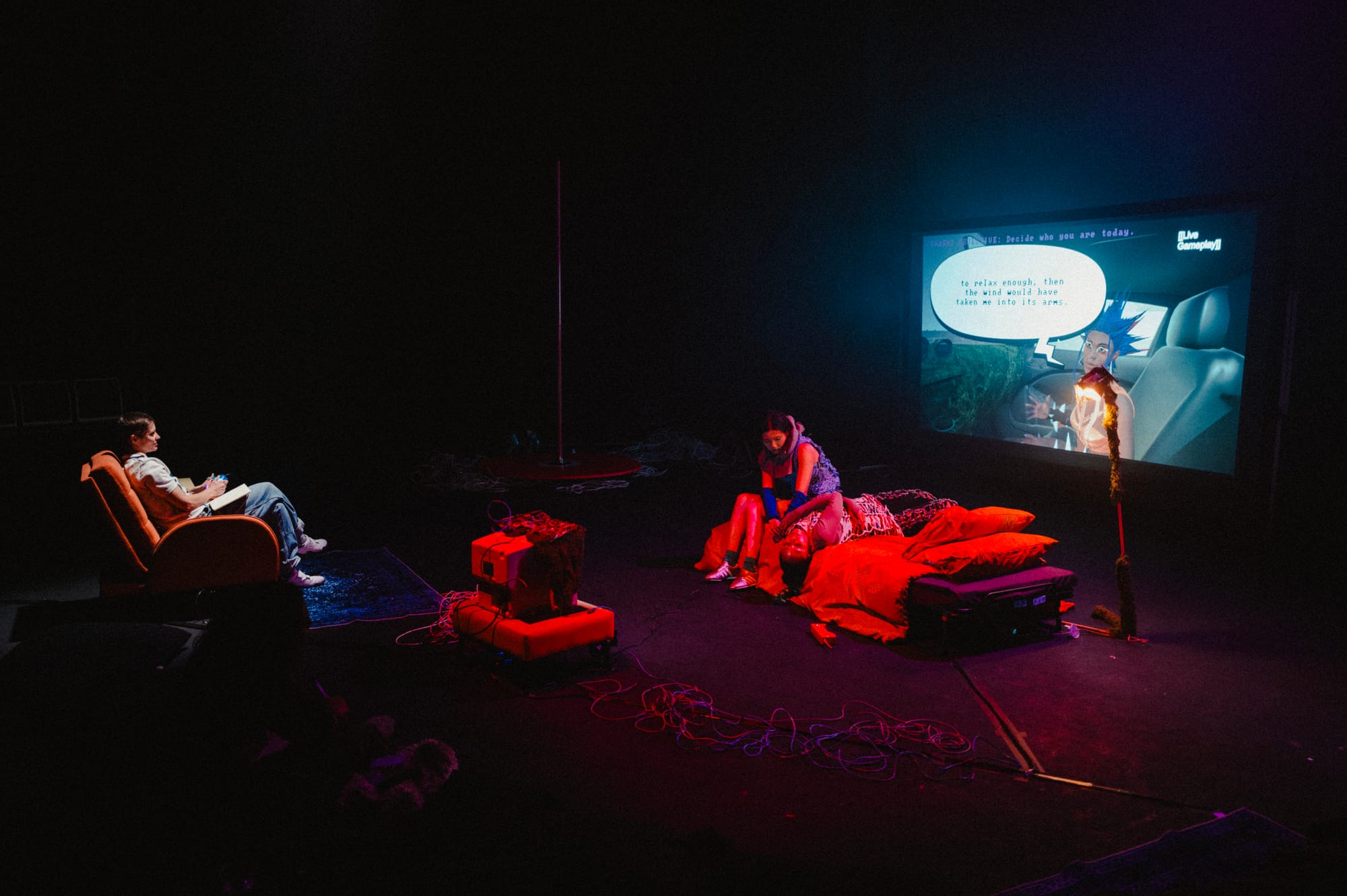
When the Stage Becomes the Interface
The seed of Nullspace Motel came from a 60-page Google Doc that Symoné and her collaborator, sound designer and writer Sammy Metcalfe, filled with observations about performance and video games. One of the genesis ideas was deceptively simple: the characters we love in games feel real. We want to be friends with them. That emotional attachment—that sense that a digital being has weight and presence—became the spine of the piece.
Playing with that emotional attachment, though, requires an act of care and a moment of vulnerability from the audience. She wanted players to feel the mild discomfort of being called up from the audience—but she didn't want to put them on the spot. Early conversations included the idea of a live camera feed on the player projected onto the screen. They dropped it. "There's something about not putting players on the spot too much and watching them in such an intense way that felt right," she said. The piece was meant to feel like 2 a.m.—dreamy, cozy, surreal—not like a game show. And the controls were kept intentionally simple. "I really wanted to attract people who feel like games are not for them," she said. "People who don't play games, but they're interested."
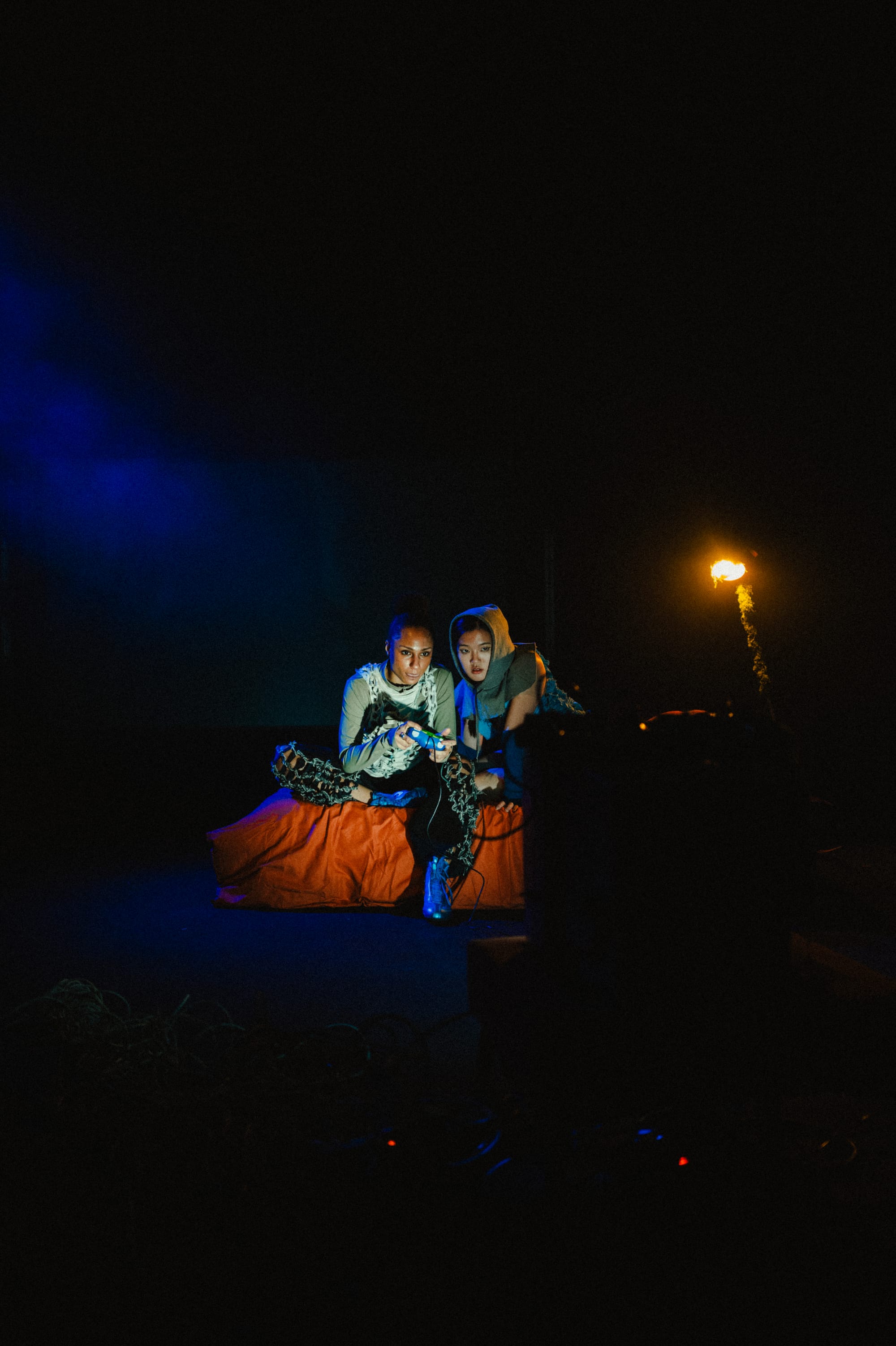
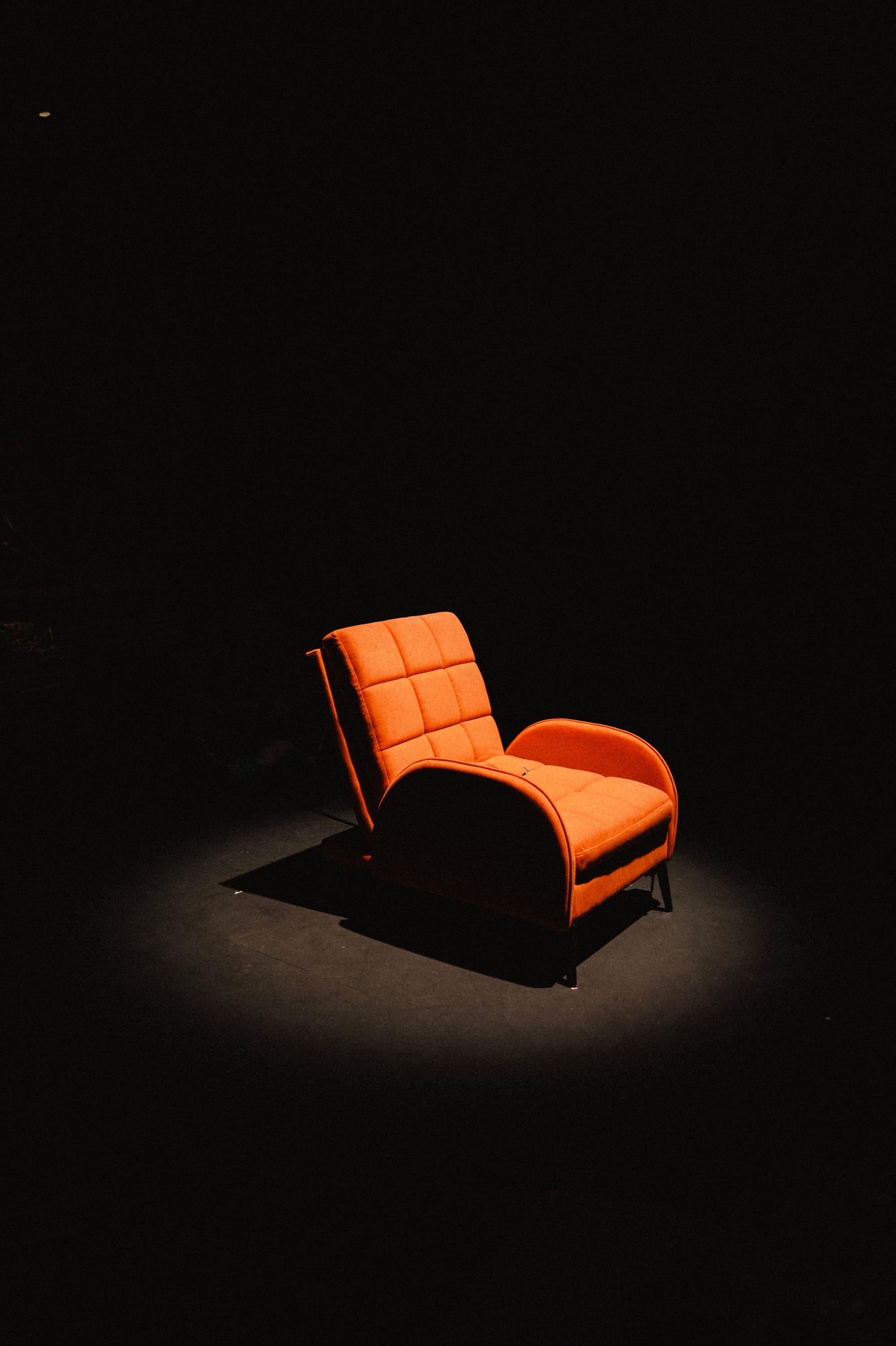
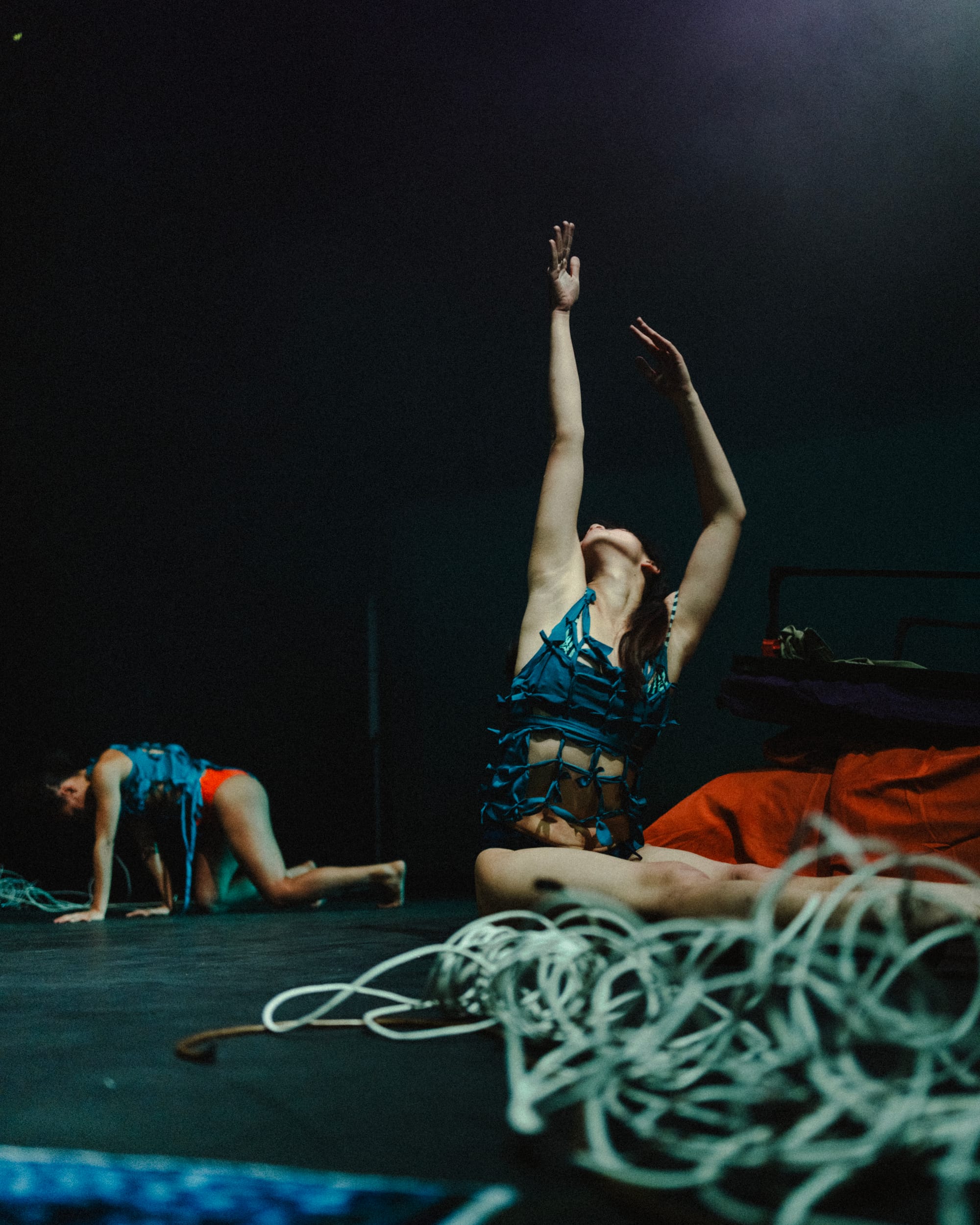

Welcoming The Unwelcome
That instinct—designing for the uninitiated theater-goer rather than explicitly game-players—connects Nullspace Motel to a broader movement in game design that foregrounds personal experience over systemic complexity. When the primary goal is communicating something about identity, memory, or queerness, elaborate mechanical gates can work against the art's own politics, especially in a live setting. It's impossible to build a skill-based activity for an audience member who is sitting down, learning a system for the first time, in front of a bunch of other people. Symoné calls her work "anti-games": goal-adjacent, emotionally driven, built to charge people rather than challenge them.
There was a moment during an early prototype—a one-on-one performance piece in which Symoné guided conversations with individual audience members—that crystallized what the work was really about. She can't remember the exact question she asked, but the person she was sitting with paused, their eyes began to glow, and they vibrantly reminisced about something that had happened almost two decades earlier. "I could feel from the way they expressed that it was really special to them," Symoné told me, "that they had unlocked this part of their mind that they hadn't connected with in 20 years."
She's now planning a 2027 UK premiere tour for Nullspace Motel, with stops from Scotland to the south of England and possibly into Europe. Some venues have told her they're excited, but their audiences are risk-averse—not ready for a game onstage. She's undeterred, offering workshops alongside performances to introduce alternative approaches to game design.
Technology gets recognized for its intelligence all the time, Symoné told me. "We just forget the body has its own."


